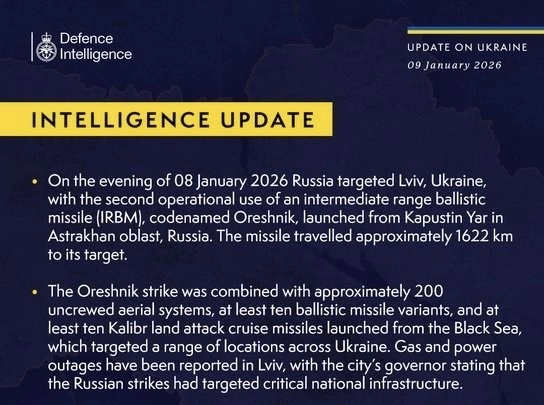
• On the evening of 08 January 2026 Russia targeted Lviv, Ukraine, with the second operational use of an intermediate range ballistic missile (IRBM), codenamed Oreshnik, launched from Kapustin Yar in Astrakhan oblast, Russia. The missile travelled approximately 1622 km to its target.
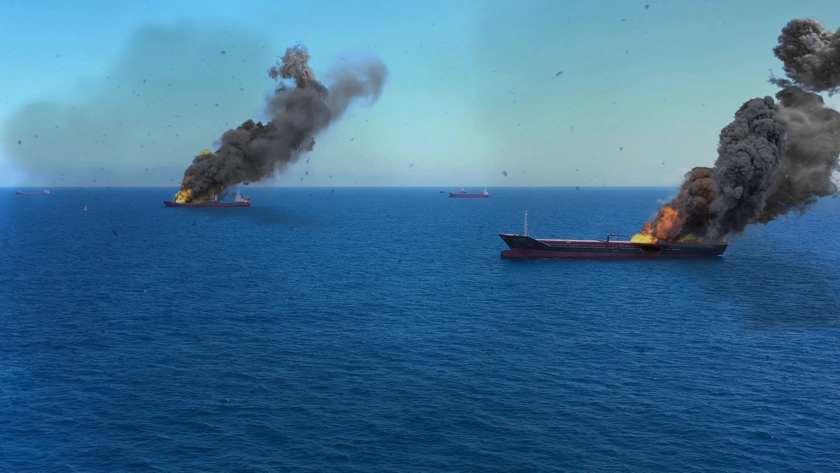
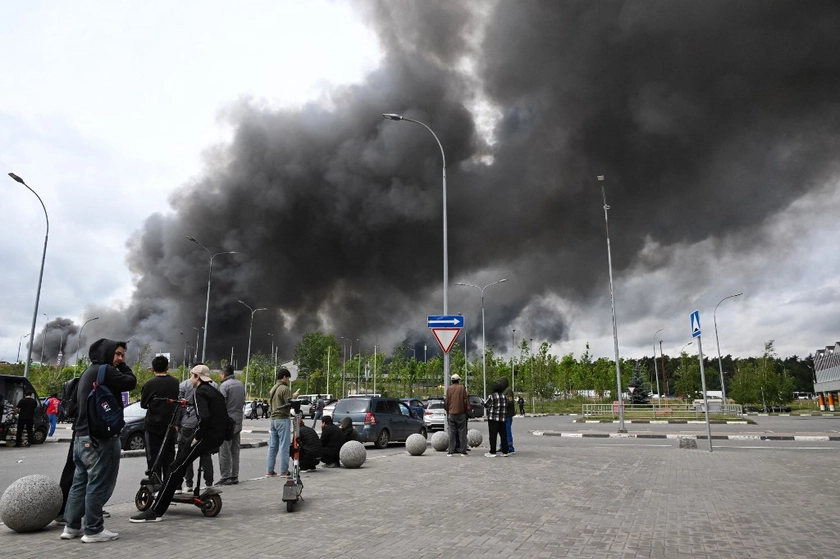
•The Oreshnik strike was combined with approximately 200 uncrewed aerial systems, at least ten ballistic missile variants, and at least ten Kalibr land attack cruise missiles launched from the Black Sea, which targeted a range of locations across Ukraine. Gas and power outages have been reported in Lviv, with the city’s governor stating that the Russian strikes had targeted critical national infrastructure.
JOIN US ON TELEGRAM
Follow our coverage of the war on the @Kyivpost_official.
• Russia announced its withdrawal from the Intermediate Nuclear Forces Treaty in February 2019, which banned the development and production of IRBMs. However, the development of Oreshnik almost certainly occurred before this. The system is highly likely a variant of the Rubezh RS-26 ballistic missile, which was first tested in 2011.
• The use of this experimental system against Ukraine was almost certainly intended as strategic messaging following Russia’s inaccurate public claims that Ukraine carried out an attack on Russian President Putin’s residence in Novgorod, Russia, on 29 December 2025. Russia highly likely only has a handful of Oreshnik missiles. This missile is highly likely to be far more expensive than other missiles Russia is currently using against Ukraine.

EU Extends Russia Sanctions for First Full-Year Term
You can also highlight the text and press Ctrl + Enter

Putin’s Worst Nightmare