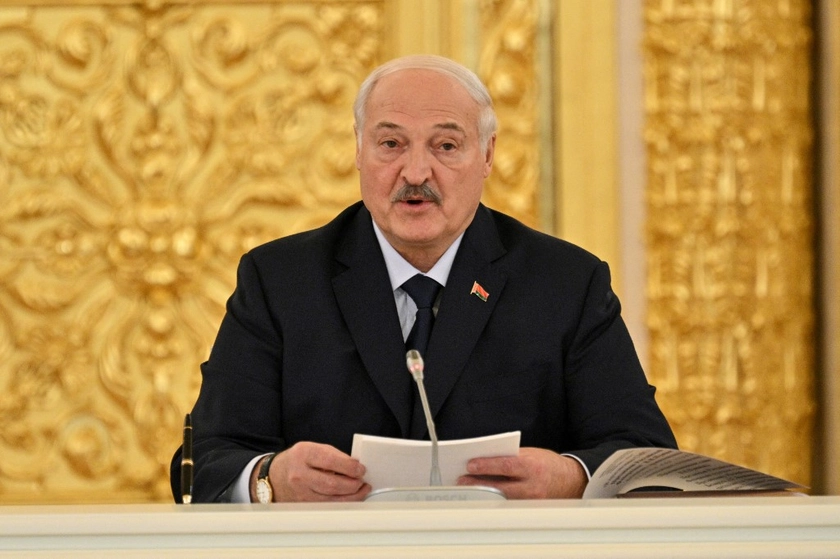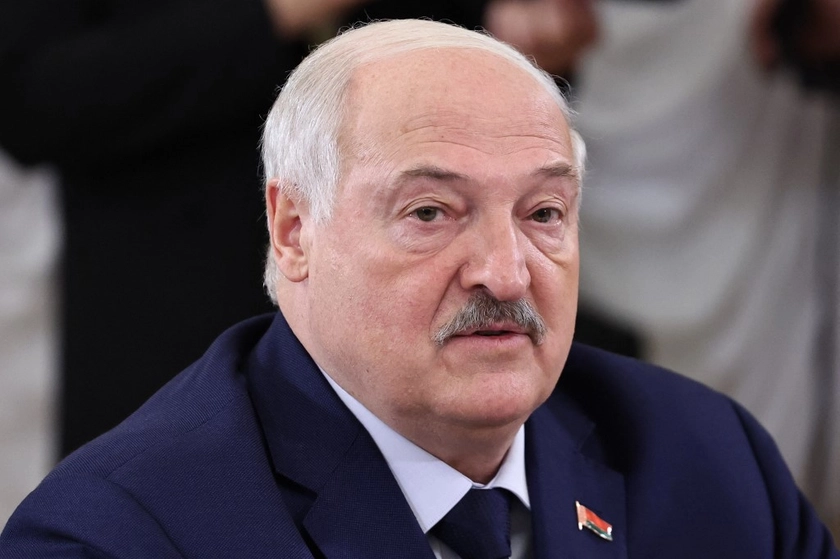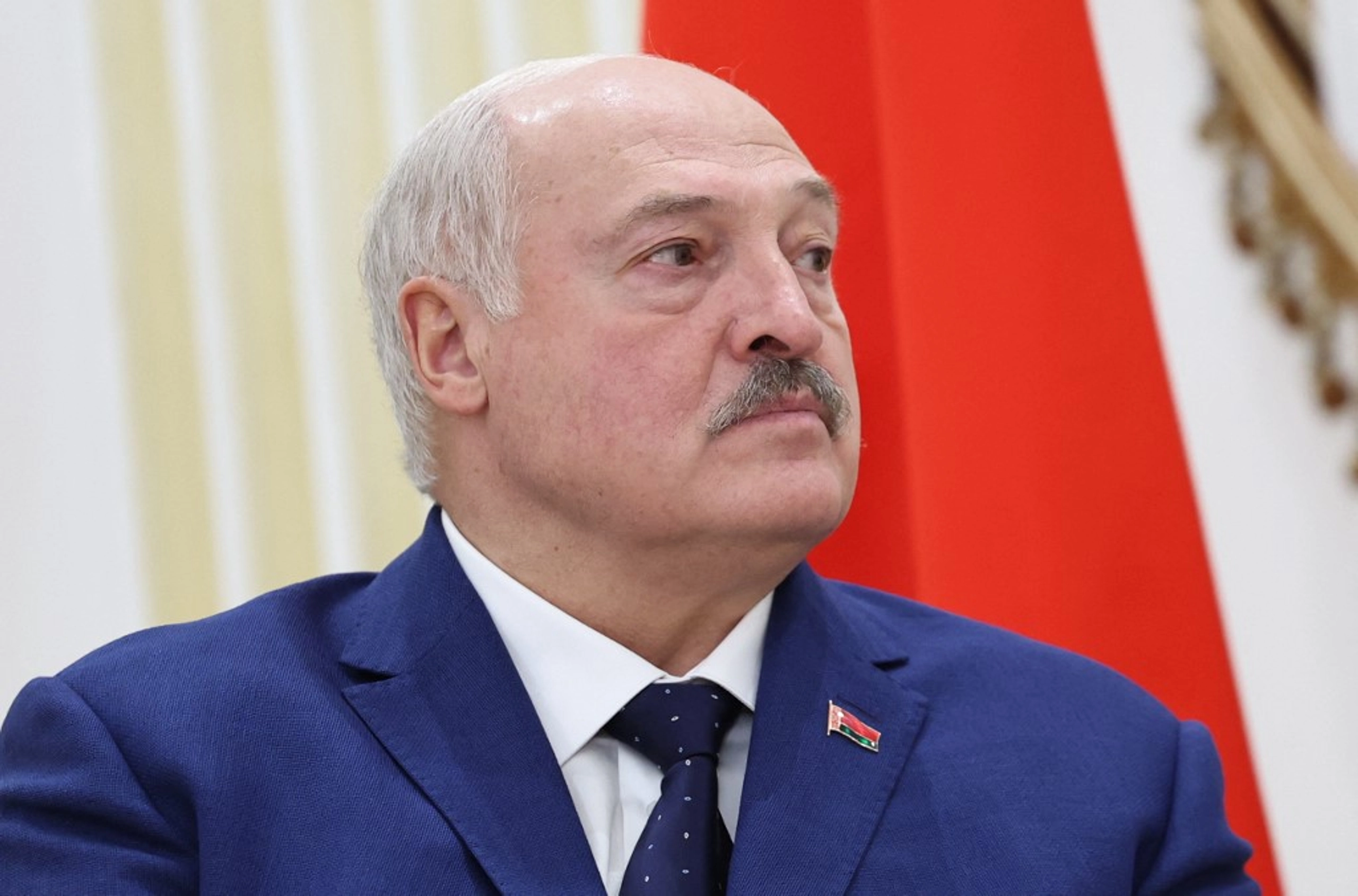
Belarusian leader and former collective farm boss Alexander Lukashenko, in a Monday interview, reversed years of tough talk towards Ukraine and unabashed confidence in the Russian army and the Kremlin.
In an interview with Al Arabiya republished by the Belarusian state agency BelTA, Lukashenko said Belarus is a peaceful state only interested in a quick end to the war between Russia and Ukraine, and told the Saudi state broadcaster that since his ancestors are buried in Ukrainian territory, Belarusian involvement in the fighting is absurd.
JOIN US ON TELEGRAM
Follow our coverage of the war on the @Kyivpost_official.
“Belarusian families live in Ukraine, and Ukrainian families live in Belarus, and in our south. There are joint families – they got married, raised children, and lived like normal people. There was no border,” Lukashenko said.
“Ukrainians came to us across the border, and Belarusians traveled freely to Ukraine. I once traveled to Ukraine. Even my roots – my ancestors’ – are buried somewhere between Chernihiv and Kyiv. And are we supposed to throw all that aside, forget it, and start a war? No,” he added.
Belarus’s role in 2022
On Feb. 24, 2022, four Russian combined arms armies with some 70,000 men and around 5,000 tanks and other armored combat vehicles rolled across the Belarus-Ukraine frontier to invade Ukraine’s northern Zhytomyr, Kyiv and Chernihiv regions.
In the first week of the war, the Russian Air Force operating from four Belarusian military airfields flew a collective 150-200 air strikes a day, against targets in Ukraine or in support of ground operations there.
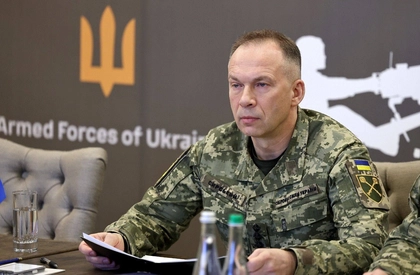
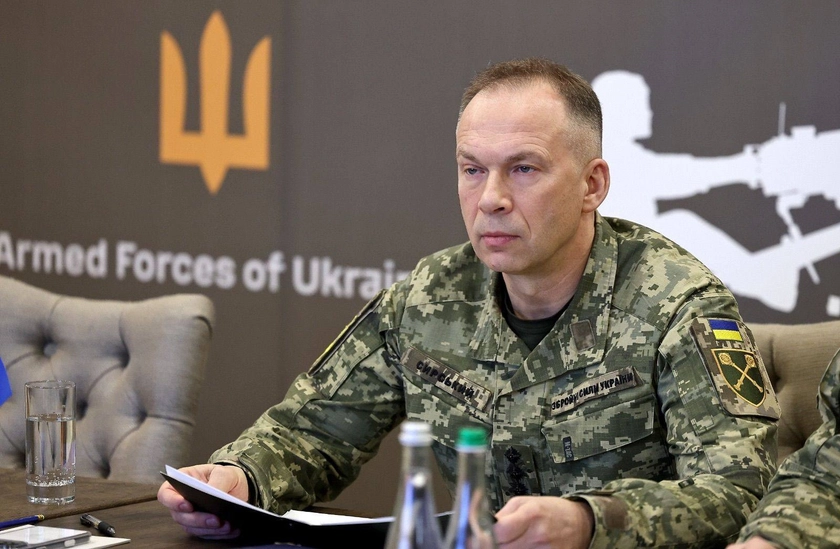
Syrsky Bets on Drones as Ukraine Fortifies Northern Border
What did Lukashenko say in 2022?
At the height of the massive Russian force build-up in Belarus, during joint war drills called Union Resolve 2022, Lukashenko echoed Kremlin narratives of the time by accusing Ukraine of planning to invade Belarus and/or Russia, and made clear that the Kremlin had his and Belarus’s full backing if war came.
“Ukraine is continuing to build up its forces, concentrating National Guard units consisting of radical nationalists,” Lukashenko said on Jan. 17, 2022, during a review of troops while standing next to Russian generals.
“We are in alliance with our strategic partner, fraternal Russia, and we will support it in every possible way,” he added.
Less than two weeks before the actual invasion, Lukashenko was interviewed by the Kremlin’s top propagandist, Volodymyr Solovyev, during which the Belarusian leader predicted the Russian army, supported by Belarus, would destroy the Ukrainian army in a matter of days.
“Against our united efforts, Ukraine has no chance. In case of a war, it will last 3-4 days. Ukraine has no one to fight us. The Ukrainians would be crazy if they collided with Russia,” Lukashenko told Solovyev in a broadcast aired nationally in Russia on Feb. 5, 2022.
Six months into the war, Lukashenko reiterated Belarus’s full backing of Russia which, he argued, would soon be victorious in Ukraine. He took personal responsibility for involving Belarus in Russia’s invasion of Ukraine.
“We are the only country that supports the Russians in this struggle,” Lukashenko told BelTA during a wreath-laying ceremony at the Minsk Mound of Glory memorial for Belarus Independence Day on July 3, 2022.
“Those who reproach us, did you not know that we have the closest alliance with the Russian Federation? With a state with which we are building a single, powerful, independent state – a unified state (Russia and Belarus together),” he continued.
“We were and will continue to be together with fraternal Russia. Our participation in the ‘special operation’ was determined by me a long time ago,” he added, referring to the invasion using Moscow’s officially-approved term.
Even three years into the war, Lukashenko maintained the idea that Ukraine must lose and Russia must win.
“Ukraine will not prevail on the battlefield. The Ukrainians realize this now, thank God, and so does the West,” Lukashenko said on Oct. 31, 2024, during an international security conference in Minsk.
Lukashenko’s latest 180 on Ukraine
But four years, four months and 30 days after the first Russian tanks rolled across the Belarus-Ukraine frontier, in comments to Al Arabiya, the Belarusian leader reversed his stance on both Russian and Ukrainian fighting capacity.
“So they’re striking targets. They’re not hitting the front. The Ukrainians are striking civilians, historical and cultural monuments, oil refineries, and factories. They’re striking all over Russia, all the way to the Urals, with drones. That’s the kind of war we have now,” Lukashenko said.
“Belarus is very vulnerable militarily, because Belarus is exposed to the Ukrainian military like we are in the open palm of their hand. We fully understand that our key life-support facilities – industrial and logistical –would come under attack,” he added. In other comments, Lukashenko repeated past false claims that Russia in 2022 retreated from its assault on Kyiv voluntarily and that it could have captured the Ukrainian capital if it really had wanted to, and reiterated rhetoric that the way for the Russo-Ukraine War to end is for Ukraine’s President Volodymyr Zelensky to make concessions and hand over sovereign Ukrainian territory to Russia.
Lukashenko now said that, for the sake of peace, he apologizes for any remarks about Ukraine or Zelensky that might have given offense, and that what is most important now are trilateral Belarusian-Russian-Ukrainian talks to end the fighting in Ukraine.
National leaders should look to their voters’ best interests and not threaten each other, he said.
“Perhaps I overdid it here and there, but it was a response to [Zelensky’s] improper statements. [Zelensky said], ‘Yes, we have 500 targets, yes, we know where Lukashenko is. We’ll strike tomorrow with missiles and drones.’ I remained silent. Even everyone was surprised that I remained silent,” Lukashenko continued.
“I understood: This man was under such pressure, a young man, inexperienced, not a military man. Perhaps something in his head was malfunctioning. I remained silent. But when they started threatening me, I was forced to respond,” he added.
The harshest Lukashenko rhetoric directed at Zelensky personally was probably made after the Feb. 26 sabotage attack of a Russian A-50 Airborne Warning and Control System (AWACS) plane at Belarus’s Machulishchy air base, during which Ukrainian operators landed an explosive drone on the wing of the $350 million Russian flying radar aircraft and detonated it.
“I still somehow thought that Ukraine needed peace and that Zelensky cared about his people. President Zelensky is just scum. Just scum!” Lukashenko said in a diatribe reported by BelTA.
In 2022 and 2023, Lukashenko also accused the Zelensky government of being illegal, fascist, Nazi-loving, and dictatorial.
“If Vladimir Alexandrovich [Zelensky] was offended, I apologize to him for these words. Perhaps I shouldn’t have said them, considering he is, after all, fighting,” Lukashenko told the Al Arabiya interviewer.
Observers of Belarus have said Lukashenko has long attempted to play both sides in the Russo-Ukraine War, but has been impeded by a population 80 percent opposed to Russia’s invasion of Ukraine and their country’s support of it, and near-total Russian control of the Belarusian economy.
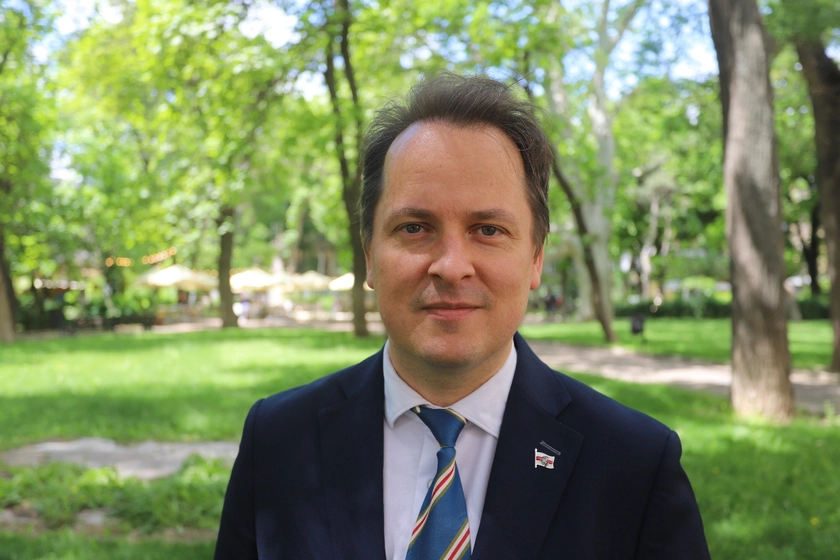
Ukrainian political analyst Taras Zahorodny said Lukashenko is a dictator but “not an idiot” in a May 19 analysis titled “Could Belarus launch attack on Ukraine?” published by RBC-Ukraine.
“Lukashenko will do everything possible not to attack and not even to show any intention of attacking. Lukashenko is a bandit and a dictator, but not an idiot. He perfectly understands the risks to his own economy and power in the event of actual involvement in the war,” Zahorodny wrote.
But other researchers have questioned whether fast geopolitical footwork by Lukashenko can free Belarus from Russian control and, with it, direct involvement and complicity in Russia’s invasion of Ukraine.
“People need to understand that there is simply no possibility today of resetting relations with Lukashenko in a way that would lead to internal liberalization, an end to repression, and at least a partial distancing from Russia,” said Arkady Moshes, an expert at the Finnish Institute of International Affairs, in a June 13 radio interview with the broadcaster Charter97.org.
Moshes said Lukashenko is fully dependent on Moscow for political survival and fears Moscow might remove him from power in a regime-change operation.
In the Al-Arabiya interview, Lukashenko made no mention of Belarus’ “eternal” alliance with Russia, and replaced the old rhetoric of inevitable Ukrainian capitulation on Russian terms with an argument that the Russo-Ukraine War can only be ended by three independent and friendly neighbors that respect each other, and want only peace and prosperity for all.
“The war is practically taking place in our own backyard. We don’t want this war, because we could suffer just as much as the Ukrainians and Russians are suffering,” Lukashenko said.
“And I have always believed that this conflict should be ended and peace agreements should be reached between the conflicting parties. And then, only we, the three Slavic peoples, having reached an agreement, will somehow deal with the consequences. Look, no Americans or Europeans will invest in this. This is foreign land to them,” Lukashenko added.
You can also highlight the text and press Ctrl + Enter
Only 11% of Europeans Now See US as Ally, Poll Finds