Fourteen European countries have agreed to step up action against Russia’s so-called shadow fleet – a network of oil tankers used to bypass Western sanctions and keep Russian crude flowing to global markets.
Countries bordering the Baltic and North Seas, along with Iceland, said they will actively obstruct tankers that break sanctions or violate international maritime rules. One of Russia’s main oil export routes runs through these waters.
JOIN US ON TELEGRAM
Follow our coverage of the war on the @Kyivpost_official.
Under a joint statement published by the UK Department for Transport, ships are allowed to sail under the flag of only one country and must carry valid documents proving they are safe to operate and properly insured.
Tankers that fail to meet these standards – including those using multiple flags – will be treated as “ships without nationality.”
That status gives coastal states the right to intervene. Under the UN Convention on the Law of the Sea, naval vessels can stop and inspect ships without a clear national affiliation on the high seas.
The countries also accused Russia of undermining maritime safety by jamming satellite navigation systems and ordering shadow-fleet tankers to switch off their transponders, which normally broadcast a ship’s location and destination.
“This puts all vessels at risk,” the statement warned.
Shadow-fleet tankers often hide their movements to carry out secret ship-to-ship oil transfers, allowing Russian crude to be blended and sold as supposedly “clean” oil.
Germany Warns of Russian Orbital Nuclear Threat
The 14 countries demanded strict compliance with international rules requiring all ships to keep tracking systems switched on.
The agreement was signed by Belgium, the United Kingdom, Germany, Denmark, Latvia, Lithuania, Iceland, the Netherlands, Norway, Poland, Finland, France, Sweden, and Estonia.
The move formalizes tougher checks already underway, especially on tankers exporting Urals crude from the Russian Baltic ports of Primorsk and Ust-Luga.
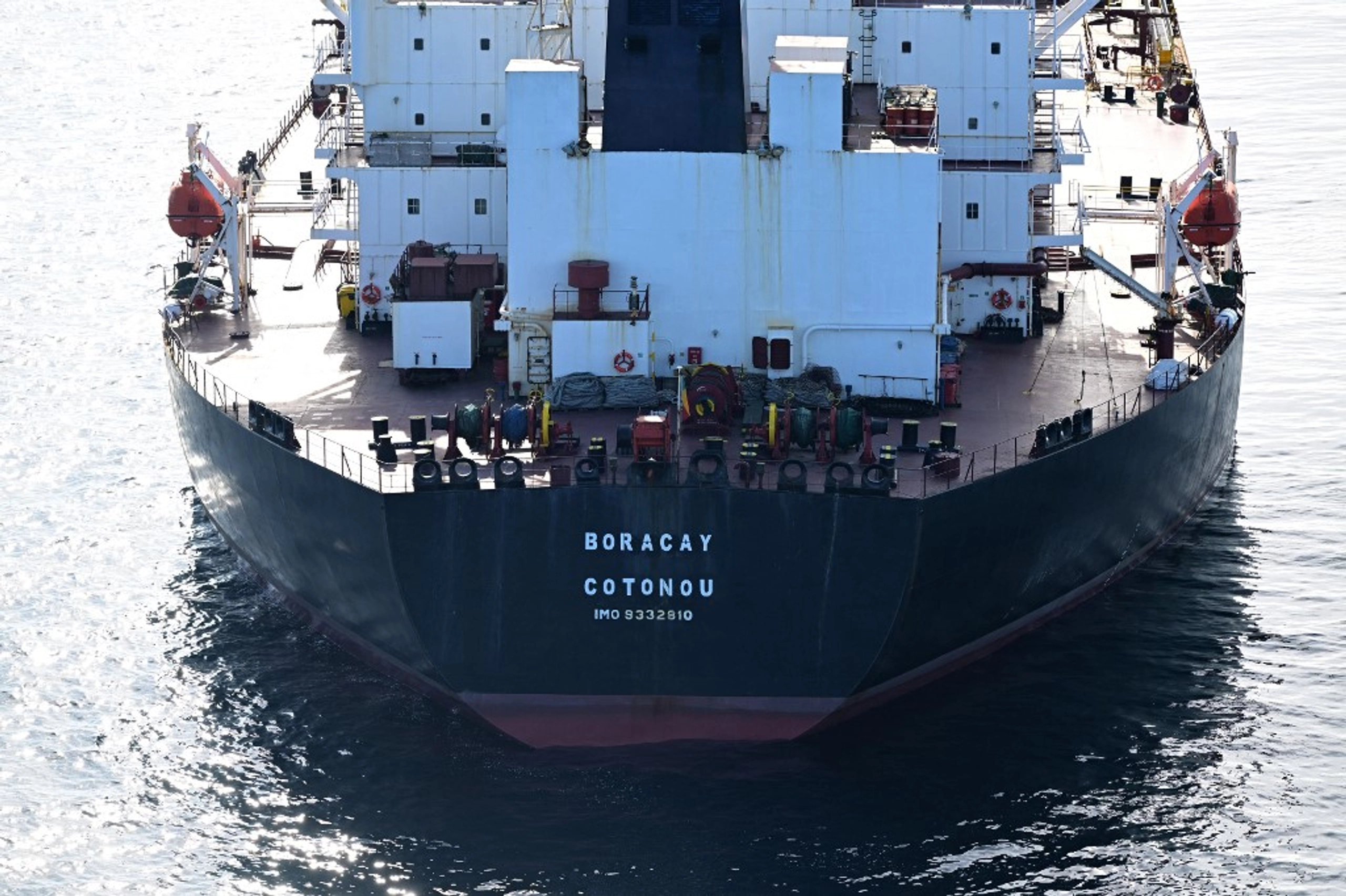
Last week, French naval vessels stopped the tanker Grinch, which Paris said was sailing from Russia under a false flag – claiming registration in a country where it was not officially registered.
Soon after, two other tankers carrying oil from Murmansk turned back off the coast of Norway and returned to port, Bloomberg reported.
Germany has also blocked a so-called “zombie tanker” heading for the Gulf of Finland. After passing between Denmark and Sweden, the vessel was forced to turn around and sail all the way around Scandinavia – apparently back toward Murmansk.
The tanker, Arcusat, is not listed in any official maritime database.
What is Russia’s “shadow fleet”?
After 2022, Russia built a “shadow fleet” of mostly old oil tankers to evade Western sanctions imposed over its full-scale invasion of Ukraine.
These ships often hide their true owners, fly false or multiple flags, and switch off tracking systems to go “dark” at sea. Many are aging, poorly regulated, and treated as expendable.
They are typically managed through offshore hubs, allowing Moscow to keep exporting oil above the G7 price cap while avoiding Western insurance and shipping controls.
The US and EU have stepped up enforcement – seizing ships, boarding tankers, and expanding sanctions. Ukraine has also targeted some vessels with drones, aiming to cut the oil revenue that fuels Russia’s war.
Still, the core problem remains: as long as there is global demand for Russian oil, middlemen will continue taking risks to deliver it.
You can also highlight the text and press Ctrl + Enter

Putin’s Worst Nightmare
Ukraine Strikes Russian Oil Hub and Key Crimea Crossings in Overnight Drone Offensive