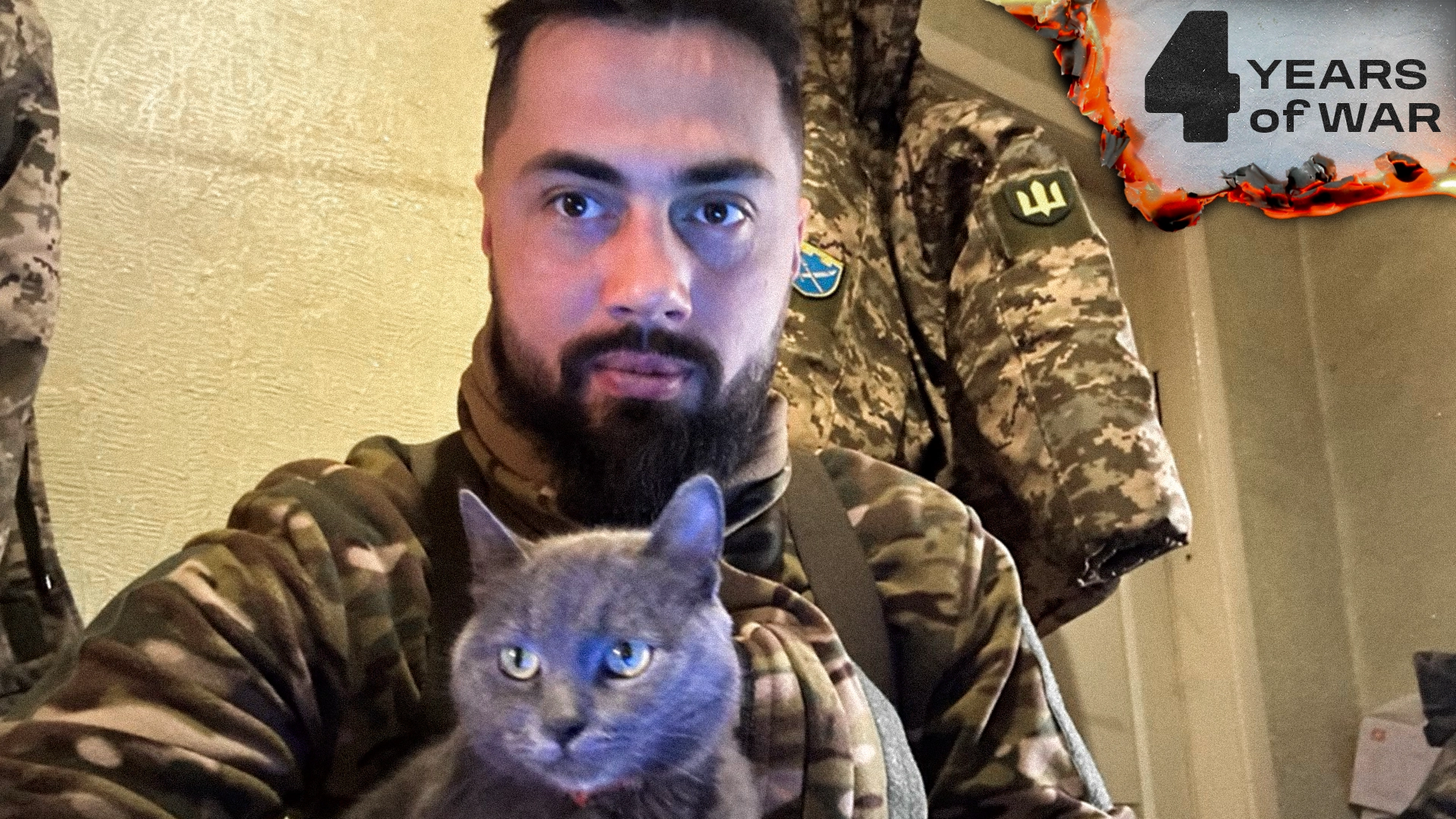
Yehor Firsov is one of those rare individuals who, by the age of 37, has managed to become an active civic leader, serve as a Member of Parliament, hold a senior position within the State Environmental Inspectorate, and, in 2022, join the Armed Forces of Ukraine. Starting as an ordinary soldier, he rose to become deputy commander of a drone regiment, while helping to build one of the most effective unmanned aerial vehicle (UAV) units in the military.
His native city of Donetsk has been under Russian occupation since 2014. Yet he remains certain that he will return home one day. He is equally convinced that, despite pressure from US President Donald Trump, Ukraine must under no circumstances relinquish Donbas – a move that, he argues, would have severe and irreversible consequences, particularly for the Ukrainian army.
JOIN US ON TELEGRAM
Follow our coverage of the war on the @Kyivpost_official.
Why?
In an exclusive interview with Kyiv Post, AFU officer and Donbas native Yehor Firsov explains his position.
You are from Donetsk, and in 2014 you were active in political and civic life. Why did you join the Armed Forces of Ukraine? What is your motivation?
In 2014, when the fighting began, I did not take part in combat. I was in parliament; I had just become the youngest Member of Parliament. At that time, that was my political front and, in a way, my justification for not being at the front – because I was serving in parliament.
Syrsky: Russian Maps Show False Advances to Please Top Command
And in 2022, I no longer had that kind of internal excuse. I clearly felt that you cannot run away from war. In 2014, I believed that in one way or another I had avoided it. This time – no. So I made the decision to go to the front. I made that decision firmly, so I would not frighten myself with uncertainty.
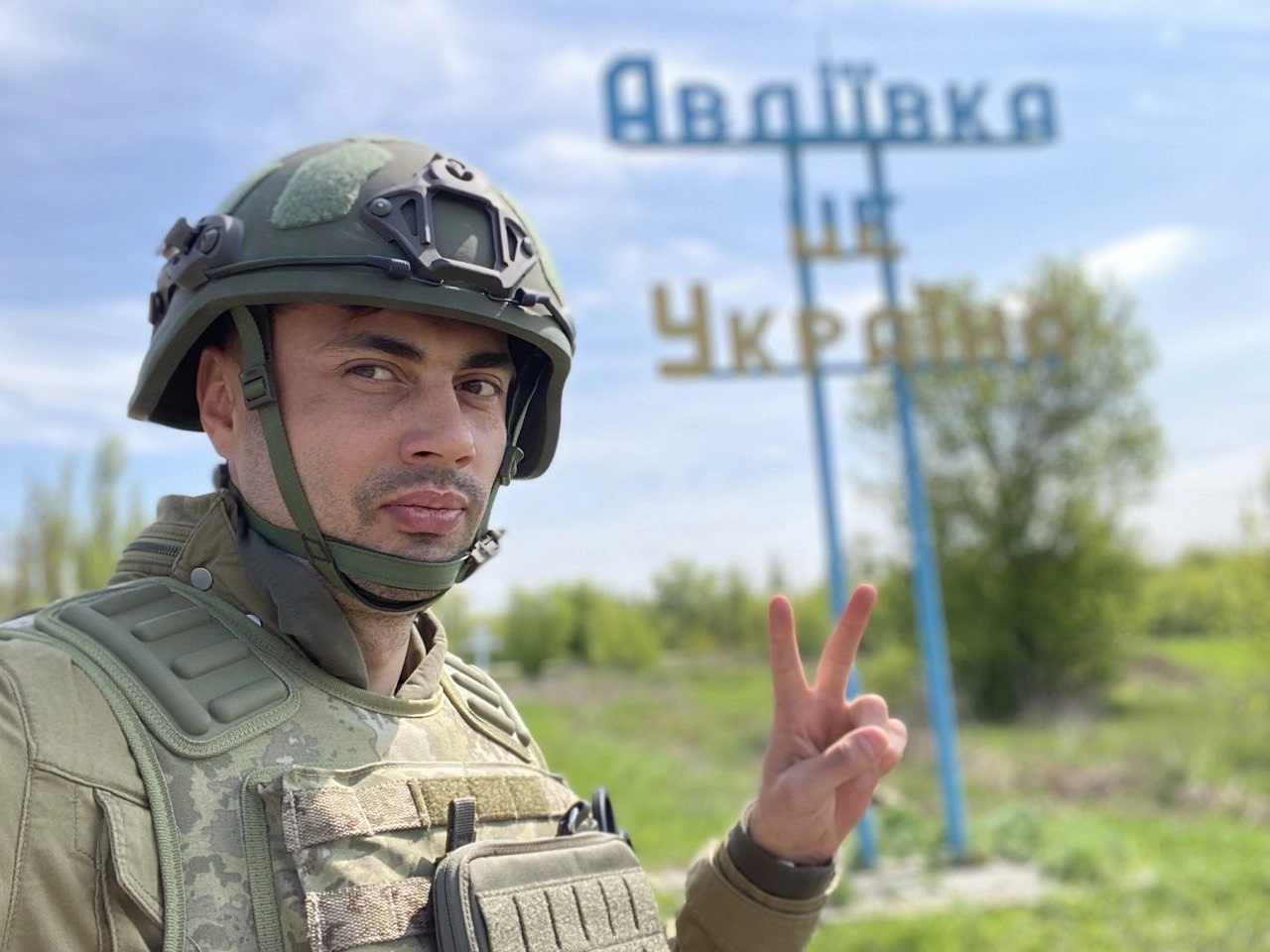
I decided that I would go to Avdiivka, find a brigade stationed there, and mobilize into it. At that time, the 109th and 110th brigades were deployed there. I chose the 109th Brigade. That was my motivation.
You were a well-known civic activist even before 2014, openly pro-Ukrainian. You headed the Donetsk office of the opposition party UDAR during the Yanukovych era, right in the heart of the so-called ‘Donetsk clan.’ Tell us, what is Donbas for you? What does it mean to you?
For me, Donbas is a place that no longer exists as I remember it from my youth. Neither mentally nor architecturally does that Donbas exist anymore. Burned-out Avdiivka, completely destroyed; Pokrovsk as it was no longer exists; even Donetsk itself is not the same. If you look back, Donetsk used to lead in everything – the best hotels, the best stadium, the best parks, the best public transport. Everything was the best. That is no longer true.
If you look at Donetsk now, it resembles something like Transnistria.
But there have also been changes. For example, 20 years ago, hearing Ukrainian spoken in Donbas was unusual. Now, every second, third, or fourth person speaks Ukrainian.
Another important point: I believe that for Putin and for Russia, the most dangerous people were pro-Ukrainian residents of the East. No one ever doubted the patriotism of Lviv. Or even the patriotism of Kyiv. But people who said, “Donetsk is Ukraine,” who went to rallies, who were ready to take up arms for Ukraine – they were dangerous.
That is why starting in 2013 there were constant assassination attempts and murders of Ukrainian activists. The first to be killed was Dmytro Cherniavskyi, a representative of Svoboda. He was killed on Lenin Square in the city center in March 2014. Then Ukraine’s Hero Volodymyr Rybak was brutally tortured and murdered for trying to defend the Ukrainian flag in Horlivka.
There were many cases when a person could be killed simply for holding a pro-Ukrainian position. But even the threat of violent death did not make us give up or step aside.
People continued going to rallies where they were beaten, abused, pelted with paving stones. Nevertheless, we fought, and I believe that struggle left its mark. Later, many of those activists – lawyers, professionals from various fields, boys and girls from Donetsk – joined the Armed Forces of Ukraine.
Let’s talk about the opposite camp. How many openly pro-Russian people were there in Donbas?
Specifically pro-Russian activists – there were actually very few of them. That is if we are talking about Donetsk. They were always on the margins. They carried out various provocations even before 2014. For example, in 2008 and 2010 they set up a tent, collected some signatures for a referendum – by the way, even back then.
But it was three or four activists. In private conversations, they themselves said, not even as a secret, that it was all, so to speak, for money. And they had no support at all. Absolutely none, among the population. Let’s recall Euro-2012: in Donetsk everything was in yellow-blue flags, constant singing in Ukrainian, the Ukrainian anthem, and so on.
Recently, I heard an interesting observation from a colleague from Donbas. The Russians financed separatist movements across the east and south of Ukraine for real separatist purposes. But everywhere the money was stolen – except in Donetsk region. There, the money actually went where it was intended.
So what was that?
It meant transporting people directly from Russian territory, illegally across the border. It meant organizing coordinated actions. It meant financing headquarters and real operational work.
And even in 2014, in March, even in February, one story caught my eye where I did not recognize my Donetsk. It was a rally near the regional administration building. There were about 500 people, but they were very aggressive. The first thing that struck me was that I did not know a single person from that rally. There was not a single neighbor, classmate, or activist. We all knew each other there. The second point – there was a certain accent, not ours, typical for Donbas, but a Russian accent.
The third point. We noticed several people who had Russian passports; they were discussing something organizationally, some lists for money, and so on.
talk about the Armed Forces. You joined a brigade, and over time you became a specialist in UAVs and one of the early adopters of their active use. How did that happen?
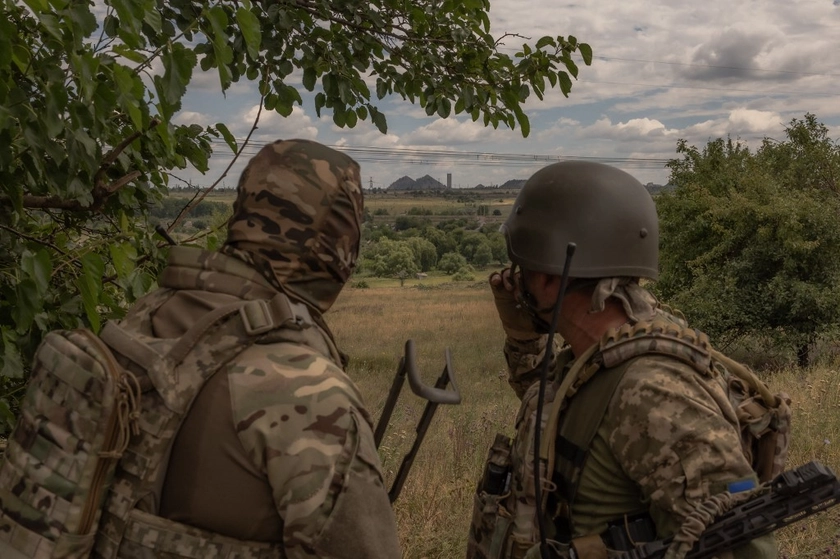
It happened very simply. I was in the Territorial Defense Forces, I was in the infantry, and in the infantry, I went through several intense battles in Bakhmut; at that time, our 104th Battalion was in Bakhmut.
I experienced mortar shelling. I saw infantry assaults. That pushed me to the realization that either I needed to move into something more innovative – or sooner or later I would simply die, perhaps even from a random mortar shell.
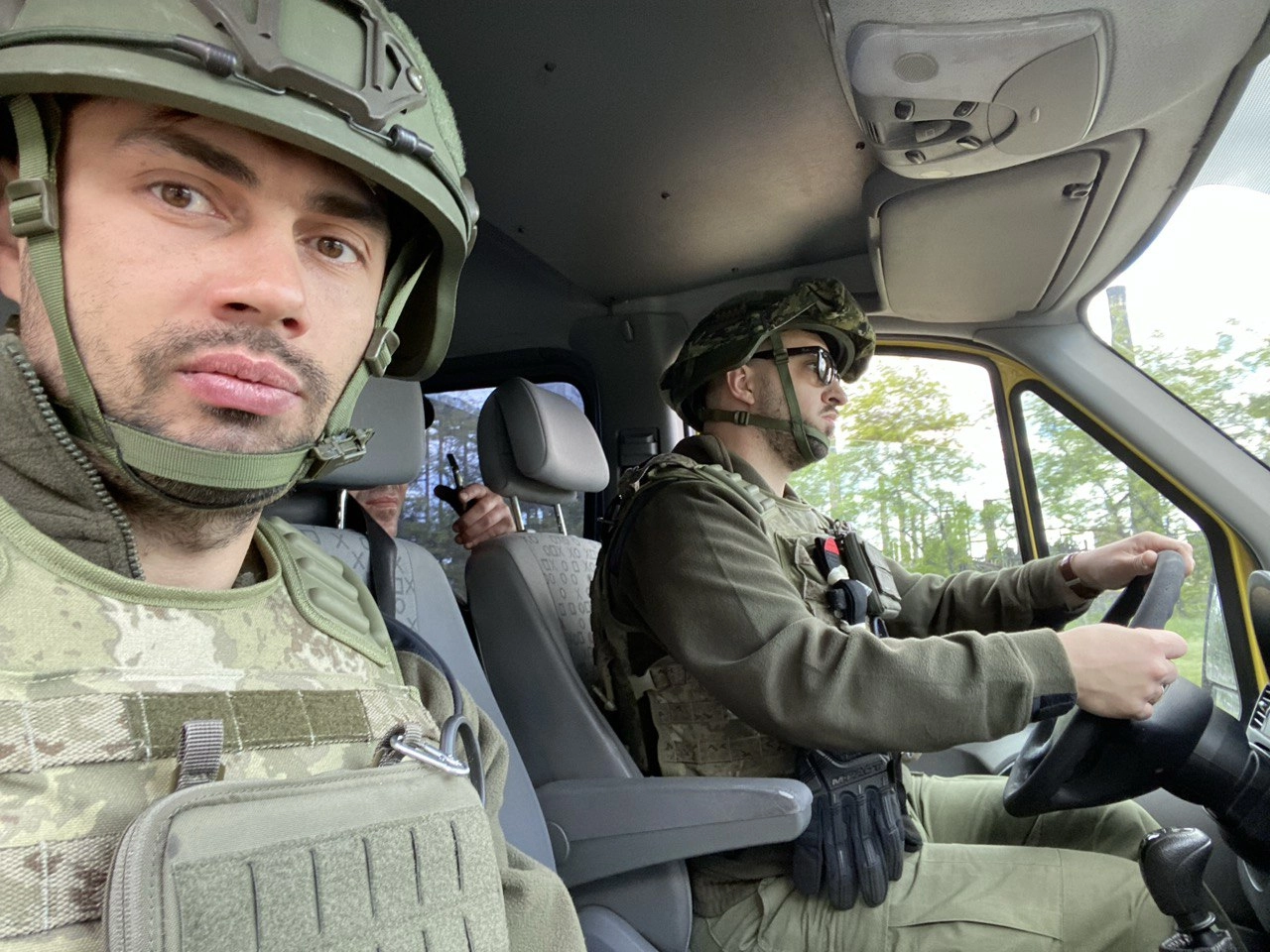
So we started thinking about what creative solution we could implement.
That is how we began moving toward unmanned systems. Then I saw how the Special Operations Forces were using FPV drones – among the very first to do so. I picked up one of those drones and thought: “Eureka.”
I clearly understood that the future was in this technology. What I did not yet understand were the enormous challenges ahead. In 2023, we still did not know many things – what explosives to attach, how to configure them, how to program the drone, how to make it fly 10-20 kilometers (6.2-12.4 miles). We had to work very hard to figure it all out. But I was 100% certain that we had to innovate.
A group of unmanned systems operators was formed from guys from Pokrovsk. We called it “Muramasa.” I had the honor of leading it and remain its informal leader. At one point in 2024 and partly in 2025, Muramasa was the most effective unit in the Armed Forces in terms of equipment destruction.
During a single deployment, we could destroy about 40 units of equipment. Our statistics were such that some battalions and regiments could not understand how we operated on that scale. And from there, things accelerated.
Later, we were offered a transfer to the Third Assault Brigade. We agreed. Muramasa moved into an experimental direction. To fly effectively and at long distances, you have to experiment.
I became an officer and took on the role of deputy regiment commander. Now I am responsible for two areas. First, finding the best technology – drones that you can, ideally, take out of the box and fly, while being both the cheapest and the most effective. Second, securing funding for that technology.
Tell us what your goal was during active operations against the enemy.
We targeted enemy logistics and struck everything moving 30-40 kilometers behind their lines. We destroyed large amounts of equipment – many Ural trucks carrying personnel or ammunition, MT-LB armored vehicles towing equipment.
Those were slightly different times, including technologically, because earlier flying 30 kilometers (18.6 miles) was something from the realm of the incredible. Now it is a working distance and you do not surprise anyone with 30 kilometers. Before that, even such concepts as a kill zone, the length of a kill zone, did not exist.
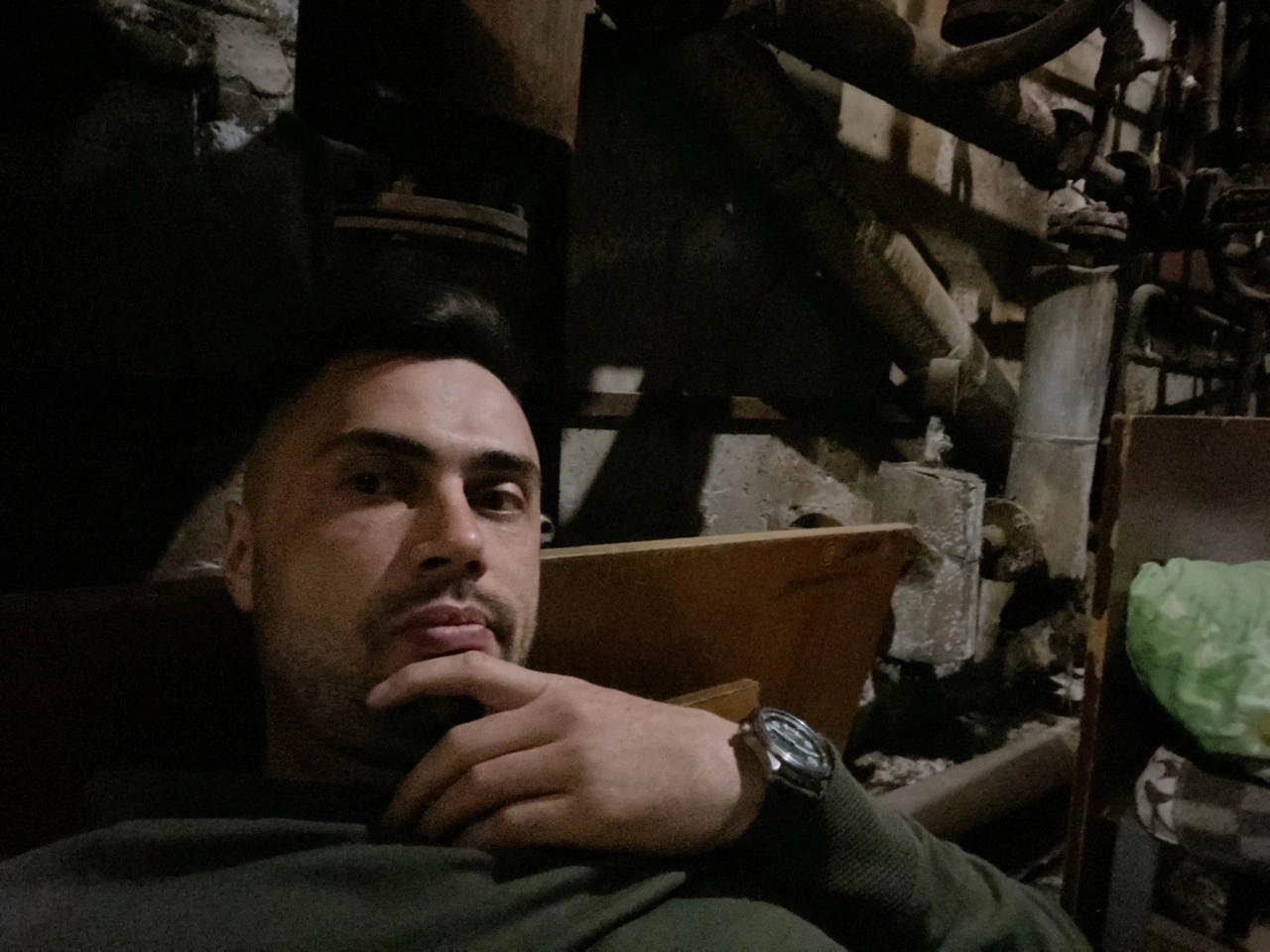
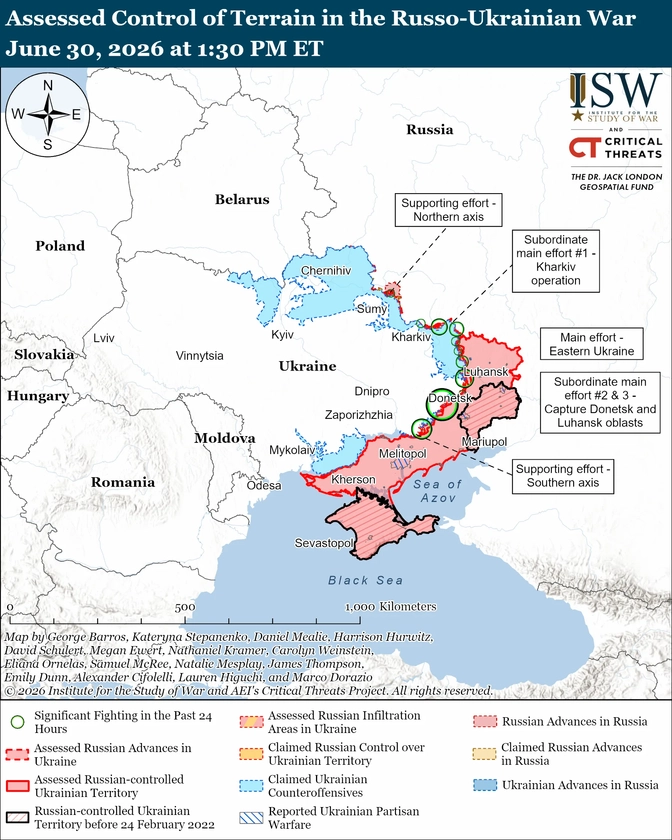
You try to avoid politics, but you are from Donbas. Ukraine is being pressured to give up Donbas, allegedly in exchange for peace. Do you have something to say about that?
I do. And the first thing that surprises me – and I do not understand it – is when you have to explain something obvious. What kind of discourse is this that we have to give something up? Seriously? You have to give up what is yours, and the only internal question you have is – why the hell should you do that? Simply, why the hell should you give it up?
Let someone give at least one argument. There is not a single argument. There is no guarantee that after giving up Donbas, they will not take something from us in another region. Not to mention that Donbas is more or less prepared for defense in terms of a huge number of strongholds, defensive structures, terrain, large plants, and factories where defense can be held.
And beyond Donbas there is steppe, where you are pushed out into an open field, where it is very difficult to defend. There are certain advantages in the fact that in Donbas, there are still large structures from Soviet times – concrete plants, factories that no longer operate, but you can organize defense, logistics, warehouses, headquarters there, keep personnel – and all of this will be safe.
The Russians understand that they do not have enough missiles, Shaheds, and everything else to bomb that part of Donbas that remains. These are huge industrial cities with factories, mines, plants, where simply finding some, conditionally speaking, concrete building is not a difficult task.
But I do not want to talk about these arguments, I just want to ask: why the hell should we give up Donbas? Why the hell should we give up our territory? Which we have been defending for quite a long time. That is all.
Do you believe that you will someday return to your native Donetsk?
I do.
Returning to Donbas is not far – a few hours from Kyiv, one and a half to two from Kharkiv. And Donetsk – yes, I believe we will return. You may not believe it, but even recently I was talking with someone about this. I truly believe we will go back.
Even if today that belief takes your breath away – I still believe it
You can also highlight the text and press Ctrl + Enter