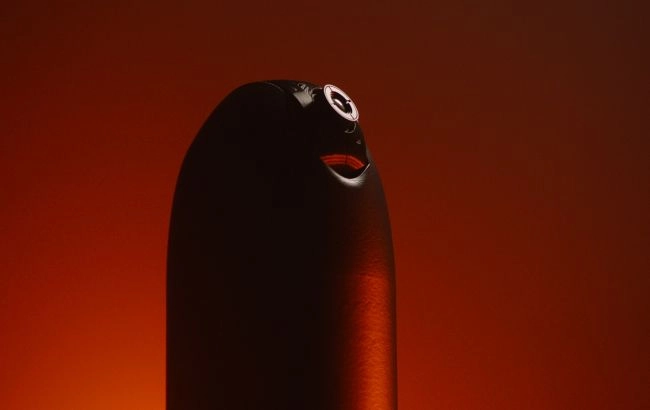
Two Ukrainian defense companies have unveiled an interceptor drone built specifically to neutralize Russian Shahed drones, offering automatic target detection and terminal guidance at what developers say is the lowest price on the market.
According to Babel, Vyriy Industries announced the ZIRKA interceptor on Tuesday, June 3, saying the drone was jointly developed with NOCTIS, incorporating battlefield experience from the Darknode anti-Shahed battalion. Each unit costs up to $2,000.
JOIN US ON TELEGRAM
Follow our coverage of the war on the @Kyivpost_official.
“We know what a properly scaled defense company looks like. That is why we invest and share expertise. Because the Ukrainian market needs more strong teams,” Vyriy Industries CEO Oleksii Babenko said, adding “The more such teams and quality products there are, the higher the chances of winning this technological race.”
Speed, range and autonomy of ZIRKA
Reportedly, ZIRKA can reach speeds above 340 km/h (211.27 mph), operate at altitudes of up to 6 kilometers (approximately 3.7 miles) and cover an operational radius of 30 kilometers (roughly 18.6 miles) from its launch point, staying airborne for up to 20 minutes.
The drone can automatically detect, track and neutralize high-speed aerial threats without requiring continuous operator input, a capability that sets the interceptor drone apart from cheaper but manually guided alternatives.
Within the partnership, NOCTIS handles interception mechanisms, software and automation, while Vyriy Industries provides funding and manufacturing scale expertise. The team behind the drone includes engineers and programmers with direct field experience in counter-drone operations, according to Babel.

Ukraine Pushes to Secure Gas, Fuel Ahead of Winter
ZIRKA 2.0
The companies are already working on a follow-up version of the ZIRKA drone.
According to NOCTIS Development Director Oleksii Komlichenko, ZIRKA 2.0 will feature an automated system that guides the interceptor directly into the target detection zone, along with upgraded thermal imaging optics capable of tracking enemy drones at a distance of 2 kilometers (about 1.2 miles).
The new version is also expected to integrate refined target acquisition and guidance algorithms, advanced communication systems and an automatic proximity fuse to detonate the warhead near the target – making the interception process more autonomous and safer for troops on the ground.
Other Ukrainian interceptors entering service
ZIRKA isn’t the only Ukrainian interceptor drone moving toward wider deployment. According to United24Media, the Ukrainian Defense Ministry recently codified the LITAVR interceptor drone, developed by Ukrainian company F-Drones.
Reportedly, the LITAVR can reach speeds of up to 350 km/h (roughly 215.5 mph) and operate at altitudes of up to 9 kilometers (about 5.6 miles). It uses an automatic terminal guidance system that tracks targets independently once an operator locks them for engagement.
Development of LITAVR began in late 2024, and by the following summer it had passed testing and entered serial production, United24Media reports.
What Shaheds are and how Russia uses them
Shahed drones were originally developed in Iran and first supplied to Russia in 2022. Known in Russia as Geran-2, they are loitering munitions which cost around $20.000 per unit, carrying warheads of up to 80 kilograms (176.37 lbs) and flying at low altitudes to overwhelm air defenses through large-scale swarm attacks.
Over the past three years, Russia has heavily modernized the original design, adding inertial navigation, better electronic warfare resistance, and at one point, Starlink-based real-time control, enabling strikes on moving targets.
Reportedly, nearly 57,000 have been launched against Ukraine as of March 2026, with single attacks now involving up to 700 drones simultaneously.
Starlink use on Russian-operated Shaheds has since been halted. The State Duma passed amendments earlier in June banning the sale and online promotion of unlicensed foreign satellite terminals, prompting Russia to build its own domestic alternative.
The Russian company Bureau 1440 launched a project called “Rassvet,” slated for commercial launch by 2027, although it has already lost one of its operational satellites just months after launch.
Ukraine’s Air Force said on Monday that relay stations positioned along the Belarusian border – which had given Russian operators live video feeds to redirect Shaheds mid-flight – stopped operating following Zelensky’s public ultimatum to Lukashenko – further limiting Russia’s real-time drone control near the border.
You can also highlight the text and press Ctrl + Enter

Russia Hit by 660-Drone Overnight Barrage Targeting Moscow, Crimea and Key Military Sites