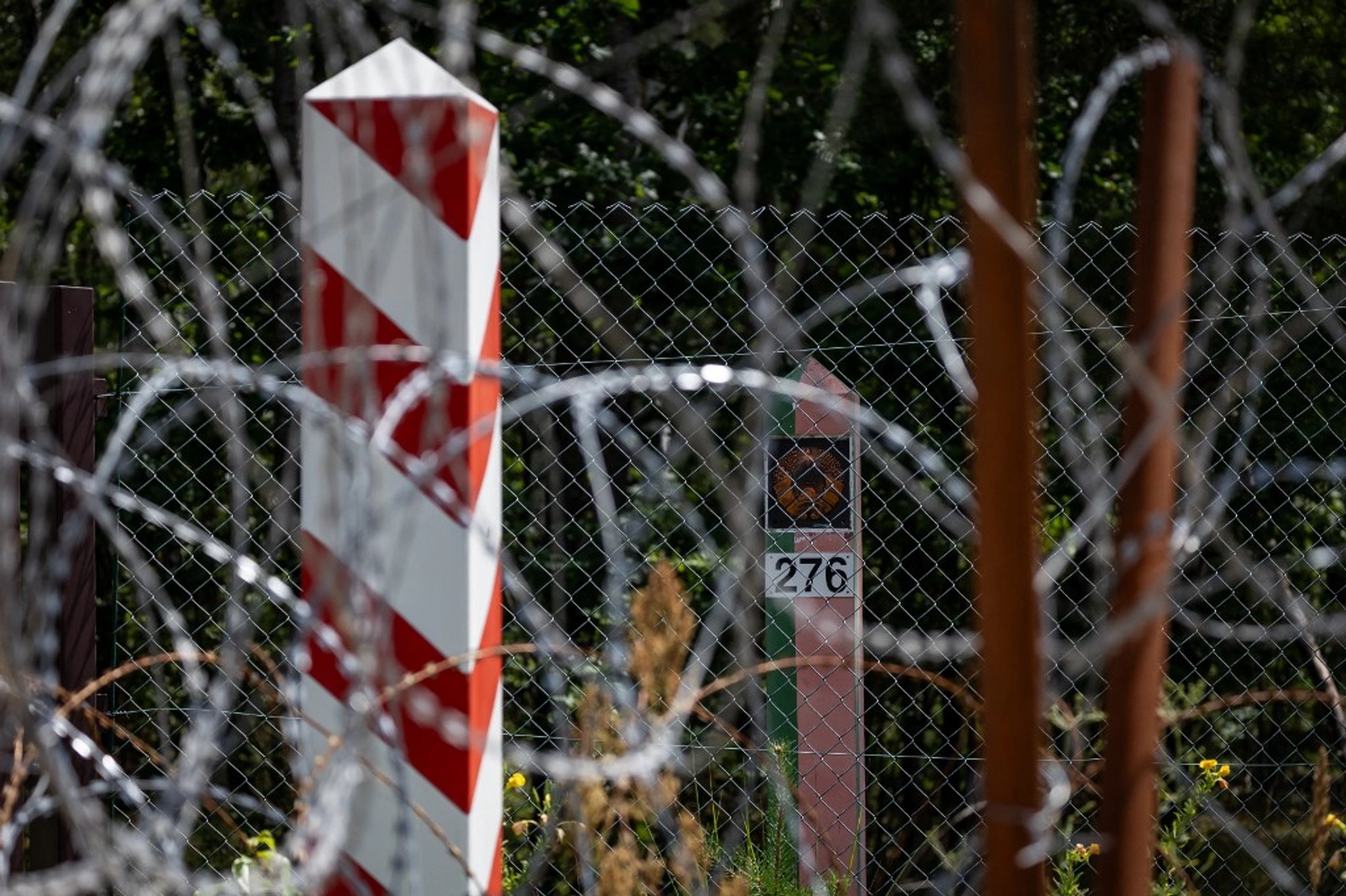
Russia is shutting down all railway border crossings with Finland, Estonia and Latvia starting July 1, closing seven checkpoints along its northwestern frontier in what the government described as a temporary suspension.
According to Russian state media Tass, Russia’s Foreign Ministry has been instructed to formally notify all three countries of the decision.
JOIN US ON TELEGRAM
Follow our coverage of the war on the @Kyivpost_official.
“Temporarily suspend from July 1, 2026, the movement of persons, vehicles, goods and cargo through railway checkpoints across the state border of the Russian Federation on individual sections of the state border of the Russian Federation according to the list in the appendix,” the decree states.
Seven checkpoints affected
Five of the closures fall on the Russian-Finnish border, according to Big Kyiv: Vyborg in the Leningrad region, Vyartsilya in Karelia, Lyuttya in Karelia, St. Petersburg-Finlyandsky in St. Petersburg and Svetogorsk in the Leningrad region.
The remaining two are single checkpoints – Pechory-Pskovskiye in the Pskov region on the Estonian border and Pytalovo, also in the Pskov region, on the Latvian border.
The closures cut one of the few remaining direct land transport links between Russia and its EU neighbours along this stretch of the frontier.
Broader pattern of escalation along NATO’s eastern flank
Russia’s northwestern borders with Finland and the Baltic States have reportedly seen mounting tensions since Finland and Sweden joined NATO in 2023 and 2024, respectively. All three countries have increasingly raised concerns over Russian military activity and hybrid threats near their territory.
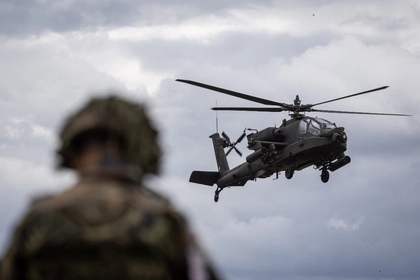
Germany, Netherlands to Take Command of NATO’s Eastern Flank in Estonia
Sweden warned that Russia remains a long-term threat to NATO, with Sweden’s military intelligence chief Thomas Nilsson saying Moscow is already expanding military infrastructure near NATO’s eastern border and could act on those plans once it regains resources from the war in Ukraine.
In April, Russia threatened to retaliate against the Baltic states, accusing them of allowing Ukrainian drones to transit their airspace. In May, a Russian drone crossed into NATO-member Romania’s airspace during overnight attacks on Ukraine, crashing into an apartment building in the city of Galați, triggering a fire and injuring two civilians.
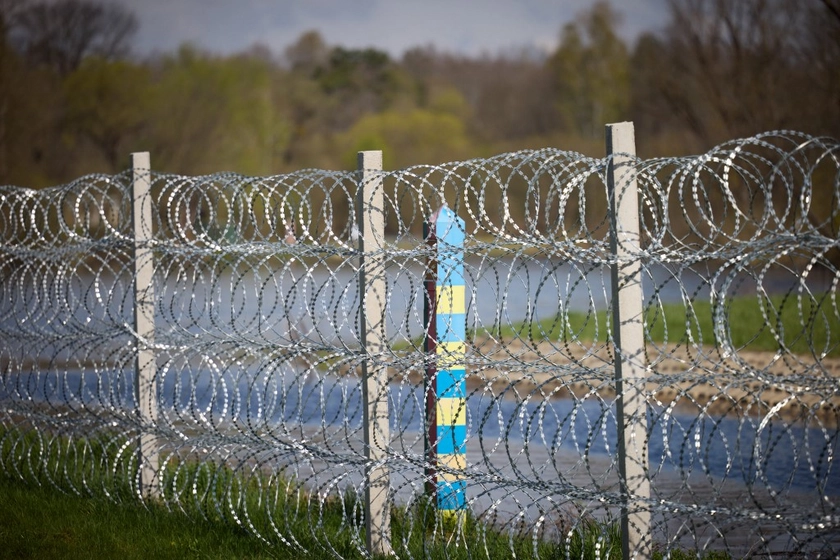
As part of a broader wave of border fortification, Latvia began installing concrete “dragon’s teeth” anti-tank barriers along its border with Russia, as part of the joint Baltic Defense Line, while Estonia has followed suit with similar obstacles.
Ukraine has meanwhile been installing “dragon’s teeth” along the border with Belarus in the Chernihiv region, alongside wire barriers and an expanding trench system.
Estonia recently placed its first modular reinforced concrete public shelter in Tallinn as well, aimed at improving civilian protection after Russian drones increasingly enter NATO airspace.
You can also highlight the text and press Ctrl + Enter