This week has been one of the most stable and least major news-worthy in months. Admittedly, the benchmark for what constitutes a major news event in a giant conventional war with one million soldiers on each side is pretty high.
But as always, plenty has happened. Most all of it is in the category of “more information about processes already in progress.” The general trend is, if you are objective, it looks like Russia certainly is losing, and Ukraine just may be winning.
JOIN US ON TELEGRAM
Follow our coverage of the war on the @Kyivpost_official.
The front
Kostiantynivka – Over the week, there were no major changes to the situation. An officer named Andriy Babichev, 93rd Brigade, a unit confirmed there, talked to the media and said that Ukrainian teams in the city are holding out, but supply to them is by drone. It’s not clear whether the Russian attempts to move deeper into the city are because of losses or preparations for another push.
Both sides are using drones to hunt places where the supply drones go. The most important thing he said is that the Armed Forces of Ukraine (AFU) is setting up new defensive lines between Kostiantynivka and Druzhkivka.
Huliaipole and the south – Situation seems stable here with no major changes of territorial control.
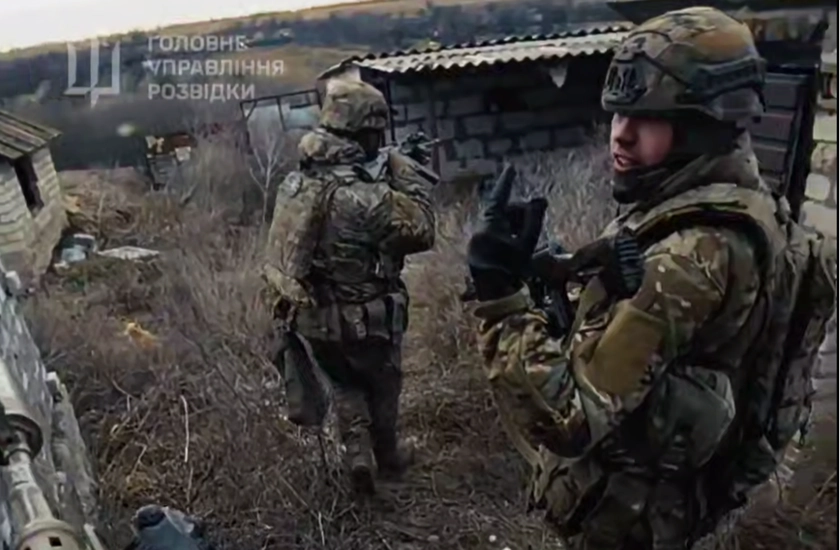
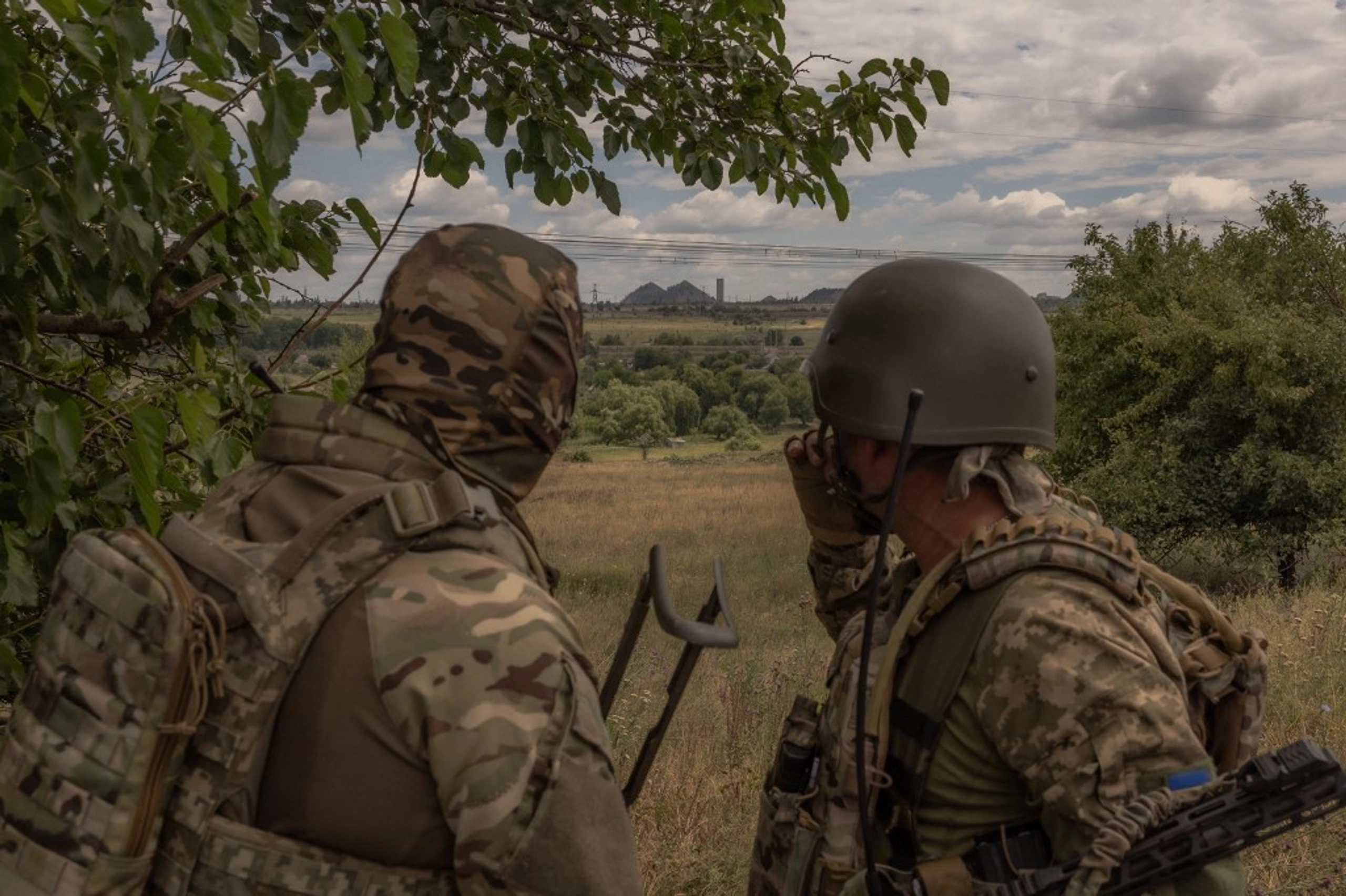
Lyman/Siverskyi Donets River Line – Yet more reports of successful Ukrainian clearing ops, advances pushing Russian troops out of the city built-up area. I have an unconfirmed report that the Ukrainians committed a major, fresh formation here, but again, this is unconfirmed.
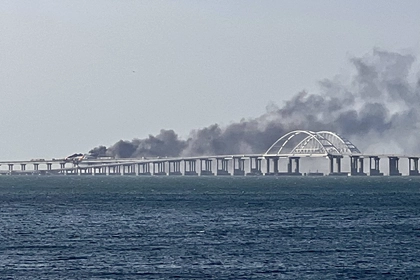
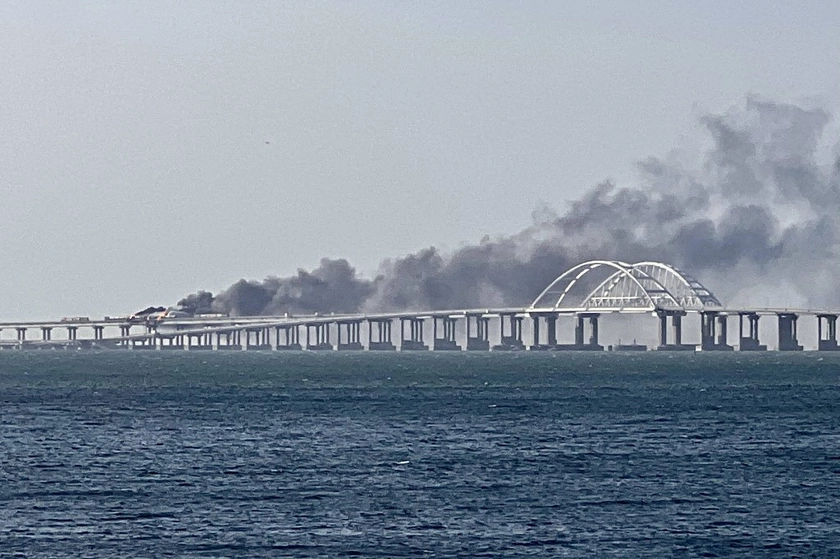
Ukraine Interdicts 2 Bridges Supplying Occupiers in Crimea, Zaporizhzhia
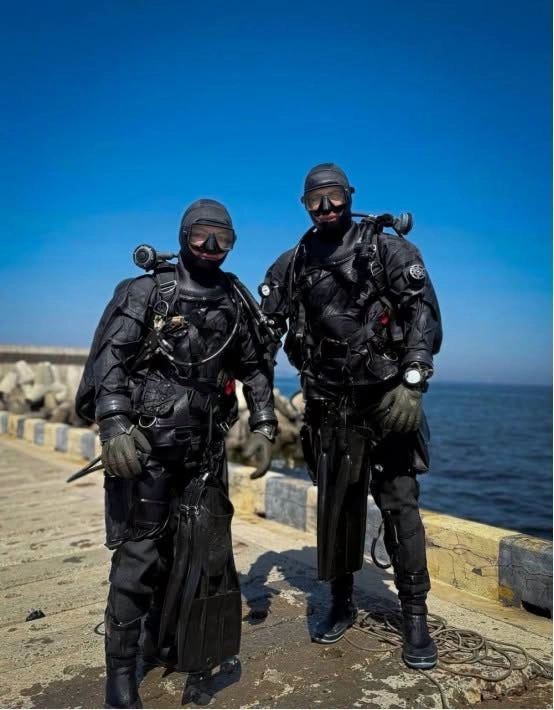

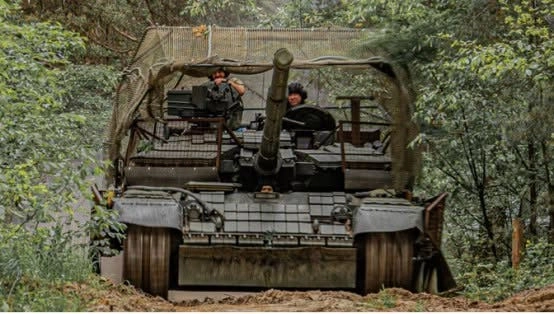
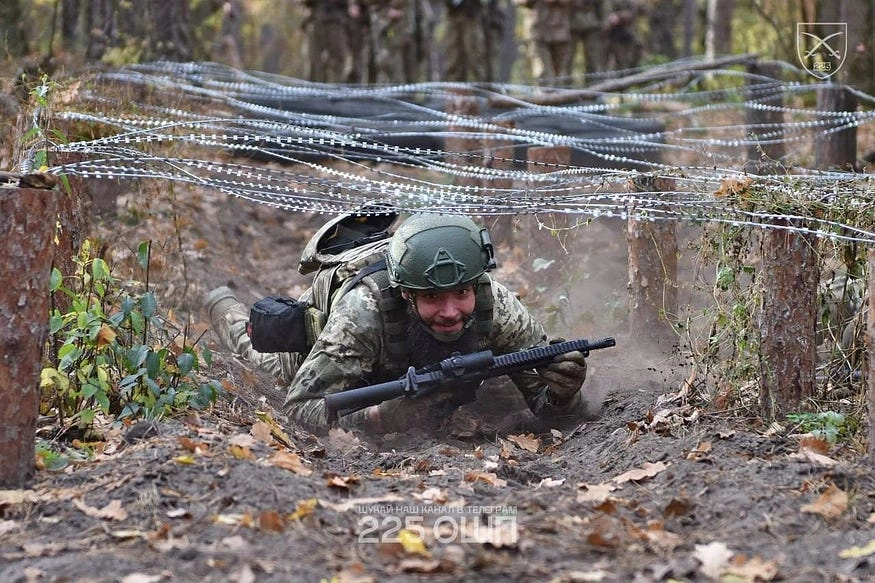
Mystery Assault Infantry Regiment – This is not news per se, but some notes from a trip to the field that you, as the reader, can’t consider strictly factual. So, if that’s what you’re here for, go to the next section.
I recently visited one of the assault infantry regiments. I can’t name it. I have some outstanding training pix and some excellent interview material I’m not allowed to publish because, well, put it this way, the unit press section is not cooperative. A colleague of mine on the TV side is in the same situation. We were allowed into the ops center and spent about two hours inside, spoke freely with close to two dozen people, but publishing identities and pix were totally banned, as was pretty much everything we were told. We then went to a training site and watched firing ranges, building-clearing drills, and chow being delivered. I’m not allowed to publish anything linked to the unit about that either, because of “security.”
This happens sometimes in democratic countries at war with independent media; there is push and pull between the unit that wants promotion and the reporters who want to report accurately.
So, for the following, you’ll have to trust me on this or skip it. I have no legal way to prove I’m not making it all up. I contend that I saw a Ukrainian assault infantry unit, or more specifically, two infantry battalions and a task force headquarters.
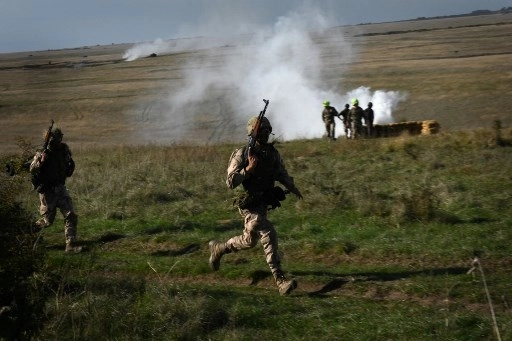
I saw hard evidence that new recruits are coming in. Some are former felons. Some men clearly have decent fighting potential. Others, it looked to me, not so much. All are being formed up into platoons and companies, with combat-experienced NCOs and a small number of veteran private soldiers. Training is ongoing. Much of it is repeating basic training or teaching what basic training should have but didn’t: marksmanship, entrenchment, daily runs, first aid, and small unit tactics. Drones and dealing with them starts with individual soldiers and goes up from there.
The sergeants were impressive, without exception, all infantry combat veterans, most previously wounded in combat. Out of every 10 sergeants I talked to, eight had scars, were missing a limb or fingers, limping slightly, etc. Officers were not visible at training. It was all run by the NCOs.
The small arms training was automatic rifles, medium and heavy machine guns, and anti-tank rockets. There was plenty of ammunition. Safety standards were reasonable but certainly not NATO. The NCOs knew the weapons backwards and forwards. Yes, they think Ma Deuce (M2 Browning .50 caliber heavy machine gun) is great. The junior soldiers were learning.
The house-clearing training was with live ammunition, including grenades. The NCOs were right there with the soldiers, training. The focus was on learning and practicing room-clearing drills with techniques made as simple and accessible as possible.
Room clearing is not like in the movies. In the unit I was at, contact is considered possible when clearing a room, but, in general, the assumption is that no room or building will be cleared unless it has been blasted and mostly flattened by bigger weapons fires, like a tank main gun or several rocket-propelled grenades (RPGs). The room-clearing teams assume the enemy might still be alive, possibly, but there is none of this Hollywood/SWAT sneaking up to a door and then throwing flash grenades and charging in to do surgical double taps. The infantry goes in to mop up the rubble; that is the doctrine I saw.
Some of the junior enlisted were sharp and motivated. Others had their heads hunched down, weren’t much interested in talking with an outsider, and were clearly following orders and trying to stay out of trouble. Normally, in a strong unit, when an outsider like a reporter encounters soldiers, the men talk freely about what they do because they know they do it well and their chain of command has told them so. I didn’t encounter that. The soldiers needed to work on drills, and small teams had not trained much together. From what I saw, the section leaders and sergeants are veterans, and the private soldiers were either green or not trained enough to fight unsupervised. In one squad of eight men, I saw two who looked like they could clear buildings without menacing themselves or others.
I picked the brains of several officers at the HQ, including a pair of battalion commanders. These were sharp, active-minded guys focused on killing Russians. Years of field combat experience. I watched a bit of actual operations in progress. There was plenty of communication and cross-talk inside the HQ. No one was overwhelmed. Information flowed. Yes, if there is a major contact in progress, a battle captain is named, and he runs the show. That’s not needed all the time. Even platoon commanders maneuver not on the ground leading (almost always), but by moving drones about to help sections do their job.
From what I saw, the critical soldier in all of this is the section or squad leader, the man leading two to 10 men in the actual fight. This is mostly because he’s the most senior soldier, actually physically on the battlefield, actually physically leading soldiers, so he’s the one who has the hard job of making risk-cost-objective decisions with the result of his call playing out in real life rather than on a screen.
As to the unit I saw, bottom line, they looked to me like they would fight and carry out attacks against buildings and entrenchments even if they were well defended. They did not look like NATO. But to be fair, I saw the middle of a training process and not the finished result. The command team was thoroughly competent and knew, to surprising detail, in what ways they were more skilled at battle operations than their counterparts in the Russian army or NATO.
As an aside to the NATO planners/policy-makers that might just read this, from what I saw, the obvious conclusion to draw is that if NATO countries are thinking about the best way to help the AFU be more capable in an offensive, given the present AFU tactical system and recruiting, what’s needed is training to make the very best Ukrainian buck sergeants and corporals possible.
Not private soldiers, the Ukrainians have trainers with orders of magnitude more real war experience, and they do that themselves. Not battalion and brigade staffs, the Ukrainians have years of wartime experience, and they have functional doctrine that works. The lynchpin in this war is the leader of the assault group physically on the battlefield, and that is a section or squad sergeant, or in rare cases, a platoon sergeant. That’s where the drive, excellence, skill, and leadership quality are most critical.
Other levels of command in the AFU, of course, have great responsibilities, and their jobs often are dangerous, but by and large, if a company or battalion commander makes a mistake, he’s not going to die or be injured, so he will live on to learn from his errors.
But at the squad level and lower, command mistakes are paid for in blood, and usually there is no second chance. So, if the goal is battlefield effect, that’s where I suggest NATO assistance to Ukrainian infantry training needs to be focused first. Yes, I know NATO runs sergeant schools for the AFU. There needs to be more. They need to be better. They need to be at the center of all combined arms training.
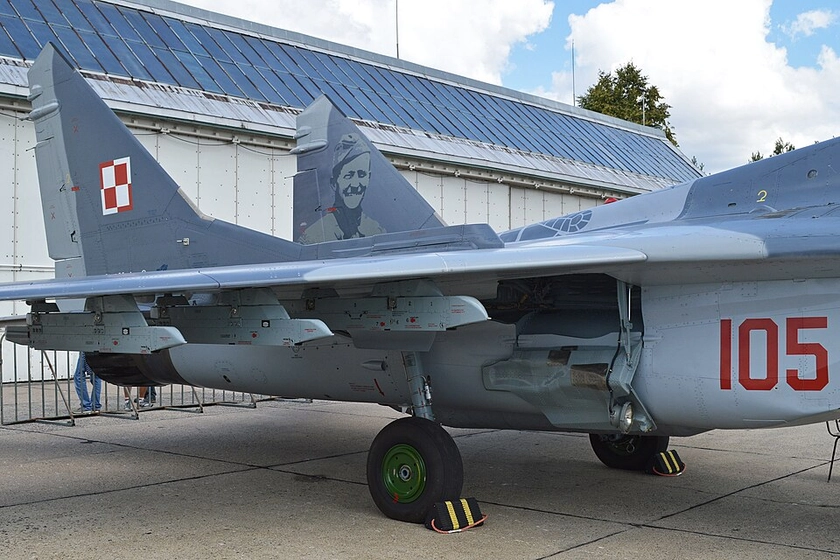
My sources say the British are thinking about expanding training support capacity in Ukraine. If I recall correctly, developing NCOs in the British army is a thing. For variety will post an image of Sergeant Brooks rather than the predictable Sergeant Bourne.

Bombardment news this week – Ukraine piles on
Probably the most significant thing is that it’s been nearly two weeks since the last big Russian missile drone strike (June 14-15), which for the Russians is a little longer than usual. Typically, they repeat the big attacks every eight to 10 days. Too early to determine if this is a trend.
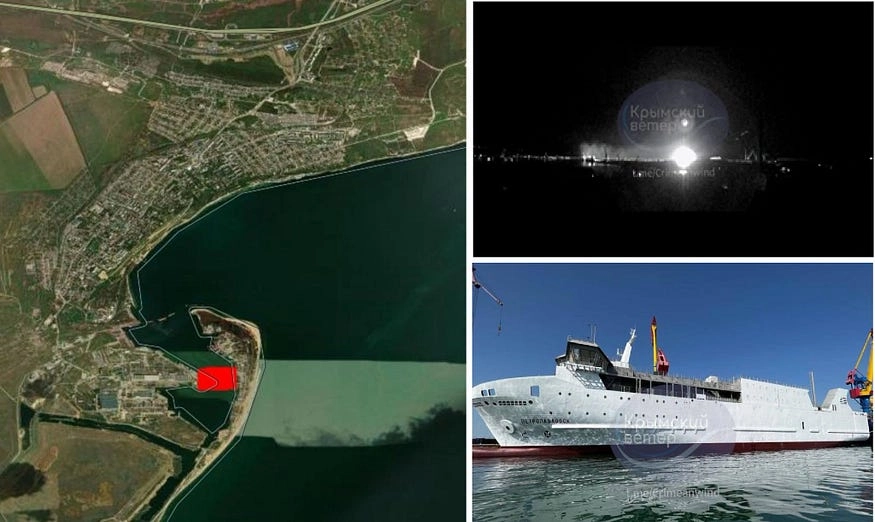
The most recent news, from this morning, Kerch was the top target of the previous night. Ukrainian security service (SBU) drones hit two cable-layer warships and an S-400 air defense system (radar plus possibly launcher) near the Kerch bridge, and (again) flew drones into the ferry Petropavlovsk, which was under construction and nearing completion at the Kerch shipyard.
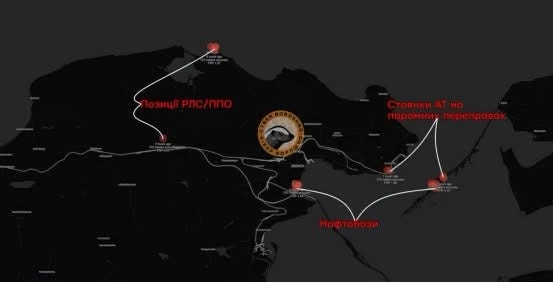
This halted all ferry service, which, even last Sunday, had been stopped due to previous Ukrainian attacks. That time, the single working ferry for trucks and heavy loads, the Elena III, was hit by drones next to the Kerch Bridge. Also, the Panagia, an auto ferry. Also, the Lavrenity, auto ferry. Note: Single rail ferry damaged and made inoperable in April. As of Friday, no ferries operating, full stop.
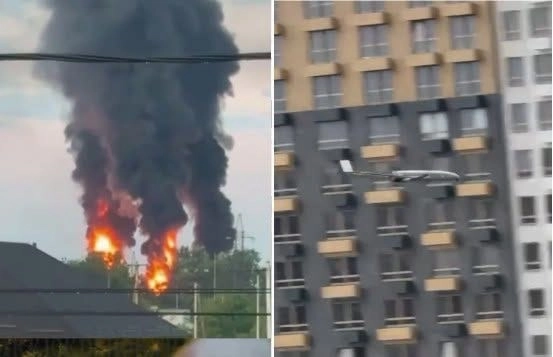
On the long-range front, the pace of strikes was a bit accelerated: Strikes against general energy targets (my notes) included: the Tavria power station near Simferopol, a power substation in Genichesk, the fuel storage base at Port Kavkaz near Kerch, the Yugtorsan fuel base near Sevastopol, a pump station near Simferopol. Energy infrastructure was also hit in Bryansk. Oil refineries burned in Tyumen, Kstovo near Nizhny Novgorod, Ufa in Bashkortostan, and Poltavskaya in Krasnodar. A gas processing factory in Orenburg caught fire, and the Novomoskovskaya power station in Tula was struck.
Against distant industrial targets strikes hit: the Zaliv ship repair facility in Kerch, a missile component plant in Voronezh was struck, (possibly with Storm Shadow or long-range ATACMS), the Azot chemical/explosives factory in Tula, the Crimea titanium “sponge” plant in Armyansk, a chalk/explosives factory in Belgorod, railroad infrastructure in Bryansk region, and the ferry terminal in Kerch and ferries themselves at Port Kavkaz.
Strikes against military targets included the Russian security service (FSB) headquarters in Armyansk, a military base or truck park on the Arbat spit near Genichesk, a vehicle park in Berdyansk, Saki air base, and some military installation near Krasnoperekopsk.
Strikes against Russian air defenses were too frequent to list here, but generally, four to six major air defense systems or radars appear to have been attacked in Crimea or the occupied territories every single day, no letup. This is not just stationary systems, but mobile launchers and even “technical” flatbed trucks carrying autocannons to protect other stuff from the Ukrainian drones.
If you want to get an insight into the scale of Ukraine’s air dominance over these territories, the Unmanned Systems Forces (USF) published strike numbers from June 1-25: they claim to have hit 41,432 targets (!), which implies 120,000-200,000 sorties total or very roughly 40,000-50,000 sorties a week or 5,000-8,000 sorties a day. This is not an absolutely fair comparison, but for fun, try and find an air force on Earth that can fly 5,000 sorties a day for a month.
Just in case Ukrainian intent isn’t clear enough, the USF commander Robert Brovdi put out a statement this week: the objective is to shut down all supply to and from Crimea. He said that’s the plan and that the USF is succeeding. I saw a video with a couple of Russian milbloggers griping about how Russia can’t seem to do anything about “that war criminal” Brovdi. They agreed the situation was bad and that the Kremlin really seems unable to stop the Ukrainian drones.
If you want anecdotal reports about how effective this drone campaign is against Russian operations, we are now seeing reports that Russian infantry is carrying shells on foot to firing positions, because the trucks carrying artillery ammunition no longer can get through. If this were to persist across a big sector of the front – which is not nearly confirmed, this is anecdotal – then Russian artillery in that sector is ineffective. The USF stat for individual Russian soldiers struck and almost certainly killed by a USF drone: about 7,500 men. Obviously, if the guy was carrying an artillery shell, it didn’t make it to the battery.
Operationally, the inability to use vehicles to deliver ammunition to artillery would not just be a disaster but also a potential game-breaker for the Russians. This is because, unlike the Ukrainians, the Russians do not have enough drones or operators to plug a major gap on the front without artillery. The Ukrainian USF is about ten times bigger than Russia’s Rubikon, and the USF is very roughly only about half of Ukraine’s entire drone forces.
Another anecdotal report: Some Ukrainian field commanders are reporting a significant drop in the number of detected Russian infantry attacks. Again, this might be an outlier, but it might be an indicator.
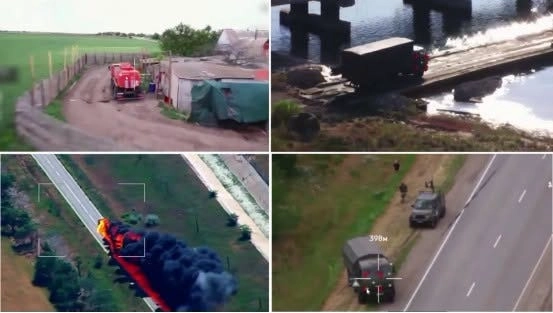
Learn the lesson: Exquisite air defense systems don’t stop small drones. Yes, you can call it “air defense,” but if that’s all you have, you will lose the exquisite air defense system
This is really less news than soapbox lecturing, so scroll on if you’re reading to get the latest important events.
I’ve included a series of images from the Russian side as an object lesson about drones and air defense capacity. What is shown is an AFU MAAWLR System produced by the US company Sierra Nevada Corporation, operating somewhere in the northern sector, most likely northern Kharkiv or Chernihiv region. Probably this is 50-100 kilometers (30-60 miles) south of the front lines.
The acronym means “Mobile Anti-Air Weapons Launcher – Reconfigurable.” The system is a truck mount for a launcher designed to fire NATO-standard short-range infrared missiles like AIM-9, IRIS-T etc. With the truck and once delivery is considered, this system must cost at least $1 million/unit, and it could be as high as $4 million. So this is a good example of US private defense companies testing out new tech in Ukraine. Financing certainly came from pre-Trump US assistance to Ukraine, or European money paid to the US starting in 2025, to get US war tech into Ukrainian hands.
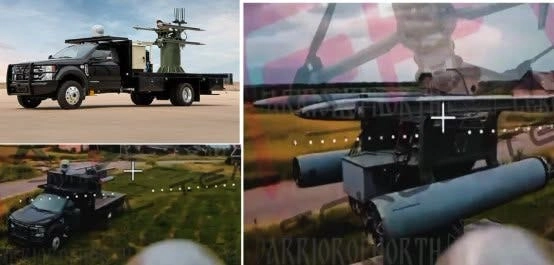
As we know, the Ukrainians have done well in incorporating air-to-air missiles with launchers like this into their ground-based defenses. Originally, this was called “FrankenSAM,” effectively, what Sierra Nevada did was start manufacturing a ground launcher for an air-to-air missile on a heavy pickup truck chassis. That’s all well and good, but as you can see from the screen grabs, an air defense system excellent at shooting down big long-range drones like Shaheds, and designed specifically by a top-end US defense contractor to serve as an air defense system, will fail if targeted by shorter-range first-person-view (FPV) drones, as we see here. The FPV drone, at most, costs $3000, assuming it was wire-guided, which spikes the price. The math is pretty obvious.
This is a tactical reality for both sides. It is a critically important lesson that NATO utterly has failed to learn: Cheap drones aren’t just a threat for frontline troops, or oil refineries a thousand kilometers behind the line. Drones are an aerial weapon of war, and like in any air war, ever, the first step to air superiority is systematic destruction of the adversary’s ability to attack your aircraft. Drones are a direct threat to tactical air defenses. If those defenses aren’t protected, an intelligent adversary will find them, which is pretty easy, and not just target them but prioritize targeting them, which is ridiculously easy in armies used to control of the air and no threat to friendly air defenses.
This week, based on the reports from the strike units, Ukrainian Middle-Strike drones have been hitting, and one assumes probably destroying, four to six major Russian air defense systems, in Crimea / occupied south Ukraine, every.single.day.
The more expensive (the fashionable word these days is “exquisite”) the air defense technology, the more vulnerable it is to cheap FPV drones. The lesson is there for anyone to see. The present Ukrainian drone air superiority over Crimea and the southern-occupied Ukraine is not an accident nor is it a fluke. It is the direct outcome of a strike campaign by Ukraine using drones to degrade Russian air defenses in those regions, over about four months. Every other army in the world is vulnerable to any adversary that can put drones into the air in quantities like Ukraine. If that vulnerability is allowed to be exploited, the loser will give air superiority to his adversary.
Is this all just fueling around?
As of Sunday, ALL retail sales of automobile fuel to the general public in Crimea were banned by order of the occupation authority. This was announced by Sergei Akseonov, a Ukrainian official who turned coat in 2014 and transferred loyalties to Moscow. The ban affects about 1.3 million residents and potentially 4.5 million summer vacation tourists critical to the Crimean economy.
In a possibly connected development, Russia’s state media control agency announced it would spend 90 million rubles ($1.1 million) on disabling VPNs and blocking access to YouTube, to protect the Russian public from Fake News.
On Friday, record traffic jams stretching for several kilometers had formed at the Kerch Bridge, both directions, with around 1,500 vehicles stuck in line. Waits are three to five hours and repeated shutdowns because of drone strike alerts aren’t helping. Rail service into Crimea is still stopped; it only goes as far as Kerch and onward by bus, but that circles right back onto the fuel crisis.
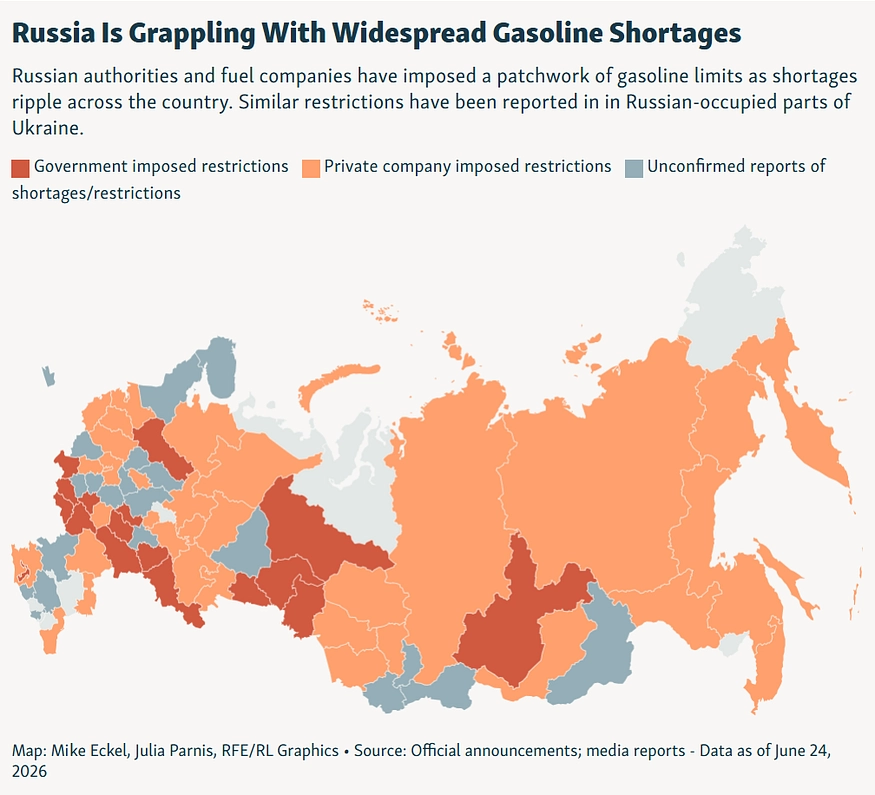
Fuel shortages and rationing are being reported all across Russia, sometimes in places ridiculously far from the war and the Ukrainian drones: Buryatia, Irkutsk, Chita, Vladivostok; but worst off are the occupied territories. In major markets like Moscow, St. Petersburg and Krasnodar, shortages were widely reported as well.
Diplomacy – OK, now this really IS starting to look like child psychology
On Monday at the UN Security Council, there was another session on Ukraine during which Russia blocked a bill calling for a ceasefire in Ukraine, which is not news.
However, the Ukrainian representative, Andriy Melnyk, along with the latest catalog of Russian war crimes and atrocities, created a new facet to Ukraine’s diplomatic pressure campaign against Russia, basically saying Ukraine too can decide a ceasefire isn’t the best route forward, it’s better just to fight it out.
“Ukraine is ready for direct negotiations with Russia to achieve a just and lasting peace in accordance with the UN Charter, but our patience is not limitless,” Melnyk emphasized. “Our patience is not limitless,” “time is not on Moscow’s side”: Ukraine may reconsider its ceasefire proposal with Russia, while the US demands the Kremlin reach a deal.
Speeches at the UN are national policy statements, so this is a direct message not just to the Russians but to the Americans and anyone else wanting to influence the direction of the Russo-Ukraine War.
To the West and particularly the Americans, obviously, the message is: “We are only going to play your game, ‘Just Make a Deal With Russia’ for so long. Your buddy Russia isn’t willing to negotiate. We have our national interest. And a time will come when we will stop stroking your ego and pretending you are a Superpower with influence over Russia. We want to buy your Patriot missiles, but there is a limit.
To the Russians, I really can’t put it better than I accidentally put it in the last review: “If the Ukrainians really were serious about a diplomatic resolution and a ceasefire with Russia, the Ukrainians would not be demanding a diplomatic resolution and ceasefire with Russia.” This is because the more Russian President Vladimir Putin might be seen to accede to a Ukrainian demand, the less likely he is to agree to it.
The only way this dynamic can change is if Russia is clearly winning, in which case Putin might say he graciously agrees to negotiations to save soldiers’ lives, but Russia would have gotten what it wanted on the battlefield anyway. But as we can see, Russia is obviously not winning; it is at best mired in a no-win war, and ending the war on non-victorious terms threatens Putin and his circle directly and personally. This is how coups start, and lives end with defenestration.
The Ukrainians very visibly understand all of this perfectly. Their constant calls for peace talks and a ceasefire have the added benefit of slowly messaging to European voters that Russia cannot be negotiated with, and so more tax money to defense and more support to Ukraine is necessary, which helps European politicians sell policies doing that to their electorates.
This is a very good example of the Ukrainians thinking many steps ahead of others. While Russia is trying to figure out what to do about the war, and the West is still dithering on how much effort it will take to bring Russia to a ceasefire, the Ukrainians are already stacking odds in their favor for the peace negotiations.
Any of you old enough probably remember the Vietnamese doing the exact same thing, in this case with the US as the adversary, back in the 1970s. I mean, right down to jerking the enemy’s chains on peace talks or not. It really is a mistake to assume that if you have a big, powerful military, you can just beat up on a small country as you wish, and they will just accept it, or that your diplomats are automatically more clever than their diplomats, just because you have a lot more diplomats.
A storm petrel to take seriously
On Wednesday, “Meduza,” a widely respected independent news platform covering Russia since forever, reported that the FSB and the head of the Russian police sat down with Putin and tried to convince him to postpone the September elections to the State Duma because the economy is bad and because Ukrainian drone attacks are probably going to get worse. Meduza said they talked to two sources inside the Kremlin. The hardliners wanting the election to go forward are the political cadre (Sergei Kiriyenko), the media/propaganda cadre (Alexei Gromov), and at least some of the national security cadre (Dima Medvedev).
Putin supposedly is pro-vote because to cancel would signal instability and a government losing its grip. The Duma elections are scheduled Sept. 18-20.
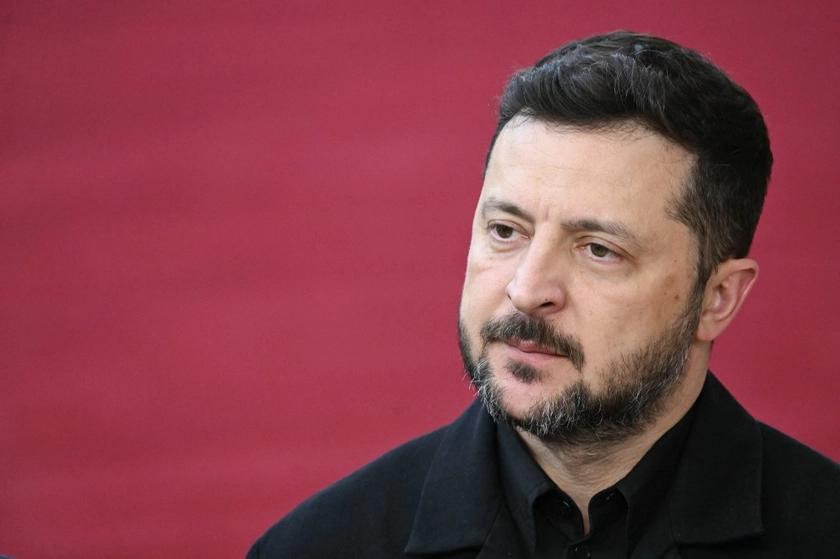
On Thursday, President Volodymyr Zelensky enunciated what had been widely suspected, to wit, Ukraine’s strategy is to undermine Russia’s energy industry and fuel distribution, while at the same time either holding ground or prevailing on the battlefield, to provoke a political crisis in Russia when elections come.
“There is already a fuel shortage in more than 60 Russian regions, and there is also a strong increase in gasoline prices, diesel prices, if they are available at all, of course. Russian special services are already even proposing to postpone or completely cancel the ritual of electing ‘United Russia’ to the State Duma. Their next imitation of elections was planned for September, and now we see from intelligence reports that in Russia, they are not confident in the processes for September,” he said.
Assuming the Ukrainians maintain the pace – and based on the Russian official reaction to problems so far, it appears they will, at least, we are seeing zero Russian declarations that the Russian state will soon resolve the fuel crisis in Russia that Ukraine has created – then come September, political instability is a near certainty.
At that point, many news outlets will be surprised that Putin has suddenly lost his grip on the country, for no clear reason. As this review (and others) has demonstrated throughout the war, not noticing an effective Ukrainian war strategy is not the same as it not actually existing nor having effect.
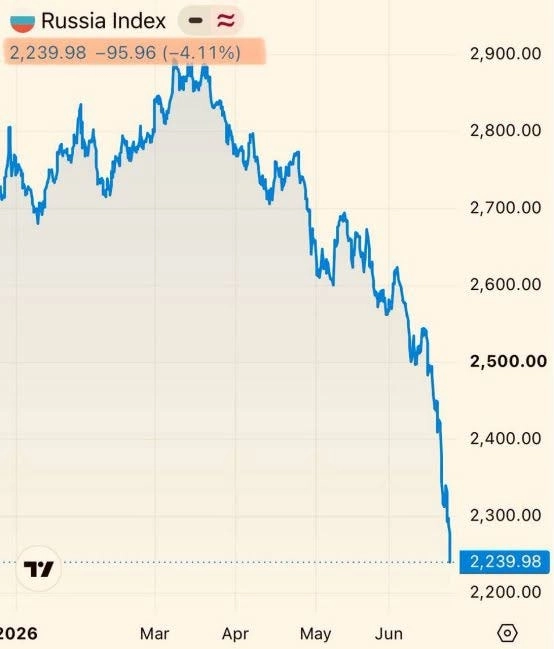
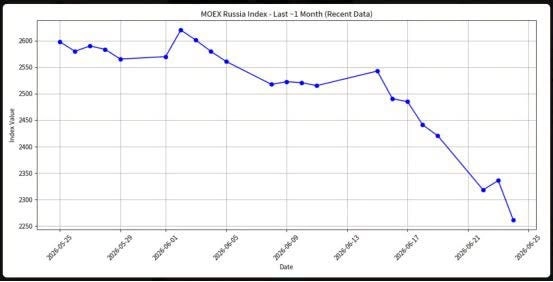
Meanwhile, in Russia, this week there were reports that after a big fight inside the Kremlin, the pro-war/ “We’re going to destroy Ukraine!” side won a debate with Russia’s fiscal conservatives, and a decision was taken, by Putin, to finance the war further by major deficit spending. This is dangerous because Russia has real problems raising capital outside the country; it is a recipe for galloping inflation. Formally, there’s been no announcement, but the Moscow stock exchange overnight Wednesday-Thursday lost 4% of its value.
In a probably connected factoid reported by Bloomberg and confirmed by Reuters and pretty much dominating the Russian energy news this week, the Moscow oil refinery trashed by Ukraine last week will be offline until 2027. That’s 40% of Moscow region fuel needs.
Putin ordered the national fuel distribution apparatchik to “come up with a plan.” This was on national TV, so the point was to reassure the public that the authorities have everything under control and that Ukraine’s actions can’t affect Russia much.
At least one country takes Ukraine seriously
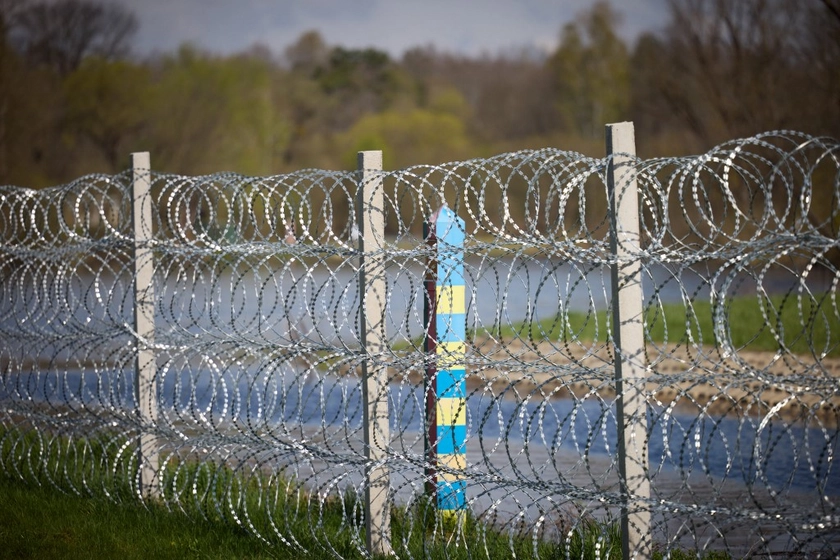
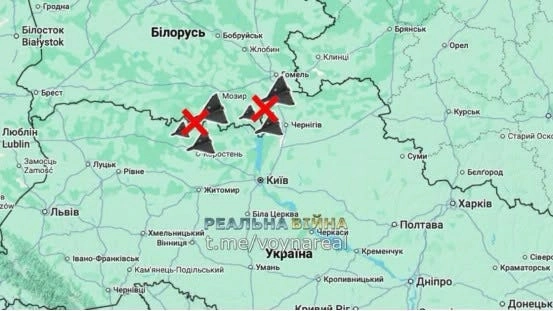
Last Friday, Zelensky caught everyone’s attention with a formal threat to Belarus about helping Russia attack Ukraine with drones. According to Zelensky, Belarus had allowed the Russians to set up repeater stations (three of them, apparently) near the Belarus-Ukraine border. The repeaters are there so that Russian drones attacking Ukraine could have good comms while flying over northern Ukraine. This is a big deal, particularly for people living in Chernihiv, Zhytomyr, and Kyiv regions, but also not unimportant for people in Rivne and Lutsk.
It’s also an actual threat to western Poland (Zamosc and Lublin), but that’s NATO territory and NATO policy is: nothing important threatening NATO airspace ever happens anywhere on Earth, unless it physically violates NATO airspace. This is not theoretical; this is the route the drones that attacked Poland last year took.
For background, when the war started, Belarus allowed Russia to fly strike missions from air bases in Belarus against Ukraine until about April 2022. Russian support missions, like air defense and reconnaissance, from Belarusian territory, had stopped by about June 2022. However, drone overflights of Belarusian airspace to attack Ukraine from that direction have been intermittent but constant. In general, the Russian tactic has been to launch drones in the Bryansk region, fly drones along the Belarus-Ukraine border, and then turn the drones south to attack something.
The Russian relay system went operational in March-April 2026. According to most analysts, this is in response to Starlink cutting off all Russian users. This forced Russian drones to navigate by inertia. The transponders returned real-time, controlled flight capacity to the Russian strike drones flying along the Belarus-Ukraine border.
Zelensky stated directly that either Lukashenko turns off the receivers or Ukraine will destroy them. This sounds tough and high-risk, but it isn’t. If Lukashenko attempted to go to war with Ukraine, chances are close to total his army would mutiny, and if the Russian army moved in, then of course that raises the questions where would the Russian army find the troops, and could Russia invade Belarus and avoid further sanctions/increased Western support to Ukraine? Ukraine has attacked Russian assets as far away as the south Atlantic and the Russian Far East, so I don’t think anyone is under any illusions about Ukrainian capacity and will to demolish radio transmission towers less than 100 kilometers (62 miles) from Kyiv.
On June 22, following Zelensky’s threat, the transponders were shut down, and as of Friday, June 26, they remained shut down.
On Thursday, the Belarusians announced national mobilization exercises during which some reserves are called up, and Belarus’ tiny army goes to deployment cantonments – in western Belarus, vs. NATO.
Russian mil tech outed – America “wins” again
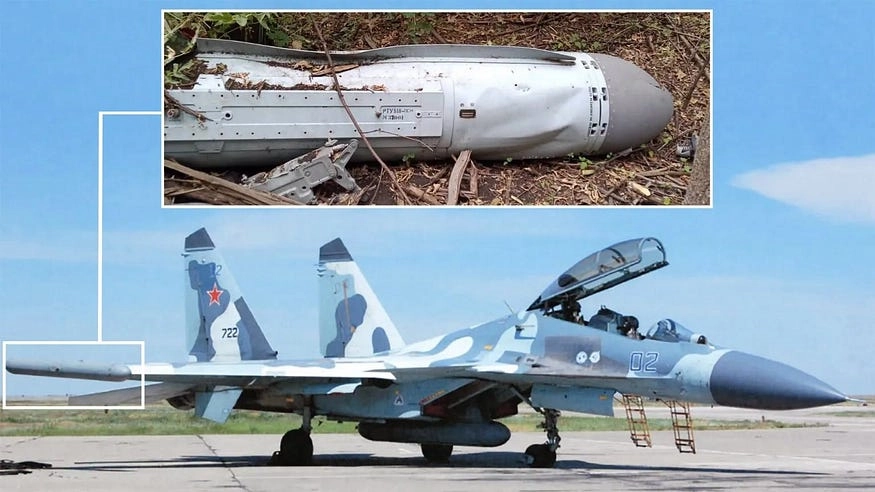
The Ukrainians this week announced that they would make public all captured Russian military tech via a platform called TrophyLab. The idea is not to try to haggle and win advantage trading captured Russian miltech with some Western country or spy agency, and just published all the tech specs obtained for everyone to read and exploit. The idea is to help Ukraine’s allies and anyone else who might be at war with an adversary armed by Russia.
The big loser isn’t so much Russia, which assumed that the moment it used a new weapon in Ukraine, the Ukrainians would find the debris and take it apart down to the nuts and bolts. Like any wartime country, they seek to maintain tech edges by developing new and better modifications, designed specifically to address their own weaknesses or exploit enemy weaknesses actually identified in an actual war. So the world knowing about Russian military tech used in Russia isn’t such a big deal for Russia, whatever they launched or used, they’re already developing a better version of it.
But for anyone who used to benefit from privileged access to Russian mil tech captured in Ukraine, this is unpleasant news, and obviously, first and foremost, the losers here are the CIA, Pentagon, and the United States. Since the war began, it’s been an open secret that anything belonging to Russia and fitting the template of “interesting mil-tech” and captured by Ukraine was taken into custody by the SBU, carried from the battlefield to an exfiltration point inside Ukraine by operators from a European military I don’t want to mention, and then placed on transport where American engineers took the stuff to the US. This is another “win” the Trump administration will never talk about: By treating Ukraine as a hostile state acting against US interests, the US has shut down its privileged and near-monopoly access to Russian mil tech captured by the Ukrainians.
Brits and Ukrainians and maybe Germany and the Netherlands to build missiles that Trump can’t brick – America wins yet again
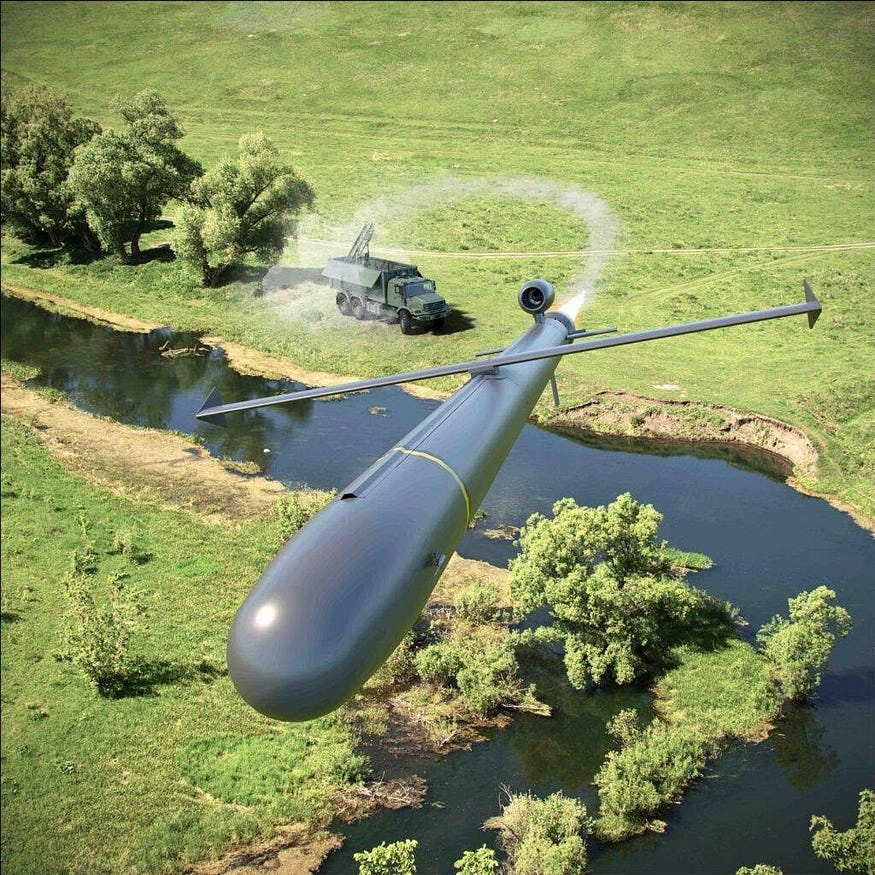
This week, news came down the pike that Britain is developing a low-cost long-range weapon for Ukraine that will be created without the participation of the United States. This was from Bloomberg. There are three possible systems that are being worked on, and the plan is to develop all three, see which one works best, and get a working copy to the troops sometime next year, or maybe late this year. Initial production, maybe 20 missiles a month. Some news agencies have taken to calling the system Crossbow, which is one of the three possible weapons, I assume, because of Operation Crossbow, the movie.
In the real world, the weapon is supposed to be more or less a simplified, smaller version of the very effective Storm Shadow missile, which is probably (along with the French SCALP) Ukraine’s single most precise and effective long-range strike system. Those missiles cost about $1 million each.
The for-Ukraine missile will carry a smaller warhead, not contain internal structures to help it break into armored targets and/or bunkers, and carry a smaller 225-kilogram (496-pound) warhead, which is roughly half the size of a Storm Shadow warhead. Price is about half the Storm Shadow, but range, according to the reports, is basically the same, “more than 500 kilometers” (310 miles).
Besides the Brits, news came down the pike on Saturday that the Dutch will fund 700 Ruta cruise missiles to be built in Ukraine, called Ruta Block 1: 300-kilometer (186-mile) range, 160-kilogram (352-pound) warhead, turbojet engine made in Ukraine. Test versions were completed in 2024, but financing wasn’t available. Now apparently it is. Last week Rheinmetall and Destinus Strike Systems – i.e. Germany – announced plans to develop a German-Ukrainian cruise missile. Word from Sunday’s reports is this will the be the Ruta Block 2, with longer range, more defensive components, etc. I’m not fully clear on how the Germans and Dutch are sorting out financing and responsibilities, but the main point is that it’s not just the British that are developing strike missiles for the Ukrainians these days.
There was a report this week, possibly showing the US is trying to keep skin in the game. Supposedly, the Pentagon green-lighted sending Ukraine 3,350 small cruise missiles under the ERAM program, and according to unconfirmed reports, maybe it wasn’t Storm Shadows but ERAM missiles that trashed the Russian missile component factory in Voronezh this week.
From the other side, if you are Russia, you are looking at waves of cruise missiles getting mixed in with all the drones right now, then starting around September-October, the worry index will spike some more because if any of these cruise missiles get into Ukrainian hands by then, then we are looking at bridge strikes and protected aircraft shelter strikes.
Pardon the editorializing, but why all of this is happening in summer 2026 and not, you know, sometime in 2023 is still a mystery to me.
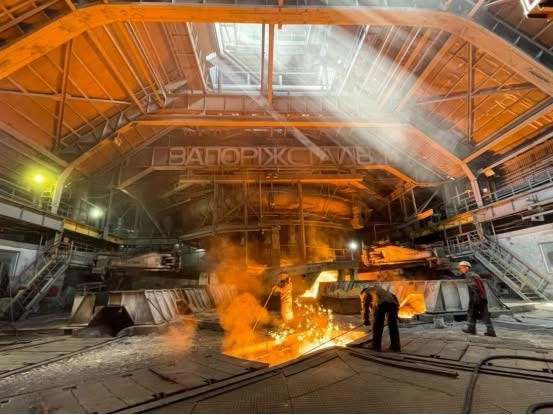
It’s a company press release, but it’s about Ukrainian steel and probably true
A Ukrainian executive named Oleksandr Myronenko spoke with a reporter at a conference called Globsec 2026 and said that Russian glide bombs hit the Zaporizhzhia steel mill, which was supposed to have taken it offline for months, but the technicians fixed the damage in a few days. Here’s a link to the interview.
The strike supposedly demolished equipment that could not be repaired and needed replacement from Europe; however, the Ukrainians milled what they needed instead. So now steel is being made.
During the interview, Myronenko also noted that the company evacuated equipment and people from Pokrovsk and some other locations, so even though the Russians eventually took over the old production premises, manufacturing continued.
For anyone who knows Soviet WW2 history, this is no surprise, in 1941 the Soviets evacuated manufacturing capacity and workers in the exact same way, I bet in more than one case from the exact same premises they evacuated in 2022–2023. This is one of those “amazing Ukrainian resilience” points that always seems silly to me. People outside of Ukraine are just astounded at how the Ukrainians deal with invasion, yet anyone inside Ukraine knows that pretty much all of Ukraine’s history has been dealing with invasions. It’s like being surprised that Swiss bankers do well at handling financial crises or the British military does well at drill and ceremony.
Reprinted from Kyiv Post’s Special Military Correspondent Stefan Korshak’s blog. You can read his blog here.
The views expressed in this opinion article are the author’s and not necessarily those of Kyiv Post.
You can also highlight the text and press Ctrl + Enter