Four years after Russia launched its full-scale invasion, the war has reshaped not only battle lines but also the way it is reported. From predictions that Kyiv would fall within days to debates about negotiations and long-term security guarantees, Western media coverage has evolved alongside the conflict itself.
In early February 2022, one prediction echoed across Western coverage: Kyiv could fall within 72 hours.
JOIN US ON TELEGRAM
Follow our coverage of the war on the @Kyivpost_official.
On Feb. 5, 2022, Fox News reported that US Joint Chiefs of Staff Chairman Mark Milley had told lawmakers the Ukrainian capital could collapse within three days if Russia invaded. Days later, CNN wrote that US intelligence believed Moscow was “poised to attack Ukraine at any moment.” Around the same time, The Times of Israel cited US intelligence officials warning that the Ukrainian capital could be taken “within days,” with some estimates suggesting as little as 48 hours in the event of a rapid assault from Belarus. “Such an attack would leave 25,000 to 50,000 civilians dead.”
On Feb. 20, The New York Times reported that President Joe Biden was “convinced that President Vladimir Putin has decided to invade Ukraine.”
At around 5 a.m. Kyiv time on Thursday, Feb. 24, 2022, Russia launched its full-scale invasion.
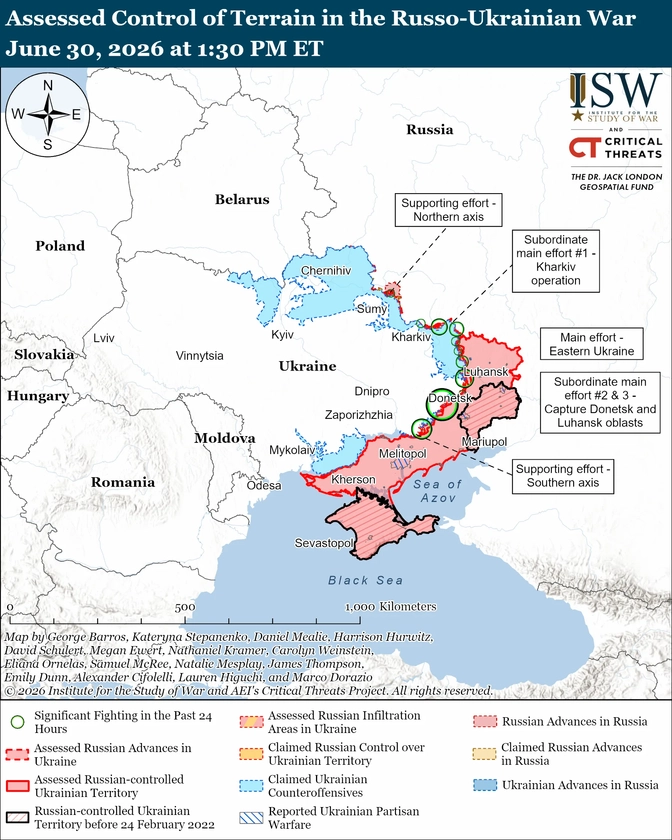
Television networks displayed maps of Russian columns advancing from Belarus toward Kyiv. Analysts discussed evacuation scenarios and whether President Volodymyr Zelensky would relocate. The underlying assumption in many early reports was that Ukraine might not withstand the initial assault.
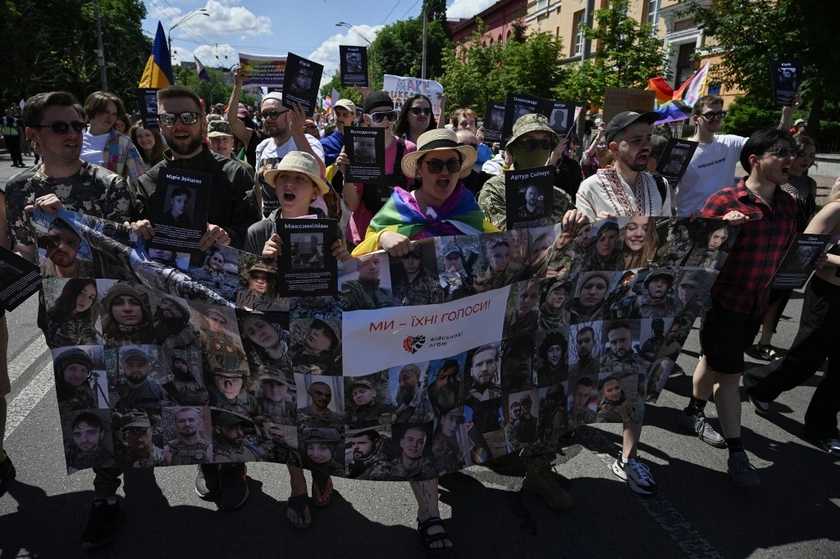
‘Die Together’: Ukraine’s LGBTQ Soldiers Fighting Russia – and for Their Rights
Coverage in the first days focused heavily on the advance toward Kyiv and the attempt to seize Hostomel airport, which was widely described as critical to a potential rapid takeover of the capital.
Much of the commentary reflected the assumption that Ukraine faced overwhelming force.
Some Western military analysts also suggested in early commentary that Ukraine’s conventional forces would struggle to withstand a coordinated Russian offensive for more than several days without rapid external support.
Across much of the pre-invasion coverage, the expectation was of a short campaign and a possible decapitation strike on the capital.
Kyiv holds
By early April 2022, that expectation had shifted.
After Russian troops withdrew from northern Ukraine, The Washington Post described the retreat as a significant setback for Moscow. The Economist called it a “humiliating defeat,” arguing that the Kremlin had misjudged Ukraine’s resistance and Western unity.
Zelensky’s decision to remain in Kyiv became central to the narrative. Coverage increasingly emphasized Ukrainian mobilization, logistical failures in the Russian army, and the resilience of civilians.
The storyline moved from imminent collapse to unexpected resistance.
At the same time, media coverage began highlighting the brutality of the Russian invasion as more attacks on civilians came to light. As towns north of Kyiv were retaken and journalists gained access to previously occupied areas, Western outlets started publishing accounts of civilian casualties, destroyed residential districts, and allegations of abuses committed during the occupation.
That shift laid the groundwork for an even sharper change in tone once images from Bucha in the Kyiv region emerged in early April 2022.
On April 4, 2022, Reuters reported: “West pledges to punish Russia over civilian killings in Bucha.” The New York Times published a front-page report detailing bodies found in the town after Russian forces withdrew, including civilians whose hands had been bound. The Associated Press documented what it described as execution-style killings.
After Bucha, the language hardened. References to a “Ukraine crisis” largely disappeared from major outlets. Reporting focused on alleged war crimes, investigations, and accountability. The war was framed less as a geopolitical standoff and more as a case of documented brutality.
Bucha was not the only event that hardened the tone of coverage.
Even before Russian troops withdrew from northern Ukraine, Western outlets were documenting the siege of Mariupol. Reports detailed the destruction of residential districts, the bombing of a maternity hospital, and, on March 16, 2022, the strike on the Mariupol Drama Theater, where civilians had taken shelter. Images of the word “children” written in large letters outside the building were widely circulated.
Coverage of the Azovstal steel plant, where Ukrainian forces held out for weeks under siege, became a focal point of reporting in April and May 2022. When the remaining defenders surrendered in May, Western media framed it both as the end of a brutal chapter in the battle for Mariupol and as the beginning of a prolonged prisoner-of-war issue.
Together with Bucha, Mariupol reinforced a shift in coverage toward the human toll of the war and allegations of systematic abuses.
Counteroffensives in the Kharkiv and Kherson regions
In September 2022, Ukraine’s rapid advance in the Kharkiv region changed the tone again.
Reuters wrote: “Ukraine sweeps back into key towns in northeast.”
The Wall Street Journal framed the push as “Ukraine’s Counteroffensive Turns the Tide Against Russia.” The BBC reported on Russian forces retreating from large areas of previously occupied territory.
For several weeks, coverage suggested that momentum had shifted decisively.
In the following months, coverage continued to reflect cautious optimism. Analysts debated whether Ukraine had the resources and will to retake all occupied territories.
Fight for Bakhmut and summer counteroffensive
However, by March 2023, that optimism began to fade as battlefield momentum slowed. The New York Times described the battle for Bakhmut in the Donetsk region as “grinding” and “costly.” The Guardian examined what the city’s fall would mean for the wider war, underscoring a shift toward attrition and sustainability.
By summer, the narrative grew more cautious. As Ukraine’s southern counteroffensive advanced more slowly than anticipated, The New York Times ran analysis pieces questioning whether Kyiv could break through entrenched Russian defenses at all. Headlines referenced minefields, layered fortifications, and high costs.
At the same time, the Washington Post examined the challenges facing Ukrainian brigades trained in the West. The Guardian asked whether expectations had been set too high.
The tone had shifted from optimism to realism. For the first time, the word “stalemate” appeared more frequently in long-form reporting.
After the battle for Bakhmut, coverage turned to other contested strongholds in the east.
In early 2024, the fall of Avdiivka prompted headlines about Ukrainian withdrawals under mounting pressure. Western reporting emphasized artillery shortages and Russia’s numerical advantage.
Attention later shifted to Chasiv Yar and then to Pokrovsk, which analysts increasingly described as a logistical hub critical to Ukraine’s defensive lines in the Donetsk region. Articles examined whether Russian advances there signaled gradual territorial gains rather than breakthrough offensives.
The narrative became less about dramatic offensives and more about grinding advances measured in miles.
Aid, fatigue, and political divides
By 2024, Western coverage increasingly focused on the politics of international support.
In February 2024, The New York Times reported on delays in US military aid, highlighting how congressional disputes were affecting the flow of weapons. Politico detailed divisions within the Republican Party over continued support for Kyiv.
The war was no longer covered primarily as a question of military capability. It became intertwined with domestic political calculations in Washington and debates across European capitals.
When Donald Trump returned to the White House in January 2025, headlines began to reflect a new phase.
During the 2024 campaign, just as analysts once predicted Kyiv would fall in 72 hours, media outlets continued to discuss Trump’s campaign promise to end the war “in 24 hours.”
After his inauguration, coverage included headlines along the lines of:
- “Trump tells Putin to end ‘ridiculous war’ in Ukraine or face new sanctions”
- “Trump’s policy on Ukrainian war may lack focus, but it’s an unexpected priority”
- “Zelensky warns Putin wants to ‘manipulate’ Trump on Ukraine”
The focus broadened to questions of leverage, concessions, and whether Washington might press Kyiv toward compromise. A year later, these questions remain unanswered.
From February 2022 to February 2026, Western media coverage of Russia’s full-scale invasion has evolved just as much as, if not more than, the battlefield itself. Periods of optimism and pessimism continue to compete for reader attention as the war continues. Four years after the headlines questioned whether Kyiv would last longer than 72 hours, the primary question remains when the war will end – and on whose terms.
The language and focus of every article published since Russia invaded on Feb. 24, 2022, do not simply dictate what information reaches the public, but profoundly influence how the world at large will remember the war for many years to come.
You can also highlight the text and press Ctrl + Enter