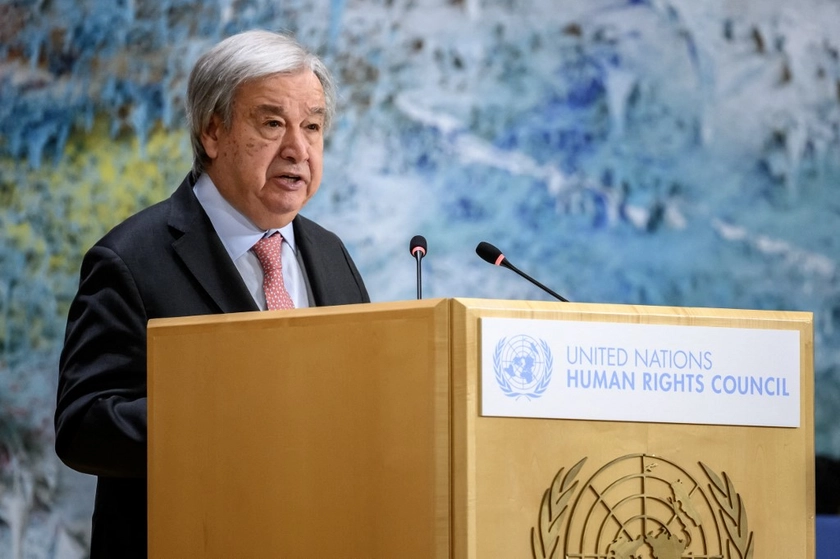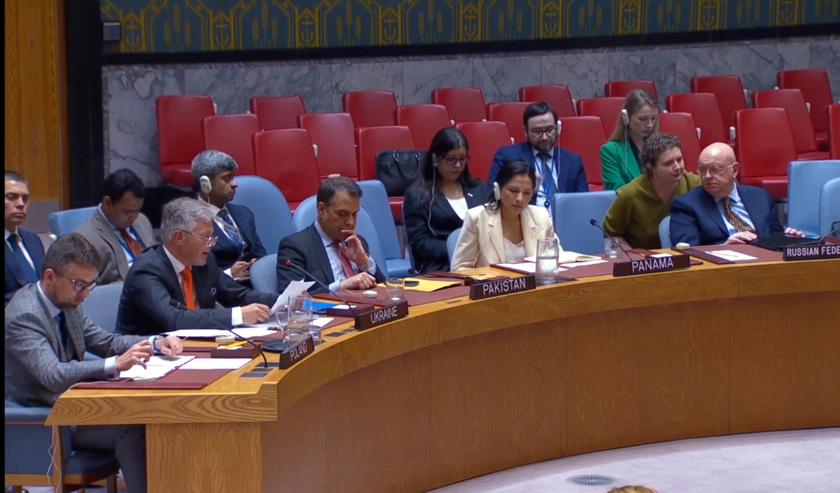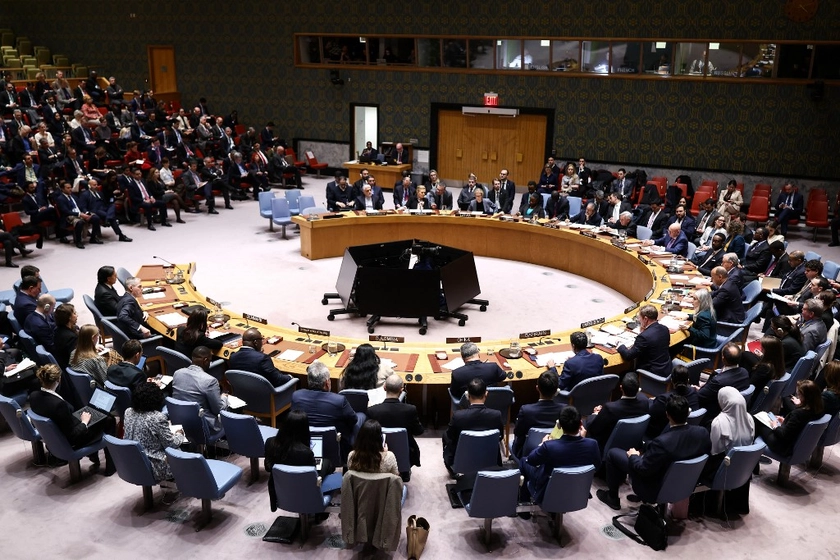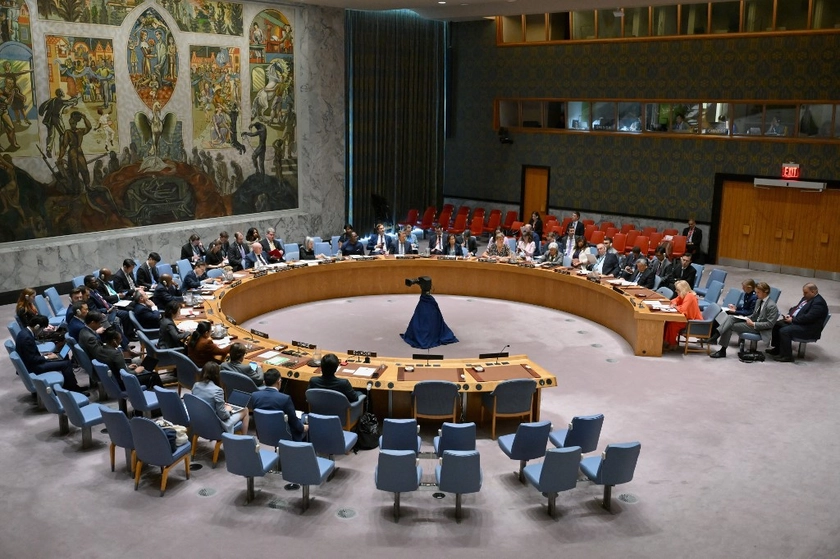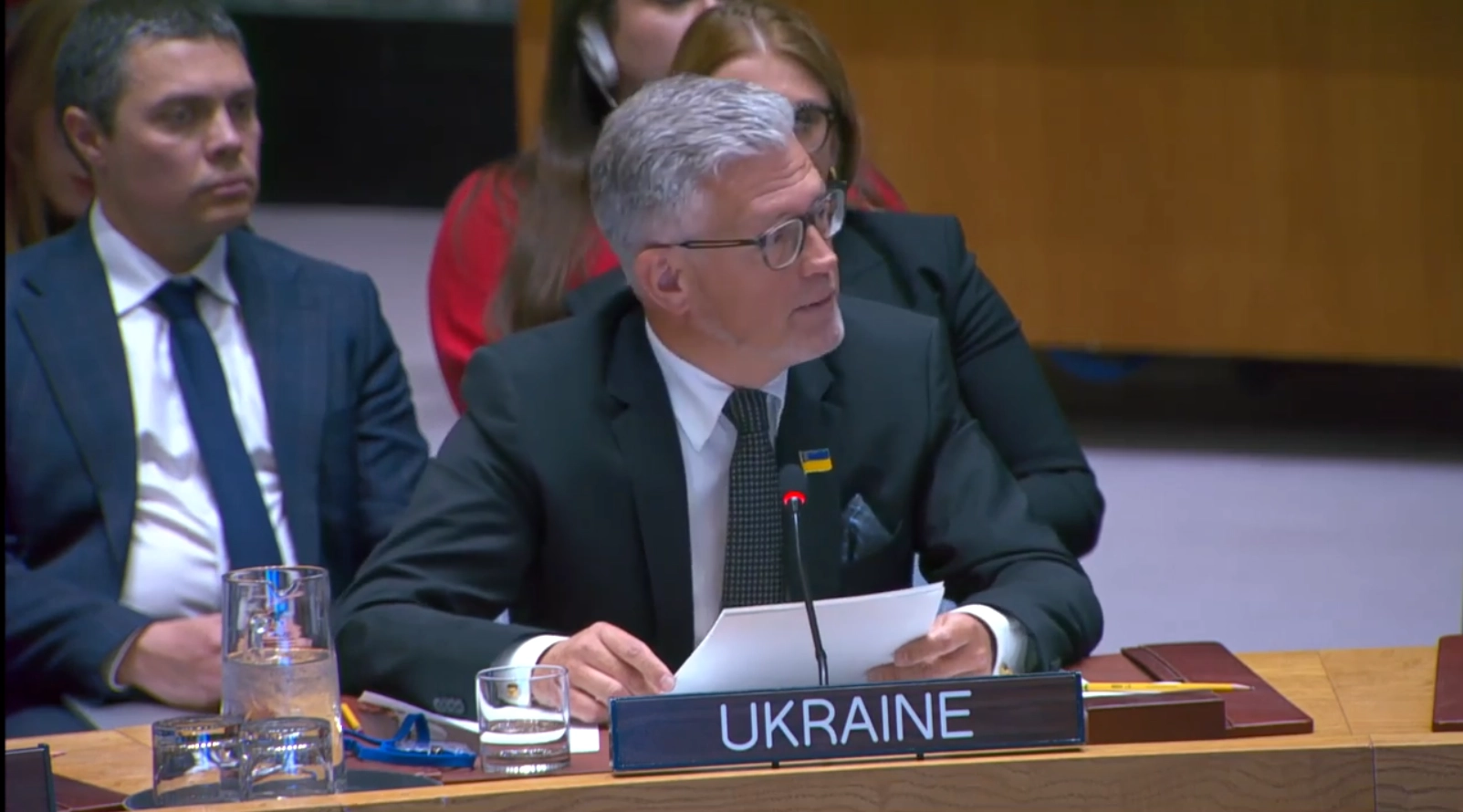
Ukraine’s Permanent Representative to the United Nations, Andriy Melnyk, delivered a forceful address at a UN Security Council meeting on Monday, accusing Russia of systematic war crimes, denouncing what he called Moscow’s “propaganda,” and arguing that the Kremlin has no realistic path to victory in its war against Ukraine.
“Once again, in this chamber, we have heard shocking and unbearable facts of Russia’s systematic war crimes and crimes against humanity perpetrated against the civilian population in Ukraine,” Melnyk said, thanking the Council presidency of Bahrain and member states that supported Kyiv’s request for the meeting.
JOIN US ON TELEGRAM
Follow our coverage of the war on the @Kyivpost_official.
He also praised briefings by UN officials, saying the evidence collected by UN missions would form a foundation for future prosecutions. “The moment of accountability will come much sooner than many expect,” he added.
Systematic attacks on civilians
More than 1,500 days into Russia’s full-scale invasion, Melnyk said Moscow continues to deliberately target civilians and critical infrastructure using missiles, guided bombs, and drones.
“Russian drones hunt civilians like in a vicious video game,” he said, accusing Russian forces of striking ambulances, emergency responders, and firefighters.
He detailed recent waves of attacks, noting that between March 30 and April 13 Russia launched over 3,600 strike drones, nearly 1,350 guided bombs, and more than 40 missiles.
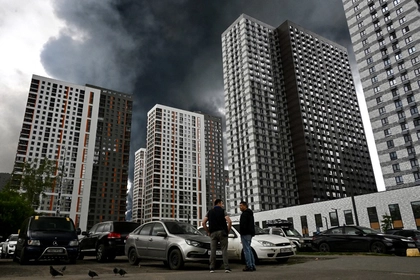
Russia Says It Downed 419 Ukrainian Drones Overnight, Including 56 Bound for Moscow
The attacks have continued unabated, he said. In the past week alone, Russia deployed more than 2,360 drones, over 1,320 guided bombs, and nearly 60 missiles.
Melnyk highlighted a strike on the city center of Dnipro on April 14 that killed 5 civilians and injured 27, as well as a massive overnight assault on April 15 targeting Kyiv, Odesa, Kharkiv, Dnipro, Zaporizhzhia, and Kherson regions.
“At least 17 civilians were killed and dozens wounded. Among those killed in the capital was a 12-year-old boy,” he said.
He warned that repeated atrocities risk becoming normalized. “For some in this chamber, these horrific acts have been reduced to little more than routine wartime statistics.”
Rejecting Russian claims
Melnyk dismissed Russian allegations regarding civilian casualties allegedly caused by Ukraine, saying such claims cannot be verified by independent UN bodies.
“Ukraine does not attack civilians,” he said.
He also sharply criticized remarks by Russia’s UN envoy Vasily Nebenzya, accusing Moscow of spreading disinformation.
“It is not easy for any person guided by common sense to provide a rational response to these Russian flows of distorted narratives,” he said.
Countering Russia’s narrative abroad
Melnyk rejected claims that Ukraine is seeking attention in the Gulf region out of fear of losing international focus, saying instead that Russia is losing influence there.
“The truth is that it is Ukraine that is extending a hand of practical assistance to its partners in the Gulf,” he said, including support in protecting energy infrastructure from Iranian drones and missiles.
He accused Russia of acting as an accomplice to Tehran and undermining regional security, including by blocking a UN resolution on freedom of navigation in the Strait of Hormuz.
Mounting losses and “meat grinder” war
Turning to the battlefield, Melnyk said Russia is suffering heavy and unsustainable losses.
“Since the beginning of this year, Russia has been losing no fewer than 30,000 to 35,000 soldiers every single month,” he said, adding that recruitment efforts are failing to keep pace.
He described a system reliant on coercion, financial incentives, prisoners, migrants, and foreign mercenaries, with many recruits sent into combat with minimal training.
“Recruits whom Vladimir Putin is sending into the meat grinder on Ukrainian soil face an extremely short life expectancy, measured in weeks or even in days,” Melnyk said.
“Astronomical” cost for minimal gains
Melnyk argued that Russia’s war effort is strategically unsustainable, citing what he called unprecedented casualty rates.
“Russia is currently losing on average 254 soldiers for every square kilometer of Ukrainian territory it still manages to occupy,” he said.
He compared this to the Soviet Union’s 1939-40 war against Finland, where losses per square kilometer were roughly 100 times lower.
Despite the losses, Russia controls less than 20% of the Donetsk region, he said, rejecting Moscow’s demand that Ukraine surrender the territory.
“Just multiply 6,000 by 254,” he said, referring to the area Russia seeks to capture. “Mr. Putin would have to send at least another one and a half million soldiers to their deaths.”
Extending that logic further, Melnyk argued that conquering all of Ukraine would require “over 122 million soldiers,” a figure approaching Russia’s entire population.
“It is quite difficult to describe the expected loss of more than 122 million Russian lives as a glorious victory,” he said.
“Ukraine will never surrender”
Melnyk rejected any possibility of territorial concessions.
“We will never, ever abandon a single square millimeter of our soil, and we will never, ever abandon any of our fellow citizens,” he said.
He described Russia’s demands as “pure blackmail” and questioned Moscow’s broader strategic logic.
“Can anyone explain Russia’s obsession with seizing yet another few square kilometers of Ukrainian land?” he asked, noting that the territory in question represents just 0.03% of Russia’s own landmass.
Criticism of conditions inside Russia
Melnyk also turned his criticism inward toward Russia, highlighting what he described as poor living conditions.
“Around 35 million Russian citizens still rely on outside toilets,” he said, calling it a stark contradiction to Moscow’s claims of great power status.
He linked these conditions to the brutality of Russian troops in occupied Ukrainian territories, including atrocities committed in Bucha in 2022.
“Russian soldiers… were confronted with something they had never expected to see: ordinary Ukrainian families living with dignity,” he said, arguing this fueled resentment and violence.
Calls for stronger sanctions
Melnyk urged the United States and its allies to intensify sanctions on Russian energy exports, warning that recent exemptions could generate up to $10 billion in additional revenue for Moscow in April alone.
“These revenues will finance Russia’s war of annihilation,” he said, including the production of large numbers of drones.
He also called on European allies to increase military support to Ukraine to 1% of GDP and urged countries in the Global South to join sanctions or at least contribute to humanitarian efforts.
Push for new UN action
With peace negotiations effectively stalled, Melnyk called on the Security Council to adopt a new, enforceable resolution.
“It must become a firm instrument of enforcement designed to compel a genuine cessation of hostilities,” he said, urging inclusion of concrete measures such as sanctions.
“Russia has no chance to win”
Melnyk concluded with a blunt assessment of the war’s trajectory.
“Russia has no chance to win this war,” he said.
In a final remark directed at his Russian counterpart, he used a Russian proverb to underscore his point: “It’s too late to drink Borjomi once the kidneys have failed.”
“There is nothing that can save Mr. Putin,” he said, “not even high oil prices.”
You can also highlight the text and press Ctrl + Enter
Russia Hit by 660-Drone Overnight Barrage Targeting Moscow, Crimea and Key Military Sites