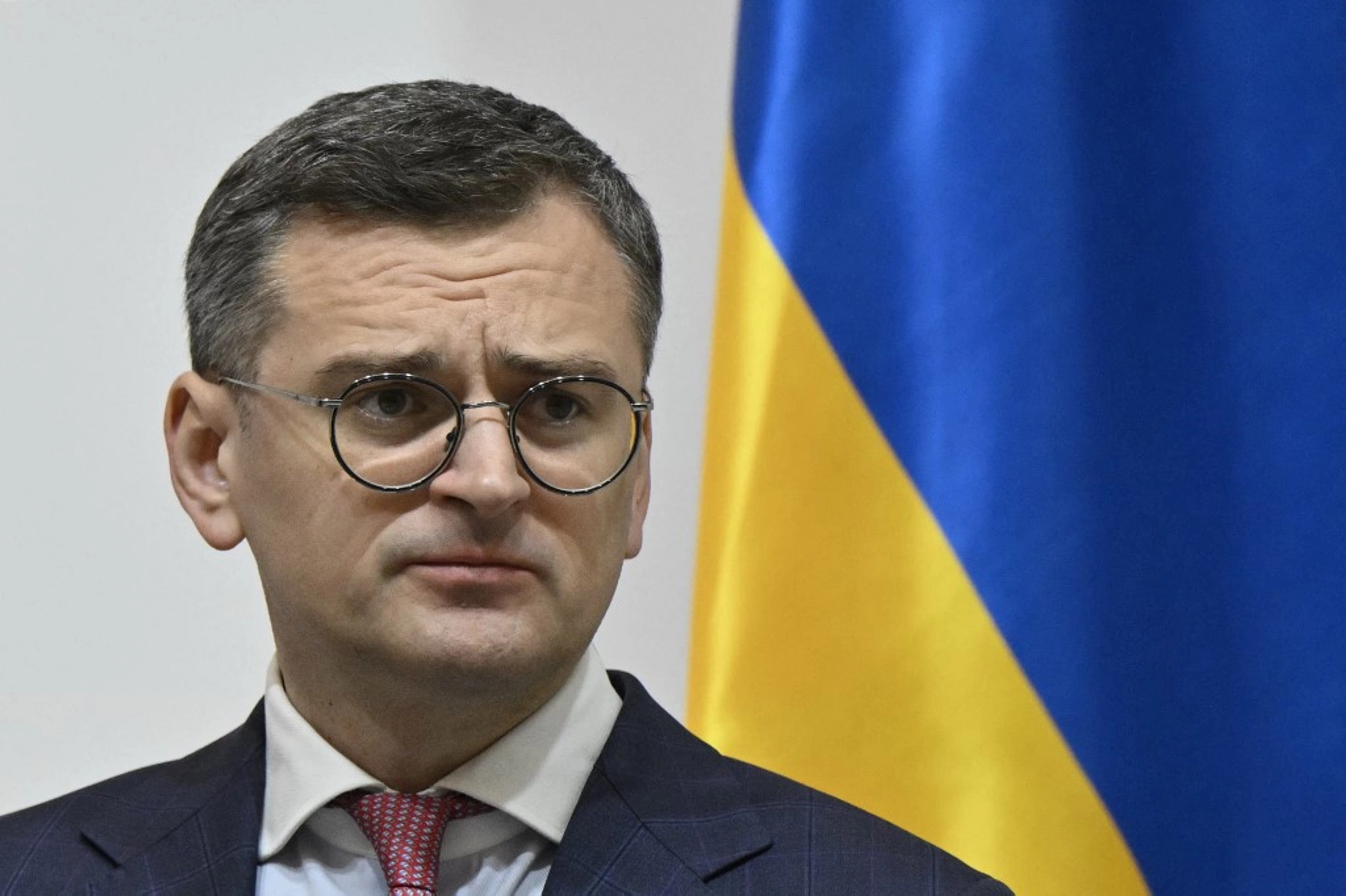
Former Ukrainian Foreign Minister Dmytro Kuleba has warned that recent developments in Belarus may signal preparations for a dangerous new escalation in Russia’s war against Ukraine.
In a 13-minute video, Kuleba said the issue had “once again exploded” into the information space, but argued that the developments were not sudden. Rather, he said, they were the result of a steady process that began in February 2022, when Belarus allowed Russia to use its territory to launch the full-scale invasion of Ukraine from the north.
JOIN US ON TELEGRAM
Follow our coverage of the war on the @Kyivpost_official.
That route – through Belarus, Chornobyl, and toward the outskirts of Kyiv – brought Russian forces to the gates of the capital in the first days of the war. Although Belarusian troops did not directly enter combat, Kuleba said Minsk had already fulfilled the role of Russia’s accomplice once before.
Now, four years later, he sees signs that Belarus could again be preparing for a more active role.
Kuleba pointed to five developments that, taken together, suggest a growing level of military readiness in Belarus under Russian supervision.
The first, he said, is the continuous combat training of Belarusian army units, with Russian instructors, coordinators, and commanders involved in the process. On its own, military readiness exercises are not unusual, he noted. But in the broader context, they take on greater significance.
Second, Belarusian authorities have placed increasing emphasis on the country’s overall mobilization readiness, not just the preparedness of its armed forces. This includes renewed focus on reservists. Reports that Alexander Lukashenko signed a decree calling up reserve officers are not extraordinary in themselves, Kuleba said, but they become more meaningful when viewed alongside other developments.
Zelensky: Russia Shifts Donetsk Capture Deadlines – Now at 15 Attempts
Third, Belarus conducted command-and-staff military exercises in March. Kuleba said these were not simple inspections of combat readiness, but larger-scale drills aimed at testing coordination between headquarters and military units – a more serious level of preparation.
The fourth factor is the strengthening of Belarus’s air defense system. According to Kuleba, this suggests Minsk expects that its airspace could come under attack in the event of a wider conflict. Belarus’s own systems are insufficient, he said, and Russia is believed to be supplying additional air defense assets to help create a protective shield.
The fifth factor is the visible intensification of coordination between the Russian and Belarusian militaries. For now, Kuleba said, this interaction appears to be concentrated at the level of planning and synchronization rather than joint deployment of units. Still, he said he is convinced Russia is helping Belarus prepare in a serious way.
Viewed separately, none of these developments necessarily points to an imminent threat, Kuleba argued. Taken together, however, they look increasingly like preparations for war.
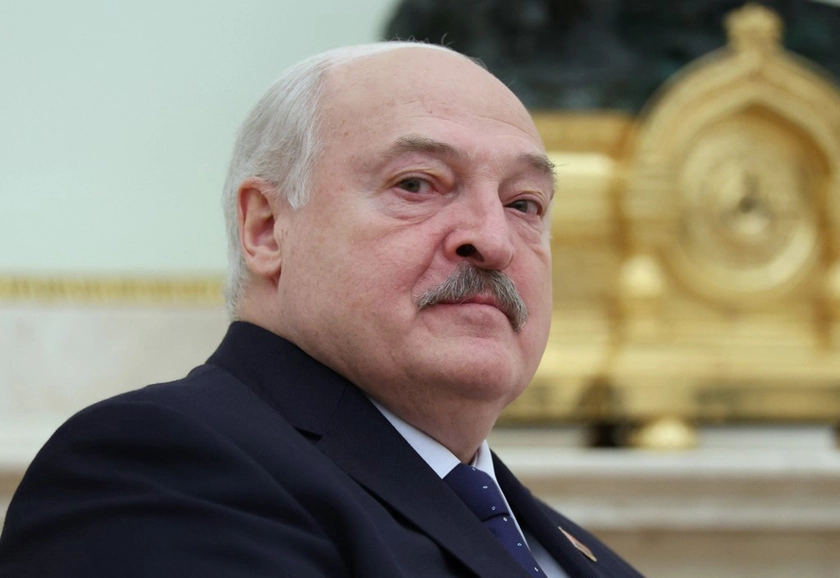
He also highlighted Lukashenko’s recent meeting with Belarus’s top military leadership, during which the Belarusian leader said the era of peace for Belarus was over and declared: “We are preparing for war.”
Lukashenko presents this as defensive preparation, Kuleba said, but dismissed that explanation as false. “Nobody is planning to attack them,” he said, warning that statements by authoritarian leaders should not be ignored.
Even so, Kuleba stopped short of predicting that Belarus is about to launch an attack on Ukraine.
In his view, Lukashenko understands the risks. No matter how strong Belarus’s air defenses may be, if Belarus enters the war, Ukraine will respond. That would mean drone and missile strikes, destruction inside Belarus, and potentially heavy losses for Belarusian forces, which have no real combat experience.
Kuleba argued that Lukashenko’s instinct is to preserve Belarus as a controlled, quasi-Soviet island and avoid a war that would destroy infrastructure and cost the lives of his soldiers. But he said Russian President Vladimir Putin is clearly trying to drag Belarus deeper into the conflict.
For that reason, Kuleba said, the current developments do not necessarily mean an offensive is imminent, but they do amount to unmistakable preparations for military escalation. In practical terms, he said, this means Ukraine must once again pay close attention to the northern front.
That creates both diplomatic and military challenges. Diplomatically, Kuleba argued, Ukraine should work through the United States and China to discourage Belarus from entering the war. He noted that under US President Donald Trump, Washington has developed what he described as unusually warm ties with Minsk, and suggested Trump has no interest in seeing another front open in the war.
He also said China could play a restraining role, as Beijing would have little interest in wider instability.
Militarily, the threat of a renewed northern front would force Ukraine to stretch already limited resources. Protecting the border with Belarus would require the redeployment of experienced combat units from other critical sectors, including Donetsk, Kharkiv, and Sumy regions, he said.
Kuleba said the developments in Belarus also serve as further evidence that Russia is not seriously interested in ending the war. On the contrary, he argued, Moscow remains focused on breaking Ukraine and forcing it to accept Russian terms.
He added that Belarus’s military activity may not be aimed only at Ukraine. It could also form part of a broader Russian strategy of pressuring the Baltic states and, to a lesser degree, Poland by creating another point of regional tension.
For Lukashenko, Kuleba said, neither option is attractive. But a direct confrontation with Ukraine’s battle-hardened military would present a far greater danger to Minsk than intimidation of neighboring NATO states whose armies, like Belarus’s, have not faced the same scale of combat.
Ukraine has faced similar moments before, he said, when Belarus’s possible entry into the war seemed close. But this latest combination of factors should be understood clearly for what it is: not an immediate attack, but movement in a highly dangerous direction.
You can also highlight the text and press Ctrl + Enter