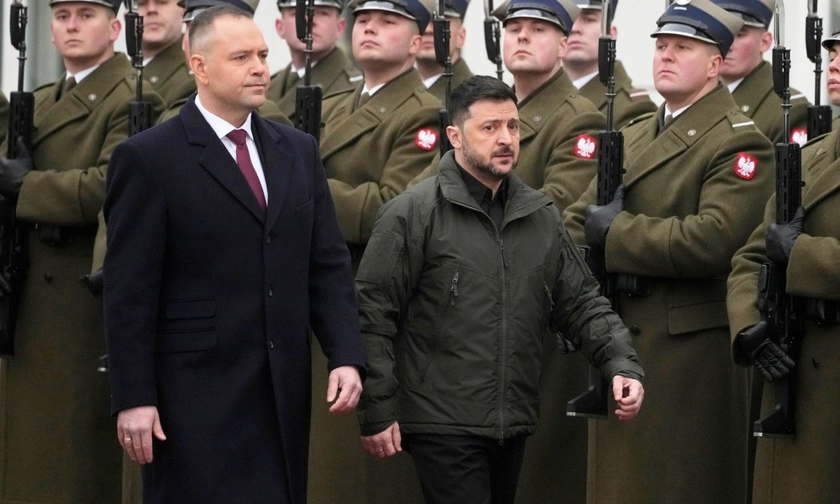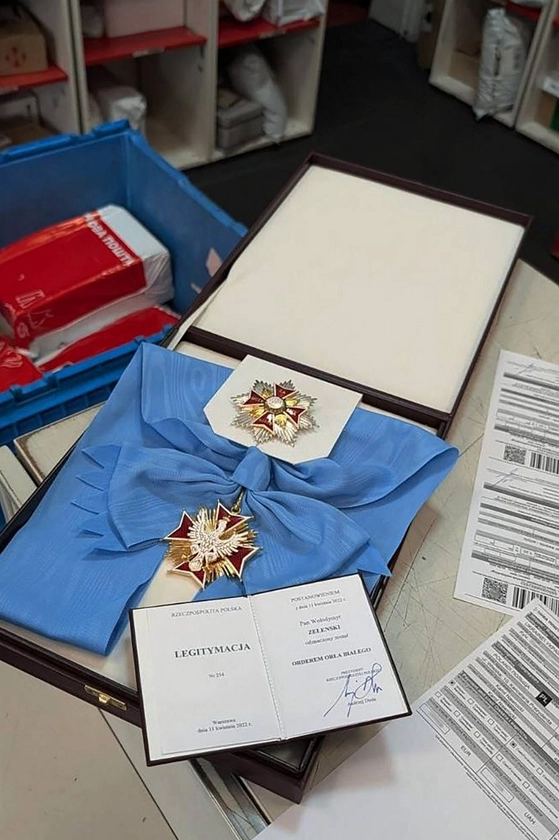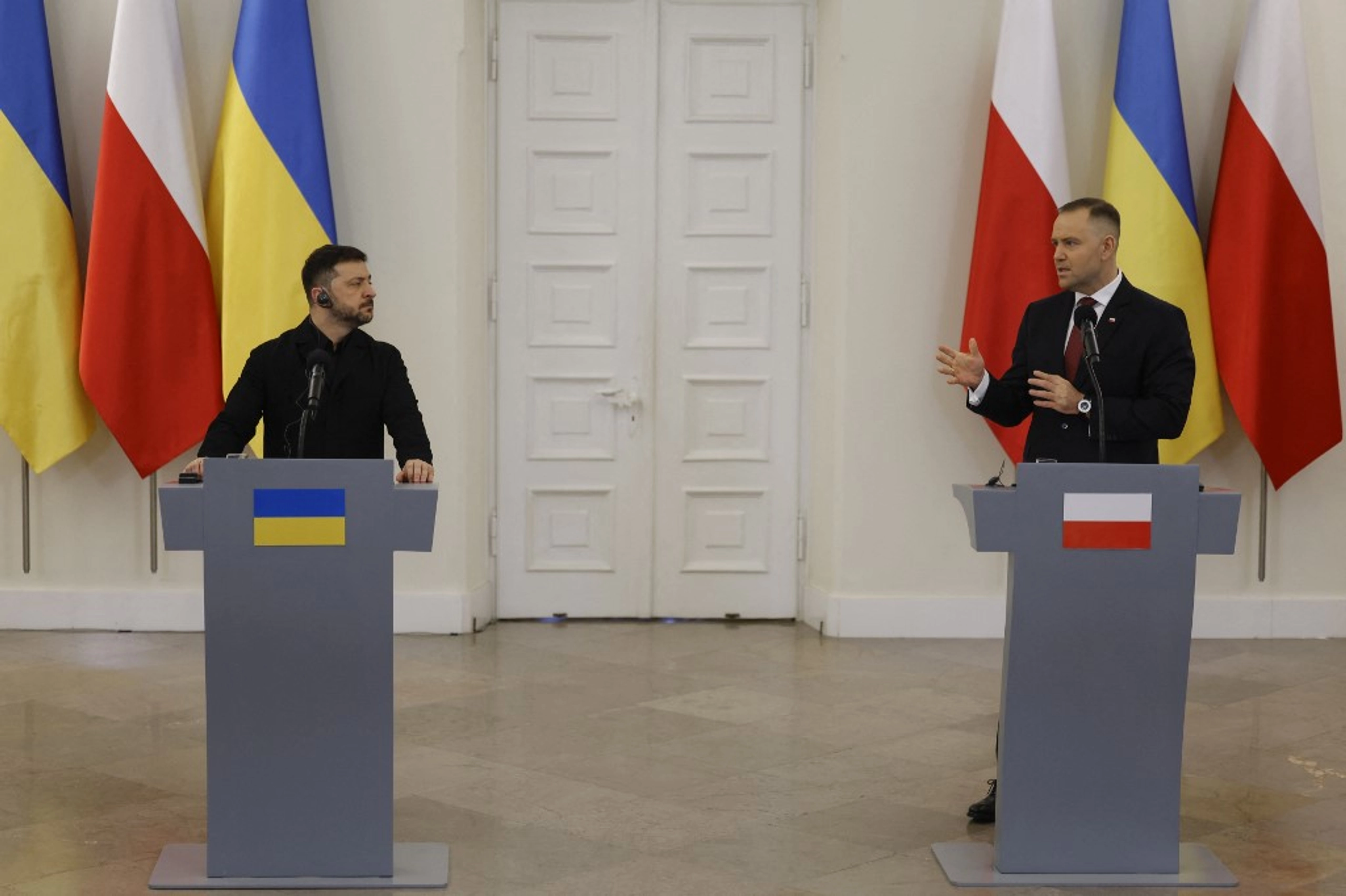
To put it plainly, Polish President Karol Nawrocki’s decision to revoke his country’s highest honor from Ukrainian President Volodymyr Zelensky is a propaganda victory for the Kremlin, a diplomatic liability for Poland, and a small-minded act of political symbolism that has no place amid the defining geopolitical crisis of our time.
More importantly, it reveals a troubling parochialism at a moment when Poland, its allies, and the wider world require something greater.
JOIN US ON TELEGRAM
Follow our coverage of the war on the @Kyivpost_official.
The American precedent
Most Americans are unfamiliar with the complex historical tensions between Poland and Ukraine, including longstanding disputes over the conduct of certain military formations during and after the Second World War.
They are, however, deeply familiar with the need for reconciliation and unity in the face of common threats, even among nations and militaries whose predecessors once engaged in conduct that would today be condemned under modern laws of war.
In less than a month, America will celebrate the 250th anniversary of the Declaration of Independence, a document that directly accuses the British Crown and its armies of committing grave offenses against the American people.
The final grievance of the Declaration, near the end of its list of accusations against King George III, reads as follows:
“He has excited domestic insurrections amongst us, and has endeavoured to bring on the inhabitants of our frontiers, the merciless Indian Savages, whose known rule of warfare, is an undistinguished destruction of all ages, sexes and conditions.”
Russia Says US Drifting From Role as ‘Objective Mediator’ in Ukraine War
That reference was to the practice of Great Britain incentivizing native Americans to scalp and murder women and children on the American frontier.
One example was Henry Hamilton, the British lieutenant governor at Detroit during the American Revolution, who became known to Americans as the “Hair Buyer General” because he was widely believed to reward Native allies for American scalps.
Yet the same Declaration which addresses what today would be considered war crimes, concludes with a reminder that even the deepest wounds of war need not endure forever:
“We must, therefore, acquiesce in the necessity, which denounces our Separation, and hold them, as we hold the rest of mankind, Enemies in War, in Peace Friends.”
If there is a nation on earth today that stands in direct opposition to totalitarianism and political violence, it is Ukraine.
Forgiveness, reconciliation, and common cause
In May of this year, the United States welcomed the King before Congress with friendship, respect, and honor, notwithstanding his direct connection to the British Crown and the institutions against which our founders declared their independence.
For more than a century, Americans have taken the same approach toward Britain’s military traditions. The War for American Independence was a violent conflict, replete with actions that would today raise serious questions under modern standards of warfare, including attacks on civilians and the destruction of civilian property.
Nonetheless, British regiments with histories which included barbaric acts while attempting to subdue the American colonies, and in violation of the rules of war as we understand them today, later fought side by side with Americans in both World Wars. They were honored not for what their ancestors had done in the 18th century, but for their courage, sacrifice, and service in the defining struggles of the 20th.
No American president has suggested that these regiments should be judged solely by the controversies of their Revolutionary War history. No alliance was abandoned because their forebears once marched under the banner of King George III. Instead, Americans chose to recognize the bravery of the men who stood beside them against the Kaiser and later against Hitler.
That is how mature nations behave.
They remember history without becoming imprisoned by it. They recognize that former enemies can become trusted allies and that reconciliation is among the greatest achievements of civilization. The descendants of the men who faced one another at Lexington, Bunker Hill, and Yorktown would eventually fight together at the Somme, Normandy, and Arnhem.
Their story stands as proof that nations can honor historical memory without allowing it to become a perpetual veto on friendship, alliance, and common purpose.
There is simply no place for smallness when the world is on fire.
The hypocrisy problem
President Nawrocki not only revoked the Order of the White Eagle, but also declared that Poland could not support European Union membership for a nation unwilling to reject what he described as a “cult of totalitarianism and violence.” It was a remarkable accusation, and one that sounded strangely detached from present reality. If there is a nation on earth today that stands in direct opposition to totalitarianism and political violence, it is Ukraine, a democracy whose citizens have spent more than a decade resisting authoritarianism and more than four years fighting a war of national survival against one of the world’s most repressive regimes.
The deeper problem is that selective moral outrage rarely survives scrutiny.
No sooner had the revocation of the Order of the White Eagle made headlines than critics began pointing to Poland’s own complicated historical legacy, including allegations of war crimes committed against Ukrainians by the Armia Krajowa, one of the most revered military groups in Poland.
In his official response, Zelensky made three important points. First, the award was for the people of Ukraine, not him. To question their heroism is deeply flawed. Second, he reminded the world that Poland has never revoked similar awards to actual tyrants like Mussolini. Finally, he explained that unity is the goal. He stands willing and ready to work with all in the cause of freedom.
The silver lining
If there is a silver lining in this affair, it is that key Ukrainian leaders, past and present, responded in precisely that spirit. By voluntarily returning honors they had received from Poland, they delivered a clear message: Ukraine will not be diminished by political theatrics, its internal policies are not subject to the approval of foreign politicians, and its people will not be divided.
That unity is the mark of a mature nation that understands exactly what is at stake.
The views expressed in this opinion article are the author’s and not necessarily those of Kyiv Post.
You can also highlight the text and press Ctrl + Enter