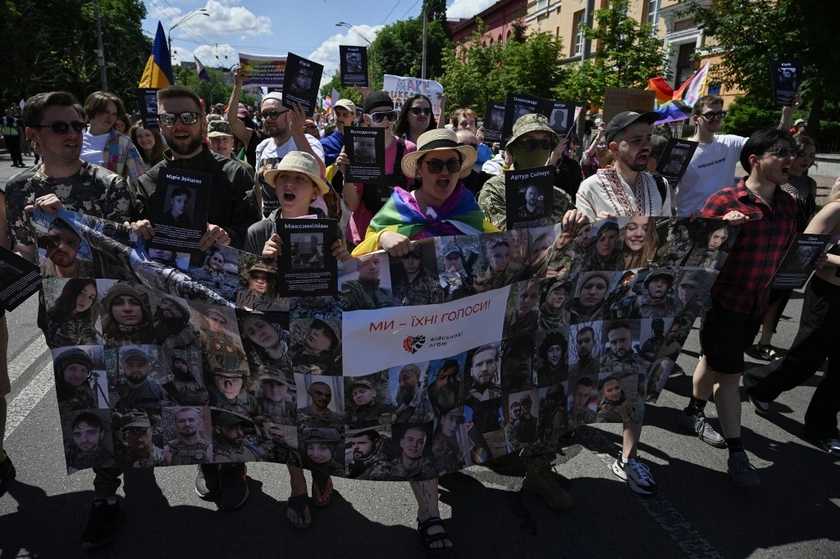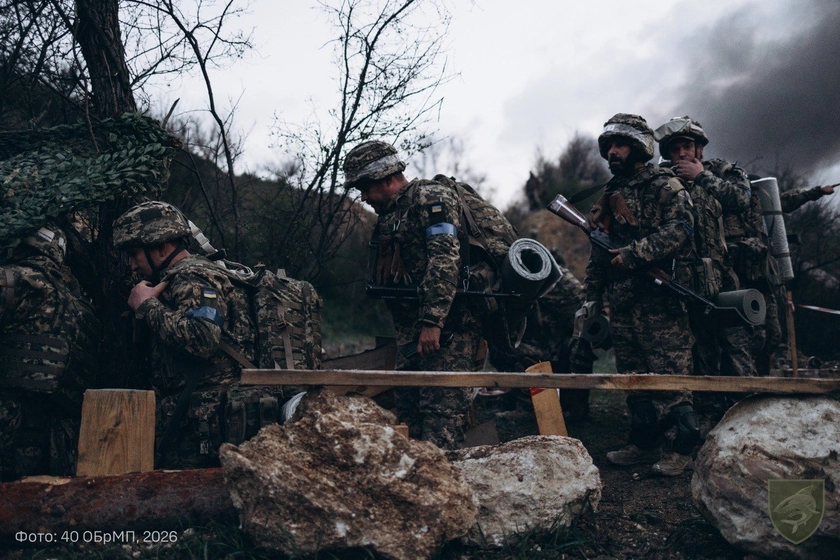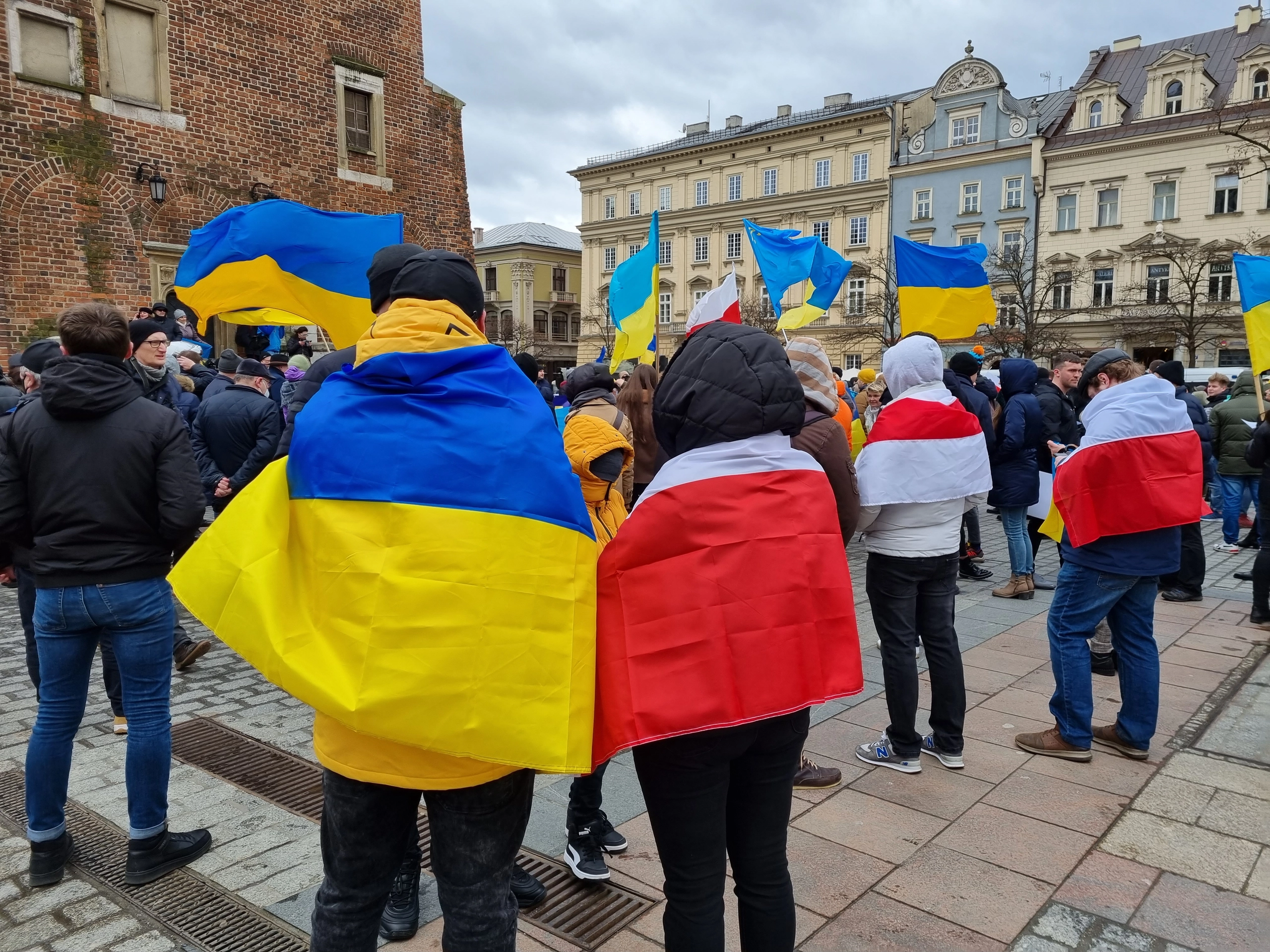
At 9 a.m., on the Przemysl-Kyiv train, the loudspeaker system announces a moment of silence in memory of fallen Ukrainian soldiers. The passengers immediately get to their feet, including a group of Poles traveling on this high-speed train from the Polish border to the Ukrainian capital.
While waiting for this train in Przemysl, I stopped at a café across from the station. I spoke to the young woman serving at the bar in Polish. She responded in Polish and made me a coffee. The man in the line behind me addressed her in Ukrainian. She responded in perfect Ukrainian.
JOIN US ON TELEGRAM
Follow our coverage of the war on the @Kyivpost_official.
It turned out that the entire staff of this small café were Ukrainian living in Poland. I didn’t ask who the owner was, but it’s entirely possible that she or he was also Ukrainian. After all, there are over 120,000 Ukrainian businesses registered in Poland.
Back in February of this year, speaking in parliament, Polish Foreign Minister, Radosław Sikorski, mentioned these businesses and said: “The level of professional activity among adult immigrants from Ukraine is even higher than among Poles… They hire people, pay taxes…”
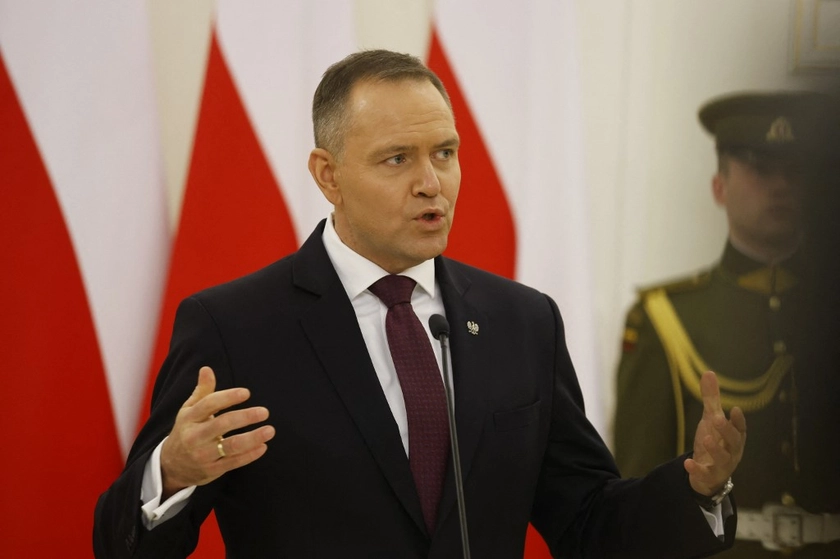
While Sikorski hasn’t changed his mind about the positive contribution that Ukrainian refugees make to the Polish economy, the political situation in Poland is different now. The new president, Karol Nawrocki, is determined to make political capital by playing the anti-immigration card. He provokes right-wing protests against the influx of Ukrainian refugees.
Stalwart Denmark Announces 30th Military Aid Package for Ukraine
Poland’s coalition government is sensitive to the right-wing trends in other European countries and is trying to minimize the damage from the President’s political activities. However, evidence of such trends inside Poland is giving cause for concern.
A video that recently went viral in Poland and Ukraine alike showed a Polish man verbally attacking a cashier at a grocery store because she was Ukrainian. In his rant, the man used violent, xenophobic threats and demanded that the cashier go “back to Ukraine.”
In Ukraine, the video sparked a wave of anti-Polish comments, while in Poland, it gave rise to strong anti-xenophobic reactions. It appears that the incident was more shocking to Poles than to Ukrainians.
Polish police identified and arrested the attacker, who could face up to 12 years in prison for inciting ethnic hatred. If the case goes to trial and results in a conviction, it will demonstrate that Poland’s legal system is stronger than President Nawrocki’s anti-Ukrainian rhetoric.
Sikorski and Tusk made it clear that they did not approve of their president’s actions.
The strain on Ukrainian-Polish relations at a state level has increased dramatically since late May, when President Zelensky signed a decree naming the Independent Center for Special Operations (“North”) after the “Heroes of UPA (the Ukrainian Insurgent Army),” a paramilitary and partisan group formed during World War II which fought for an independent Ukraine against both the Soviet and the Nazis regimes.
Nawrocki responded by recalling that UPA had committed crimes against Polish civilians in Volhynia and demanded that Zelensky reverse the “glorification” of that organization and rescind his decree.
Zelensky refused and, in response, Nawrocki promised to strip him of Poland’s highest state award, the Order of the White Eagle, bestowed on Zelensky in 2023.
President Zelensky duly sent the medal directly to Nawrocki’s office and not through diplomatic mail, but via Nova Poshta – a popular private Ukrainian postal service, which is currently expanding its network of branches in Poland. This mode of delivery for Poland’s highest honor was perceived in both Ukraine and Poland as a mockery of Nawrocki and his attitudes.
Many Ukrainians were offended by Nawrocki’s threat to rescind the award because it had been given to Zelensky as the representative of the entire Ukrainian people for their courage and determination in defending their homeland. In other words, the attempt to humiliate Zelensky morphed into flagrant disrespect for the Ukrainian nation.
In a show of support for Zelensky, former Ukrainian presidents Leonid Kuchma, Viktor Yushchenko, and even Petro Poroshenko renounced their “Order of the White Eagle” honors. Other senior Ukrainian officials publicly renounced Polish awards they had been given. Then, Polish officials and politicians started returning their Ukrainian awards. This uncontrolled spiral of honor-slinging very soon reached the point of absurdity.
Zelensky’s office should have been able to anticipate Poland’s reaction to the naming of a military unit after “the Heroes of UPA.”
Foreign Minister Sikorski and Prime Minister Tusk made it clear that they did not approve of their president’s actions. However, in early June, Prime Minister Tusk commented: “The Ukrainian side created this problem itself, so now let them seek a way out of the situation... Now all responsibility lies with the Ukrainian side to somehow smooth over this completely unnecessary conflict of historical interpretations.”
Indeed, President Zelensky’s office should have been able to anticipate Poland’s reaction to the naming of a military unit after “the Heroes of UPA” since this organization is associated with the murderous destruction of Polish villages in Volhynia in 1943.
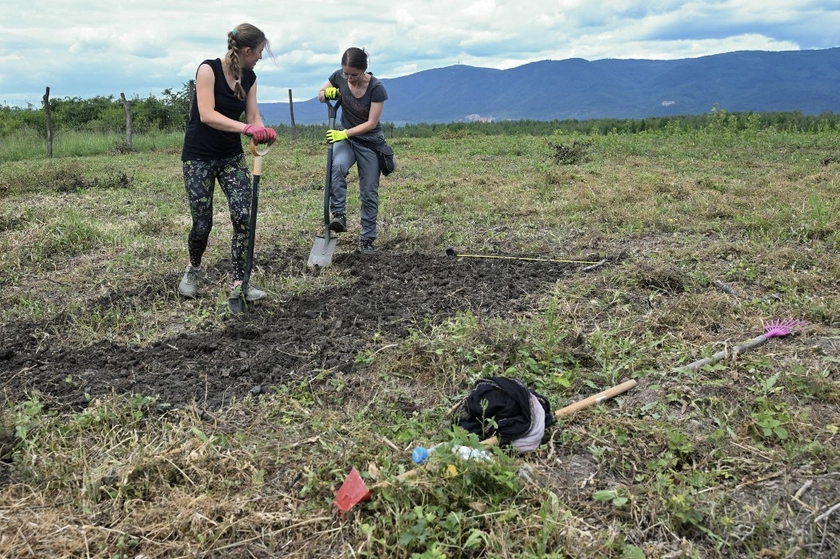
These developments are particularly regrettable given the progress towards a mutual understanding of those tragic events. Since early this year, with permission and cooperation from the Ukrainian side, teams of Polish researchers have been searching for the mass graves of Poles at the sites of former Polish villages in Volhynia (an area that today comprises Ukraine’s Volyn and Rivne regions).
According to historians, approximately 100 Polish villages in Volhynia were destroyed during World War II, and, despite the latest scandal, the work to find the mass graves and exhume the Polish victims of the Volhynia Massacres continues.
On June 7, amid the Polish-Ukrainian strife, Zelensky’s presidential jet left its permanent hub at Poland’s Rzeszow Airport and landed in Moldova’s capital, Chisinau, which will likely remain the transit hub for Ukrainian official visits for the foreseeable future.
Moldova is the only neighboring country willing to offer Ukraine this level of logistical assistance. Other neighboring countries, Slovakia and Hungary, are not willing to partner Ukraine in its defense against Russian aggression.
However, for Ukraine, more important than the loss of a permanent berth for the presidential jet is the loss of an immediate future for Polish-Ukrainian relations. Social surveys indicating that 50% of Poles have less radical views regarding Ukrainians than their president offer some hope. The voices of anti-Ukrainian activists are balanced in Poland by those of pro-Ukrainian activists who understand that in this war, both Poland and Ukraine share the same enemy.
The views expressed in this opinion article are the author’s and not necessarily those of Kyiv Post.
You can also highlight the text and press Ctrl + Enter