The retail price of a tank of gas in Crimea, a Russia-occupied territory now relentlessly targeted by Ukraine’s drone forces, has shot up near or even possibly more than the cost of filling up one’s auto anywhere else in the world, and is more expensive than Russian vodka, according to motorist accounts and news reports over the weekend.
Spot pump prices equivalent in excess of $5/liter (which converts to about $18.93 per US gallon) were reported along the Black Sea peninsula’s southern coast, and nowhere was the per-liter cost in an actual Crimea filling station anywhere near the official Moscow statistic for the price of gasoline in the region: $1.52/liter (about $5.75/gallon).A territory with more than 3 million residents that Russia invaded and declared annexed in 2014, Crimea is almost completely landlocked excepting a bridge to the Russian mainland to its east and a land road corridor to its north. Both access routes have been hit with dozens, and on some days, more than a hundred Ukrainian drone strikes daily in an anti-logistics bombardment campaign launched by Kyiv in early July, with the declared objective of cutting links between Crimea and mainland Russia.
JOIN US ON TELEGRAM
Follow our coverage of the war on the @Kyivpost_official.
Local, Moscow-loyal officials have admitted the attacks have inhibited fuel supply to Crimea but have insisted the Ukrainian attacks don’t do too much damage and that the fuel shortages are temporary.
As Iranian War Continues, Ukraine Must Learn From Its Lessons
Gasoline was available over the weekend at some but not all stations in Crimea’s most heavily traveled southern seaside resort belt and along the major Sevastopol-Simferopol-Melitopol highway, but prices had rocketed to three or more times the per-liter cost in mainland Russia, weekend motorist reports surveyed by Kyiv Post showed.
Fuel rationing, first ordered early July, was still in effect across Crimea, with retail purchases restricted to between 20 to 40 liters (5 to 10 gallons) per vehicle per day. Those rules did not apply to police, emergency response vehicles and vehicles operated by senior government officials, some reports said.
A Russian influencer in the occupied Crimean city of Yevpatoria posted a receipt Monday from a fuel station on 2nd Guards Army Street showing she had paid 5,380 rubles ($70.07) for 20 liters of A-95 gasoline — the equivalent of about $3.50 a liter. She complained that automobile fuel prices in Crimea were “the most expensive in the world” and used vulgar language to criticize authorities’ energy policy.
Per the worldwide retail fuel tracking group GlobalPetrolPrices.com the world’s most expensive automobile fuel is sold in Hong Kong at Hong Kong at the equivalent of $4.06/liter ($15.37/gallon), followed by Malawi at $3.24/liter ($12.26/gallon), Israel at $2.85/liter ($10.70/gallon) and Denmark at around $2.70/liter ($10.22/gallon).
In Yalta, Crimea’s ritziest seaside resort city, a receipt purportedly paid in cash by a driver showed a cost of 450 rubles ($5.85, or about $22.14 a gallon) per liter for A-100 high-test gasoline — the highest single per-liter price spotted by Kyiv Post researchers. The address on the receipt matched a real fuel station in Yalta’s resort-saturated Vinohradne suburb, but the receipt could not be fully authenticated.
A driver in Mirniy, a Crimean resort suburb of Yevpatoria, on Monday posted video of a pump price equivalent to $4.95 a liter ($18.74 a gallon) for A-95 fuel — about 4.7 times the price paid by motorists in April, in the weeks before Ukraine’s drone forces kicked off an intensive strike campaign targeting the peninsula’s energy and transportation infrastructure. In the video, published Monday by the pro-Ukraine, Crimea-focused information platform Krymsky Veter, the man expressed frustration with Crimea’s fuel prices:
“Guys, OK, on the one hand it’s a good thing that I was able to get fuel. But on the other hand, this [vulgarity] fuel costs more than a liter of milk! It’s more expensive in price than vodka! It works out, it would be better to pour liquor into your car and drive on that. It’s crazy!” he said.
Economy-segment, Russia-manufactured Green Mark (Zelenaya Marka) vodka typically retails at $10.50-$11.50 a liter, while Russia’s premium Beluga Noble vodka usually sells for $36-$45 a liter.
A woman fueling her vehicle in Yalta on Sunday – in her case paying a slightly lower $4.70 equivalent for a liter of A-95 – said: “The fuel is there and we are getting fueled up. A-95 at 330 rubles. But we are happy that it is on sale,” according to content published by the Crimea-based information platform Reutov.SOS.”
At some stations, staff refused to honor bank cards or allow contact-free payment and were accepting only cash, reports said. Some postings in Crimea motorist chat groups suggested the policy might allow station owners to avoid paying taxes, or that it was necessary because chronic power outages had shut down bank data networks, so digital payments had stopped working.
The sky-high fuel prices in Crimea reported by motorists contradict official data from Rosstat, the Russian Federation’s government statistics agency, which reported the average price per liter of auto fuel in Crimea was $1.52 for the week ending June 29, 2026 – at least 50% less than prices reported by actual Crimea motorists. Kyiv Post researchers found no evidence that automobile fuel was on sale, retail, in Crimea over the weekend at the Rosstat price.
Even by Rosstat figures, Crimean fuel prices are the highest in all of Russia, with Moscow drivers on average paying the equivalent of $0.90 to $1.10 a liter ($3.41 to $4.16 a gallon), St. Petersburg car owners paying between $0.80 and $1.28 a liter ($3.03 to $4.84 a gallon), and residents of less-favored regions like the remote Siberian territory of Tyva Republic and the Caucasus mountain territory of Dagestan paying $1 to $1.30 a liter ($3.79 to $4.92 a gallon).
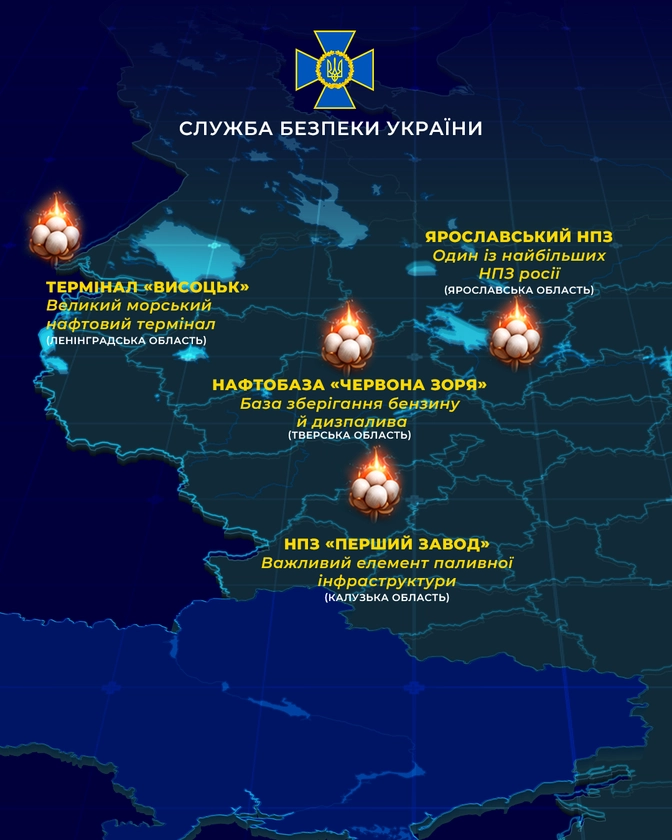
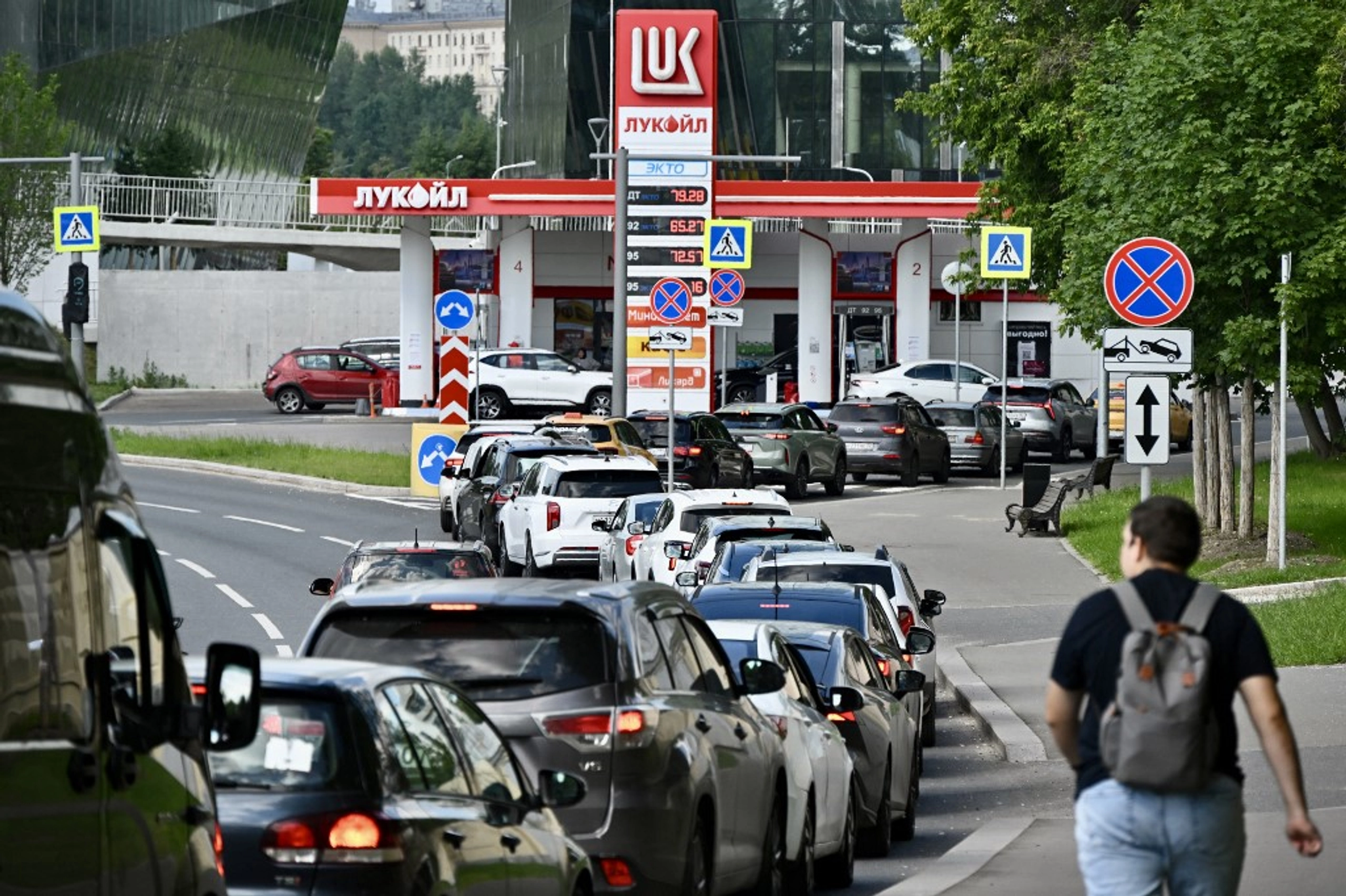
Following the intensification of Ukrainian deep strikes against Russian oil and gas infrastructure launched in early June, fuel station queues stretching for kilometers, or stations simply unable to sell fuel, have been reported outside Russia-occupied Crimea across the Russian Federation — from its westernmost region, Kaliningrad on the Baltic Sea next to Poland, to Russia’s easternmost region, the Maritime Provinces on the Sea of Japan.
The worst outage widely reported was a 600-plus-kilometer (373-plus-mile) stretch of federal highway between the major Siberian cities of Chita and Ulan-Ude, where, per late-June reports, drivers wishing to transit the route north of Mongolia had to carry fuel in jerry cans because every station on that stretch of road had had no product to sell for more than a week.
The Moscow-loyal news agency Izvestiya, in a Monday report headlined “No More Trade: In the Regions, State Orders for Fuel Are Getting Canceled,” warned that the fuel crisis was far more than spot shortages, and that across the country, the biggest fuel customer of all – the Russian state – was slashing orders because the market was unwilling to supply fuel at any price.
Izvestia has found at least ten failed, canceled, or repeated tenders for fuel. In Samara, no one wanted to supply gasoline to the regional medical center; in Tambov, the administration’s motor pool was left without fuel; and in Stavropol, rescue workers have repeatedly rescheduled their procurement,” the outlet reported.
“Suppliers find it more profitable to sell gasoline retail than to commit to a fixed government contract price. This threatens budgets with unnecessary expenses, even though ambulances, buses, and utility services are being saved by reserves and priority deliveries,” the report said.
Moscow formally acknowledged Ukraine’s drone strike campaign targeting Russian fuel and energy infrastructure – underway and relentlessly accelerating since late July 2025 – only on Friday, when Deputy Prime Minister Alexander Novak admitted Russia faces a national fuel crisis “due to the [Ukrainian] strikes.”
The Russian stock market plunged to its lowest level since February 2023 on the news, with shares in state oil and gas transportation company Transneft and national electricity producer Inter RAO among the biggest losers.
Moscow has moved to free up fuel supplies by removing pollution control standards and allowing the production and use of higher-lead fuel in cars, by tapping into the national strategic fuel reserve and selling army-designated fuel stores on the commercial market, and by opening talks with China and Japan on future imports of refined fuel products.
You can also highlight the text and press Ctrl + Enter

OPINION: The Bill for Crimea Comes Due for Putin