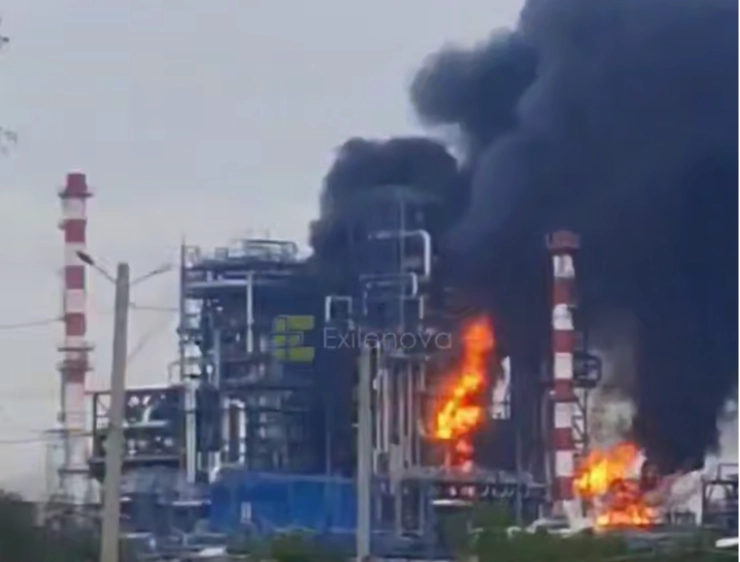
Russia’s oil refinery output has dropped by over 60%, hitting its lowest level in 21 years since 2005, according to data from Energy Aspects (EA).
Bloomberg, citing EA Analytics data, reported that Russia’s crude processing rate fell to 3.91 million barrels per day in July 2026, down more than 1.4 million barrels per day from the previous year’s average.
JOIN US ON TELEGRAM
Follow our coverage of the war on the @Kyivpost_official.
The outlet said EA Analytics gathers the data by “monitoring the entire crude supply chain, from satellite tracking of oil fields and storage tanks to real-time cargo flows,” adding that Moscow has classified official data and thus “making independent assessments of damage to the industry challenging.”
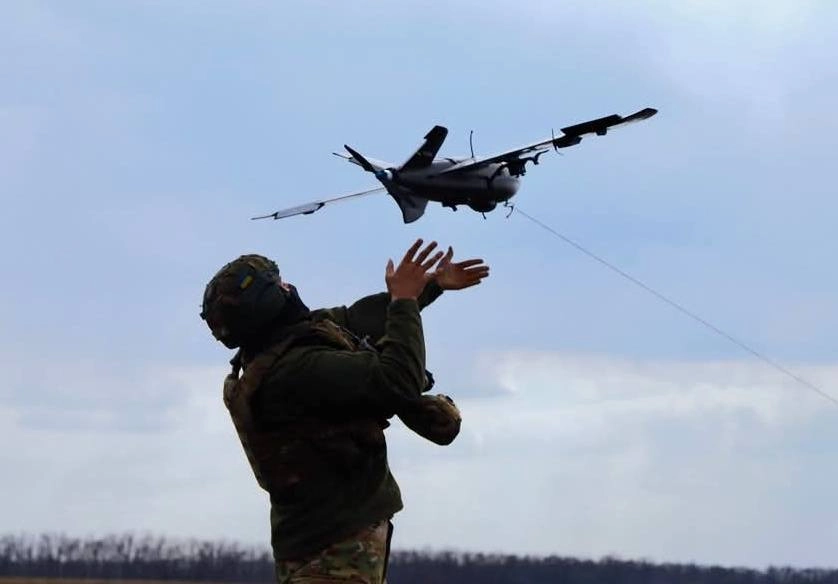
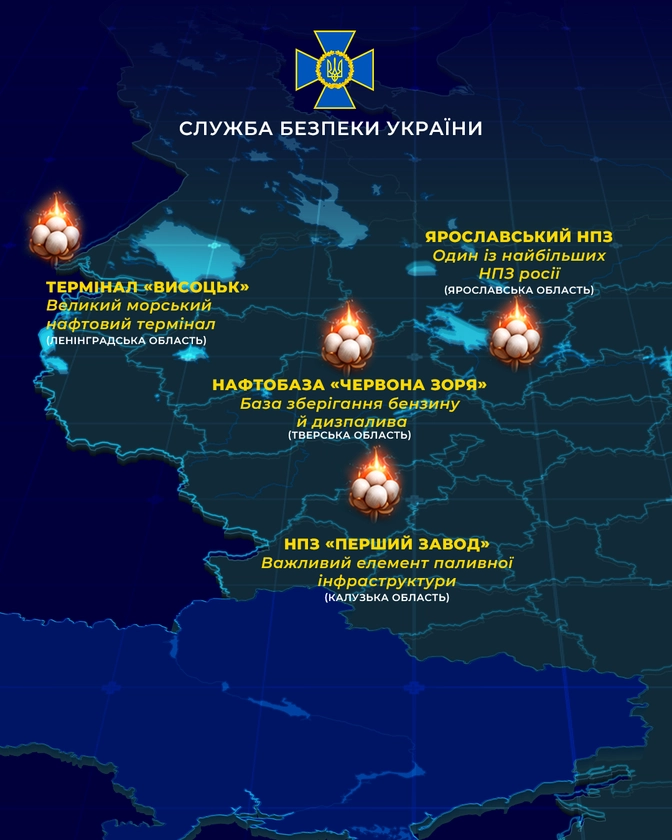
The drop comes amidst Ukraine’s intensified strikes against Russian oil refineries nationwide in recent months.
Ukraine’s General Staff claimed in early July that the strikes disabled 42.7% of Russia’s total projected oil refining capacity.
Bloomberg, citing its own tally, reported that Ukraine has likely struck at least 24 of Russia’s 34 large refineries in 50 attacks over the past 100 days.
The strikes included a July 6 attack on the Omsk refinery, Russia’s largest, which Bloomberg described as a key domestic fuel supplier, with Reuters confirming that the attack had forced the refinery offline.
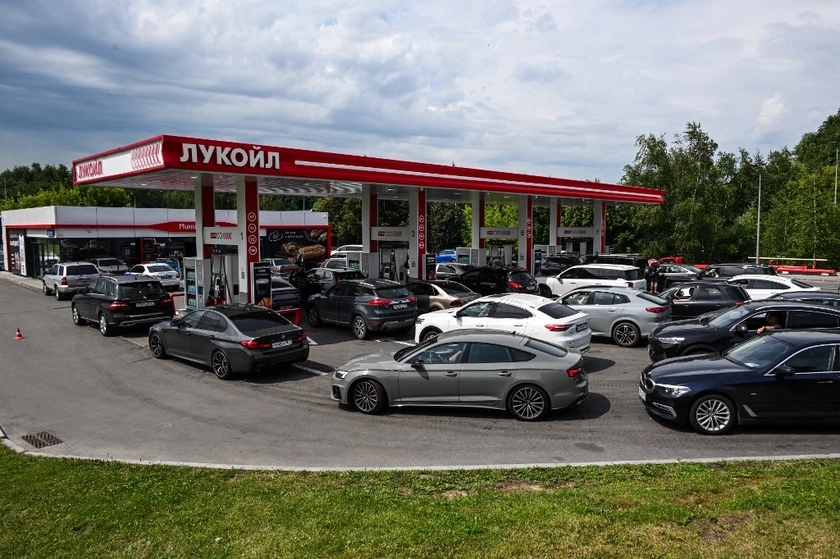
The months-long attacks led to an extensive fuel crisis in Russia and occupied Ukraine.
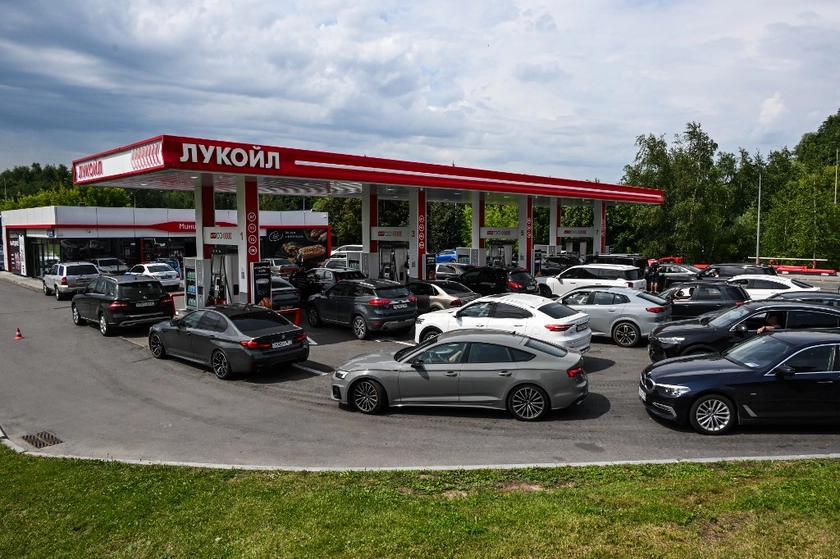
Fuel rationing is reported nationwide across Russia, with locals complaining of queues and isolated confrontations between locals and law enforcement.
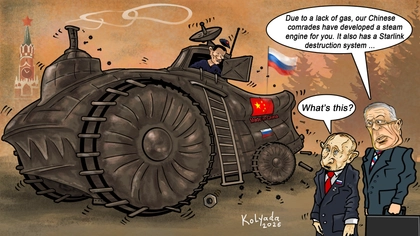
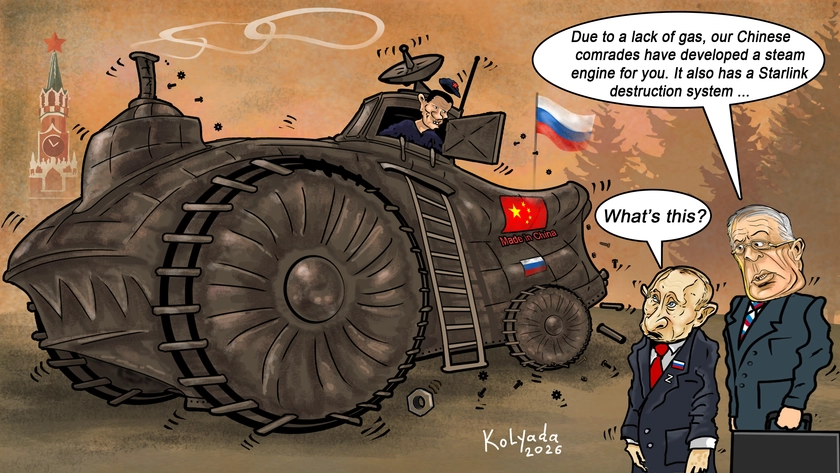
CARTOON: ‘With a Little Help’ from Chinese Friends
In response to the widespread domestic fuel shortage, local authorities in Russia’s Krasnodar region have directed public school teachers to work shifts at gas stations to monitor queues and manage interactions with drivers.
As a result of the crisis, Russia has banned exports of gasoline starting in April, of jet fuel starting June 1, and of diesel starting July 8.
Moscow was also reportedly in talks to import gasoline from India and Kazakhstan in June.
While Kyiv framed the campaign as an effort to pressure Moscow into negotiations, Kremlin spokesperson Dmitry Peskov dismissed the initiative, saying Russia would respond by seeking to capture more Ukrainian territory.
You can also highlight the text and press Ctrl + Enter

OPINION: The Bill for Crimea Comes Due for Putin
‘Shadow Fleet Is Leaving the Chat’: Ukraine Hits 10 Russian Fuel Tankers in One Day