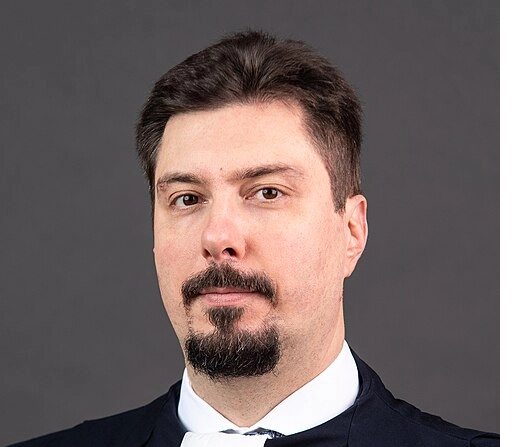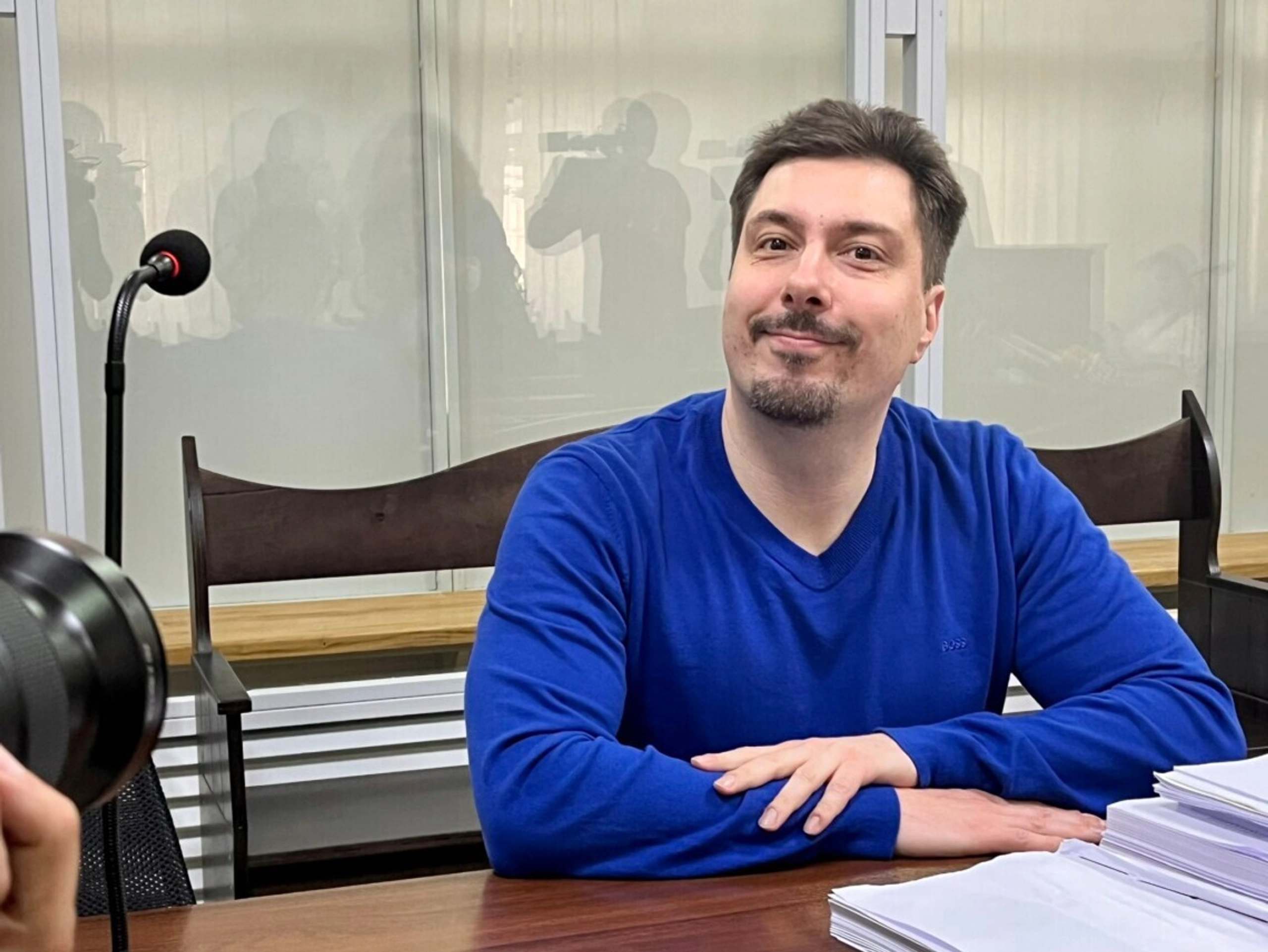
Several Ukrainian media outlets reported this week that former Chief Justice of Ukraine’s Supreme Court Vsevolod Kniaziev has entered into a plea agreement in the criminal proceedings against him.
Instead of the 12-year prison sentence prescribed by law for accepting a particularly large bribe, Kniaziev will serve five years in prison, return the bribe and donate an additional $1 million to Ukraine’s Armed Forces.
JOIN US ON TELEGRAM
Follow our coverage of the war on the @Kyivpost_official.
The case involved a $2.7 million bribe allegedly paid in exchange for securing a court ruling in favor of Ukrainian businessman Kostiantyn Zhevago.
How did this happen?
Vsevolod Kniaziev served as Chief Justice of Ukraine’s Supreme Court, the country’s highest judicial authority, from 2021 to 2023.
He became head of the court in 2021 following judicial reforms introduced several years earlier.
Previously, only a professional judge with at least 15 years of judicial experience could become a Supreme Court judge or chief justice. Under the new rules, the experience requirement was reduced, and candidates were no longer limited to sitting judges. Any qualified legal professional could apply.
Kniaziev passed interviews, integrity assessments and background checks for previous corruption allegations. At the time, he was declared to have an impeccable reputation, and influential anti-corruption civil society organizations raised no objections.
However, in 2023, detectives from the National Anti-Corruption Bureau of Ukraine (NABU) detained him in a record-breaking bribery case.
How the Brother of Ukraine’s Top Investigator Came to Own 143 Apartments
According to investigators, the bribe was allegedly intended to secure a Supreme Court ruling in favor of Zhevago by overturning a lower court decision.
The Grand Chamber of the Supreme Court was expected to overturn a Sept. 12, 2022 ruling by the Northern Commercial Court of Appeal, under which Zhevago’s company would lose control of shares in the Poltava Mining and Processing Plant.
According to prosecutors, the scheme was organized through intermediaries — lawyer Oleh Horetskyi and notary Kyrylo Horburov — while Kniaziev was responsible for ensuring the desired outcome inside the court. Horburov allegedly acted as an intermediary during negotiations between the lawyer and the judge.
Prosecutors said Kniaziev was to receive $2 million under the arrangement proposed by Zhevago’s lawyers, while another $700,000 was allegedly intended for people associated with Zhevago.
According to the prosecution, Kniaziev allegedly determined the amount and distribution of the bribe payments, received the cash and distributed it among judges.
He was detained while receiving the second cash installment.
The investigation lasted three years.
As the prospect of a court verdict approached, Kniaziev agreed to a plea deal with the investigation.
The High Anti-Corruption Court found him guilty and approved the agreement. Under its terms, Kniaziev fully admitted guilt and agreed to provide incriminating testimony against alleged accomplices.
According to the prosecution, those alleged accomplices include Grand Chamber Supreme Court Judge Zhanna Yelenina and Supreme Court judges Iryna Hryhorieva, Ihor Zhelieznyi and Oleksandr Prokopenko.
Prosecutors allege that all of them received shares of the bribe distributed by Kniaziev.
Why does the plea deal matter?
The agreement raises two key questions: whether it will have consequences for Zhevago himself, and whether plea agreements will become a more common tool in high-level corruption cases investigated by NABU.
At this level, the Kniaziev case is one of the first of its kind in Ukraine’s legal system.
Legal experts say that if more corruption suspects begin entering plea agreements, the number of implicated officials could grow significantly.
This is especially relevant as NABU is currently investigating dozens of high-profile corruption cases, including proceedings involving more than ten members of parliament, among them lawmakers from Servant of the People, President Volodymyr Zelensky’s political party.
The inefficiency of Ukraine’s bureaucratic system, which has often encouraged officials to “cut corners” to resolve issues, could now contribute to what some legal observers describe as a potential wave of criminal cases involving government officials and lawmakers.
Could Zhevago be affected?
For Zhevago, however, the situation may be more complicated for investigators.
Since only his lawyer is mentioned in NABU case materials, sources interviewed by Ukrainska Pravda believe the businessman could argue that he had no knowledge of his lawyer’s alleged plans and that the substantial payment was made solely for legal services.
According to the publication, Zhevago’s defense may argue that he never instructed anyone to deliver a bribe to Kniaziev and that his representative merely proposed a large legal success fee contingent upon winning the case.
This possible defense strategy was described to Ukrainska Pravda by an unnamed lawyer who had previously worked with Zhevago.
“Let’s assume the lawyers, or other individuals involved in the case, decided that, in order to guarantee success, they would offer Kniaziev $2 million and keep another $1 million for themselves,” the lawyer said.
Under such a scenario, Zhevago could maintain that he knew nothing about any plan to pay a bribe.
In that case, the lawyer said, prosecutors could face serious difficulties proving the businessman’s direct involvement.
For Ukraine’s anti-corruption system, the Kniaziev plea agreement may become more than the conclusion of one high-profile case. It could also become a test of whether plea deals can help investigators move beyond individual suspects and expose wider corruption networks at the highest levels of the state.
You can also highlight the text and press Ctrl + Enter