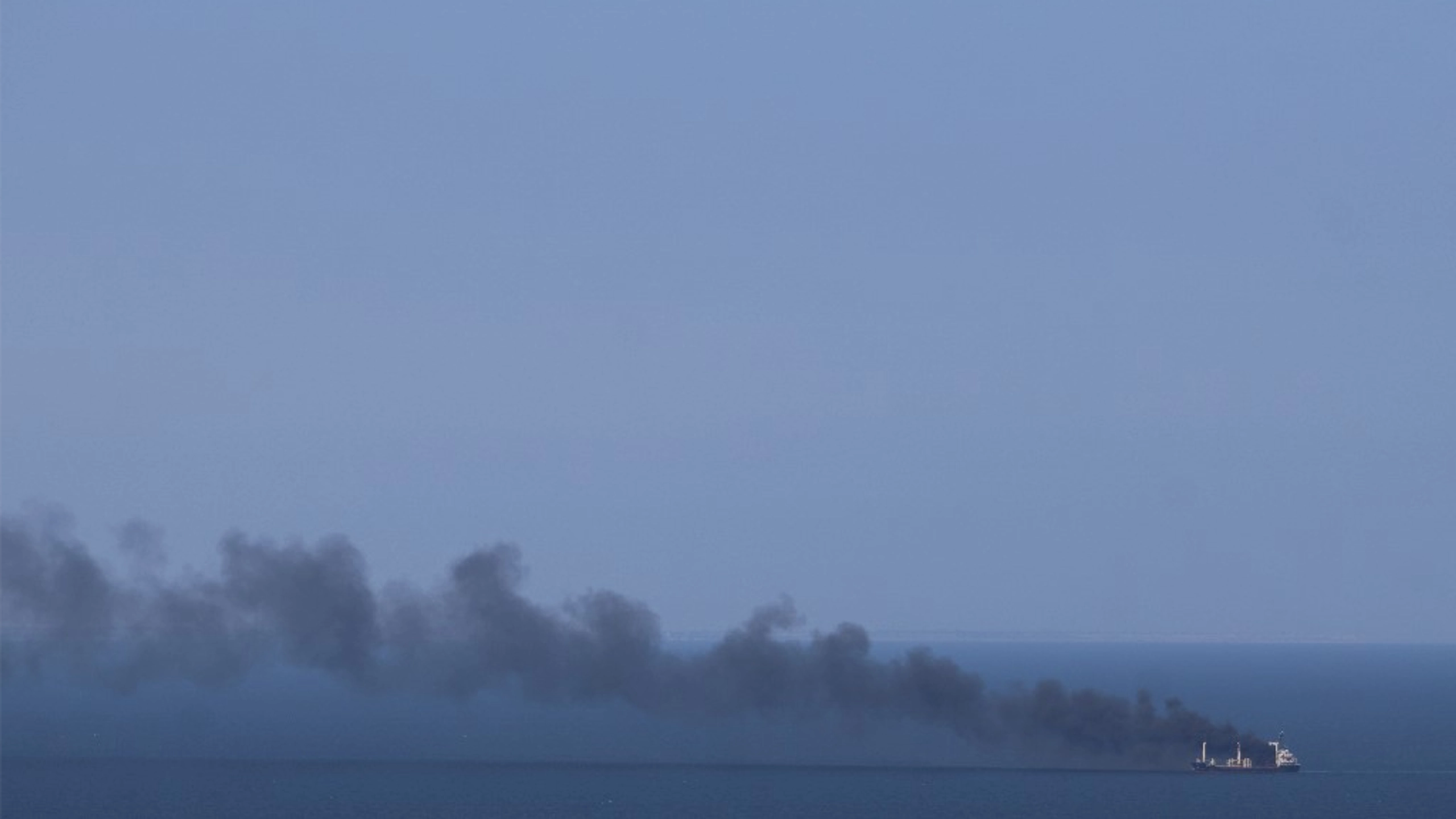
A civilian cargo ship hit lethally by Russian cruise missiles sank in the Black Sea on Sunday, Ukrainian news platforms reported.
The MV Golden Leo, a coastal transport loaded with corn at the time she was hit, went down within sight of shore near the port city of Odesa, capsizing following progressive flooding following a July 19 Russian Air Force attack with three X-59/69 anti-ship missiles.
JOIN US ON TELEGRAM
Follow our coverage of the war on the @Kyivpost_official.
Nine crew members and a Ukrainian harbor pilot died in the strike after at least one Russian weapon struck the ship’s bridge. The Golden Leo caught fire and burnt out, and had been adrift in nearly calm seas for a week before she rolled over and went down bow first mid-morning.
Officials in Ukraine’s Odesa Regional Administration (ORA) first announced the hulk had sunk, with Ukrainian military portals confirming the ship’s loss on Monday. Regional media reported the ship’s fuel bunkers had been full but coast guard and border patrols had not observed oil slicks near the sinking site.
Water depths in Odesa shipping lanes are relatively shallow ranging from 15-22 meters (49-72). Photographs published by the ORA seemed to show the ship sank within Ukraine’s 12-nautical-mile territorial waters line. According to reports at the time, the ship had been outbound from the Ukrainian port Chornomorsk and en route to Romanian territorial waters with destination Istanbul when hit by the Russian attack.
Zelensky Updates Targets for Long-Range Strikes on Russia
At least four of the Golden Leo crew killed in the strike were India nationals.
Dehli on July 21 filed a strong protest to Russia over the attack, with India’s Foreign Ministry summoning Russia’s Chargé d’Affaires and senior diplomat in country Vladimir Ladanov to receive a formal note called a démarche.
The official Indian letter said Russian targeting commercial shipping and causing civilian deaths was “unacceptable…(because such attacks) undermine the safety, security, and stability of international maritime commerce.”
Russian military commanders the next day appeared either to have been unaware or uninterested in the Indian warning that drones hit the bulk carrier Golden Rose setting the vessel afire and forcing 16 foreign crew to abandon ship, and other kamikaze aircraft attacking cargo ships in the Ukrainian ports Odesa, Mykolaiv, and Chernomorsk.
Ukraine on July 6 opened a blistering massed drone strike campaign against Russian commercial shipping in the Black and Azov Seas. According to data compiled by Ukraine’s Unmanned Systems Forces (SBS) through July 22, Ukrainian robot aircraft had hit and damaged 126 Russian shadow fleet vessels in the Sea of Azov and 70 in the Black Sea.
Almost all the strikes were targeting the ship’s bridge or engine areas.
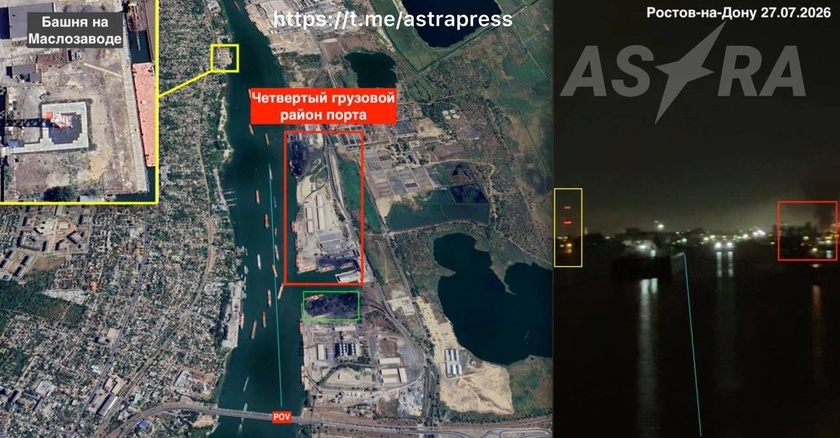
Russian air defenses, to date, have proved unable to prevent the attacks and by July 20 most vessels that previously had been riding at anchor in the vicinity of the Kerch Strait, had sailed up the Don River to the freshwater port of Rostov, to take shelter at port facilities inside the city.
Russian attacks
Russia’s armed forces have targeted civilian shipping in the Black Sea since the outset of the Kremlin’s invasion of Ukraine on Feb. 24 2022, but strikes have been relatively infrequent because most carriers of Ukrainian exports sail along a UN-sponsored corridor along the western Black Sea shore. Some partly travel through the territorial waters of NATO member states such as Romania, Bulgaria, and Turkey.
Actual and attempted Russian attacks against that ship cargo stream intensified in mid-July, possibly in retaliation for the thus far successful SBS campaign targeting Russian shadow fleet vessels. Russian strikes have mostly used conventional strike aircraft launching legacy anti-ship cruise missiles in the strikes, in contrast with SBS tactics favoring drone swarms.
According to the shipping journal The Marine Executive, Russia has probably attacked 20-28 commercial ships in the greater Odesa area in July.
Key incidents, aside from the Golden Leo, include a July 13 strike that hit a Togo-flagged ship reportedly unloading mineral fertilizers, with five crew killed and 10 injured. On July 14–15 strikes hit Tanzania, Marshall Islands, and Liberia-flagged vessels, killing a captain and injuring 11 sailors in total. During a July 18 strike, there was a strike hitting a Marshall Islands-flagged merchant vessel followed by a July 21 drone or rocket strike that hit a Panama-flagger bulker. Lastly, on July 21-22 attacks hit Odesa port facilities and an Antigua and Barbuda-flagged vessel, killing one.
The Russian attacks have taken place in Ukrainian territorial or international waters at least 60 sea miles (120 km) from NATO nation territorial waters.
The White House
On Saturday, the US newspaper Wall Street Journal reported the White House had warned Ukraine that it should stop attacking Russian tankers and shore facilities loading them. The US energy giant Chevron owns shares in a major tanker loading terminal in the Russian Black Sea port of Novorossiysk, with such strikes causing economical issues. Earlier on Friday, Kazakhstan officials accused Ukraine of attacking tankers carrying non-sanctioned Kazak oil and suggested the strikes were illegal.
During the previous government led by Democrat President Joe Biden, the US repeatedly condemned Russian anti-cargo ship strikes in the Black Sea as illegal and a direct violation of freedom of seas agreements signed by Russia.
The current administration led by Republican Donald Trump has called ensuring freedom of seas a top US national security objective. Thus, launching major military operations against Iran and the Iran-supported Houthis in a bid to keep ship traffic moving through the Persian Gulf’s Strait of Hormuz and the Red Sea’s Bab al-Mandab Strait.
However, protecting freedom of navigation in the Black Sea and preventing Russian attacks on it have not been a Trump White House priority.
Trump and other US officials have said the US national interest and Black Sea navigation is best served by major Ukrainian concessions and a quick peace deal on Russian terms, a strategy not supported by Ukraine or its allies. Kyiv officials have said as long as Russian forces are invading Ukraine, ships supporting the Russian war economy will be fair targets for SBS operators and pilots, particularly tankers carrying Russian product for export.
You can also highlight the text and press Ctrl + Enter