Ukraine’s Verkhovna Rada has approved a new government, with a new cabinet of ministers headed by former Naftogaz CEO Serhiy Koretsky. However, the government was approved with one major caveat: it was incomplete. It lacked both a foreign minister and, most importantly, a defense minister. These two positions fall under the president of Ukraine’s constitutional quota, meaning the president must personally nominate them to parliament.
President Volodymyr Zelensky did not nominate anyone today. As a result, Ukraine now has a government without its most important minister.
JOIN US ON TELEGRAM
Follow our coverage of the war on the @Kyivpost_official.
Why does this matter?
First, because Ukraine is fighting a full-scale war. Second, because Ukraine’s defense budget effectively constitutes the entire state budget – with Western partners financing social expenditure. That defense budget is projected to reach $100 billion in 2026.
So why did this happen? Why have people taken to the streets and what happens next?
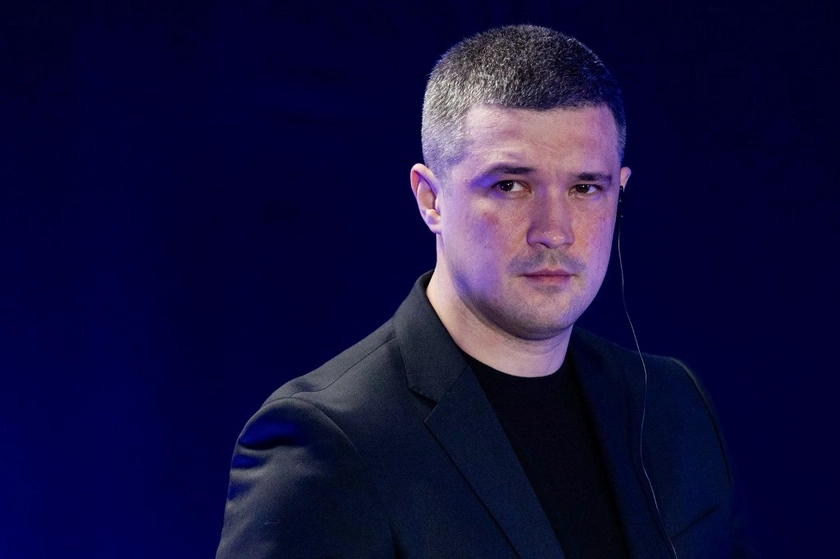
Fedorov’s name is the one that matters
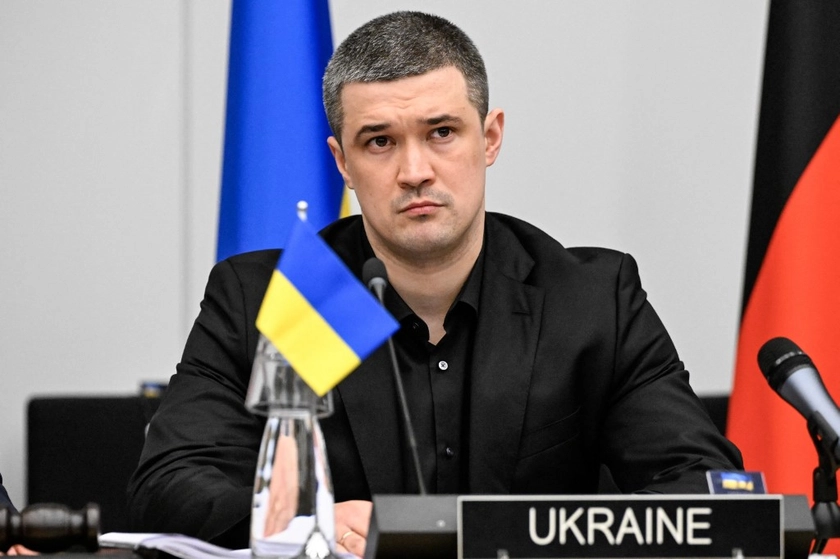
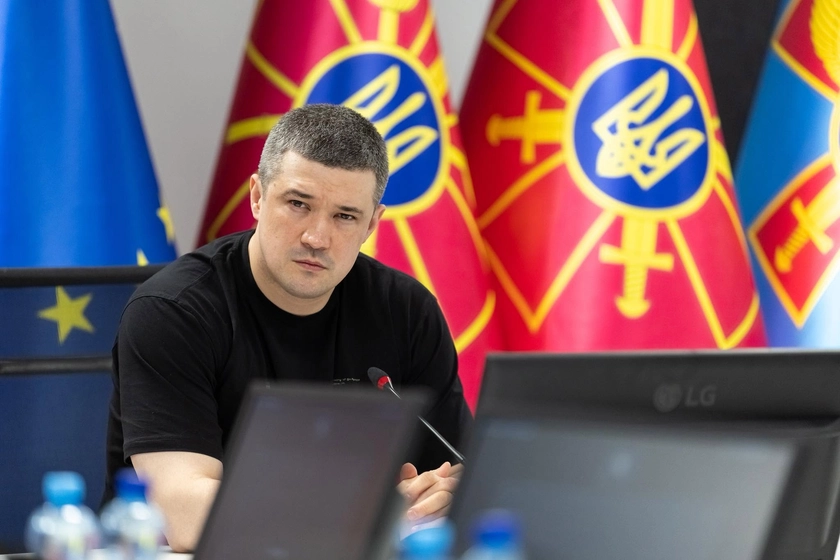
As of the afternoon of July 15, the reshuffle appeared straightforward. The plan was to replace Mykhailo Fedorov – the reform-minded minister who had launched transparent procurement, certification, and quality-control reforms at the Ministry of Defense, infuriating the military bureaucracy. Taking his place would be Interior Minister Ihor Klymenko, who, while not a military officer himself, at least had experience leading a major ministry.
Who Is Mykhailo Fedorov?
However, society would not simply ignore Fedorov’s dismissal.
According to several Kyiv Post sources, it seemed the resignation of Prime Minister Yuliia Svyrydenko’s government – one that, over the course of a year, had committed no major mistakes – had been orchestrated solely to remove Fedorov. Dismissing such a popular reformist minister directly would have caused an enormous scandal.
Yet the outcome proved no better.
One EU expert told Kyiv Post what he expected would happen on July 16 and whether Fedorov would indeed be dismissed.
“Listen, everyone involved in Ukrainian affairs is asking whether Fedorov will remain in the new Cabinet. Nobody is interested in the composition of the government – they are just interested in him,” she remarked.
Days earlier, rumors of Fedorov’s possible dismissal had already sparked widespread disappointment among Ukraine’s expert community.
The young minister had no obvious failures or major mistakes to his name. On the contrary, Ukraine had dramatically expanded drone procurement, introduced an electronic points system rewarding soldiers for destroying enemy targets, provided unprecedented support to dedicated drone units that were able to clear entire sections of the front, and shifted toward systematic deep-strike and medium-range strike campaigns that inflicted serious damage on Russian forces and helped Ukraine regain the initiative.
These developments gave Ukrainians hope after two difficult years and the harshest winter of the war – that military fortunes were finally beginning to turn in Ukraine’s favor once again.
The potential dismissal of the popular reformist minister felt like a bitter betrayal of that hope. But the longer events unfolded, the clearer it became that Fedorov’s energetic reform efforts within the entrenched ministry bureaucracy appeared to be the most likely reason for his removal.
“Everyone understood that whichever choice the president made – supporting reformers or choosing ‘stability’ – there would be a scandal,” one Kyiv Post source inside parliament said.
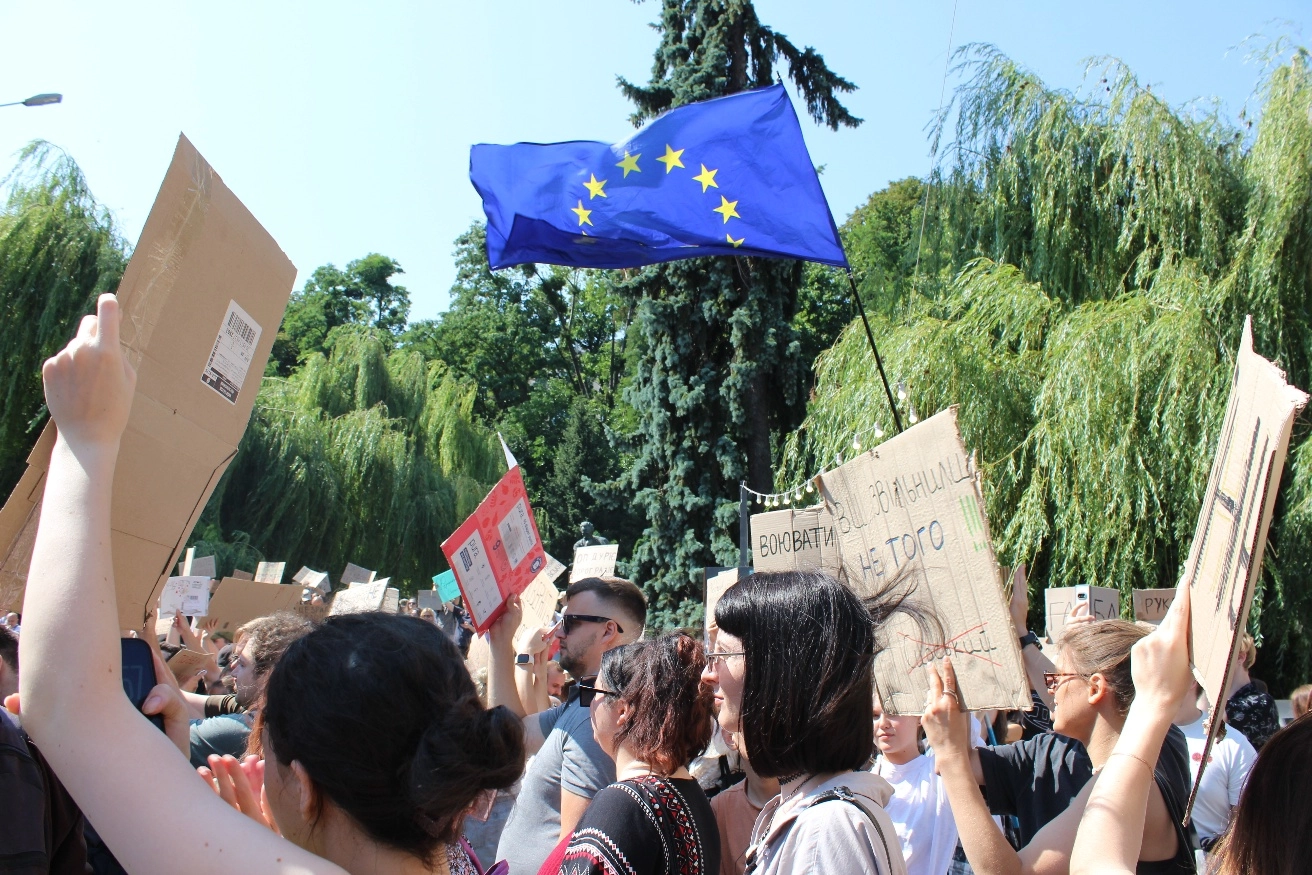
On the evening of July 15, once it became clear that Fedorov would not be part of the new Cabinet of Ministers, people began gathering for spontaneous protests in Lviv. In the western Ukrainian city, long known for its active civic community, individuals carrying handwritten cardboard signs took to the streets, much as they had done exactly a year earlier during the government’s unsuccessful attempt to undermine the independence of the country’s anti-corruption institutions.
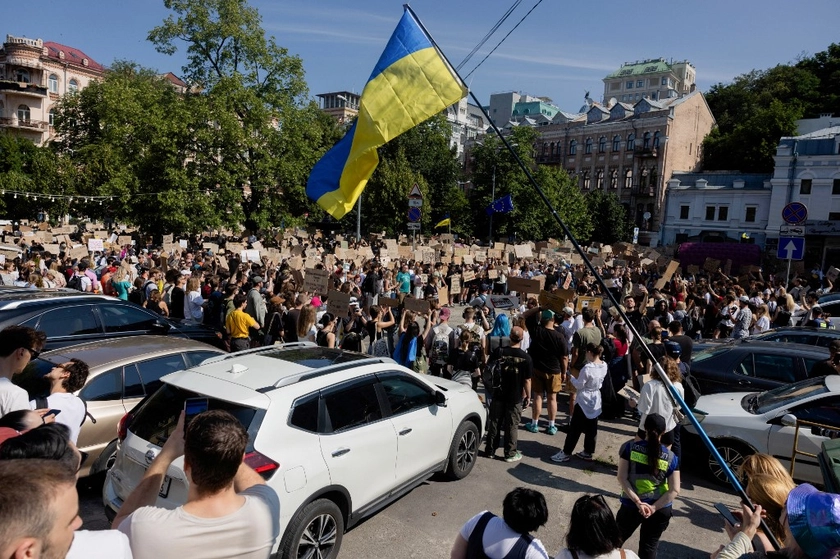
By the following morning, large-scale demonstrations had erupted in Kyiv, Lviv, Ternopil, Vinnytsia, Kharkiv, and other cities. Protesters rallied in support of Fedorov while demanding that Zelensky explain his decisions publicly – to parliament and to the Ukrainian people – instead of making them unilaterally.
In Kyiv, despite the fact that Thursday was a working day, between 5,000 and 7,000 people, mostly young Ukrainians, gathered near the Ivan Franko National Academic Drama Theater, not far from the Presidential Office.
Their chants included “Fedorov!”, “Shame!” and “If it works, don’t touch it!”
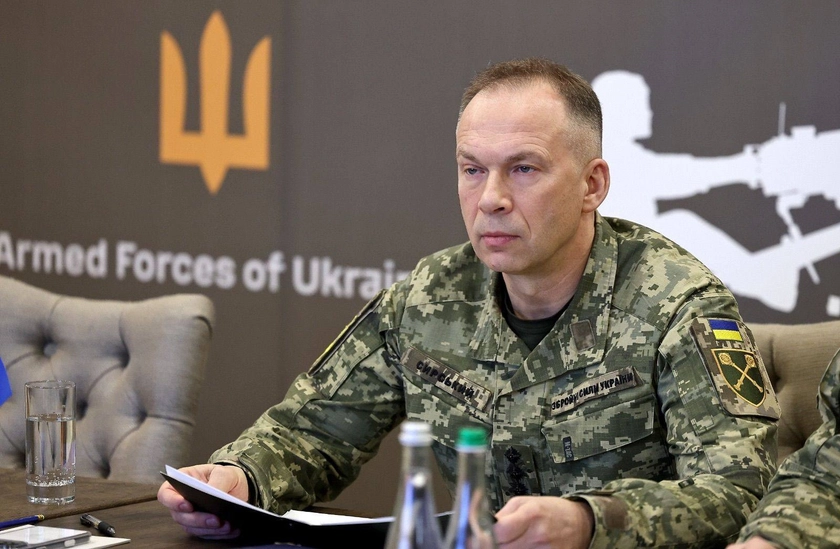
The demonstrators demanded that Fedorov be returned to the defense ministry leadership. They also called for the dismissal of Commander-in-Chief Oleksandr Syrsky, whom they associate with scandals surrounding assault units where crimes against soldiers’ lives and health have allegedly occurred, as well as with outdated methods of military leadership.
For many protesters, Zelensky’s decision to preserve his relationship with the old military bureaucracy instead of backing a minister who had begun implementing reforms was deeply disappointing. The prevailing mood at the rally was one of resignation and bitterness, with many believing that military reforms would now be rolled back.
“I’m simply amazed that the president could step on exactly the same rake twice and produce exactly the same consequences within a single year,” one protest organizer said.
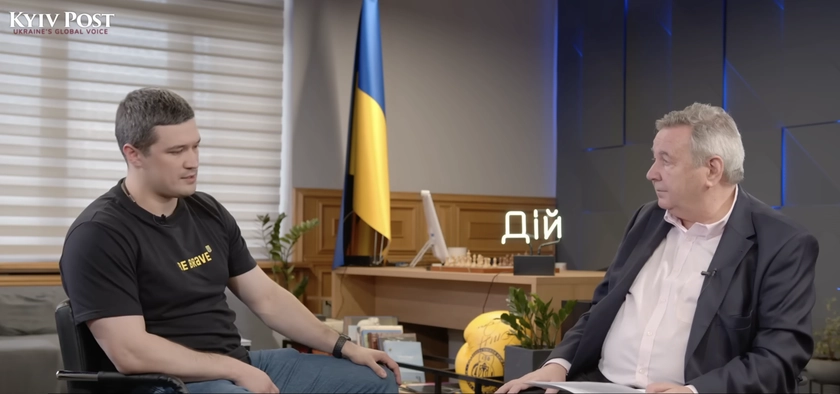
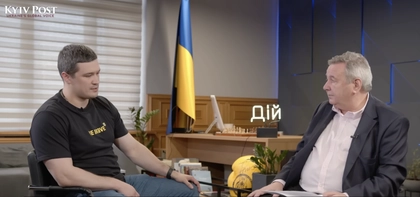
Meanwhile, Fedorov himself appeared before reporters wearing his trademark plain T-shirt and delivered an unusually frank press conference.
He confirmed that his dismissal stemmed from his attempts to reform the defense ministry and from his conflict with the General Staff and Syrsky.
“It took us four months to approve a project to supply brigades with drones because of bureaucratic infighting. For six months, we couldn’t change the structure of the Ministry of Defense because the General Staff refused to approve it. They kept saying this wasn’t written correctly, that wasn’t written correctly. In six months, we barely managed to transfer a handful of people into the ministry.”
According to Fedorov, he eventually approached Zelensky with what he believed was the only viable solution: replacing senior military commanders whom he accused of effectively sabotaging reforms:
“I never said “either me or Syrsky.’ Zelensky refused to dismiss him. Fine. I was prepared to continue working with the commander-in-chief. But after that, all of our initiatives began to be blocked. Syrsky is not prepared to speak openly about the problems. Then he issued an ultimatum. Instead of thinking about how to defeat Russia, he figured out how to divide the country.”
Despite the war, Fedorov argued that the ministry had accomplished a great deal during his six months in office.
Among various achievements, he cited a significant increase in Ukraine’s medium-range strike capabilities and the launch of industrial-scale procurement of drones.
“Our interceptor drones are now shooting down 70 to 80% of Shahed drones. Another example: last year we contracted for 12,000 unmanned ground vehicles. This year we’ve contracted for 50,000.”
Fedorov also revealed details about efforts to disable Russian access to Starlink, which he described as one of the turning points that shifted momentum back toward Ukraine during the winter.
“We realized that if we didn’t disconnect the Russians from Starlink, we’d have a serious problem. Guided Shahed drones, operated over our territory, could strike virtually anything because of their sheer numbers. So we decided to contact Elon Musk directly. Frankly, it seemed like there was only a 1% chance it would work. But Elon said, ‘Let’s talk by video,’ and we did.”
Throughout the press conference, Fedorov was remarkably candid.
He argued that Ukraine’s mobilization challenge cannot be solved through financial incentives or short-term recruitment contracts alone. Instead, he said, it requires an entirely new social contract between the state and its citizens.
“It’s impossible to solve the mobilization problem without addressing all the systemic issues I’ve just described. Do you think young people are discussing enlistment contracts right now? They’re not. They’re discussing the commander of the 155th Brigade and what happened there. They’re discussing the scandals involving assault units. The question is: what exactly are we selling people? A lie? No. We have to change the product. Ukrainians deserve that. Ukrainians know how to take responsibility.”
This unusually direct criticism from a sitting defense minister quickly spread across Ukrainian society, fueling the growing public debate over the government’s direction.
The mass protests, amplified by Fedorov’s candid remarks – which rapidly spread through an already disillusioned society – had an immediate political impact.
Lawmakers from the governing majority, many of whom had grown weary of being expected to support presidential decisions without prior consultation, signaled that they were prepared to approve the new government. However, they refused to vote for a new defense minister.
“There simply aren’t enough votes for a new defense minister. That’s a fact,” one opposition MP told us earlier that day.
This was particularly significant given that members of both the opposition and the governing majority had previously supported Fedorov.
Later, a deputy from the pro-presidential majority reported that the leading candidate for defense minister – Klymenko – had declined the nomination.
As a result, Zelensky chose not to submit any candidate for the position of defense minister.
“We’ve ended up in a paradoxical situation: we have a government without a defense minister. Any defense ministry leadership that doesn’t include Fedorov is going to look bad to the people in the streets. But at the same time, the ministry still has to function. We may find ourselves with no defense minister at all, in a country that is at war,” one senior government official told Kyiv Post, expressing his concerns.
The first – and perhaps most obvious – solution would be to bring Fedorov back to the Ministry of Defense. At first glance, this would not seem especially difficult. After all, it would not be the first time Zelensky has reversed course following large-scale public protests. He did so only a year ago.
Moreover, relations between Fedorov and Zelensky do not appear to have broken down completely. Throughout his unusually frank press conference, Fedorov spoke cautiously about the president, repeatedly emphasizing that he respected and supported him, just as he had throughout their seven years of working together.
On the other hand, returning Fedorov to office would not be straightforward. Fedorov made it clear that he has no interest in holding a title without genuine authority to carry out reforms.
“I don’t need a position for the sake of having a position. I need it in order to win the war,” he said.
Yet granting Fedorov real authority – and allowing him to pursue the sweeping reforms he advocates – would inevitably bring him back into conflict with the military hierarchy headed by Syrsky, a relationship that Zelensky appears reluctant to jeopardize.
Several experts have proposed another solution.
One of them, Anatolii Tkachuk, a leading architect of Ukraine’s decentralization reform, suggested appointing Fedorov to lead a separate institution responsible for defense procurement. Such a body, operating outside the Ministry of Defense, could implement reforms without becoming entangled in existing military bureaucracy.
“It is necessary to establish a Ministry of Armaments, Ammunition, and Industry. As long as the war continues, this ministry should accelerate research and development, expand weapons production, and simultaneously prepare the country for a new wave of industrialization,” Tkachuk wrote.
Coincidentally, one institution that might fit this description is the state defense industry conglomerate Ukroboronprom. It currently has a vacant leadership position following the recent departure of its Director General Herman Smetanin.
Still, many observers regard this option as unconvincing.
Ukraine has already experimented with creating a specialized Ministry of Strategic Industries, but the ministry survived for little more than a year before ultimately being absorbed into the Ministry of Defense.
For now, Ukraine finds itself without a defense minister, without a stable parliamentary majority, and with thousands of angry demonstrators in the streets.
Is this the beginning of a broader political crisis? Or will Ukraine find a way to prevent one?
On July 16, just as this article was going to press, President Zelensky announced he had instructed Yevhen Khmara to temporarily act as Minister of Defense. Some analysts have questioned the legality of the move. Zelensky said Khmara is to continue reforming the defense sector and will ensure results.
From Zelensky: “I just spoke with Yevhen Khmara about our long-range operations against Russia and the provision of necessary means to security units and Ukraine’s Defense Forces. It is critical that there is a strategic vision for Ukraine’s ongoing active efforts to defend our independence and force Russia into diplomacy. Yevhenii Khmara has gained extensive and, in many respects, unprecedented experience with technological combat operations. This is exactly where our defense efforts should be focused during this war.”
The coming days will determine what the long-term solution might look like.
You can also highlight the text and press Ctrl + Enter

Trump Says US Will Let Ukraine Build Patriot Systems: ‘We’ll Show Them How to Make Them’