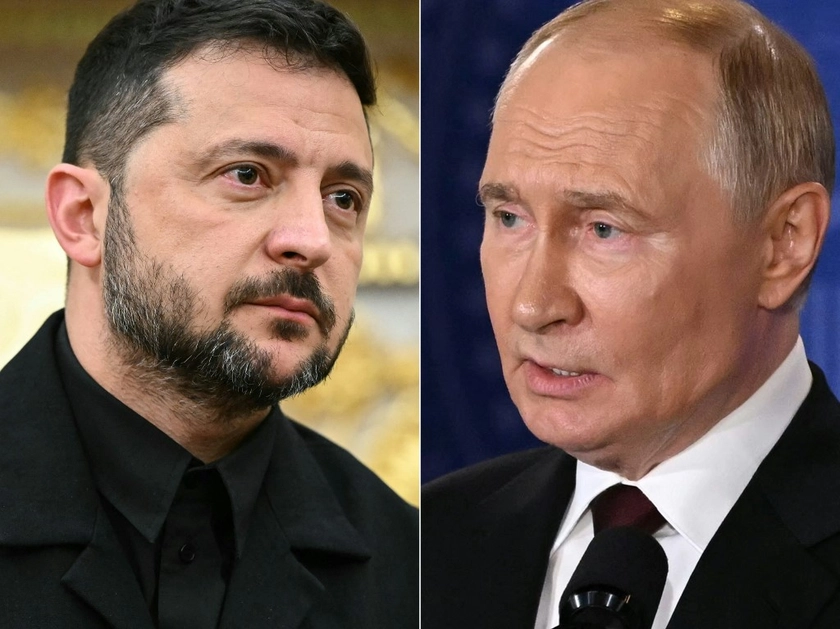
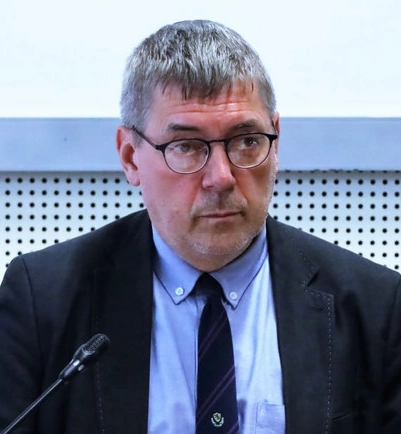
The recent intensification of peace negotiations has revived debate about the causes of the war in Ukraine and what each side has achieved so far. Kyiv Post spoke with geopolitical analyst Manlio Graziano, based in Paris and formerly a professor of geopolitics at Sciences Po and the Sorbonne.
JOIN US ON TELEGRAM
Follow our coverage of the war on the @Kyivpost_official.
Russian officials often claim that Russia has a geopolitical right to dominate Ukraine based on historical and cultural ties. Can we consider this the ideological basis for the Russian invasions of 2014 and 2022?
If we speak of ideological foundations, then yes – as long as we understand ideology as the reversal of reality. I’ve heard some Ukrainian historians argue that it’s Ukraine that has historical rights over Russia, claiming that Russia “stole” its name because the first Russian state originated in Kyiv. This kind of retreat into ancient history to justify modern territorial claims is purely ideological. If we followed that logic, Italy would have the right to reclaim not just Libya, but Romania, Great Britain, and much of Europe, simply because these regions were once part of the Roman Empire.
Historically and politically, such arguments have no real basis. Actually, the Russians are not claiming rights over Ukraine – they are claiming the right to rebuild the Russian Empire.
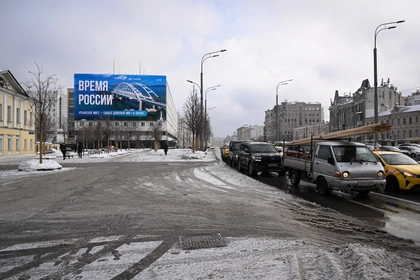
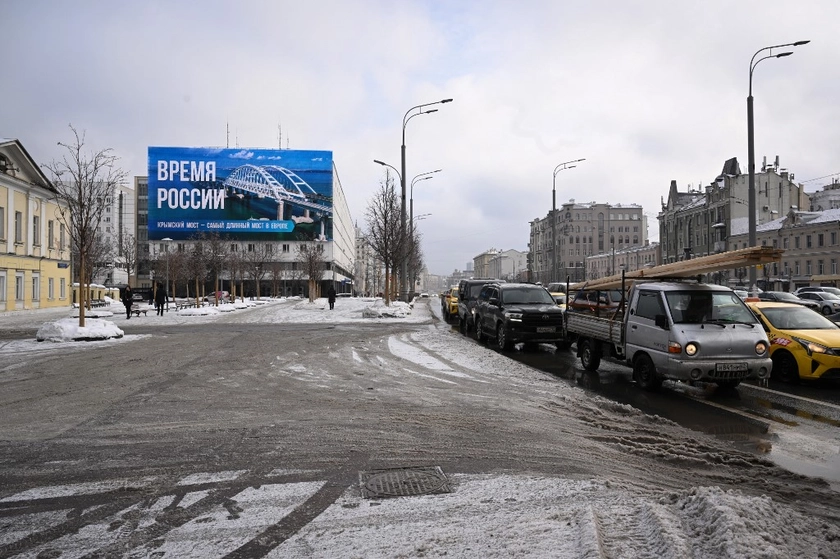
Russia Disguises Fuel Trucks as Milk Tankers to Reach Crimea
When Putin said in 2005 that the collapse of the Soviet Union was the greatest geopolitical catastrophe of the 20th century, he made his intentions clear. But even earlier, when Yeltsin and the leaders of Ukraine and Belarus dissolved the USSR in December 1991, they immediately created the Commonwealth of Independent States and openly stated that that was the beginning of a new Union. In other words, the plan to rebuild the Union began the moment the Soviet Union fell apart.
Actually, the Russians are not claiming rights over Ukraine – they are claiming the right to rebuild the Russian Empire
Putin intended to revive that plan. But any attempt – however unrealistic – to rebuild the Russian Empire must, from their point of view, begin with its Slavic foundation. After securing control over Belarus, Ukraine was next. And not just the 21 percent of Ukrainian territory currently under dispute – the plan was to take all of Ukraine. If Russia succeeded, it would claim legitimacy to reclaim the rest of the former empire. Perhaps not the Baltic states, but certainly the Caucasus and Central Asia.
Instead, Russia has shot itself in the foot. This war has cost it the influence it still had in the Caucasus and has pushed Central Asian states away. Russia is fighting a war it is visibly incapable of winning: the battle of Stalingrad lasted six and a half months; the battle for Pokrovsk has dragged on for 18 months and is still unresolved. The fact that Russia captured only 1 percent more of Ukraine in all of 2025 should settle the debate: Russia is not winning this war.
Yet some Italian commentators insist that Russia has won, arguing that Ukraine is financially bankrupt and dependent on Western aid. What criteria should we use to judge victory for both sides?
Victory depends on achieving your objectives. Russia has never clearly stated its goals, and by any reasonable measure, both sides have lost.
Ukraine resisted aggression and retains most of its territory, but militarily the war is essentially lost. Politically, the outcome is still uncertain.
Russia, however, has lost far more. Losing a war as the aggressor is more damaging than losing one as the victim. And Russia is losing not just on the battlefield but on every front. It is far weaker today than it was on Feb. 24, 2022, caught between a deepening economic crisis and the growing danger of becoming a backward, dependent province of an expanding Chinese sphere of influence.
Whatever political project Russia had before February 2022 is gone – burned along with Russia’s own future prospects. Its only possible escape is to reach an economic and strategic understanding with the United States, one that would help it regain ground against China. If the US were willing to support a strategic decoupling of Russia from China, things might change – but in the foreseeable future Russia can never recover what it could have had before 2022.
The Trump administration appears to be seeking an agreement with Russia to decouple it from China. Is this achievable?
The problem is that there is no single “American will.” Within the US administration there are many competing centers of power that often contradict one another. From a purely strategic, top-down geopolitical perspective, it is clear that the American national interest is to separate Russia from China. This idea goes back to Mackinder and the Cold War doctrine of containment: preventing the union of industrialized powers with Russia is essential to preserving US global primacy.
But this remains theoretical. Currently the United States does not seem to need help to undermine its own primacy, and is deeply divided domestically. Inside the administration, some – like Marco Rubio – seem to think strategically and to support the State Department’s traditional aim of decoupling Russia from China. Others, like JD Vance, want America to retreat from global engagement entirely. Trump himself wants a quick foreign-policy “win” before Jan. 21, and a Nobel Prize if possible, and perhaps profitable deals with Russia.
Within the US administration there are many competing centers of power that often contradict one another
So speaking of a single “American goal” is meaningless. Strategically, the US should prioritize breaking the Russia-China partnership. But I doubt many people in Washington today are thinking in long-term strategic terms.
Before the 2024 election, some in the State Department said, “Let’s play the Trump card” (and it was not a pun), because although Trump doesn’t understand geopolitics, he admires Putin and might find a way to end the war. That hope proved naïve. Trump is unpredictable and has severely damaged global confidence in the United States through sheer incompetence.
In 2014, European governments responded with largely symbolic sanctions. This time, however, they have committed to Ukraine militarily, politically, and financially – albeit, dragged by the scruff of the neck. Is this a turning point in Europe’s role in foreign policy?
I would not say so. The key phrase is by the scruff of the neck. After 2014, France and Germany promoted the Minsk agreements, seeking compromise with Russia. Even in February 2022, days before the invasion, Macron and Scholz travelled to Moscow in a desperate attempt to prevent war. Germany also had strong economic incentives tied to Nord Stream. More broadly, European powers have long believed it useful to keep Russia as a card they can play when needed.
That is why I was surprised when, in the wake of Feb. 24, Germany immediately suspended the pipeline and France aligned with the US after the invasion. Essentially, the Americans forced the pace. I think that, essentially, France and Germany did not want to repeat the awkward situation of 2003, when their opposition to the Iraq War isolated them from the rest of Europe, which strongly supported the US. Whether by design or not, the US exploited these divisions – Rumsfeld’s “old” vs. “new” Europe – and managed to weaken European unity.
Putin treated Macron and Scholz with open disdain during their pre-war visits – a humiliation not easily forgotten
In 2022, the risk of completely losing Europe’s unity was even greater. If France and Germany had opposed American leadership again, they would have alienated not only Washington but also nearly all of Central and Eastern Europe (with the likely exception of Hungary). On top of that, Putin treated Macron and Scholz with open disdain during their pre-war visits – a humiliation not easily forgotten.
In the end, Europe supported Ukraine because it could still rely on the United States. But now that US commitment is more than uncertain, Europe is left exposed. Formally it maintains its position, but in reality, it lacks leverage.
How did the Ukrainian leadership prepare after 2014, and what risks do you see in the current diplomatic process?
Since 2014, Ukraine strengthened its military cooperation with Western states, especially the UK. This modernization is what allowed Ukraine to resist the initial invasion and even push Russia back. Russia is still fighting with a 1950s Soviet military doctrine; Ukraine adapted quickly.
Politically, the situation is more complicated. Zelensky was elected to make peace with Russia and to weaken the oligarchs. A few years later he found himself at war, while the oligarchs remained powerful. Corruption scandals damage Ukraine’s image abroad and undermine morale at home – especially during wartime, when people see others getting rich while they are dying.
Ukraine’s political system is not very different from Russia’s – they are two ribs of the same skeleton
There were also structural problems. Becoming a president is not the same as playing one on TV. Politics requires deep study and experience, not acting or real-estate management. Zelensky may have been sincere when he promised peace and reform, but the outcome is what it is.
The deeper issue is systemic: Ukraine’s political system is not very different from Russia’s – they are two ribs of the same skeleton. The war has changed this dynamic, but if Russia were ever able to regain direct or indirect control over Ukraine, it would face constant resistance. Similarly, reintegrating Donbas would be extremely difficult for Ukraine, since these territories have been repopulated by Russians and are now effectively enemy territory.
Another serious challenge is Ukraine’s radical nationalist groups. They played a key role in 2014, both on the Maidan and in Mariupol, and they remain armed and politically influential. Having a Jewish president dependent on far-right factions is inherently unstable. Some of these groups still glorify Stepan Bandera and maintain links to the legacy of collaboration with Nazi Germany – which is not good for a country that claims it wants to become a respectable Western democracy.
If this issue is not addressed, Ukraine risks transforming an externally imposed war into an internal one. Everything depends on how the peace process is managed. If Ukraine were forced into a capitulation, there will almost certainly be some who will continue to fight.
You can also highlight the text and press Ctrl + Enter