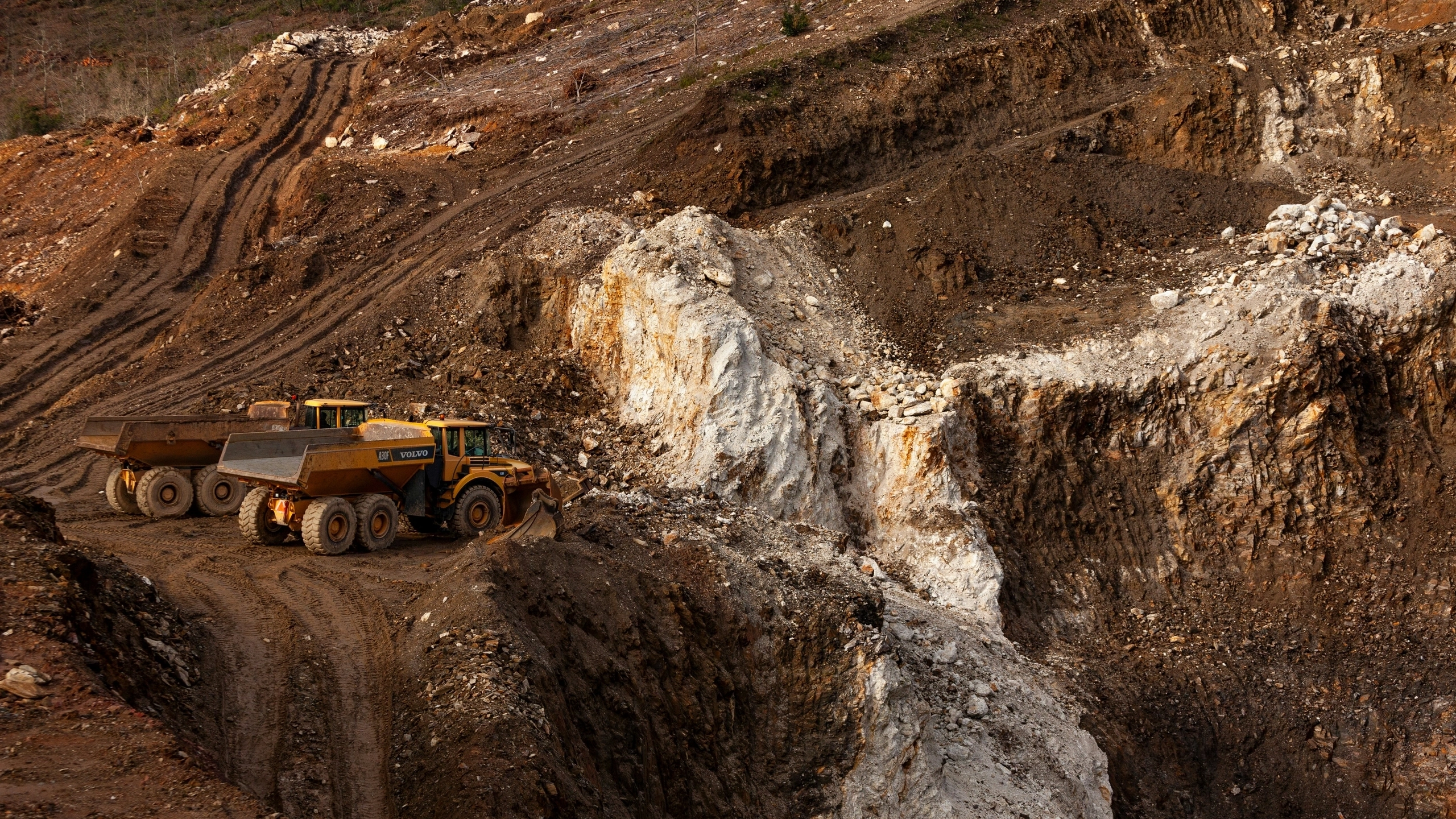
Britain’s relationship with Ukraine’s mining runs deep. In the 1870s, Welsh engineer John Hughes shipped blast-furnace kit and colliers to the steppe, carved out the town of “Hughesovka” (or Yuzivka, today’s Donetsk) and sparked the industrial boom that made the Donbas Europe’s coal-and-steel powerhouse. A century and a half later, the logic has flipped, but the opportunity is the same. Ukraine now sits on some of the world’s richest seams of battery-grade lithium, magnet rare-earths and ultra-pure graphite – exactly the resources that London must lock in as it cleanses its supply chains away from China. By stepping in as one of the lead investors once again, the UK can help create a new golden age of Ukrainian mining and, in the process, secure the critical minerals that its own green-tech economy cannot do without.
The new US-UK trade pact and the clauses that could force British manufacturers to purge Chinese parts from their supply chains, has caused a flurry of protests from Beijing. Soon after the publication of the agreement, China’s foreign ministry hypocritically warned London that “cooperation between states should not be conducted against or to the detriment of the interests of third parties.” Meanwhile Beijing has become the biggest enabler and supporter of Russia’s war and murder machine.
JOIN US ON TELEGRAM
Follow our coverage of the war on the @Kyivpost_official.
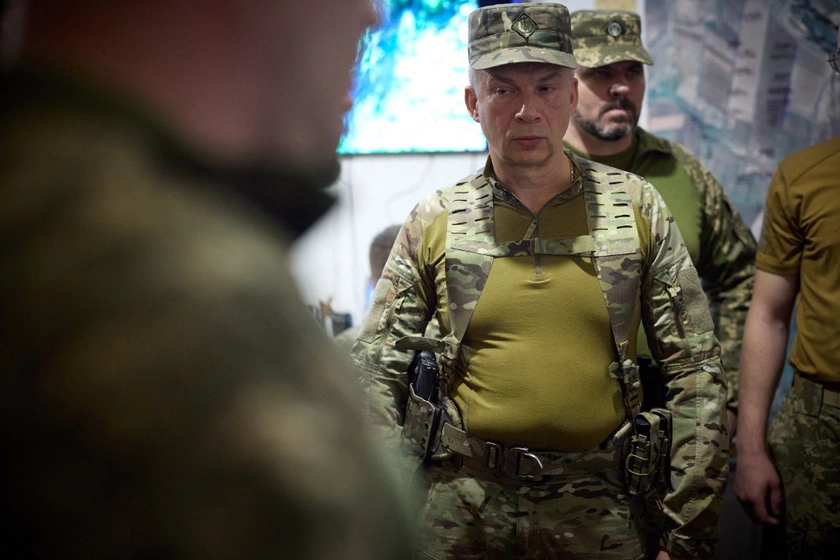
Ukraine’s General Syrsky: AFU Is Making Fair Progress vs Russia But No Victory Soon
British ministers scarcely needed the hint, as the response came in the recent China Audit, announcing which, David Lammy told Parliament that Beijing had already “established dominance over most critical mineral supply chains,” leaving the UK exposed across everything from battery cathodes to radar components. The very provisions China dislikes, therefore, hand Britain an opening: if Chinese inputs are about to become a liability in trans-Atlantic trade, British industry must lock in non-Chinese feedstocks. And few opportunities are as strategic, or as underdeveloped, as the resources lying beneath Ukraine.
What Ukraine needs first is capital; what Britain lacks is a friendly, scalable source of magnet metals that can be stamped “non-Chinese.”
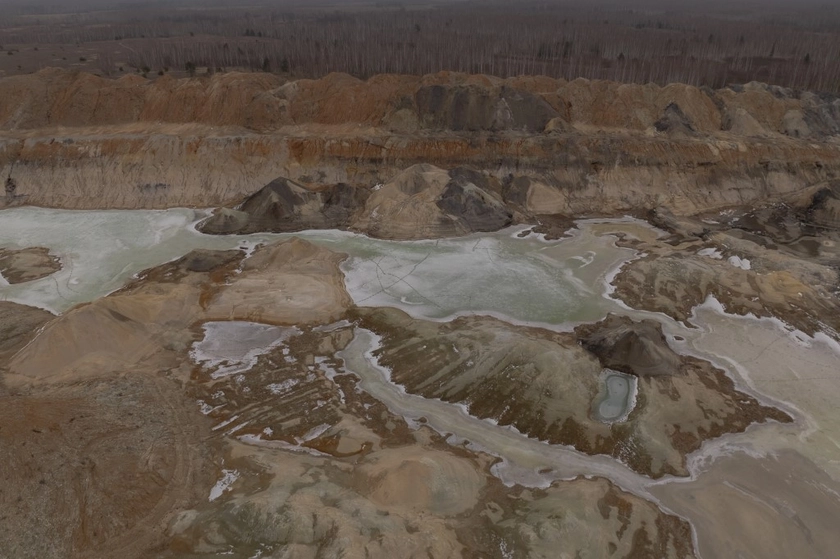
Ukraine holds 22 of the 34 minerals Brussels defines as “critical,” among them neodymium, lanthanum, cerium and yttrium – metals essential for wind-turbine generators, missile seekers and electric-drive systems. Geological surveys suggest the country also sits on one-fifth of global graphite resources and half-a-million tons of lithium reserves, quantities that could turn it into Europe’s own raw-materials powerhouse. Yet Soviet-era mapping is patchy, modern feasibility studies are scarce, and Russian occupation has placed several promising sites out of immediate reach. What Ukraine needs first is capital for new surveys, drilling programs and pilot separation plants; what Britain lacks is a friendly, scalable source of magnet metals that can be stamped “non-Chinese” all the way from pit head to finished rotor. The partnership potential is obvious.
Washington’s minerals-for-investment accord with Kyiv, signed on April 30 of this year, creates a joint reconstruction fund to be financed partly by future mining revenues and gives the United States preferential access. However, crucially, the deal is not exclusive. Ukraine retains ownership of its subsoil and is already courting other allies. Kyiv’s First Deputy Economy Minister said talks are under way with Britain, France and Italy, and the government is packaging one hundred sites for joint licenses before 2033. So, for Ukraine, bringing in a second G7 investor spreads geopolitical risk, while for the UK it prevents a single-horse race in which American miners scoop the richest seams while European manufacturers remain supplicants.
British participation would also make commercial sense at home. The Pensana Saltend plant in Yorkshire is scheduled to become one of the first rare-earth separation facilities in the West, yet it still needs assured feedstock. A British-backed mine-to-magnet chain running from Poltava to the Humber could feed Saltend, qualify end-products for US export, and reduce the carbon and shipping cost baked into importing from the eastern hemisphere. It would align neatly with the Critical Minerals Strategy’s call for “diversification and friend-shoring,” while giving tangible economic support to a wartime ally whose stability matters every bit as much to European security as weapons deliveries or air-defense radars.
Practicalities remain daunting. Ukrainian public reporting of minerals exploration information must be modernized to international standard, power grids shattered by Russian strikes will need rebuilding long before any hydrometallurgical plant can switch on, and private insurers will demand robust political-risk cover – historically an issue in Ukraine since the start of the invasion. These obstacles are tailor-made for UK expertise. London brokers dominate the war-risk market, British Geological Survey staff are already embedded in joint mapping projects, and the City’s green-finance houses are hunting for exactly the kind of high-impact reconstruction vehicles that Washington just piloted.
It is a long-term game that only those with political vision and backbone can achieve outside of time-unlimited authoritarian regimes.
A trilateral taskforce of Ukraine, UK, and the US could carve out a defined share of future resources for British processors, parallel to but independent from American volumes, without slowing the larger investment timetable. Equity tranches might come from the UK Infrastructure Bank or British International Investment, backed by development-finance guarantees and export-credit insurance against war damage.
Central Asian governments have already grasped how to turn Westminster’s attention into concrete partnerships. On the June 2, a House of Lords roundtable on the “Middle Corridor: Strategic Investment and Cooperation Opportunities” will bring together Kazakh, Azeri and Turkish ambassadors, Lords, senior MPs and UK investors to showcase Kazakhstan’s new mineral routes and woo British capital. That level of public diplomacy drives momentum: ministers take notice, City money follows, and policy obstacles are ironed out in real time. Kyiv should not allow the steppe to monopolize the stage. By mounting a similarly high-profile forum and pairing Ukrainian miners with London financiers and giving its ambassador and ministers a platform in Parliament, Ukraine can signal that its lithium, graphite and rare-earth deposits are open for business, diversify its backing beyond Washington and ensure Britain sees the country not only as a security partner but as an indispensable supplier in the post-China supply chain.
Today, investment into extracting Ukrainian rare-earth ore would scarcely dent China’s global market share overnight and supporting such projects can be daunting for democratic governments, fearful of irrelevancy at the next elections. It is a long-term game that only those with political vision and backbone can achieve outside of time-unlimited authoritarian regimes, yet it would move Westminster from lecture theatre to pit head, matching rhetoric about resilience with an asset-level stake in Europe’s most undeveloped mineral province. This prospect is far more than an altruistic reconstruction pledge: it is a straight-line answer to Beijing’s taunt that Britain can be “forced” to choose between US trade access and Chinese inputs. By anchoring its next generation of wind turbines, electric vehicles and radar arrays in Ukrainian rock, the UK would be choosing something altogether different – supply-chain sovereignty built with, not against, its two closest partners.
The views expressed in this opinion article are the author’s and not necessarily those of Kyiv Post.
You can also highlight the text and press Ctrl + Enter