Bob Woodward, in his book “War,” cited a conversation between then-Chairman of the US Joint Chiefs of Staff Gen. Mark Milley and then-Chief of the General Staff of the Russian Armed Forces and First Deputy Minister of Defense, Gen. Valery Gerasimov, where the Russian General stated the conditions under which Russia would use nuclear weapons.
Gerasimov provided three conditions: “If there’s an attack on Russia that threatens the stability of the regime. If a foreign power attacks Russia with a weapon of mass destruction, so that’s chemical, biological or nuclear. And that Russia reserves the right to use tactical nuclear weapons in the event of catastrophic battlefield loss.”
JOIN US ON TELEGRAM
Follow our coverage of the war on the @Kyivpost_official.
That loss has yet to come; however, if it does – say in a Yorktown-like moment – the doomsayers are going to be disappointed. It will not likely precipitate a Russian nuclear response nor start World War III.
Ukraine can defeat Russia – and Russian President Vladimir Putin knows it. He also knows that his regime would not be the target.
Kyiv’s sole goal and therefore end state is national survival and that entails securing Ukraine’s sovereignty and territorial integrity. The war – and by default, the killing – will not stop until the Kremlin stops attacking and withdraws their forces from Ukraine.
Moscow, however, will not stop on their own accord. Ukraine, along with its Western allies, must bring the land war to Russia’s doorstep.
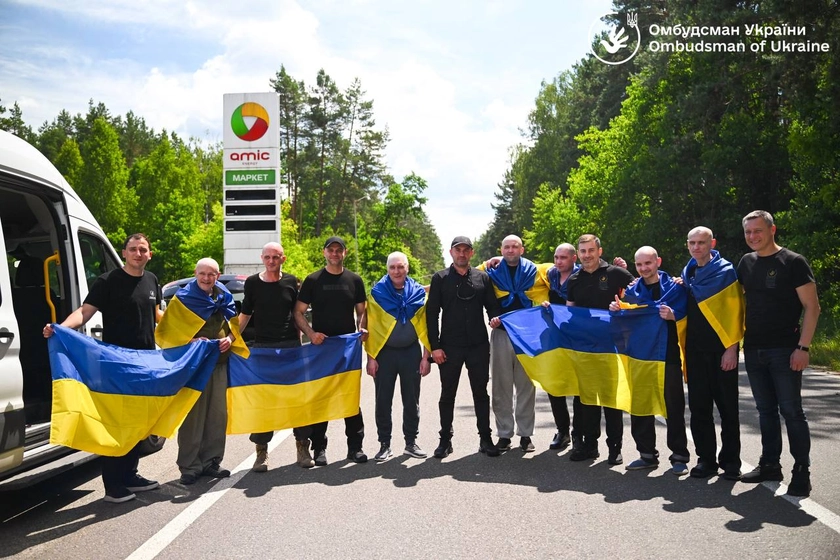
Ukraine Secures Release of Seven Civilians from Russian Captivity
Ukrainian President Volodymyr Zelensky does not need a million-man army to push Russian forces out of Ukraine. But he does need additional military assistance – artillery, precision deep strike weapons, jet fighters, intelligence, and time.
He also needs Russia to feel the impact of European Union sanctions, and for President Donald Trump to follow through on his ultimatum to “implement severe tariffs unless a peace deal is reached within 50 days.”
Trump does not need all 50 days – and Putin remains nonplussed. Russian Deputy Foreign Minister Sergey Ryabkov immediately rejected Trump’s ultimatum when he stated “any attempts to make demands, especially ultimatums, are unacceptable to us. If we cannot achieve our goals through diplomacy, then the [war in Ukraine] will continue.”
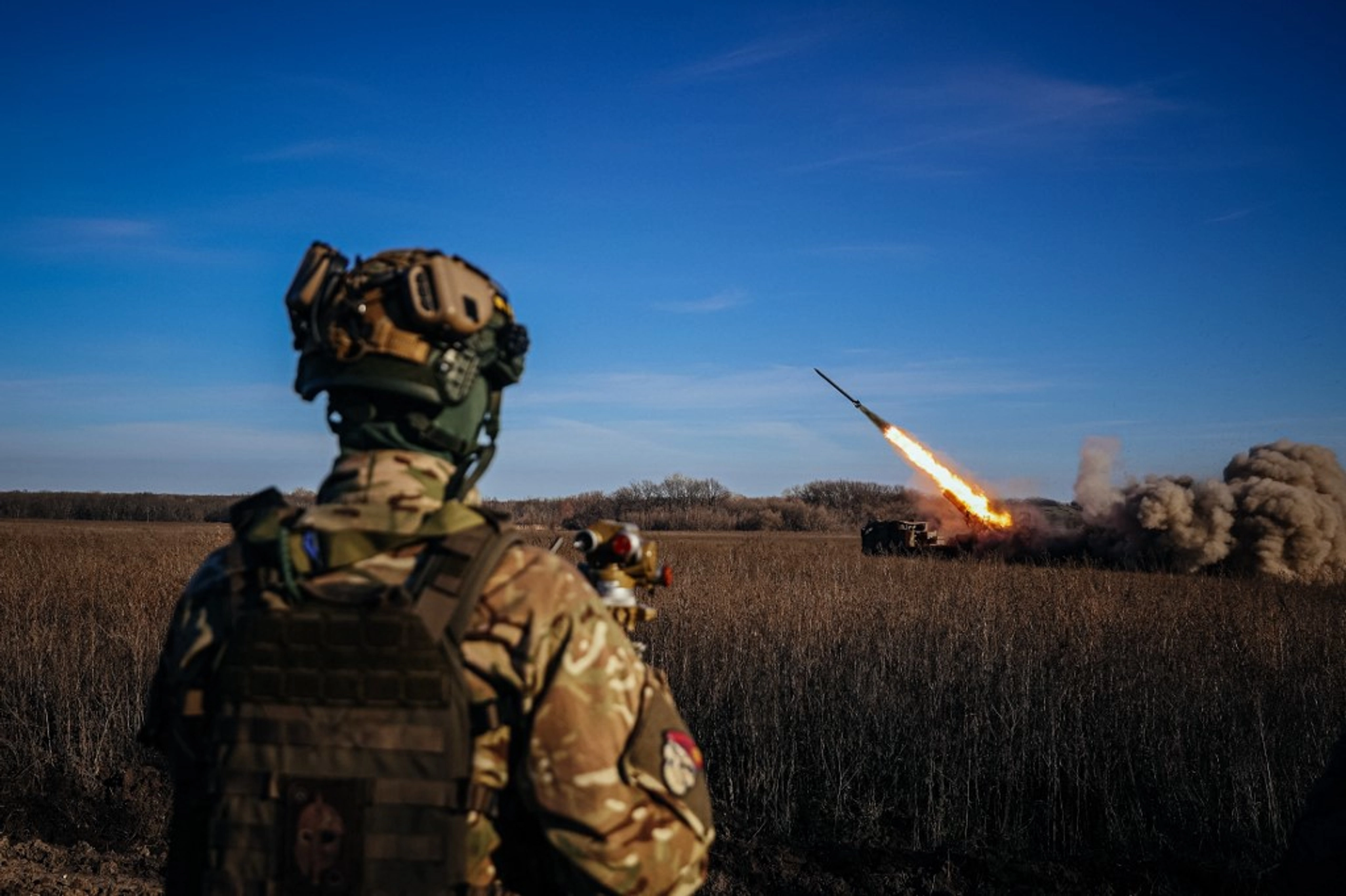
The war is going to continue. In terms of close, deep, and rear areas of the battlefield: Ukraine must stop the ground advances of the Russian army, weaken the Kremlin’s ability to wage and finance the war, and protect their civilian population.
In terms of instruments of national power – Diplomatic, Informational, Military, Economic (DIME) – the military and economic instruments hold the key to winning: stop the airstrikes, stop the flow of troops, equipment, and ammunition into Ukraine, and cripple Russia’s economy so they can no longer finance their war.
Ukraine’s main effort? Siege warfare. Ancient and medieval yes, but with modern 21st century twists, laying siege to Russian forces could be Kyiv’s best course of action and a novel one that Russia is ill-prepared to counter.
Supporting efforts? The establishment of a No-Fly Zone (NFZ) and an integrated and layered air defense system (IADS), deep strikes, and sanctions.
Historically, siege warfare is a military tactic whereby an army surrounds a fortified position to cut off supplies and communications in order to capture it via attrition or assault.
It is essential for Ukraine to defeat mass in Russia before it can arrive on the battlefields of Ukraine.
It worked for Gen. George Washington in Yorktown, Virginia during the American Revolutionary War in 1781. The British Army, commanded by Gen. Charles Lord Cornwallis, found itself surrounded by the Continental Army on three sides.
The Chesapeake Bay – an escape route and line of communication the British navy once reigned supreme over, was blocked by the French fleet commanded by Adm. Comte de Grasse. Unable to evacuate and sustain his force, and under withering ground assaults and artillery bombardment by Washington and de Grasse from Sept. 28 to Oct. 17, Cornwallis was forced to surrender his army to Washington on Oct. 19 at what is known today as Surrender Field.
The superior forces of Britain were defeated by an army of American soldiers – supported by France – determined to gain their independence. Making the impossible possible is an American trait – one that the Armed Forces of Ukraine (AFU) has emulated throughout the course of Putin’s war against Ukraine.
For it to work though, Zelensky must execute a Yorktown-like siege on a much grander scale – and do so concurrently and sequentially. The war in Ukraine will eventually be won on the ground – in the close fight.
It is therefore essential for Ukraine to defeat mass in Russia before it can arrive on the battlefields of Ukraine. The daily grind exhausts Ukrainian resources. Kyiv simply cannot sustain Putin’s war of attrition – not in manpower, munitions, or terrain.
Last month Putin said that 700,000 Russian soldiers were fighting in Ukraine, with an additional 30,000 North Korean soldiers enroute to join them. He is content to just keep feeding the “meat grinder.” Furthermore, as described by the Institute for the Study of War, “Russia will likely implement new policies to augment its military administrative capacity to significantly expand the rate at which Russia can call up a larger volume of conscripts and reservists.”
According to British Defense Secretary John Healey, Russia has suffered 240,000 military casualties since the beginning of 2025 – or about 1,188 a day. Yet, there is no reason to believe Putin will stop the carnage anytime soon. His end state is clear: “All of Ukraine is ours.”
Allowing Russia to continue attacking Ukraine unabated would be a tragic mistake.
To implement the strategy, the AFU needs to isolate Russian ground forces in Ukraine. That requires stopping the flow of Russian forces and their supplies into the country via deep strikes and interdiction, while protecting their civilian population, critical energy infrastructure, and front-line troops from Russian ballistic missiles and drones.
Without the ability to replenish the 1,188 casualties the Russian army incurs each day, or the ability to sustain them, they will eventually wither on the vine and become vulnerable to a counteroffensive.
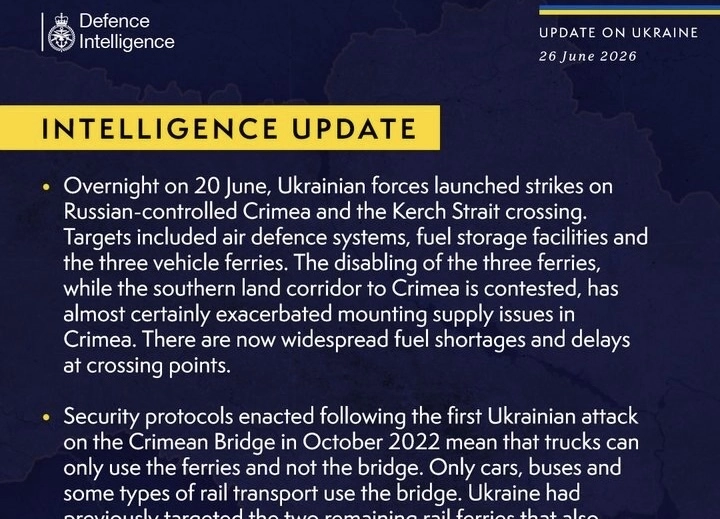
The isolation begins with the destruction of the Putin’s much vaunted Kerch Strait Bridge – the Crimean Peninsula’s lifeline. Its destruction would be both strategic and symbolic, denying logistical sustainment to the Russian military in Crimea while severing the illegally constructed umbilical cord to the Russian mainland.
Next, Ukraine would need to identify and destroy marshalling areas along the Ukraine-Russia border – along with the associated ports of debarkation: seaports, airports, train stations, and highways where soldiers, weapons, equipment, and fuel are off-loaded, staged, and prepared for onward movement into Ukraine.
The active front line between Ukrainian and Russian forces extends approximately 745 miles across eastern and southern Ukraine. Therefore, a robust intelligence collection effort will be required to identify key targets to strike in Russia’s main and supporting efforts in the Kharkiv, Luhansk, Donetsk, and Zaporizhia Oblasts.
Then, the AFU must identify where they will reposition. Persistent pressure is essential to disrupt Russian sustainment. The new Tavrida-2 railway, which connects Rostov-on-Don to southern Ukraine and occupied-Crimea is an excellent example.
The supporting efforts – NFZ, IADS, deep strikes against weapons/munitions production facilities, oil/gas refineries, airfields from which bombers launch with ballistic missiles, and sanctions run concurrently with the interdiction effort to defeat Russia’s ability to wage war against Ukraine and target civilians.
Meanwhile, in the close fight, AFU ground forces must continue to hold terrain, attriting Russian forces as they attack, while building combat power for an eventual counteroffensive. The effect of relentless interdiction of Russian supply lines will eventually lessen the “meat assaults” on Ukrainian defensive positions – allowing the AFU time and space to prepare their counteroffensive.
By choosing to subordinate the “Russian economy to the war, devoting more and more resources to producing materiel,” sanctions, combined with interdiction and deep strikes, can make the seemingly impossible, possible again. Putin is risking everything for an outcome unacceptable to the West – it is time to make sure he fails.
Ukraine’s Yorktown moment is now. Allowing Russia to continue attacking Ukraine unabated would be a tragic mistake – given the continued slaughter of Ukrainian civilians and NATO’s concern of Russian plans post Ukraine. The siege of Russian occupied territories – and the supporting efforts – in Ukraine provides the best course of action to end the war without threatening the Russian regime.
The views expressed in this opinion article are the author’s and not necessarily those of Kyiv Post.
Copyright 2025. Jonathan E. Sweet and Mark C. Toth. All rights reserved.
You can also highlight the text and press Ctrl + Enter


Attack on Moscow Oil Refinery: Putin Under Pressure?