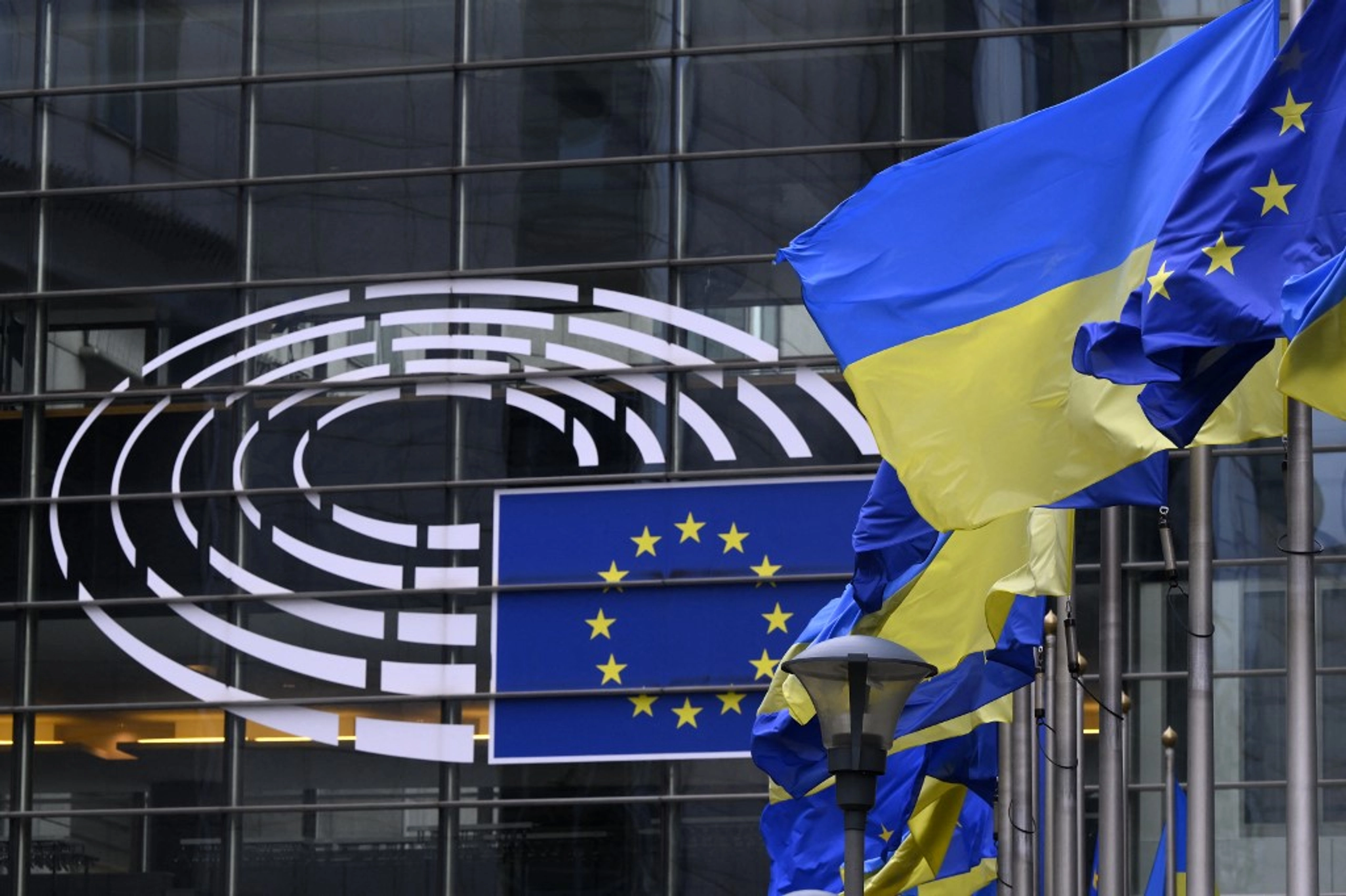
Still digesting the news that the EU failed to get agreement on using immobilized Russian Central Bank (CBR) assets to fund Ukraine, and that instead a €90 billion ($105 billion) loan will be issued by the EU to fund Ukraine for the next two years.
The plus here is that Ukraine gets much-needed financing. And €90 billion will go a long way to meeting the estimated (by the European Commission, or the EC) €140 billion ($164 billion) financing gap (military plus budget) for 2026-27.
JOIN US ON TELEGRAM
Follow our coverage of the war on the @Kyivpost_official.
The assumption is that the remaining gap will be met by “others,” so the Brits, Canada, Japan, plus others in the coalition of the willing. The IMF will want $63 billion to cover its program needs for 2026-27, which was its estimated financing gap for just the two years, albeit the gap to 2029 was larger at $140 billion.
The IMF likely will now sign off on its new 48-month, $8.5 billion Extended Fund Facility (EFF) for Ukraine.
On a personal note, I have been campaigning for a couple of years to get the powers that be to understand Ukraine’s real funding needs and gaps. You will know I have criticized the IMF et al for living in cloud cuckoo land in terms of how it views Ukraine’s financing needs – taking a narrow view on just budget and balance of payment (BOP) needs, excluding military financing needs.
I think now there has been a reality check – or cheque – as we know Ukraine’s financing needs are $100 billion plus a year, all in, including budget, BOP, and military. This is what needs funding, and Europe currently is still on the hook for the full nine yards, so that needs to be properly signaled to European taxpayers.
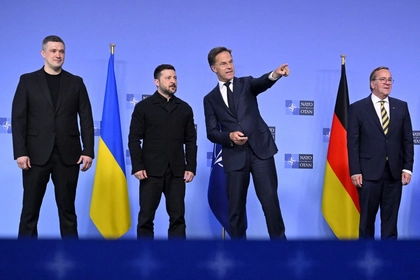
Rutte Calls Ramstein Meeting a ‘Window of Opportunity’ for Ukraine
You could also argue that the bulk of the $300 billion-plus in immobilized CBR assets remains untouched and in play still – our own campaign to get these allocated to Ukraine will not climb down for sure. We now have our arguments better honed and know the opposition. We will not rest until Russia pays for the huge damage it has inflicted on Ukraine.
Sovereign immunity only counts when a state is acting in accordance with international law, which clearly Russia is not.
Europe also secured the permanent immobilization of the €210 billion ($246 billion) in the EU juridication, so no risk on a six-monthly basis of these being freed – that is subject to a peace deal, and Trump forcing Europe to free the assets to fund that deal, and give back to Russia.
On the negative side of the ledger:
Russia is not being made to pay – and I still do not get how European politicians think it is ok to do everything in their power to protect Russian taxpayer money in their jurisdictions while happily spending their own taxpayer money to support Ukraine.
Sure, the €90 billion will be borrowed, but the EU taxpayer will ultimately pay this back, and more debt in Europe means higher borrowing costs for everyone in Europe, lower growth and a weaker euro in the end, in my view.
That said, the reparations loan (RL) idea also did not really make Russia pay, as the CBR assets were not seized in effect, just repurposed. I think the past week has now clearly laid out the legal basis for full seizure – and I think we won that argument. It is now clear that Belgium overstated the legal risks. Herein, these two papers are excellent:
- Frozen, but Usable – Why a Reparations Loan Is an Alternative to Confiscating Russian Central Bank Assets
- The Ukraine Reparations Loan: How to Fix Europe’s Financial Plumbing
Bottom line: Russia had a very weak case on the sovereign immunity argument, and zero basis to use bilateral investment treaties to sue, as these are sovereign, not private sector assets, so not covered by such treaties.
The fact that 3.5 years after immobilization, Russia has not launched any legal action in a Western jurisdiction says it all, really. It knows it has a very weak case – sovereign immunity only counts when a state is acting in accordance with international law, which clearly Russia is not.
Countermeasures therefore apply – we can seize the assets.
But all along, this was never really a legal issue in my mind; it was always political. Laws are made by politicians, and if the political will was there, laws would be changed if need be – given the existential threat to Europe from the war in Ukraine, I would have assumed it would be.
This deal has not boosted Ukraine’s position in peace negotiations; it has weakened it.
In the end, the RL failed for two reasons in my mind:
First, successful lobbying by business lobbies, which saw the RL as a threat to their Russian business. As I argued yesterday, it is pretty outrageous that the interests of a few greedy Western companies that made the mistake of first investing in Russia, then stayed too long because they loved the windfall profits they were earning, are being put above the national security interests of Europe. And even worse, that they are now, in effect, being bailed out by the European taxpayer.
This sends a message that it pays to take Putin’s 40 pieces of silver. Blood money in my mind. Let’s spell this out though: Through this decision, the interests of the Russian taxpayer and Western businesses that have done, and continue to do, business with Russia are being protected and bailed out by European taxpayers.
We are helping fund Putin’s war on Ukraine and Europe. That is utterly extraordinary in my mind, and a dereliction of duty by our own politicians. Merz got that, but seemingly was outplayed by Russian and business interests. The German taxpayer will now pay, and that could have untold political consequences – it will play to the advantage of the AfD, another win for Putin, and Trump.
Second, Russia’s long-running investment in buying political and business interests in Europe paid off, be that in Belgium, Austria, Italy, the Czech Republic, Bulgaria or Slovakia.
And therein lies the problem with this deal in my mind, that Europe revealed itself as disunited.
We hoped for a strong message of support from Europe for Ukraine, and actually, we got a pretty divided response. We now clearly know who is in the MAGA/Russian camp and who is standing behind Ukraine – and we know at least six countries in Europe are not to be trusted on Ukraine.
I think Putin will take heart from this. He will think his efforts are succeeding, and this will encourage him to ask even more from peace negotiations, and to continue the war. Notably, it is worth noting that Putin’s business sidekick Kiril Dimitriev was celebrating the failure of the EU to agree on the RL. That really says it all in my view.
This deal has not boosted Ukraine’s position in peace negotiations; it has weakened it. But my take is that that has been Trump and Putin’s game plan all along.
Reprinted from the author’s @tashecon blog. See the original here.
The views expressed in this opinion article are the author’s and not necessarily those of Kyiv Post.
You can also highlight the text and press Ctrl + Enter