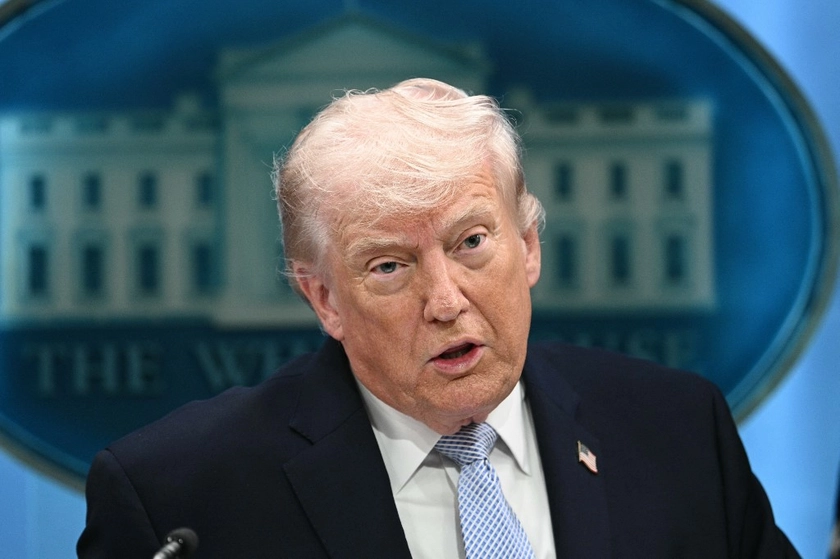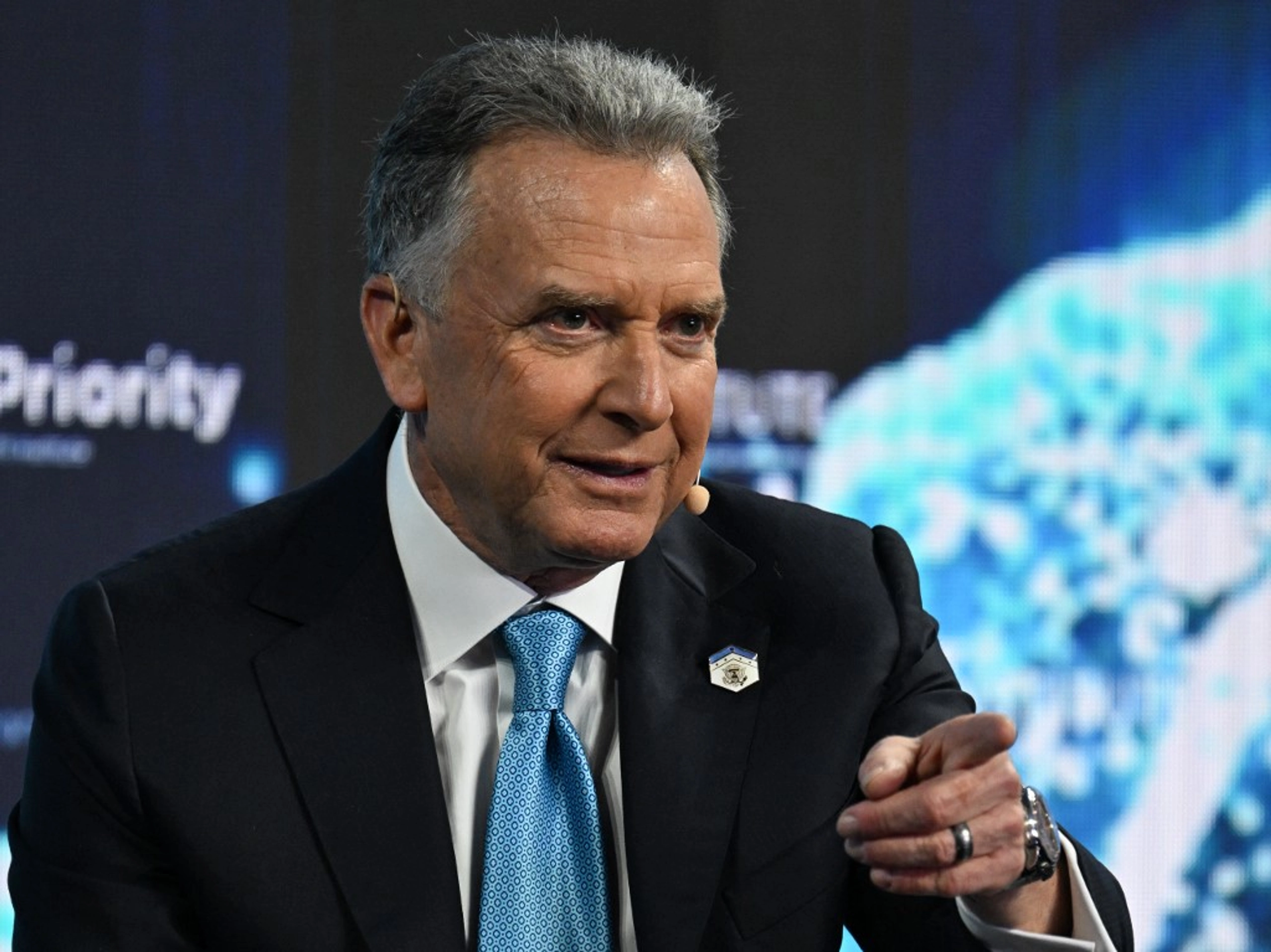
Trump peace negotiator Steven Witkoff during an interview with CNN aired on Sunday said:
“The war didn’t need to happen. It was provoked. It doesn’t necessarily mean it was provoked by the Russians. There were all kinds of conversations back then about Ukraine joining NATO. The President has spoken about this. That didn’t need to happen. It basically became a threat to the Russians. And so, we have to deal with that fact. Those are real facts on the ground.”
JOIN US ON TELEGRAM
Follow our coverage of the war on the @Kyivpost_official.
Witkoff’s remarks misconstrue the actual historical record of Ukraine-NATO relations. In many respects, Witkoff’s comments to the major US newscaster CNN are identical with Kremlin talking points about Ukraine.
- Witkoff said there were “all kinds of conversations” about Ukrainian joining NATO…” that became, a threat to the Russians.”
Although “all kinds” is a murky statement that could be interpreted many ways, Witkoff’s boss. President Donald Trump has accused his predecessors in the White House repeatedly for, Trump has claimed, irresponsibly encouraging Ukrainian accession to NATO and placing Ukraine on a path leading to Ukrainian membership in NATO which directly threatened Russian national security.
This is false – although the Kremlin has claimed it repeatedly.
In fact, Ukrainian cooperation with NATO from independence in 1991 was at best lukewarm and limited to intermittent joint troop training until 2014. When Russia invaded Ukraine for the first time, annexed Ukraine’s Crimea peninsula using a gunpoint referendum, and started a war in Ukraine’s eastern Donbas region using conventional and unconventional military forces, Ukrainian enthusiasm for NATO membership increased.
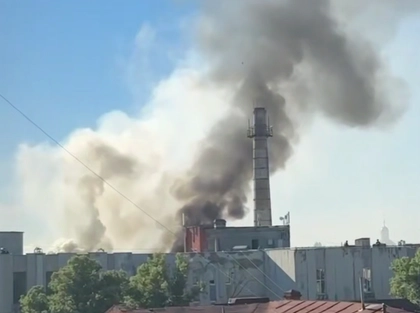
Ukraine Hits Targets 1,300 km Inside Russia, Striking Ufa Oil Refinery and Penza Missile-Linked Plant
In 2008 and 2021 NATO leaders in statements said the Atlantic Alliance’s intent was that Ukraine might start down the formal path to membership at some unspecified time in the future. Contextually, Albania and Croatia (2009), Montenegro (2017) and North Macedonia (2020) were NATO’s most recent new members, all after incorporation processes taking more than a decade to complete. In fact, Ukraine never began the formal process of joining NATO.
Russia, in 2021, with its troops still occupying some 18 percent of Ukraine’s territory, demanded NATO renege on its commitment to consider, someday, starting Ukraine down a path to membership. NATO refused on grounds the Kremlin cannot dictate NATO policy. Six months later Russia (re-)invaded Ukraine and launched the bloodiest European war since World War II.
Witkoff’s characterization of NATO relations with Ukraine and discussion of Ukrainian membership in NATO at some indefinite point in the future, as a clear, legitimate and immediate threat to Russian national security justifying a major war, has no basis in fact.
- Witkoff said: “Those are the real facts on the ground.”
This is false, and the situation on the ground is effectively opposite of what Witkoff argued.
In 2004, at a time when Russian President Vladimir Putin had been in office already for four years, the Baltic states – Estonia, Latvia and Lithuania – became NATO members. Estonia borders directly on the Russian mainland, whereas Lithuania and Poland, the older NATO member, border the Russian exclave of Kaliningrad. In 2022 Sweden and Finland joined NATO, closing international water access to Russia’s Baltic Sea ports, and extending the NATO-Russia land border by some 1,100 kilometers (684 miles). The Kremlin said all the NATO expansions were undesirable, but Russia did not go to war.
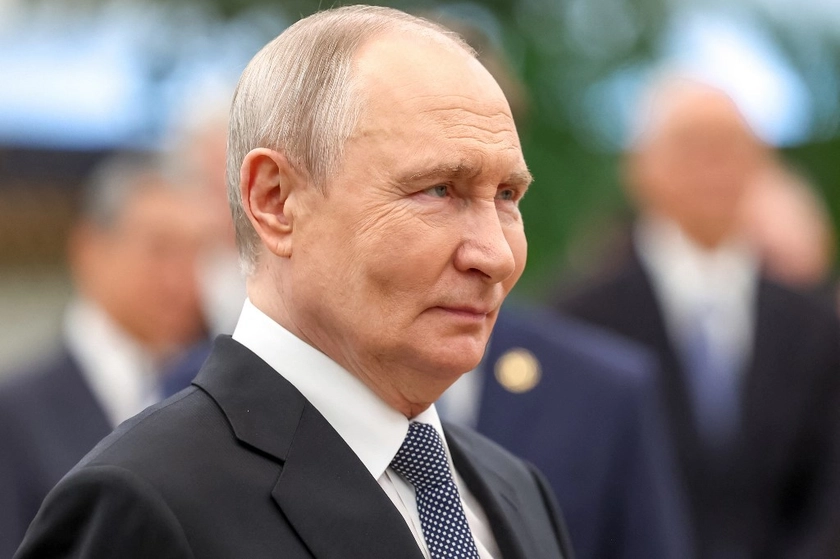
The Russian position that NATO members Poland, Lithuania, Estonia and Finland, located adjacent to Russian Federation territory, do not constitute a threat to Russian national security, but that a non-NATO Ukraine does, is at least the very least inconsistent. This undermines Witkoff’s view, matching those of the Kremlin, that the “facts on the ground” justified Russia’s massive invasion Ukraine.
Witkoff’s acceptance of Russian justification for its invasion of Ukraine effectively puts a US stamp of approval on Russia’s invasion and genocidal intent.
- Witkoff by omission justifies Russian genocidal state policy towards Ukraine.
This is technically true but it was almost certainly not his intent. Nonetheless, Witkoff’s views, as expressed, place the US government in a difficult, and some would say inexcusable moral position.
Russian state-controlled media led by practically all senior members of the Russian national leadership, among them Putin, have called repeatedly for the elimination of Ukraine as an independent state, the eradication of the Ukrainian language and the eventual incorporation of ethnic Ukrainians into the Russian population. This state policy with an end state amounting to the disappearance of Ukraine and the Ukrainian people intensified after 2014 and Russia’s first invasion of Ukraine. Russian officials and state-controlled media express it today.
Ukraine did not invade Russia. Russia invaded Ukraine.
Witkoff’s acceptance of Russian justification for its invasion of Ukraine places the stamp approval by a senior government official of the United States of America – according to him based on positions held by President Trump – on a Russian go-to-war decision, driven by extreme nationalist ideology, calling for the eventual elimination of the Ukrainian people.
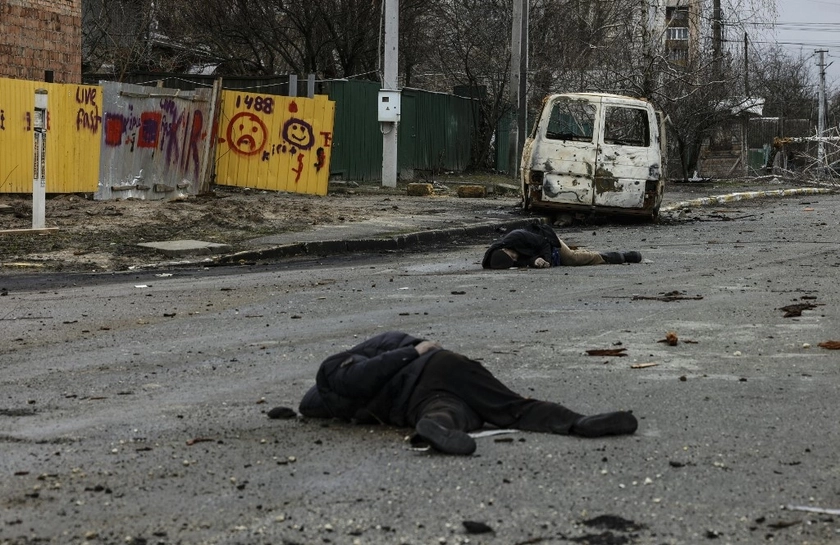
Provided the principle that genocide never can justify war is consistent with modern US foreign policy, the facts on the ground of the Russo-Ukrainian War argue a US government official should oppose Russia’s violent invasion of Ukraine vehemently. In President Trump’s name, Witkoff arguably extends American approval to the intent behind Russia’s actions in Ukraine, and also the results, which include war crimes.
You can also highlight the text and press Ctrl + Enter