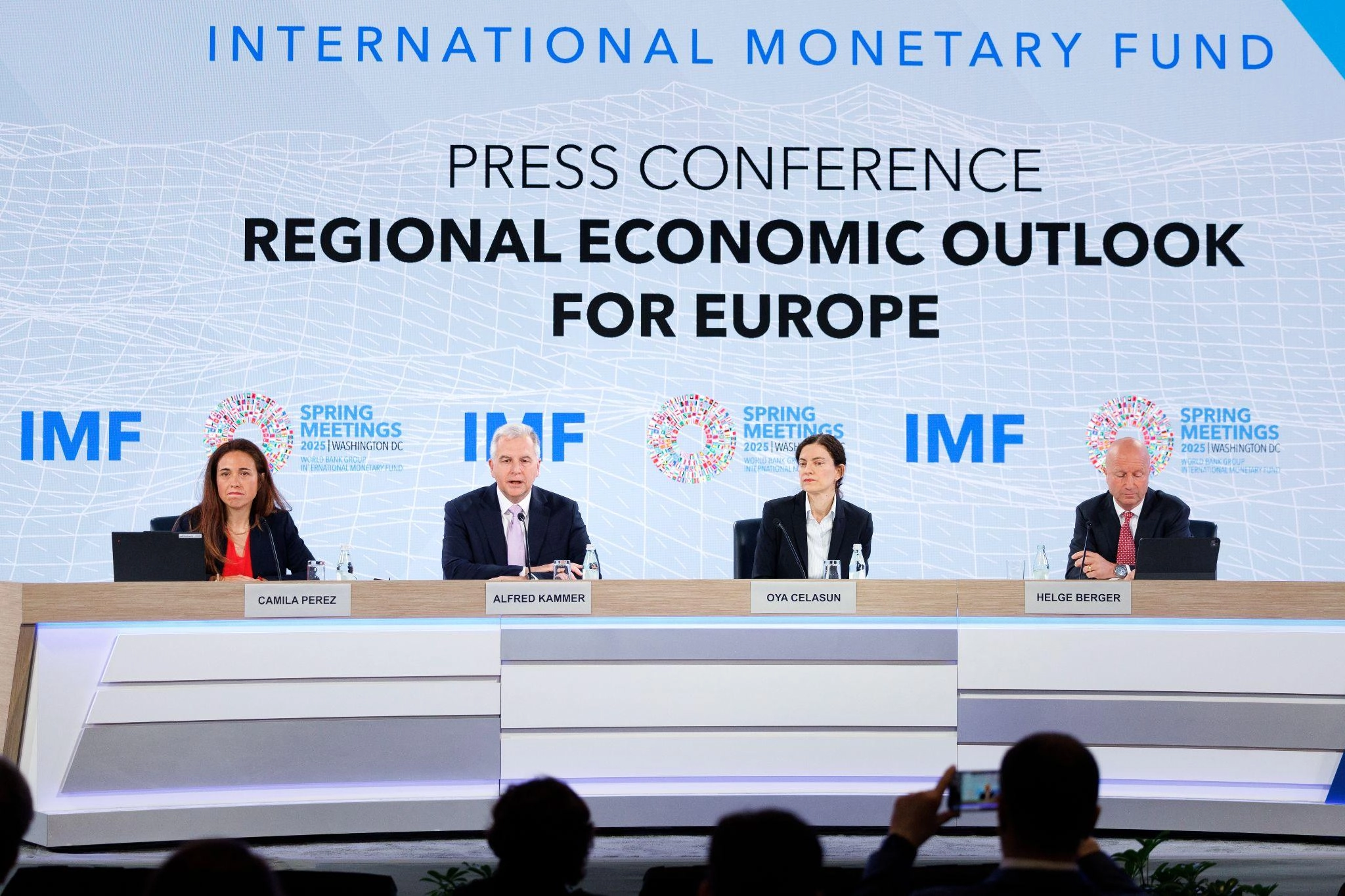
The International Monetary Fund (IMF) has forecast real GDP growth for the euro area at 0.8% for 2025 and 1.2% for 2026, according to the April 2025 Regional Economic Outlook for Europe.
“The size of the downgrade relative to our latest forecast in January 2025 is -0.2 percentage points for both years,” Director of the European Department of the International Monetary Fund Alfred Kammer said during a press briefing presenting the report.
JOIN US ON TELEGRAM
Follow our coverage of the war on the @Kyivpost_official.
Furthermore, trade tensions and uncertainty could pose a greater risk to growth longer term.
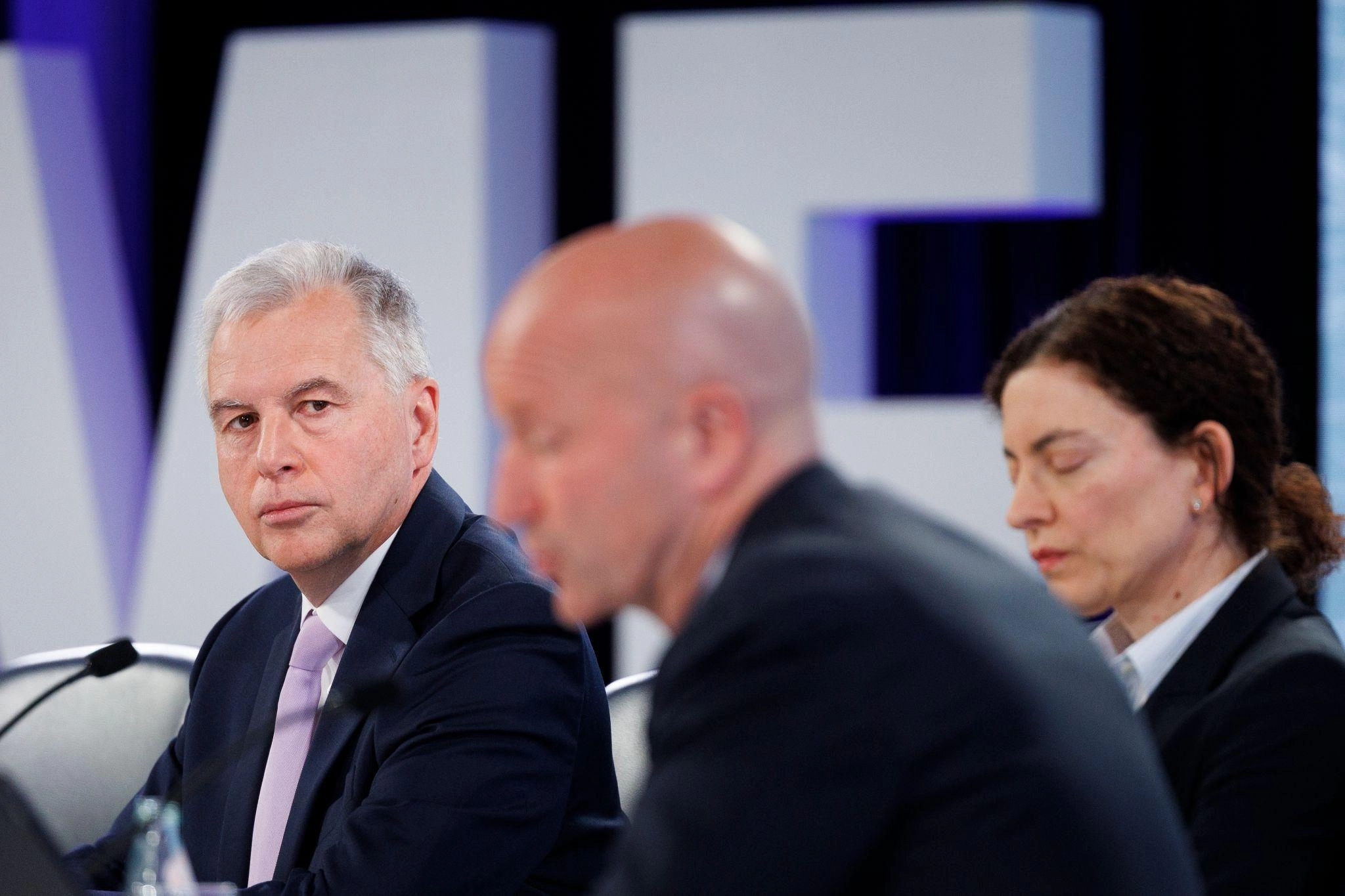
“Tariffs do have an impact. The longer they last, more pronounced the impact will be, including on the medium-term outlook,” Kammer said in response to a Kyiv Post question during the press briefing.
Tariffs might even undermine the silver lining of increased defense spending pushing up Europe’s GDP, meaning Europe has no other way but to negotiate lower tariffs.
Europe’s financial system has become more resilient but may feel more in the way of financial strain.

Infantry Up Close, More and Better Bombardment, Helping America ‘Win’
The IMF does see optimism in higher defense spending and lower energy prices, especially noting Germany’s €500 billion ($569 billion) infrastructure package.
Lower energy prices, alongside softer demand, will help euro zone inflation reach targets in the second half of 2025 – countries in the euro area include Belgium, Germany, Estonia, Ireland, Greece, Spain, France, Croatia, Italy, Cyprus, Latvia, Lithuania, Luxembourg, Malta, the Netherlands, Austria, Portugal, Slovenia, Slovakia and Finland.
But inflation may remain above target “well into 2026 and for some until 2027” in the so-called Central, Eastern, and Southeastern European (CESEE) region that excludes Belarus, Russia, Turkey and Ukraine.
Higher CESEE inflation is still driven by persistent services inflation and high labor costs, according to Kammer.
Among the key challenges for Europe’s growth is an aging population. By 2050, the working-age population will have shrunk in more than two-thirds of EU countries, so Europe should help labor move more freely around the union.
Europe is still falling behind in channeling the full potential of its single market, according to Kammer. In October 2024, Europe’s economic policy was harshly criticized by the IMF official, concluding that Europeans have not become productive enough, trade has become too fragmented and hasn’t taken sufficient advantage of the EU’s single market. “Europe is still a very fragmented single market,” he said.
The key problems are barriers in goods and services markets, segmented capital and
labor markets which limit companies’ incentives, and an ability to innovate and scale up.
However, Kammer was satisfied that Europe has taken action to fix economic policy according to IMF recommendations, especially in monetary policy.
But, according to Kammer, the EU should accelerate reforms and find the political will for more change.
“There’s a lot of resistance from certain sectors [and] in certain countries towards change. What one needs to consider is to maybe have a bigger approach to that and to start not discussing individual areas of reform where you have perceived winners and losers, but to think about more of a package deal. There, everybody can see something which is a win situation,” Kammer explained.
You can also highlight the text and press Ctrl + Enter