





Key Takeaways from the ISW:
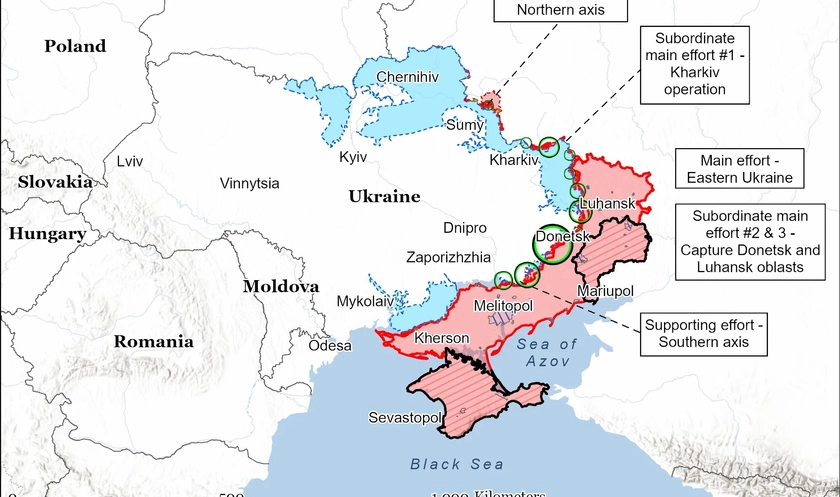
- Russian Security Council Secretary Dmitry Medvedev stated on April 29 that Russia’s war in Ukraine must end in Russian “victory” and the “destruction” of the current Ukrainian government. Senior Kremlin officials continue to signal that Russia has greater territorial ambitions than just the occupied areas of Ukraine, particularly in areas bordering the Black Sea.
- Senior Russian officials reiterated the longstanding, false Russian narrative that the Ukrainian government is illegitimate, likely in order to set conditions to manipulate ceasefire negotiations and renege on any future Russian-Ukrainian agreements at a time of Russia’s choosing.
- Russian officials are setting conditions to baselessly accuse Ukraine of violating Russia’s unilateral May 8 to 11 ceasefire, as the Kremlin has done during previous ceasefires, while rejecting Ukraine’s proposal for a 30-day ceasefire.
- Kremlin officials within Putin’s inner circle continue to threaten NATO as Putin himself refrains from doing so — likely as part of Kremlin efforts to justify future Russian aggression against NATO to the Russian population.
- Putin promoted his previously proposed Eurasian security architecture on April 29 as part of Russian efforts to create an alternative Russian-led bloc that furthers Putin’s goals of destroying NATO and weakening the West and its allies.
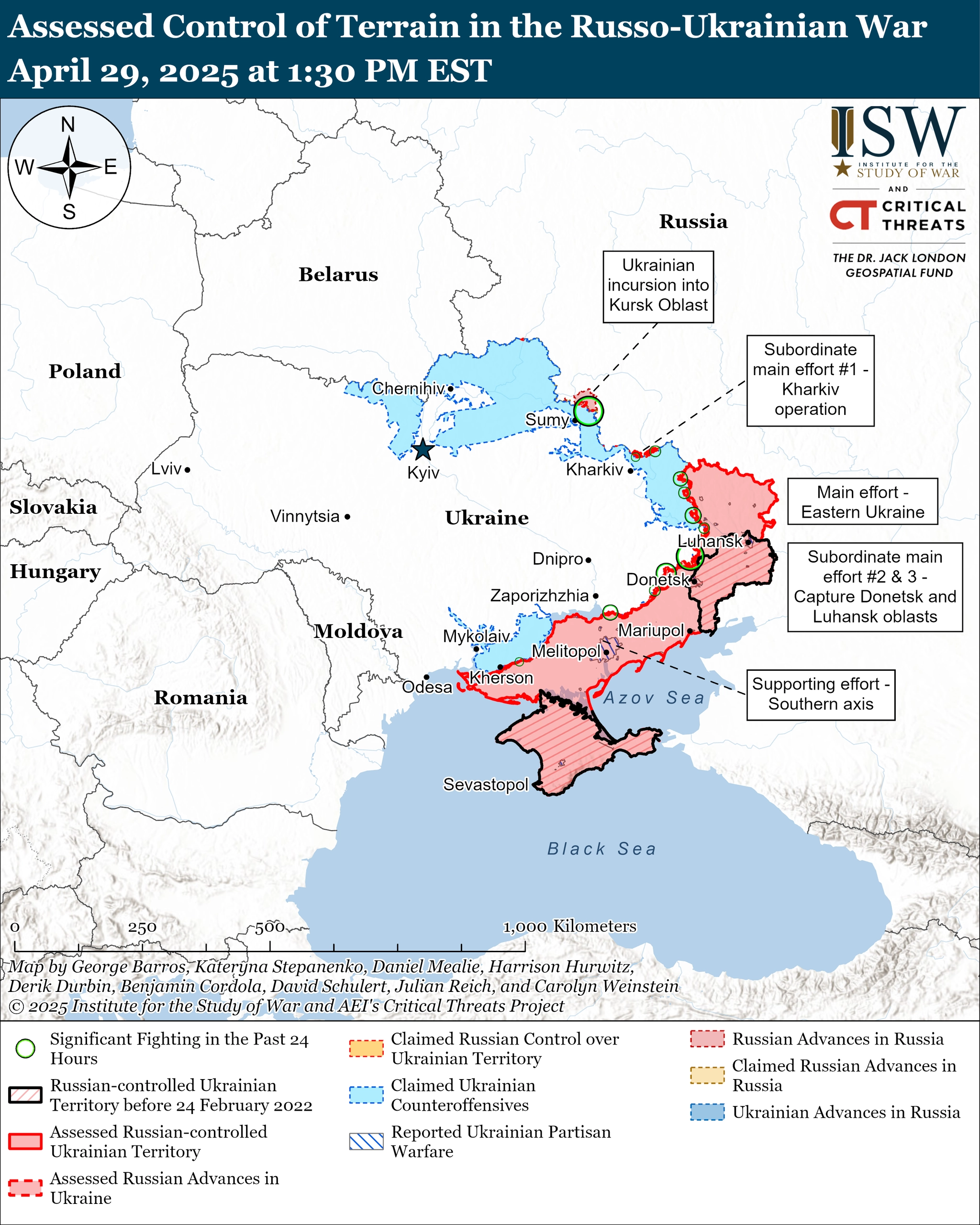
- Ukrainian forces recently advanced near Toretsk, and Russian forces recently advanced in Belgorod and Sumy oblasts and near Pokrovsk, Kurakhove, and Velyka Novosilka.
JOIN US ON TELEGRAM
Follow our coverage of the war on the @Kyivpost_official.
Authors: Daria Novikov, Nicole Wolkov, Olivia Gibson, Davit Gasparyan, and George Barros with William Runkel.
See the original here.
To suggest a correction or clarification, write to us here
You can also highlight the text and press Ctrl + Enter
You can also highlight the text and press Ctrl + Enter

ANALYSIS: Why Ukraine has Abandoned Four Years of Caution over Belarus
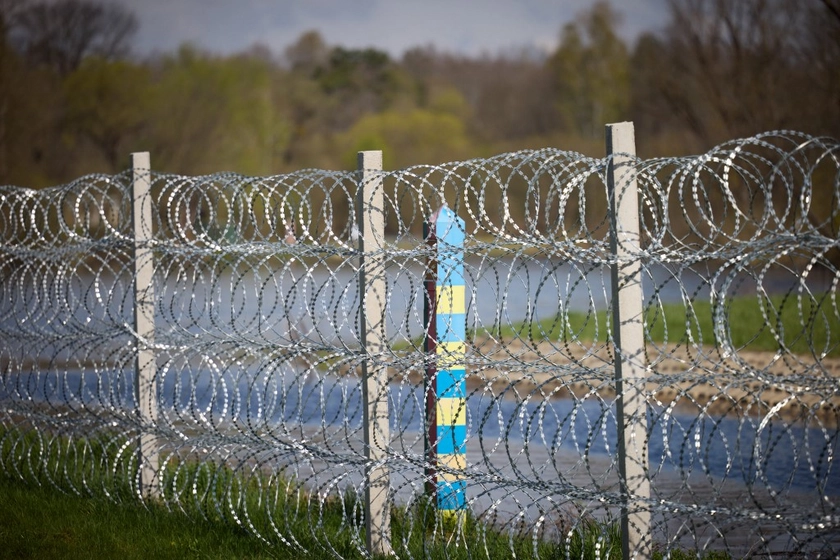
Ukraine has issued a public ultimatum to Belarus, demanding the removal of relay equipment used to guide Russian drone strikes.
June 28, 2026