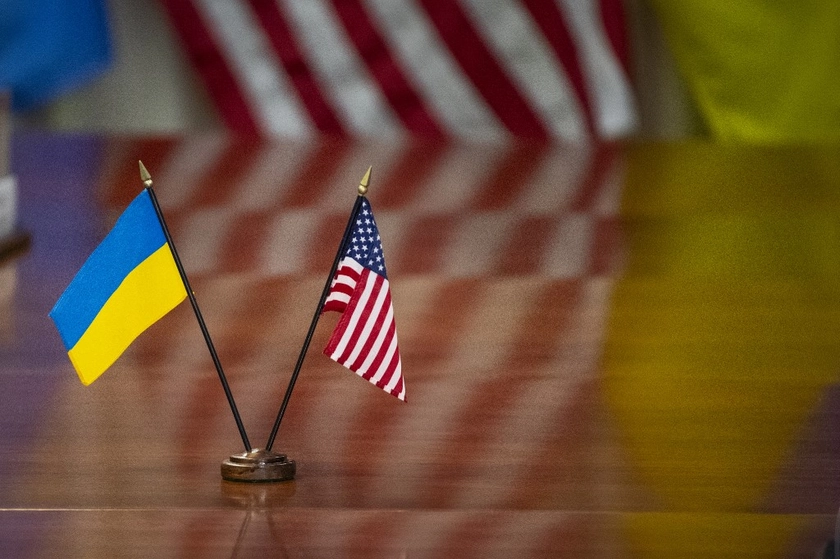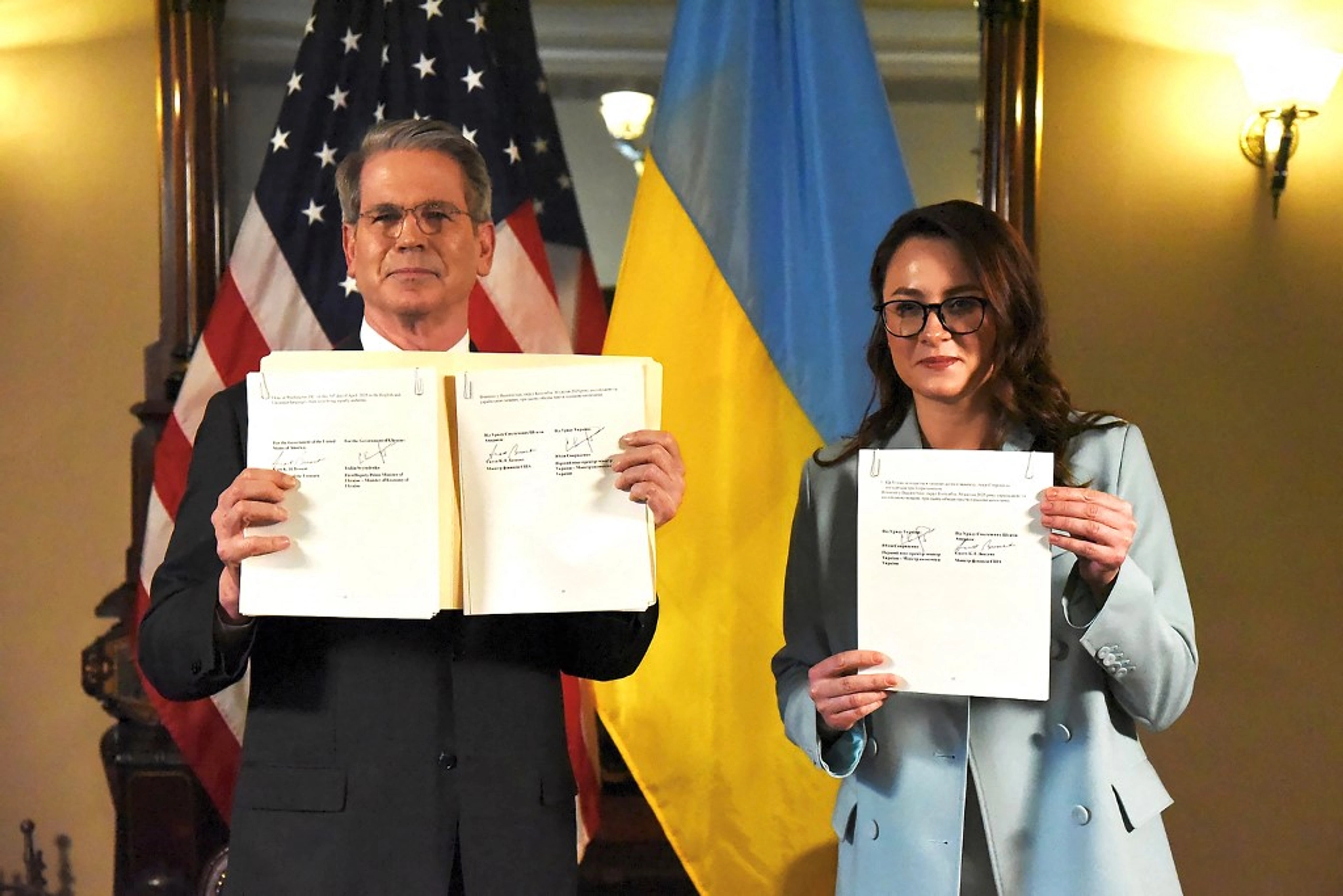
Amid Russia’s ongoing full-scale invasion, on Wednesday, May 30, Ukraine and the US formalized a sweeping agreement over mineral resources, linking military aid to long-term economic reconstruction and investor access to dozens of critical raw materials.
On Thursday, Kyiv published the full text of the agreement. Here’s a summary of some of the key points.
JOIN US ON TELEGRAM
Follow our coverage of the war on the @Kyivpost_official.
What’s the point of the document?
It is an agreement that outlines the scope and basic definitions of what is to come.
The document says it is aimed at Ukraine’s long-term reconstruction and modernization in response to Russia’s invasion and the half a trillion dollars in damages it caused.
“The Parties acknowledge that Ukraine’s recovery requires not only financial investment but also structural, institutional, and technological transformation, aligned with democratic values, market principles, and the rule of law,” it lists as one of its objectives.
How many documents are there in this deal?
Ukrainian lawmaker Yaroslav Zhelenyak said this is the first of several similar documents.
Previously, European Pravda reported that Ukraine and the US decided once again to split the agreement into several components.
The bilateral agreement signed in Washington on Wednesday sets the framework for cooperation between the two governments regarding subsoil development, the sale of minerals, and American assistance – including military aid – that Ukraine will continue to receive.

Children, Pets, and Sirens: Massive Russian Strike Forces Thousands Into Kyiv Metro
What minerals are covered?
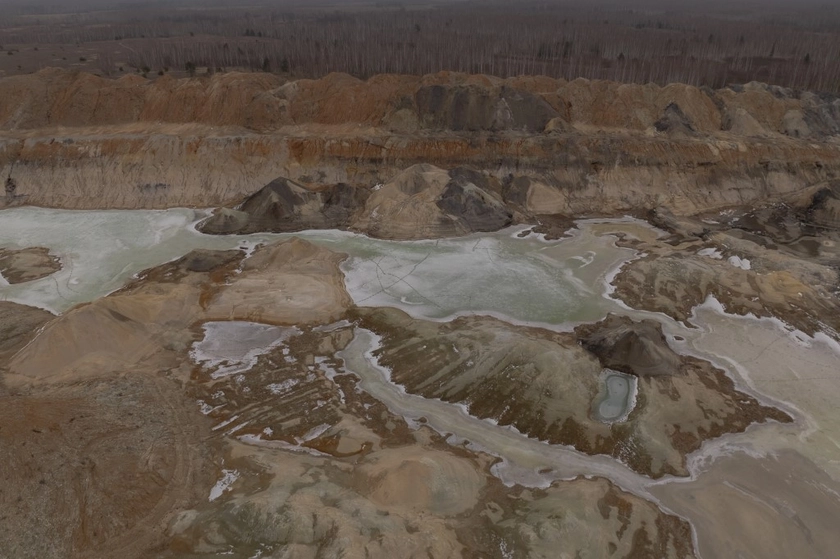
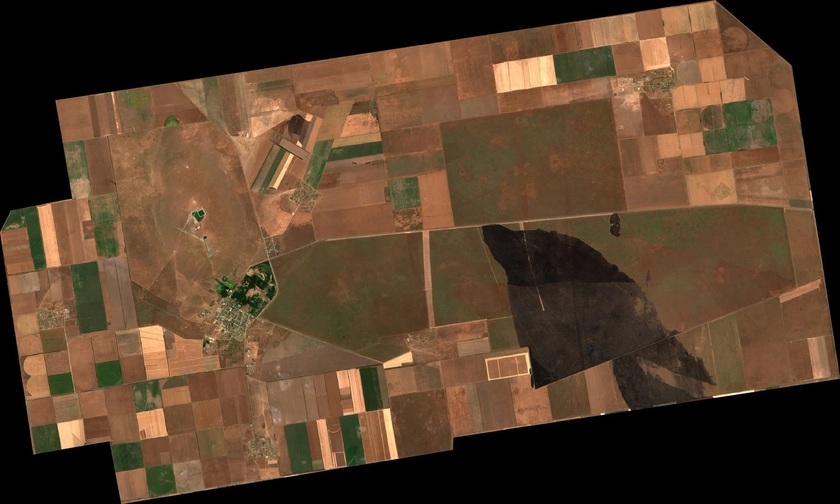
The list of minerals available for investment and extraction:
aluminum, antimony, arsenic, barite, beryllium, bismuth, cerium, cesium, chromium, cobalt, copper, dysprosium, erbium, europium, fluorine, fluorspar, gadolinium, gallium, germanium, gold, graphite, hafnium, holmium, indium, iridium, lanthanum, lithium, lutetium, magnesium, manganese, neodymium, nickel, niobium, palladium, platinum, potassium, praseodymium, rhodium, rubidium, ruthenium, samarium, scandium, tantalum, tellurium, terbium, thulium, tin, titanium, tungsten, uranium, vanadium, ytterbium, yttrium, zinc, zirconium, oil, and natural gas
Who will manage it?
The two countries will establish the “United States-Ukraine Reconstruction Investment Fund” as a limited partnership.
The US International Development Finance Corporation (DFC) will manage the fund from the American side. Ukraine will manage it through the “Agency on Support [of] Public-Private Partnership,” or the PPP Agency.
The agreement says that both Kyiv and Washington might have to enact new legislation to give the DFC and PPP Agency new tools to enact the agreement.
Who gets what?
Ukraine and the US split revenues 50/50.
The revenues apply to new licences and permits that Ukraine issues after the agreement comes into force.
Ukraine and the US will earn from rent payments for minerals extraction, license fees, and “amounts payable under production sharing agreements.”
Previous calls by Washington to consider the revenue repayment for previous aid have been scrapped.
How much are both sides contributing?
There are no exact numbers for US or Ukrainian contributions to the Reconstruction Fund. Instead, it says all sides will contribute to the partnership.
Ukraine agreed to make its contribution, but the date is not specified.
What about the EU?
The agreement includes assurances that the deal won’t hinder Ukraine’s EU accession.
Revenues from Ukrainian infrastructure are not controlled by the US, despite previous proposals.
US investors will not have first dibs on mineral extraction licenses. They’ll be granted access to auctions or negotiations to purchase minerals on terms no less favorable than those offered to other buyers.
What about security guarantees?
In short, there are no solid guarantees.
However, the document states that any future military aid, including technologies and training, from the US will be counted toward the US contribution under the agreement, the monetary value of which is likely determined in subsequent documents.
“If [the U.S. government] provides the Ukrainian government with new military assistance in any form (including the transfer of weapons systems, ammunition, technologies, or training), the US capital contribution shall be deemed increased by the estimated value of such military assistance,” the document says.
Will the revenue be taxed?
No.
The deal includes taxation, tariffs, and cross-border transfers policy.
Kyiv agreed not to impose taxes, levies, fees, withholdings (including backup withholdings), or any other duties on any payment contributions to the reconstruction fund.
The US will only impose the federal tax on “income of a foreign person from the United States sources or income effectively connected to a United States trade or business,” the agreement says.
What happens if Ukraine encounters major financial issues?
If Ukraine’s gold and currency reserves decline significantly or its balance of payments worsens enough to risk economic stability, both sides will limit hryvnia-to-dollar conversions after consulting with each other.
In this case, Ukraine must set a time limit for the restrictions and compensate the affected parties.
The agreement will come into force when Ukraine’s parliament, Verkhovna Rada, ratifies the agreement.
You can also highlight the text and press Ctrl + Enter