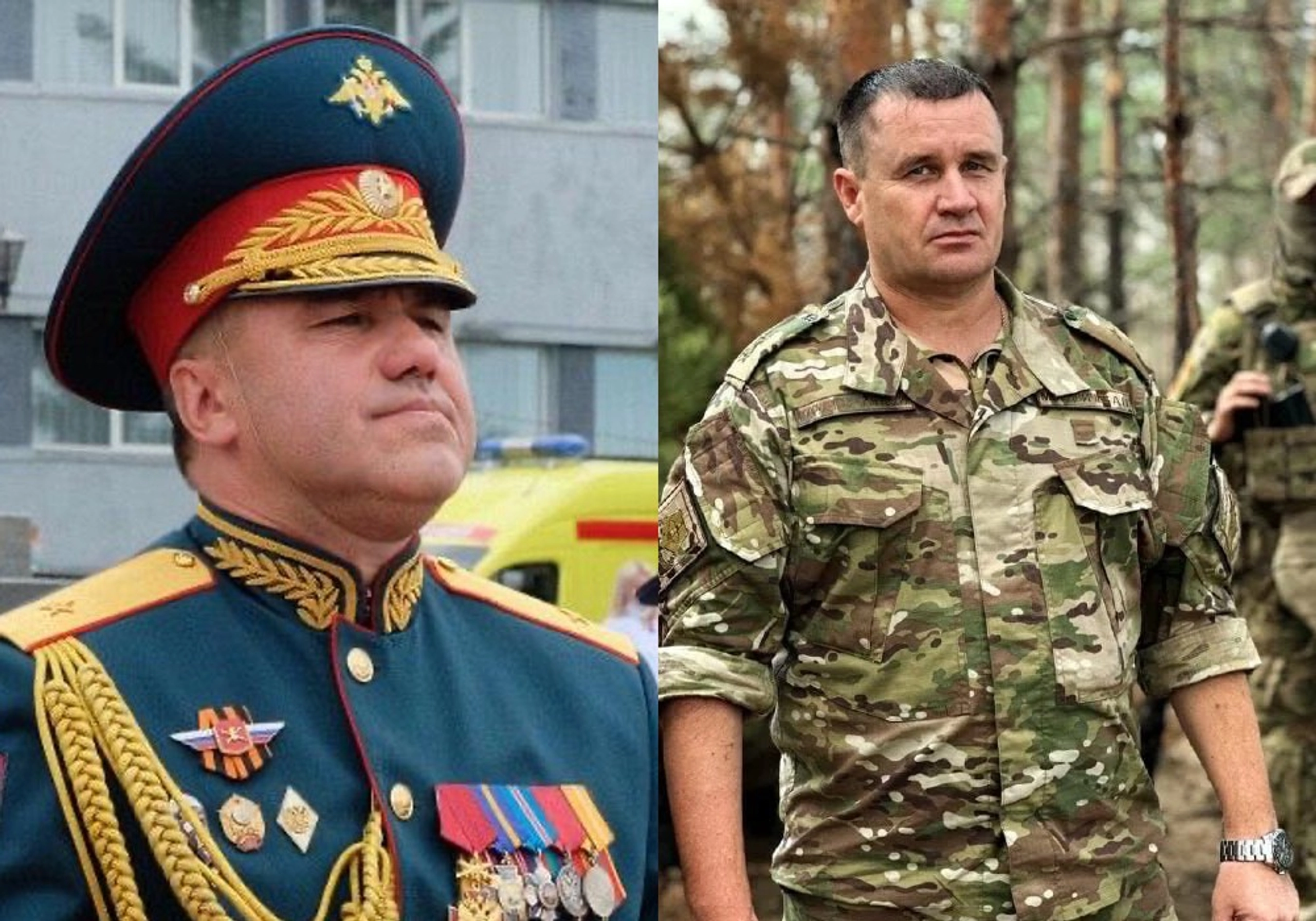
The Kremlin on Thursday promoted two hard-fighting paratrooper generals with reputations for attacking relentlessly without much regard to casualties to senior commands that aim to defeat the Ukrainian army by overwhelming it.
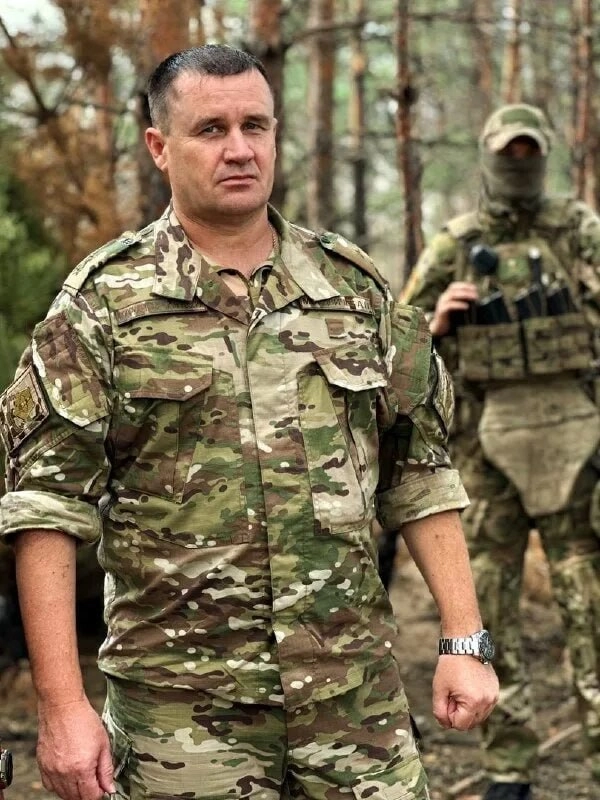
Colonel General Valery Solodchuk, a career airborne infantry officer, was appointed the new commander of Russia’s Central Military District, the main Russian army command responsible for ground and air operations in Ukraine’s war-critical Donbas region.
JOIN US ON TELEGRAM
Follow our coverage of the war on the @Kyivpost_official.
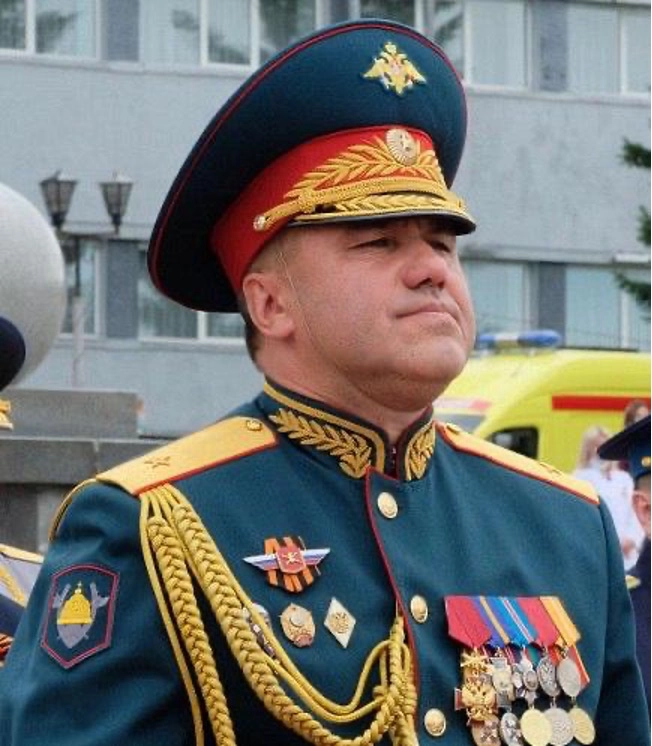
Solodchuk replaced fellow paratroop Colonel General Andrey Mordvichev, who was elevated to the job of Commander-in-Chief of the Ground Forces. The outgoing ground forces commander-in-chief, Oleg Salyukov, had recently turned 70 and reached mandatory retirement age. He will draw a pension but serve as an advisor on Russia’s National Security Council, Russian news reports said.
The twin appointments accelerating Solodchuk’s (54) and Mordvichev’s (49) already-impressive careers were a visible Kremlin double down on younger, aggressive generals ready and able to gain ground against Armed Forces of Ukraine (AFU) forces, even at slow pace and at the cost of prohibitive losses.
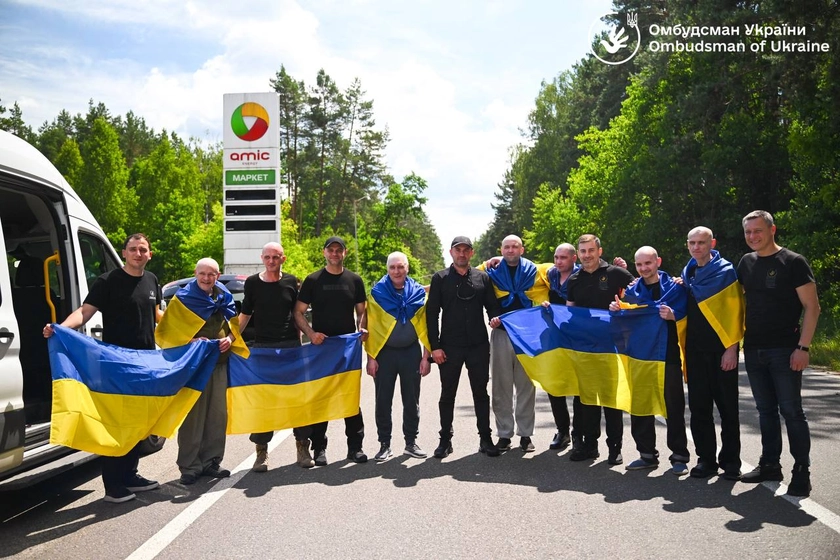
Ukraine Secures Release of Seven Civilians from Russian Captivity
Solodchuk most recently gained prominence as commander of Russia’s joint forces north, an ad hoc headquarters formed in Russia’s Kursk region in June 2024 following a surprise Ukrainian invasion of Russian Federation territory.
Solodchuk took over the command in late 2024 following early Russian army failures against picked Ukrainian units that occupied a Luxembourg-sized chunk of Russia.
Combining air strikes, massed artillery, and a reported 10,000 North Korean mercenary troops, from November 2024 to March 2025, Solodchuk engineered a relentless recapture of Russian territory. Dozens of Russian villages and four major towns were flattened in the six-month grinding offensive.
A reported one in three North Korean soldiers died or was severely wounded in massed assaults made over open ground, into the teeth of Ukrainian fortifications defended by drone swarms and NATO nation-supplied artillery.
Although Ukrainian forces still hold a sliver of Kursk region, Solodchuk’s forces had liberated more than 98% of lost territory by early May 2025.
Prior to the Kursk operation, Solodchuk led Russia’s 36th Combined Arms Army, a major formation fighting mostly in Ukraine’s north. In the early months of the war, 36th Army troops under Solodchuk’s command killed hundreds of Ukrainian civilians during Russia’s failed bid to capture the Ukrainian capital Kyiv.
Ukrainian prosecutors have claimed that 400-800 Ukrainian civilians died at the hands of 36th Army soldiers from late February 2022 to April 2024, some in random killings, and others in massed executions taking placing primarily in the Kyiv-outskirts towns of Bucha, Borodyanka, Morshcun and Motyzhyn.
Ukraine’s intelligence agency, the SBU, in January 2025, published materials implicating Solodchuk, along with three other Russian generals and a colonel for ordering a November 2024 air strike against a shopping center in the northeastern Ukrainian city of Kharkiv killing 19 and injuring 46 civilians.
No military targets were anywhere near the attack which Solodchuk, as the chief operations officers for Russian forces deployed in north-eastern Ukraine at the time, was responsible for planning, the SBU said.
During the 2014-2021 period, Solodchuk commanded a Donetsk-region-based formation called First Army Corps, a Kremlin-sponsored formation recruited from pro-Russia fighters from Ukraine’s Donetsk region, and commanded by Russian army officers. Prior to combat service in Ukraine, Solodchuk commanded Russia’s elite 76th Airborne Division, and graduated from the Frunze Military Institute, Russia’s top university for training rising officers for top-level service.
Mordvichev, the man Solodchuk is replacing, will, as the new Russian Federation Commander, Ground Forces, move into a mostly managerial position responsible for training, recruitment, force generation, and balancing ground force operational priorities across Russia.
A critical challenge will be maintaining flows of replacement troops and military material to keep feeding meat-grinder warfare on the Ukraine front, without dangerously depleting formations and fighting capacity elsewhere across Russia’s thirteen time zones.
Ukrainian officials have suggested Mordvichev, the commander of Russian forces assaulting the encircled major city Mariupol from Feb. 24-May 20, 2022, is complicit in the deaths of at least 20,000 civilians by military action, cold, starvation, and sickness. During the Mariupol battle, Russian forces under Mordvichev’s command bombarded and partially leveled the Azov Sea port city using tanks, mortars, cannon, artillery rockets, tactical strike aircraft, strategic bombers, and naval gunfire.
Pro-Russia observers saw the transfer of a fighting officer like Mordvichev to a top-level management job as a validation of Russia’s strategy of attrition warfare in Ukraine that seeks to break Ukrainian resistance by weight of men and firepower, and proof the Russian army command system is functioning well.
“Mordvichev (I really hope) will go through a period of adaptation in the top military leadership and receive a strategic position, and then we will truly congratulate him,” wrote popular mil-blogger Vladimir Rogov on May 15. “Personnel movements in the Ministry of Defense of the Russian Federation, in my opinion, should take place smoothly, without jerks, and this is wonderful. This is an indicator of a healthy, non-crisis policy in the development of the Armed Forces of the Russian Federation.”
Some Russia-critical observers have taken Mordvichev to task for commanding Russian forces in east Ukraine for more than two years and failing to achieve much more than a stalemate. Sviatoslav Golikov, a Russian military writer often critical of Kremlin operations in Ukraine, accused Mordvichev and his headquarters of ignoring field reports about bad Russian logistics and lethal Ukrainian drone swarms.
“The problem is not that the [Russian] guys are fighting badly. Supply is still a total mess. The [Ukrainians] have paralyzed our logistics. Okay, we can drag [rifle] ammo 15 kilometers [9 miles] on our backs. But what about heavy machine guns? What about the ammo for that?…We simply don’t have enough [air defense] crews to cover the sky. As a result, the logistics situation is completely f*cked up. I have no idea what the command will do there. The most interesting thing is that I am now 100 percent sure that at the regiment or brigade level, everything about that is being reported to the army headquarters. How this information is processed further, what conclusions they draw, this remains a mystery to me,” Golikov said in a March 6 Telegram post.
You can also highlight the text and press Ctrl + Enter

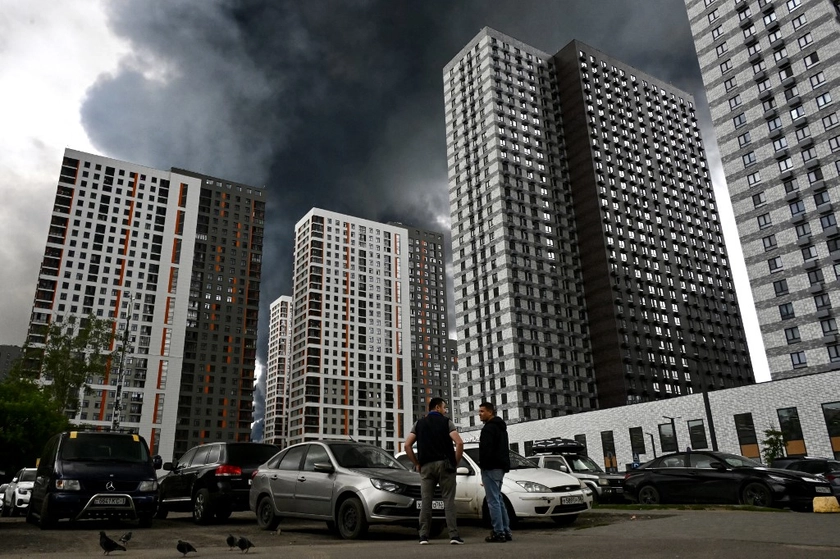
Attack on Moscow Oil Refinery: Putin Under Pressure?