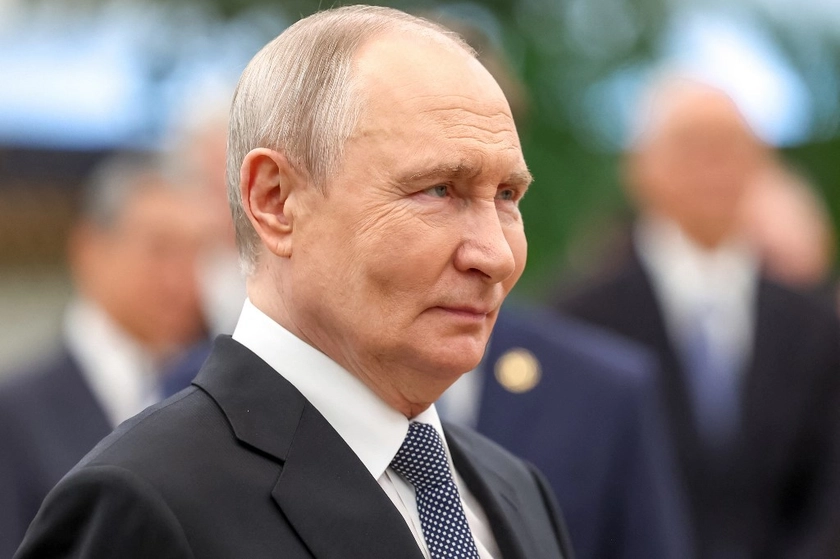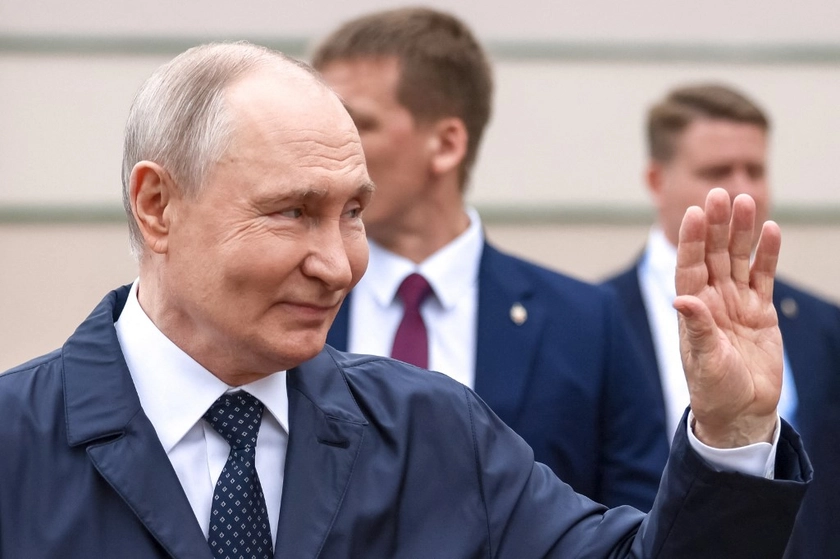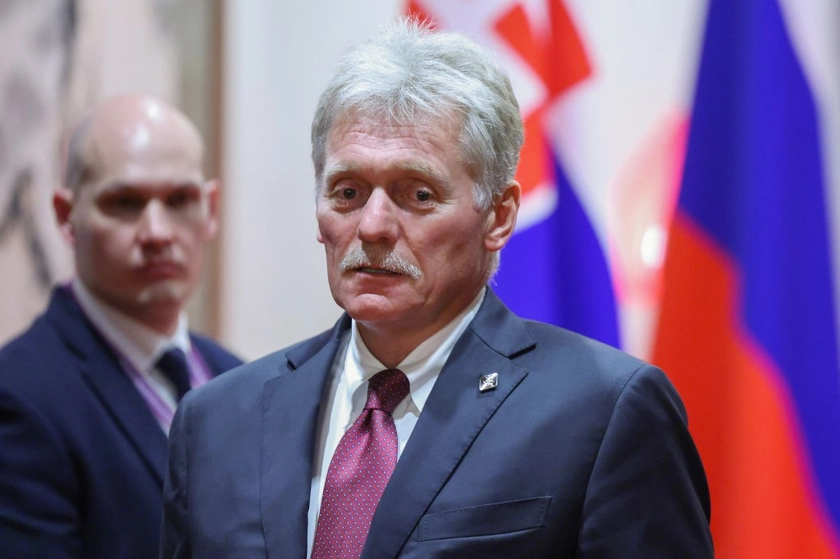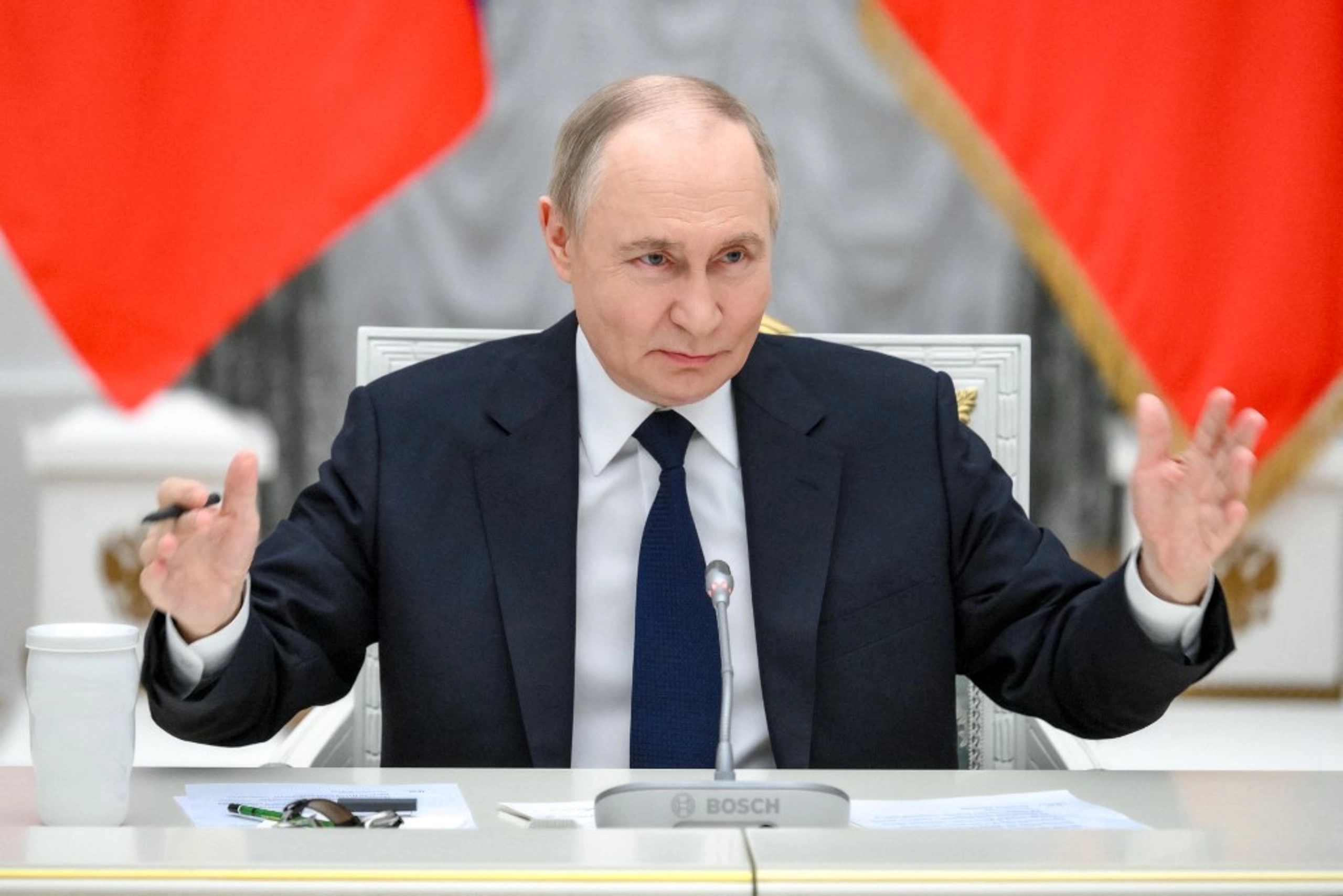
According to Russian state media outlet RIA Novosti reporting on a meeting held by President Vladimir Putin with business leaders on Monday, Putin claimed he was left with no option in 2022 but to launch his so-called “special military operation (SVO)” – which most of the world calls a “war” – due to what was happening in Ukraine and the insincerity of the West.
“We didn’t organize the [2014] coup d’etat in Ukraine. We were constantly told all the time that elections and democracy were needed. Then a bloody coup d’etat was carried out – and that’s it.”
JOIN US ON TELEGRAM
Follow our coverage of the war on the @Kyivpost_official.
Putin’s statement was highly misleading and largely false.
Putin was referring to the Revolution of Dignity, which grew out of the Euromaidan mass protests triggered by former President Viktor Yanukovych who, reportedly under orders from Putin, refused to sign an EU association deal that he had campaigned on. It grew into a broader movement against corruption, abuse of power, and calls for democratic reform.
The Revolution of Dignity was “bloody,” but most of the deaths – over 100 – were those of unarmed protesters fired on by Yanukovych’s Berkut riot police. The government’s violent crackdowns intensified the protests, leading to Yanukovych fleeing the country. The revolution marked a turning point for Ukraine – toward Western integration and civil rights.
How Putin Will Fall: Chronicle of a Coming Succession
Putin then went on to claim that “the lawful government” was replaced by an illegitimate one that began to persecute “the peaceful citizens of the Donbas” and began to kill its “people from helicopters and planes.”
“They simply forced us to do what we are doing now, and are trying to make us guilty,” he said.
Adding that the goal of the SVO had been “the protection of people who have been subjected to abuse and genocide by the Kyiv regime for eight years,” he said Russia “was left with no chance to act differently, the security risks were such that it was impossible to respond by any other means.”
These statements are highly misleading and largely false.
In fact, after Yanukovych fled to Russia in February 2014, the Ukrainian parliament, the Verkhovna Rada, followed constitutional procedures to remove him from office after his abandonment of duties. A transitional government was formed followed by presidential elections three months later which resulted in the election of President Petro Poroshenko. The vote was widely recognized as free and fair by international observers, including the OSCE.
As for the “helicopters and planes” attacking civilians claim, the UN Human Rights Monitoring Mission and other organizations documented fighting between Ukrainian armed forces and pro-Russian separatists armed by the Kremlin, but the Ukrainian government did not indiscriminately attack civilians in the Donbas – which is something Russia is currently doing on a near daily basis in Ukraine.
While human rights violations occurred on both sides of the Donbas conflict, there is no evidence that Kyiv systematically engaged in abuse of ethnic Russians or Russian speakers or in any manner that remotely supports claims of genocide.
Claims of genocide, supposedly necessitating Russia’s February 2022 full-scale invasion, have been widely debunked by international organizations, independent investigators, and legal experts – including the UN Human Rights Monitoring Mission, the OSCE, and the International Court of Justice.
Putin then turned his focus on the West, saying that Moscow had been trying to come to an accommodation with NATO to agree on a mutual security mechanism for Europe for more than 30 years.
This is statement is partially true, but misleading in the context.
After the end of the Cold War, Russia engaged with NATO through the “NATO-Russia Founding Act” of 1997 and through the NATO-Russia Council, which was established in 2002.
Russia was offered a partnership role with NATO and participated in military and political dialogues. However, the Russo-Georgian War and its 2014 invasion of Ukraine – led to a deterioration in relations with NATO.
Those discussions failed, Putin claimed, as Russia had been faced with a combination of cynical deception and lies, attempts to pressure and blackmail the Kremlin.
This claim is unsubstantiated.
NATO decisions are made by a consensus of member states and there is no evidence of NATO members blackmailing or lying to Russia in formal negotiations.
At the same time, Putin claimed on Monday that NATO and the European Union steadily expanded their blocs eastwards and advanced up to the borders of the Russian Federation despite Moscow’s protests – claiming Ukraine was a step too far that he could no longer ignore.
Part of this is true, part of it false, all of it misleading.
There was no binding treaty prohibiting NATO expansion and several countries including the Baltic states, the Czech Republic, Hungary, and Poland did join NATO after the fall of the Soviet Union. However, it was their choice to join NATO, a defensive alliance, out of the desire for security and democracy and fear – which turned out to be justified in the case of Ukraine – of Russian aggression.
As for Ukraine, it has never been a member of NATO and was not close to joining NATO in 2022. It was even less so in 2014, when Russia first invaded. Ukraine had never posed an existential threat to Russia. Russia’s main concern was losing its influence over Ukraine after 2014, when Ukrainians opted to pursue a democratic Westward-leaning future.
Conclusion
Putin’s statements to business leaders on Monday are a mix of falsehoods, exaggerations, and distortions. The statements are propaganda intended to delegitimize Ukraine’s democratic transition and justify Russian aggression.
The whole tenor of Putin’s comments undermined his previous claims that Russia was now “seeking peace.”
Even though a Russian delegation met with representatives from Kyiv on May 16 in Turkey, it merely doubled down on its maximalist demands for concessions from Ukraine and the apparent US readiness to grant them.
These included recognition of Moscow’s sovereignty over Crimea, an end to Ukraine’s NATO membership aspirations, and demands that Russia receive control over the four Ukrainian regions of Donetsk, Luhansk, Kherson, and Zaporizhzhia.
At the Istanbul meeting the head of Russia’s delegation Vladimir Medinsky specifically warned that, unless Kyiv agreed to its demands, Moscow was prepared to “fight endlessly.”
Western commentators cited by the Economist and Bloomberg say that Russia will not end the war while it continues [to believe] it is “winning” – an assessment which Putin’s latest remarks continue to reinforce.
You can also highlight the text and press Ctrl + Enter
Attack on Moscow Oil Refinery: Putin Under Pressure?