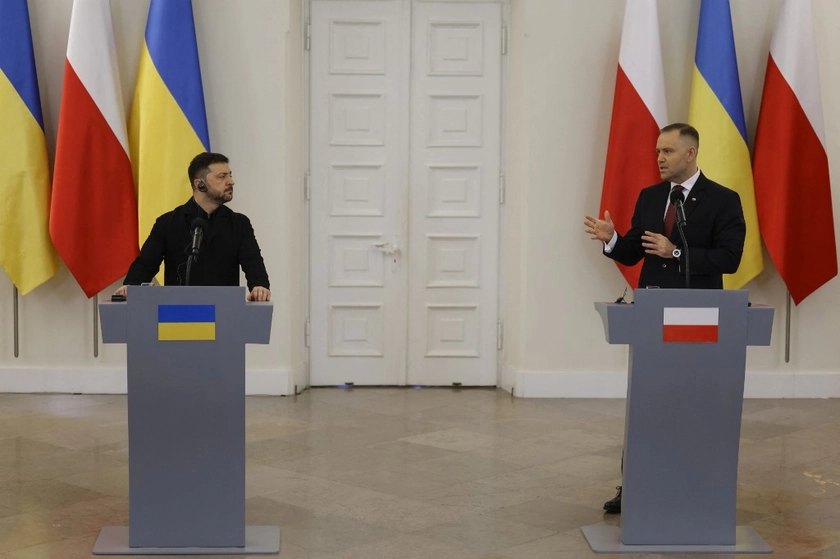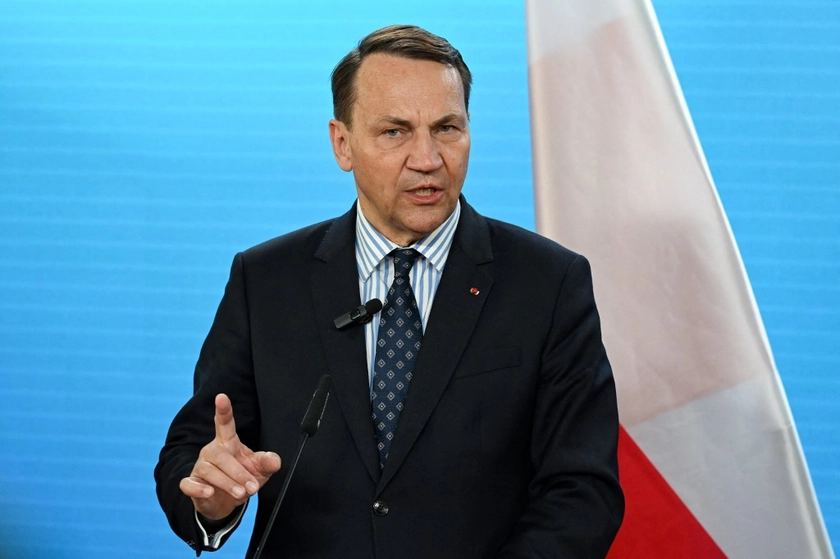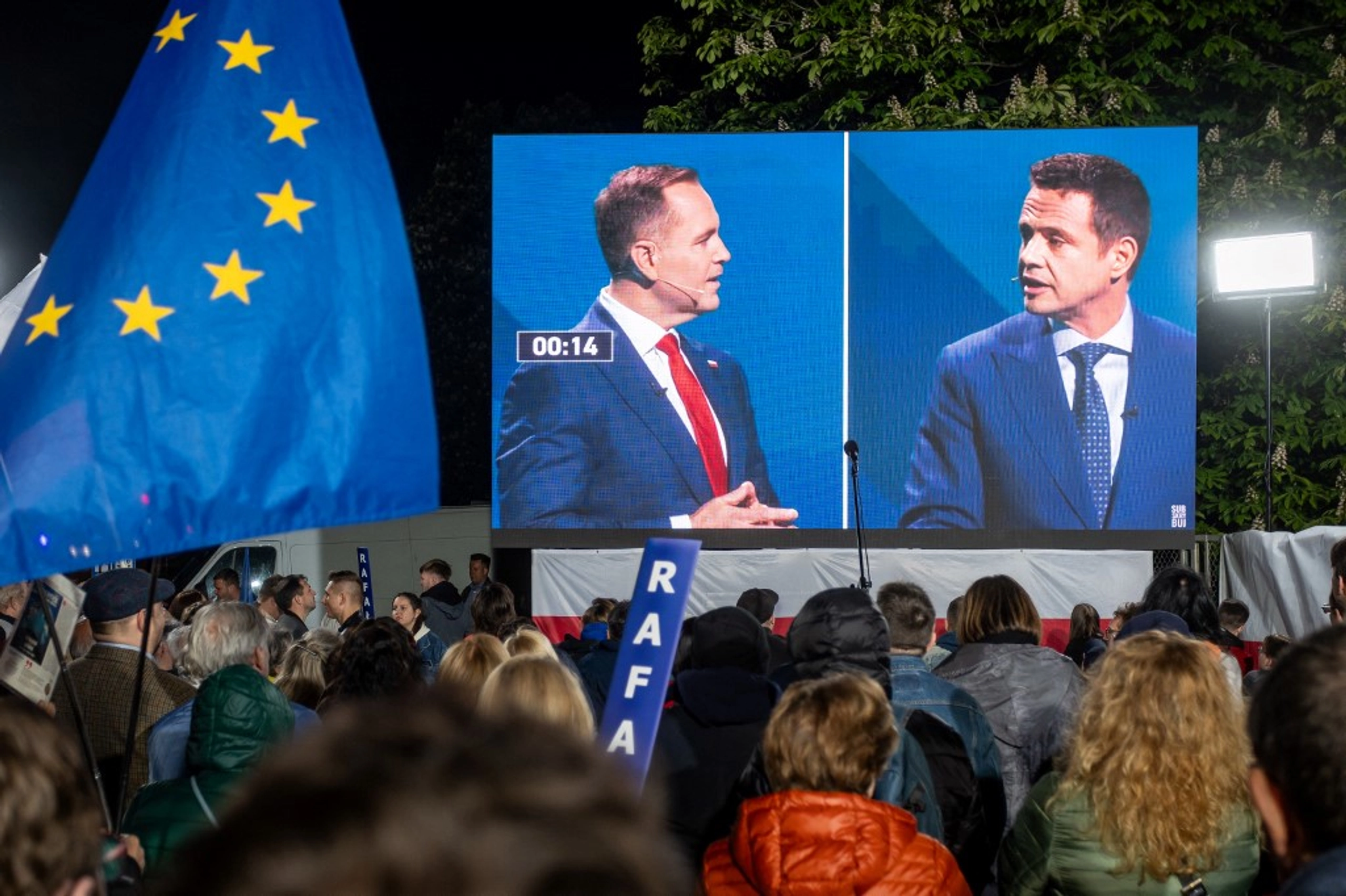
As Poland heads into the final days of a fiercely contested presidential race, the nation stands at a political crossroads: Liberal candidate Rafał Trzaskowski and right-wing challenger Karol Nawrocki are locked in a dead heat, each offering starkly different visions for the country’s future – from EU integration to relations with Ukraine.
With record numbers of overseas voters registered and tensions running high, Sunday’s vote could reshape not only the Polish presidency, but the balance of power in Warsaw and beyond.
JOIN US ON TELEGRAM
Follow our coverage of the war on the @Kyivpost_official.
It’s difficult to assess which candidate has a better chance of winning. According to polls released just before the election silence begins at midnight between Friday and Saturday, the race is neck and neck.
A poll conducted by Ipsos for OKO.press and published on Thursday, May 29, indicates a tie, with a slight edge for Rafał Trzaskowski (48%) over Karol Nawrocki (47%), within a margin of error of +/- 3 percentage points.
Support for the right wing is often underestimated in Polish polls, and the final outcome may be determined by voter turnout. Over 695,000 Polish citizens have registered to vote abroad, which is a record number.
The Campaign
The second round is preceded by a heated and, in the eyes of many, extremely dirty campaign, full of manipulation and fake news.
Karol Nawrocki has been accused of ties to the criminal underworld and involvement in football hooligan fights.
Russia May Provoke Baltics, Poland as Ukraine Strikes Deep
Rafał Trzaskowski, on the other hand, bears the burden of the Donald Tusk government, often negatively assessed by Polish society.
One of the main social sentiments is fatigue with the power swap between Law and Justice and Civic Platform, which have alternated in ruling Poland for over twenty years.
This party duopoly fatigue is especially visible among younger voters. A typical 25-year-old has only ever known governments led either by Jarosław Kaczyński or Donald Tusk, and membership in the EU or NATO is simply the established order.
This sentiment contributes to the popularity of far-right populist candidate Sławomir Mentzen, who, thanks to protest voters, placed third in the first round. His party, Confederation, enjoys 17% support and is likely to co-govern after future parliamentary elections.
It is Mentzen’s voters who could help Karol Nawrocki win. His first-round result and the Confederation’s growing support make them the biggest political winners of this campaign.
The Election Campaign and Ukraine
The second dominant emotion is fear of war. Even before the first round, most candidates declared they would not send Polish troops to Ukraine as part of any international stabilization mission. Security policy is a key issue in the campaign, though debate rarely moves beyond arms investments.
There is little honest discussion on Poland’s role in shaping regional security architecture, military training for citizens, conscription, or civil defense.
Many candidates, especially from the right, claimed before the first round that Poland has given too much to Ukraine since 2022 and received little in return.
Negative emotions related to the historical Polish-Ukrainian conflict over the Volhynia massacre have played a significant role. Despite cautious progress and the beginning of exhumations of Polish victims, the issue remains unresolved and fosters mistrust.
Rafał Trzaskowski appears to be more pro-Ukrainian in his messaging, but would a Nawrocki victory change Poland’s Ukraine policy? If so, only cosmetically. A cooling of political tone may occur, but not a shift in direction.
Nawrocki’s political camp, Law and Justice, sent hundreds of units of heavy weapons to Ukraine and opened borders to refugees after the 2022 invasion – a policy continued by the current government.
Even if disputes between Warsaw and Kyiv grow, there is no scenario on the table where Poland joins countries like Hungary or Slovakia in distancing itself from Ukraine. The key to understanding politics is distinguishing real decisions and facts from emotional appeals.
Is Nawrocki Pro-Russian?
Many voices on social media platforms suggest Karol Nawrocki may be a pro-Moscow candidate. It’s undeniable that Poland’s extreme political polarization benefits Russia, but this polarization stems from internal tensions.
Nawrocki, the Law and Justice candidate, is wanted by Russia and listed on an international arrest warrant for dismantling Soviet monuments – something he consistently did as head of the Institute of National Remembrance.
What raises eyebrows is Nawrocki’s support from figures like Kristi Noem (US Secretary of Homeland Security), Hungarian PM Viktor Orbán, and George Simion, who lost the Romanian presidential election. This is part of an attempt to build a pro-American MAGA-style, anti-liberal front in Europe.
Trzaskowski, by contrast, is favored by the EU and supported by Nicușor Dan, Romania’s president-elect.
Meanwhile, right-wing US Republican congressional members on the House Foreign Affairs Committee also weighed in on their partisan X group account, addressing a conspiracy theory-based letter to Ursula von der Leyen that accuses “Obama, Soros, and the Globalist Left” of attempting to rig Poland’s presidential election.
Who Will Win?
Sunday’s vote will conclude Poland’s extended election cycle that began in the second half of 2023 – if Trzaskowski wins.
If Nawrocki becomes president, the electoral calendar may be disrupted, possibly leading to early parliamentary elections. Poland’s political system allows the president to veto legislation passed by the parliamentary majority, which would essentially paralyze Donald Tusk’s government.
If Trzaskowski wins by a narrow margin, Nawrocki’s political camp may accuse the government of electoral fraud. Similar accusations have been made before, though never backed by evidence.
If parliamentary elections were held today, the ruling coalition would lose its majority, and the Confederation – polling at 17% in a recent IBRiS poll for Onet – would become the kingmaker in forming the next government.
The views expressed in this opinion article are the author’s and not necessarily those of Kyiv Post.
You can also highlight the text and press Ctrl + Enter

OPINION: In High-Stakes Bluff, Putin Holds a Losing Hand
Hungary Blocks Ukraine, Moldova’s EU Membership Talks