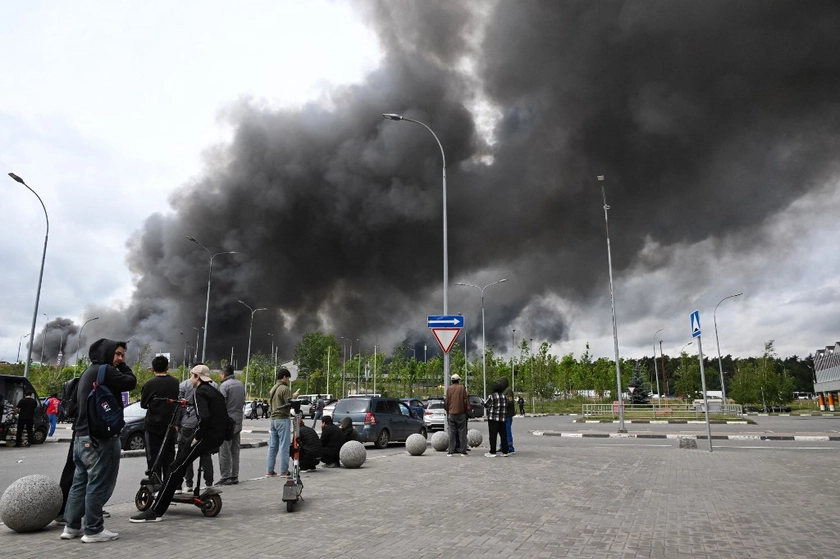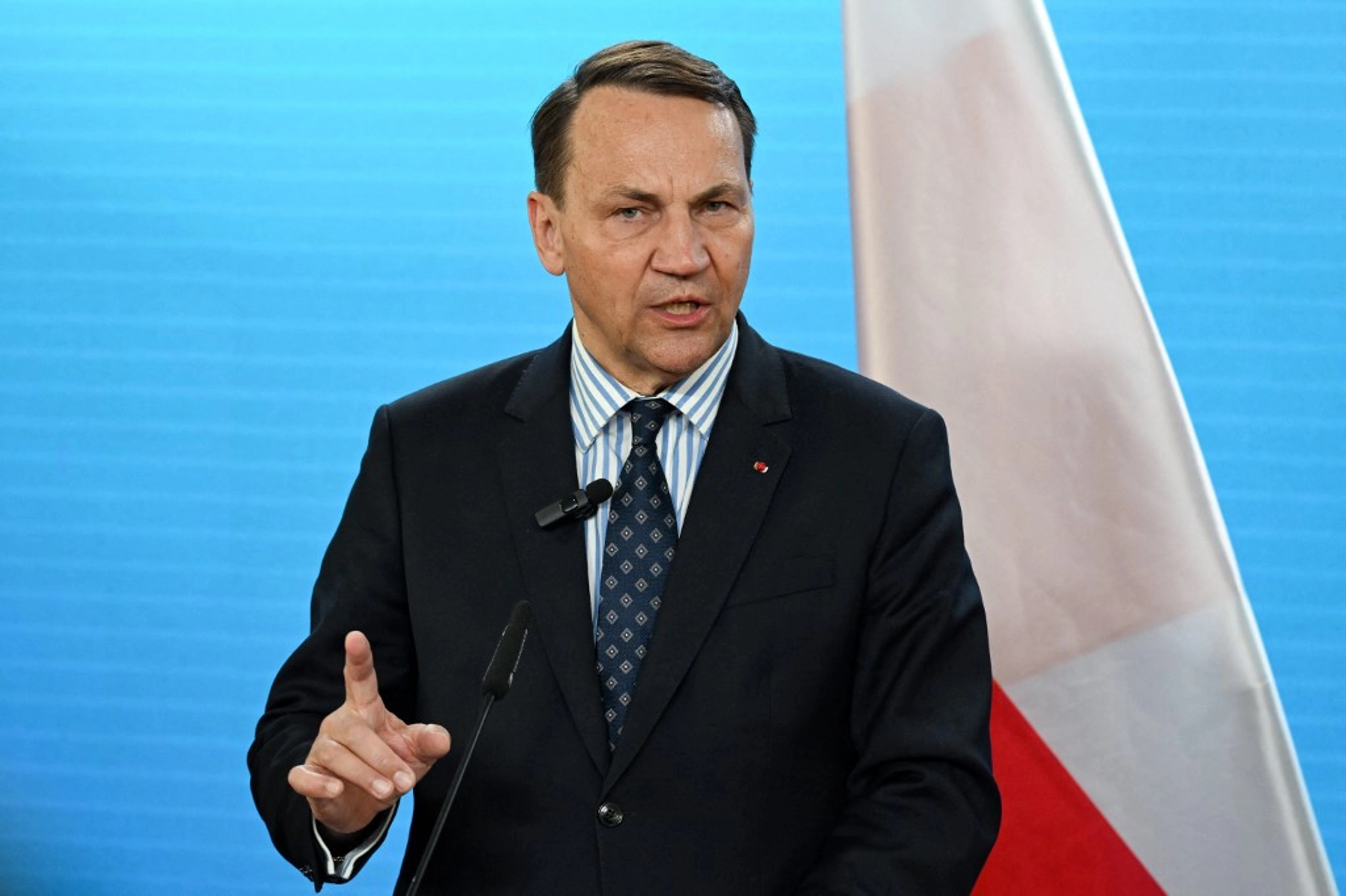
Polish Foreign Minister Radosław Sikorski warned that Moscow may be preparing a staged provocation on Russian territory to justify further escalation, drawing a historical parallel to Nazi Germany’s 1939 pretext for invading Poland.
In a post on X, Sikorski reacted to recent threats from the Kremlin, saying Russia’s latest rhetoric could be laying the groundwork for a false-flag operation by Russian special services.
JOIN US ON TELEGRAM
Follow our coverage of the war on the @Kyivpost_official.
“This sounds like an announcement of a provocation. I expect an attack on Russian territory under a false flag, to which Putin will ‘respond,’” Sikorski wrote.
He compared the situation to the 1939 Gleiwitz incident, when Nazi Germany staged a fake Polish attack on a radio station near the German-Polish border to justify launching World War II.
“I remind you that in August 1939, the Abwehr staged a ‘Polish’ attack on a radio station in Gleiwitz in order to give itself a pretext for war,” the Polish minister added.
Concern in Warsaw followed remarks by Vladimir Putin during a speech to military academy graduates.
“Now the West openly declares that it is preparing for war with us, increasing military and offensive budgets. To justify such spending and the radical militarization of their states, NATO and EU leaders continue to rely on false claims about an alleged Russian military threat,” Putin said.
Kyiv Smashed, Moscow Burned, Parsing Drone Operations
According to him, the West first creates threats to Russia and “forces” Moscow to respond, only to later accuse Russia “of all mortal sins.”
“Even after the treacherous attack on the Soviet Union on June 22, 1941, the West, Hitler’s Germany, tried to accuse the USSR and Stalin of aggression against the collective West,” the Russian president added.
Putin also claimed that Russia supports “equal and indivisible security for all,” while remaining ready to “respond swiftly and adequately to any external or internal threats.”
Moreover, Russia’s Foreign Intelligence Service accused Ukraine in May of preparing to launch drones from five Latvian military bases – Adazi, Selonia, Lielvarde, Daugavpils, and Jekabpils – while warning that NATO membership “will not protect” Latvia.
Latvian intelligence officials told Fox News Digital that Russia may be preparing hybrid provocations against the Baltic states or Poland to pressure NATO members into reducing support for Ukraine.
According to Latvian intelligence, Moscow is unlikely to launch a conventional attack on NATO in the near term but could resort to drones, missiles, or other destabilizing actions.
“We see indications that Russia is preparing military provocations against the Baltic countries or Poland – not a conventional war... but hybrid attacks, such as missiles, drones or other actions designed to send a signal: stop supporting Ukraine, or you will have your own problems.”
Officials said the main concern is not Russia’s immediate military strength, but the risk of miscalculation by Putin.
“The biggest concern is miscalculation. Russian institutions are telling Putin what he wants to hear...”
Notably, former editor of Russia’s Vesti program claimed that Putin has received separate, non-televised news bulletins since 2011 designed to present a curated version of events.
He said it began after the 2011 Moscow protests and has since expanded, increasingly filtering information about Russia’s war in Ukraine.
The warning echoes concerns from Polish officials, who say Russia’s hybrid campaign against NATO’s eastern flank is already underway, including cyberattacks, drone activity, and attacks on critical infrastructure.
Latvian intelligence also said Western sanctions are increasingly hurting Russia’s economy despite Moscow’s public claims to the contrary.
“Russia says publicly that sanctions do not matter, but its own internal assessments show that sanctions are biting.”
Despite the warnings, officials stressed there is no immediate invasion threat.
“Currently, there are no military threats to Latvia.”
They estimate Russia would need three to five years to rebuild enough military capability for a large-scale attack, even if the war in Ukraine ended today. For now, the greater risk lies in limited provocations designed to intimidate NATO and test alliance unity.
You can also highlight the text and press Ctrl + Enter

Attack on Moscow Oil Refinery: Putin Under Pressure?