Two key Ukrainian operations derailed Russian aspirations in the Donetsk region, and both were the result of impressive Ukrainian intelligence and impeccable operational timing. This is the story of how Russia’s scheme to retake Pokrovsk, literally, blew up on the pad.
Russia’s plan for Pokrovsk was simple and brutal. The 8th Combined Arms Army, Moscow’s spearhead in the east, was reinforced to a total of about 110,000 troops, with attached units of artillery, armor, mechanized infantry, and a significant stockpile of weapons, fuel and supplies. Infiltrated into staging areas in occupied Donetsk, the 8th Army was massed for a push toward Pokrovsk.
JOIN US ON TELEGRAM
Follow our coverage of the war on the @Kyivpost_official.
The attack was to be led by Col. Ruslan Goryachkin, Putin’s hand-picked commander. The offensive was to be supplied by a massive ammunition storage complex at Khartsyzk, just outside the city of Donetsk. Containing tens of thousands of tons of ordnance, Khartsyzk was to be the principal stockpile of ammo for Russia’s summer offensive. Col. Goryachkin had all his eggs neatly stacked in one basket.
Freshly briefed in Moscow, Goryachkin arrived, plan in hand. His troops were assuming positions, carefully hoarded food, fuel, and ammunition were stockpiled, and the time was ripe – or so he thought.
But Ukraine’s Signals Intelligence (SIGNIT) units had identified a Russian command center outside Donetsk. Direction finding technology pinpointed the location and signals traffic analysis revealed that the headquarters was communicating directly with a multitude of subordinate units and commands. It didn’t take James Bond to realize this was the epicenter of Russia’s Donetsk operation.

The Illusion of a Peace Deal for Ukraine
SIGNIT had identified the target – but it needed to be verified. Local Ukrainain Partisans provided Human Intelligence, confirming that the location was, in fact, the operational headquarters of the 8th Combined Arms Army. Ukraine planned accordingly.
After sunset on June 30, 2025, six Ukrainian strike fighters lifted off from their runways and headed east. Approaching occupied Donetsk, two aircraft released ADM-160 MALD Minatare Air Launched Decoys. Each MALD decoy is a flying bag of electronic warfare tricks, designed to suppress and distract enemy air defenses. Roaring through the night, the MALDs headed northeast as the strike package closed in from the southwest.
Closing in at treetop level, the remaining four aircraft delivered a precision strike using Stormshadow air-launched cruise missiles.
While Russian sensors locked on the decoys, the stealthy Stormshadows whizzed past Russian air defenses, closed on target, and obliterated the headquarters and surrounding buildings. The headquarters, and Col. Goryachkin never saw it coming.
The attack killed not only Col. Goryachkin, the 8th Army’s commander, but virtually all of his battle staff and several subordinate commanders. In the span of seconds, four Stormshadows decapitated Russian military operations in the region.
But this was only the first blow. Even as Russians dug through the wreckage of their headquarters, Ukrainian partisans had identified another high-value target – this time in a secured compound in occupied Donetsk.
Eyewitnesses described a hellscape of fire and chaos.
In the early hours of July 3, 2025, Ukrainian Security Service (SBU) operatives unleashed a swarm of precision-guided kamikaze drones on a massive Russian ammunition depot located in the town of Khartsyzk, near Donetsk.
It proved to be a “sympathetic target.” When the drones hit, the depot didn’t just burn – it erupted. As pallets of ammunition ignited, they set off other shells and bombs stored nearby. The resulting blasts lit up the sky and shook the earth with explosions that could be seen and felt as far as 20 kilometers away (12 miles).
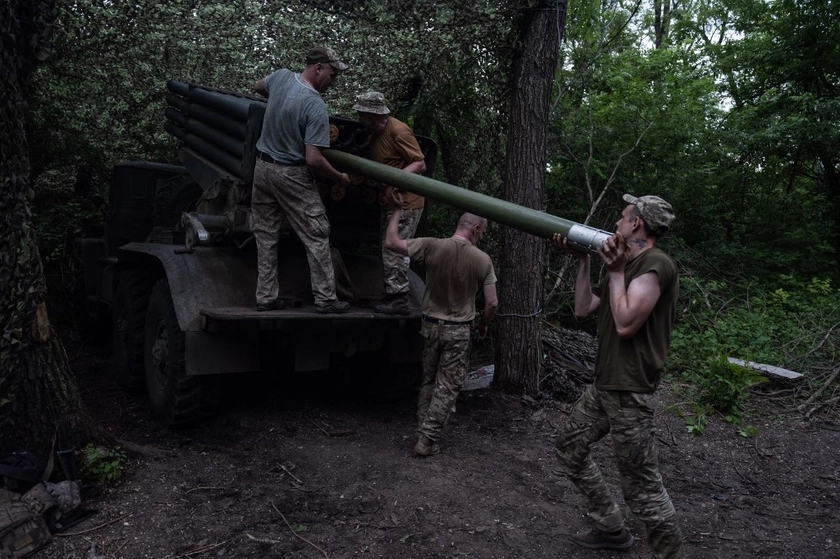
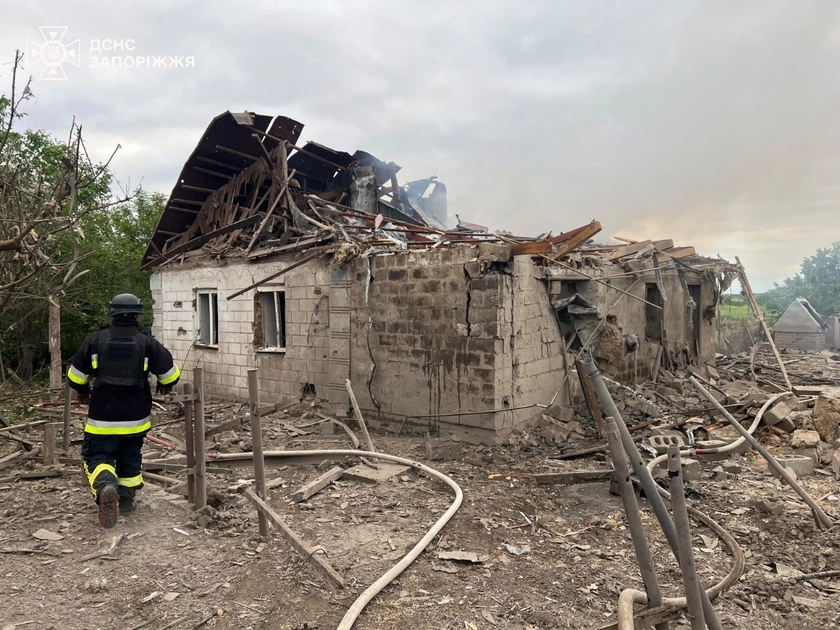
This was no ordinary ammo dump – it was the beating heart of Russia’s logistics operation for Donetsk Oblast. Crammed with thousands of rockets, multiple launch rocket system (MLRS) rounds, and surface-to-air missiles, the Khartsyzk ammunition depot was the principal and largest ammunition storage facility for the offensive aimed at crushing Pokrovsk. Secondary detonations thundered for hours. Eyewitnesses described a hellscape of fire and chaos, the night sky glowing red as Russia’s summer offensive went up in smoke.
This wasn’t a lucky shot; it was a calculated follow-up. The first attack cut off the snake’s head, the second disemboweled it. The rest is history: two smoking holes and Russian summer plans in shambles.
Now, with their ammunition reserves reduced to ash, Moscow’s grunts are hung out to dry – exposed, under-gunned and staring down Ukraine’s battle-hardened defenders. Occupation forces in Donetsk now face a grim reality: no shells, no missiles, and no one to lead them. Among the destroyed munitions was Russia’s principal storage point for Surface-to-Air Missiles in Ukraine.
Ukraine was quick to take advantage. Ukraine’s air force, long constrained by Russian defenses, now have open skies to rain AASM “Hammer” guided bombs on enemy troop concentrations. The timing was razor-sharp.
The hit on the 8th Army HQ and the Khartsyzk strike are a textbook case of asymmetrical warfare. The ripple effects were immediate: subordinate commanders no longer have a boss, or a plan, or any way to coordinate their activities.
Russian infantry and armored units, short of ammo, are now stripped of fire support, left naked to Ukraine’s counterstrikes. Pokrovsk, the Kremlin’s obsession and a strategic hub in the Donetsk region, remains a fortress. Ukraine’s defenders, outnumbered but undaunted, have turned Russia’s numerical edge into a liability, exploiting poorly supported assaults with devastating efficiency. Ukraine’s precision strikes changed the game. Russia is now on the back foot. Even though they are outnumbered, Kyiv’s forces don’t just hold ground – they dictate the terms of battle.
As Russia tries to rebuild ammunition stores and logistics, Ukraine is watching. Cyber-operatives have cracked Russian railway networks, tracking ammo trains in real-time as they rumble through occupied territory. The moment Russian supplies hit new depots, Ukrainian drones and HIMARS launchers are waiting, turning stockpiles into firestorms.
In the occupied territories. Ukrainian eyes are everywhere. Resistance groups play the long game, occasionally letting smaller convoys slip through to reveal larger, hidden bases. Then, the hammer falls – precision strikes that vaporize weeks’ worth of Russian supplies in minutes.
This is Ukraine’s war now – a relentless campaign of sabotage, precision, and disruption. By hunting commanders, torching depots, and strangling supply lines, Kyiv forces Moscow into a corner. Driven by “attack quotas” from Moscow, Russian commanders launch premature, ill-equipped offensives, that are quickly dismantled. Russian combat efficiency, and morale continue to diminish as their summer offensive sputters.
Ukraine’s troops, forged in three years of unrelenting combat, are not just surviving – they’re shaping the battlefield. The headquarters and Khartsyzk strikes were more than tactical wins; they were psychological gut punches, a signal to Russia’s generals that they are not safe, and their ammo hoards are priority targets.
Every depot that burns, every convoy that’s ambushed, every node of command and control that is targeted chips away at Russia’s ability to sustain its war machine. Pokrovsk stands firm, and Ukraine’s message is clear: the invaders’ summer offensive is dead before it begins.
You can also highlight the text and press Ctrl + Enter