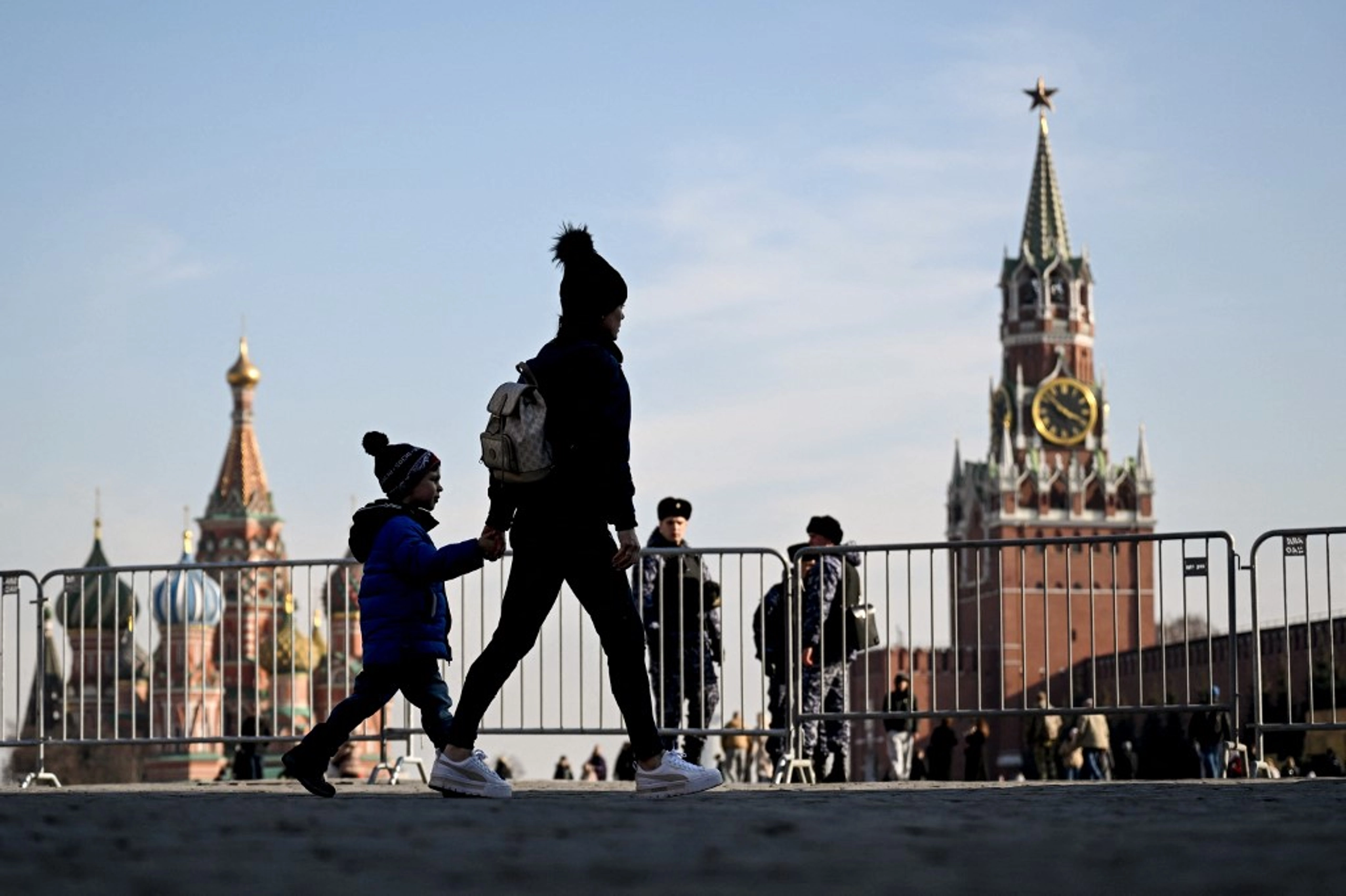
The Federal State Statistics Service (Rosstat) has stopped publishing data on the demographic situation in Russia.
May’s statistics were published in July. But, according to sources from Kyiv Post, from now on statistics on mortality, birth rates, the number of marriages and divorces, as well as data on migration in Russia, will be provided under signature and not disclosed. Kyiv Post decided to investigate.
JOIN US ON TELEGRAM
Follow our coverage of the war on the @Kyivpost_official.
Population decline
The closure on data release was first noted by demographer and sociologist Alexei Raksha – a former employee of Russia’s Federal State Statistics Service (Rosstat). Raksha began to voice concerns about the worsening demographic situation on social media, shortly after which he was declared a “foreign agent” and deprived of the ability to lecture, teach, and publish books and academic articles.
After viewing data for the first quarter of 2025, Rashka described it as “the worst since the 18th century,” adding: “Birth rates fell by 6-7% in March [compared to March 2024] and by 3-4% in February.”

Even before this year, the figures for the preceding two years indicated that Russia’s population was shrinking.

Ukrainian Defense Company SkyFall Secures Path to EU Funding
In January 2021, the Russian Federation’s population was officially 147.1 million – a figure that includes occupied Crimea. By January 2025, it had dropped to 146.1 million. That total also included the populations of the occupied Ukrainian territories of the Donetsk, Luhansk, Kherson, and Zaporizhzhia regions, which Russia laid claim to in September 2022, and which account for several million citizens.
Ukrainian researchers say that statistics also include pre-war Ukrainian population data from the occupied territories in those statistics, figures that no longer reflect reality.

“Because many people left the occupied territories. We’re talking about a very significant portion of the population. For example, the population of destroyed and occupied Mariupol was counted by Russians using pre-war Ukrainian data – more than 400,000 people – although today, nobody knows how many of those live there,” Dr. Lidiia Smola, a political science PhD and social psychologist said.

But even including artificially inflated figures for the occupied territories, the overall statistics across Russia remain extremely grim.
2024 saw a record decline in Russia’s population. A 3.5% increase in mortality combined with a drop in birth rates led to record demographic losses – there were 600,000 more deaths than births – a 20% increase on 2023.
Between 2022-2024, there was a steadily increasing population deficit with “excess deaths” – those exceeding the average annual rates from disease, natural disasters, accidents, etc.
In 2022, excess mortality stood at 22,000, in 2023, 40,000; and in 202,4 more than 140,000 – many of which experts told Kyiv Post were most likely war-related losses, the greatest increase occurring in regions with the most active military mobilization efforts.
These included the Tuva Republic, Altai, Nenets Autonomous Okrug, where almost 30% of the excess deaths occurred.
Hiding the cost of war
These figures echo those of Russian outlet Mediazona, which identified more than 120,000 Russian soldiers killed in Ukraine based on open-source information: obituaries, social media posts, official bulletins, etc. Mediazona suggested that the real number is significantly higher, as many bodies are unidentifiable, many have not been recovered, and the media do not report many funerals (especially of convicts).
US Secretary Marco Rubio said July 10 that Russia lost 100,000 dead just in the last six months.

“This is an attempt to hide loss data that is not published openly, but can be inferred from demographic statistics. The Kremlin has a direct interest in this. They didn’t notice it at first, but such data reveals not only losses, but also the country’s military potential,” Russian sociologist and journalist Igor Yakovenko said.

Former State Duma deputy and retired FSB colonel Gennady Gudov said statistical data can no longer conceal the shrinking of Russia’s working-age population and war losses:
“Simply because the statistics discredit the entire Kremlin war effort. But classifying data won’t help the authorities hide the death toll. There are many other sources, and many people are constantly working with them – for example, data on payouts, issuance of death certificates, inheritance paperwork, divorces, etc. It’s painstaking work, but it’s happening,” Gudkov says.

Another striking figure derived from the 2024 statistics is the decrease in life expectancy. In 2024, it stood at 72.8 years, compared to 73.5 in 2023. The gender gap is even more stark. Women in Russia live to 78 on average, men live only to 67.
The overall death rate also rose – to 12.5 per 1,000 compared with the global average of 8.
“This 10+ year age gap difference between men and women shows that men in Russia die significantly more often. And there’s a specific reason – war, in which mainly young men are dying,” says Smola.

But it’s not just official statistics pointing to a demographic catastrophe. In 2024, a top Russian healthcare official expert, Oleg Apolikhin, noted that 50% of Russian men do not even live to 65.
Hiding More Than the War
None of the experts we interviewed doubt that the war has accelerated Russia’s deep demographic problems, which were already severe before the full-scale invasion and identified a massive regional imbalance in birth rates.
In ethnically Russian regions, birth rates are extremely low, while overall Russian statistics are buoyed by high birth rates in some non-Russian, Asian and Caucasian republics.
“The imbalance in birth and death rates across regions is very strong, and the Russian government’s attempts to raise birth rates among ethnic Russians are not working. For example, an unprecedented initiative offering benefits to schoolgirls who get pregnant – even though sex under 18 is considered a crime – is not working. The gap between Russian and non-Russian regions is widening,” says Smola.
According to Gudkov, another issue the Russian authorities are attempting to hide by restricting demographic data relates to migration and the loss of labor resources – between 500,000 and 1.5 million Russians have fled the country in recent years due to the war and rising authoritarianism.
“If the data were published, they would show everything about the shrinking workforce and that people are fleeing. Around the world, especially in Europe, there are visibly more Russians on the streets. A million migrants is one major metropolis. And Russia’s population is already shrinking. Plus, these are young, active people. Entrepreneurs or skilled workers, often of reproductive age, often with children,” Gudkov said.

To this must be added over a million killed, wounded, or missing in the war, and another million currently fighting – all of whom are lost to Russia’s social and economic life.

According to Raksha, this continued population decline will inevitably lead to economic problems in Russia – economic contraction and a rise in the retirement age.
Yet there are even broader questions. Many experts argue that even this classified and grim version of Russia’s demographic data could be artificially improved. In 2023, Russian President Vladimir Putin accidentally revealed that only 12 million people live east of the Urals in Siberia and Asian Russia – not 27 million, as previously claimed. This led to some Russian demographers living abroad to question all of Russia’s published figures.
“The question arises – does the European part of Russia really have the 100+ million people claimed by the statistics?” Smola asks.
Russia is already actively employing increasing numbers of migrant labor to support its economy. Multiple media reports have shown Russia hiring African, Chinese, and North Korean workers. Just a few days ago, the head of the Ural Chamber of Commerce said Russia is preparing to invite a million men from India to work in factories.
According to Kyiv Post’s sources, these steps are more populist than effective and will not help Russia climb out of its demographic hole.
“Russia is hiding everything – fuel production, real estate, and capital registration, and now demography. All of these point to a very simple fact – things are going badly, and theft is growing,” Gudkov concluded.
“Russian demographic statistics were already spiraling in a catastrophic direction in 2024. It had reached a point where they had no choice but to classify it,” says Smola.
You can also highlight the text and press Ctrl + Enter

Attack on Moscow Oil Refinery: Putin Under Pressure?