WASHINGTON DC – The United States on Thursday dismissed Russia’s escalating “nuclear commentary” as “reckless and unhelpful” for regional security.
The move came just days after President Donald Trump’s 50-day deadline, a period during which Moscow has intensified its aggressive rhetoric rather than softened its stance.
JOIN US ON TELEGRAM
Follow our coverage of the war on the @Kyivpost_official.
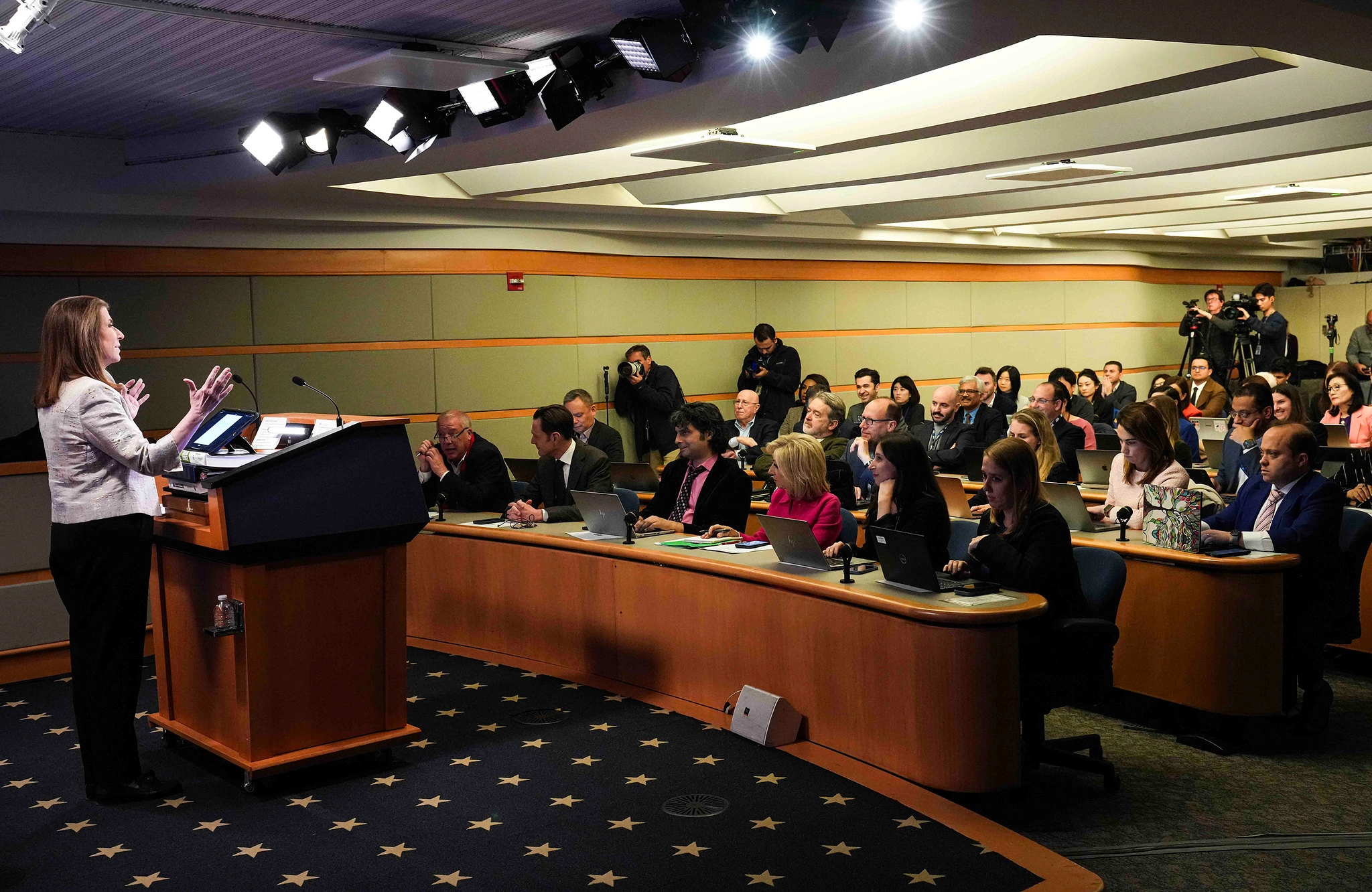
“That rhetoric does not improve regional security,” State Department Spokesperson Tammy Bruce told a daily briefing when asked by Kyiv Post about Moscow’s reactions to Trump’s deadline, which have included nuclear threats. Kremlin spokesperson Dmitry Peskov on Wednesday reaffirmed that “Russia’s nuclear doctrine remains in effect, and thus, all its provisions continue to apply.”
Bruce further emphasized the gravity with which the US views such language, echoing previous warnings from Trump.
“As President Trump has said, the word ‘nuclear’ should not be treated casually, and we have seen these kinds of reckless and unhelpful statements before,” she said.
A Russian Foreign Ministry spokesperson on Thursday declared that Moscow has “not accepted threats,” seemingly in direct response to Trump’s ultimatum.
The deadline, announced amid ongoing frustration with the lack of progress in the Ukraine conflict, includes the prospect of stringent economic penalties if a ceasefire is not achieved within the stipulated time frame.
Russia Seeks Kazakhstan Fuel Imports
White House details consequences for Russia
White House Press Secretary Karoline Leavitt, also speaking to reporters on Thursday, elaborated on the repercussions for Russia if it fails to agree to a peace deal within the 50-day window.
“If there is not a ceasefire agreement or a peace deal within that time frame, if Russia refuses to legitimately agree to a ceasefire, then they will face very steep tariffs, and they will also face secondary sanctions,” she stated.
Leavitt clarified that these secondary sanctions would extend to countries that continue to purchase, for instance, oil from Russia, which she asserted “will do deep damage to Russia’s economy.”
She reiterated Trump’s desire for the war to end through a diplomatic solution, emphasizing that the current U.S. administration has dedicated considerable effort to resolving the conflict.
“The President wants to stop the killing, and he wants to save lives,” Leavitt said.
Scrutiny over tariff strategy
Leavitt was also pressed over the administration’s new threat of 100 percent “secondary” tariffs on Russian exports.
Despite reporters pointing out the limited $3 billion trade volume in 2024, Leavitt defended the policy, emphasizing its broader impact through secondary sanctions.
The new tariff threat arises as the Trump administration’s efforts to broker peace in Ukraine have yet to yield results, other than POW exchanges.
Bruce also reiterated the White House commitment to a peaceful, diplomatic resolution.
“The good news is that the world knows the nature and the attitude and the values of President Trump and the Secretary and of the American Government,” she told Kyiv Post.
“And we also, of course, remain committed, as we have, to Ukraine and to ending that situation peacefully, hopefully through diplomacy, as the President has been committed to,” she said.
As the clock ticks down on Trump’s 50-day deadline, Washington will be closely watching whether this diplomatic and economic pressure can ultimately steer Moscow towards de-escalation, senior Trump administration officials said.
You can also highlight the text and press Ctrl + Enter
Navy Denies Reports of Sea Drone Attack on Odesa
Eight Killed in Deadliest B-52 Crash in Decades