The whole world has been watching the war in Ukraine – perhaps the most televised and talked about in history, at least in real time. There’s not much subtlety to it: cities under siege, mass graves, missiles hitting buildings, videos of drones dropping ordnance, first-person footage of infantry assaults…
Many spectators in front of their computer screens have become inured to the spectacle. “Ukraine fatigue” it’s called in some circles.
JOIN US ON TELEGRAM
Follow our coverage of the war on the @Kyivpost_official.
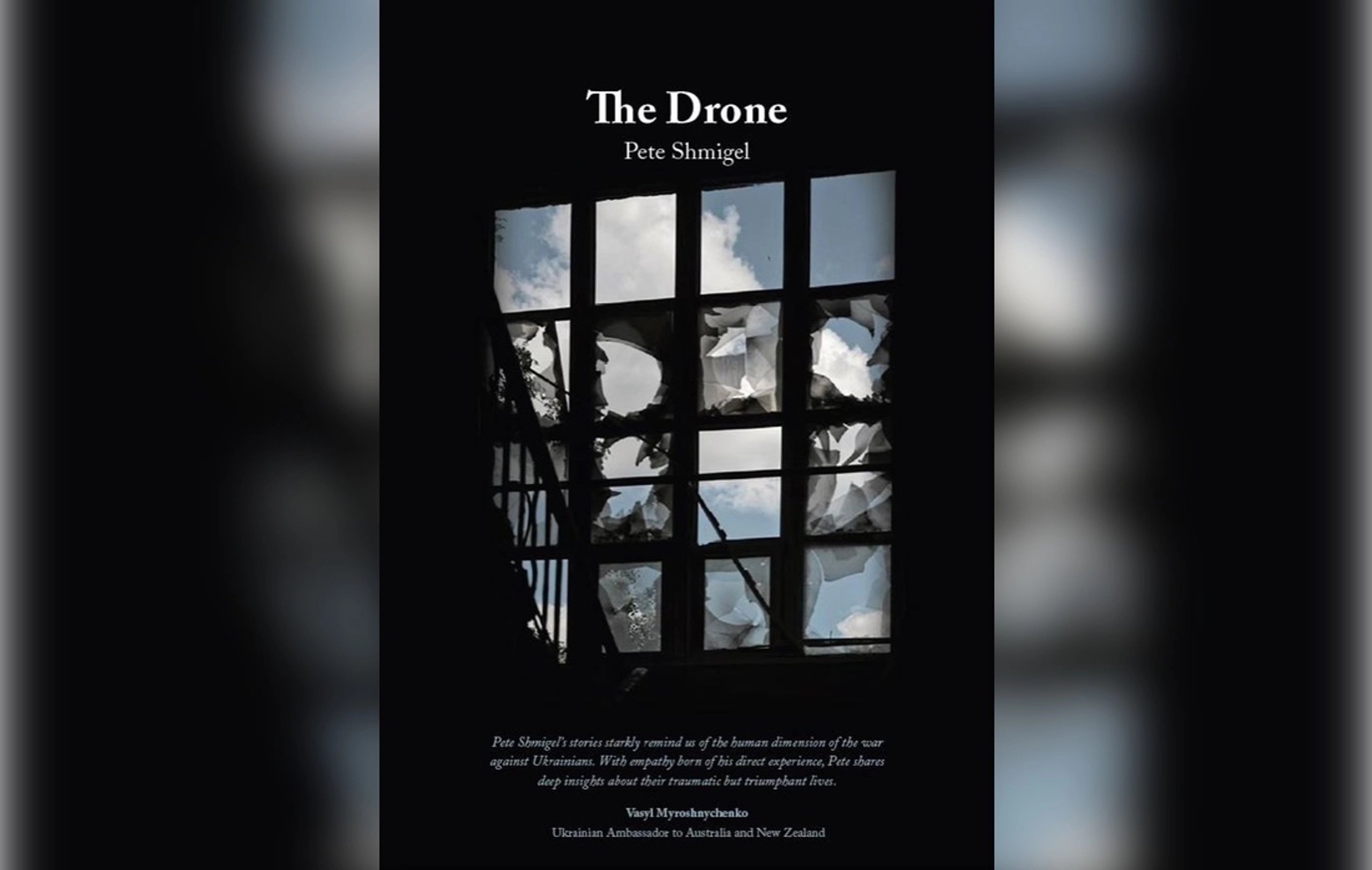
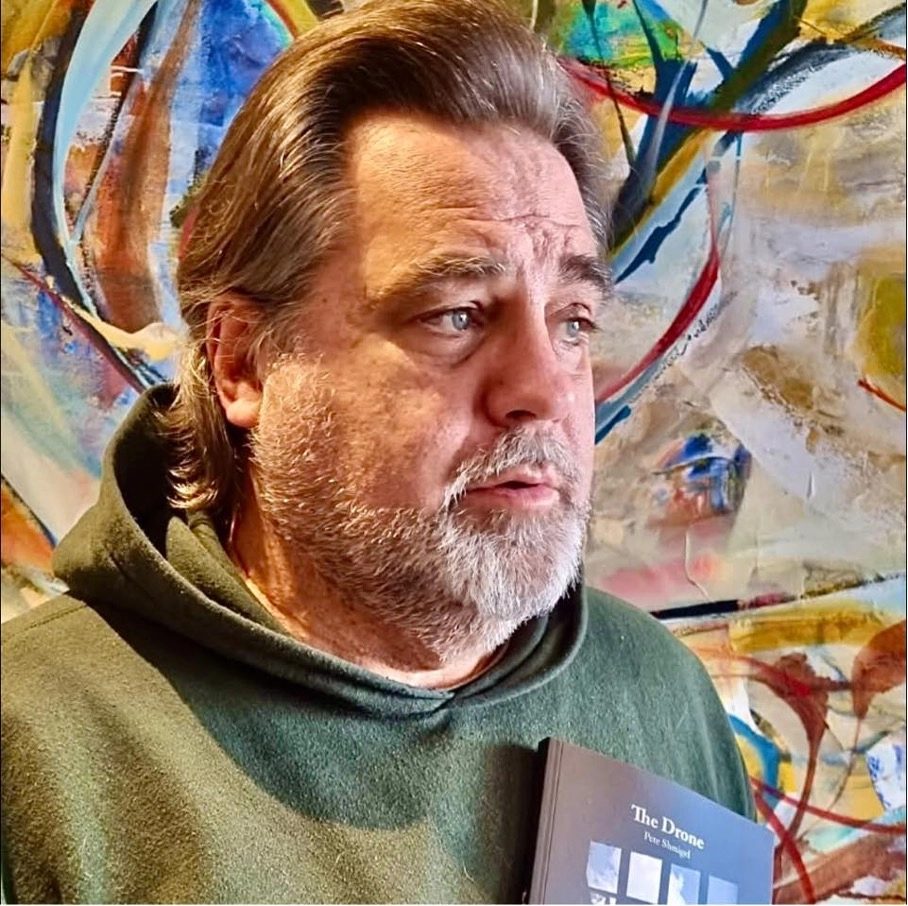
But Pete Shmigel’s stories of this war – collected in The Drone, due to be published in August – manage to capture fleeting glimpses of irrevocable subtly. Something happens, sort of, some image or smell triggers a memory or doubt, an uncomfortable epiphany camouflaged by the stuff of daily life… and you know nothing will ever be the same again.
How can anything be the same when you’ve been uprooted or forced to clinically liquidate those who would uproot you? How can you carry on when you’ve lost a part of your body or soul?
As a journalist traveling up, down and across Ukraine’s cities, forests and steppes to cover the war, Shmigel has provided insight into the politics, history and military positioning of this war. But it’s his ability to seize on some subtle detail, often unconscious, of how a human being tries to stave off the ravages of trauma that stands out like a jewel in the mud.
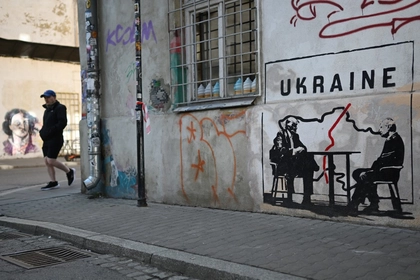
‘Negotiations’ Are Traps – How Russia Tweaks Language to Deceive the West
We all know the war came. We’ve watched the fire and fury. So many television cameras transmitting the facial expressions of upheaval and loss. What these stories give us, among other things, are the quiet thoughts that come with trying to process a trauma still in progress: a train ride, a project potentially gone awry, a few days of home leave in a place that’s scarcely a home.
Ezra Pound famously wrote that “literature is news that stays news.” Shmigel presents us with exactly this news: those vague, fleeting feelings that can change a life forever.
In “Katya’s Kvity,” Kateryna arranges flowers and deletes an app on her phone. You can practically hear her long fingernail clicking the touchscreen – like an explosion.
In “AWOL” Sergey wakes up from a troubling dream to see the sheen of his new carbon-fiber prosthetic leg leaning against a chair. “The other wounded men found a way, Sergey saw. The emptiness of their missing legs and arms was filled by the hero-worship of neighbors, the love of family and the fandom of strangers.”
We share his seemingly random encounters. We enter his thoughts as he casually considers and categorizes the suicide option.
In “Hotel California” a sniper on leave is pressed into making a toast at dinner:
“‘Why do we fight? Why do boys keeping turning up for the front? It’s something I think about a lot and, much of the time, I don’t know the answers,’ Vadym softly said. He made no eye contact.
‘Yes, it’s for our country, but that’s easy to say. Yes, it’s because we have no choice, and that’s obvious.’
‘Yes, it’s for our families and future no doubt,’ he said and looked at Dima and paused.
‘But for me, it’s more simple…,’ Vadym said. ‘It’s just to be normal again. Simple. Normal. So, here’s to normal.’”
Set in a context where worlds are exploding and tragedy abounds, Shmigel’s photographic fiction zeroes in on a neglected truth that Ukraine’s recent revolution and war have confirmed: Like the devil, dignity is in the details. Whether it’s a pair of cheap sneakers, a precious horse figurine, or a dance in a metro bomb shelter, our attachment to daily things and trivial rituals determines the meaning we give to our lives.
In these exquisite stories we get to caress the surface of life’s seemingly insignificant details and penetrate to the source of human dignity – as well as the strength and vulnerability that come with it.
In these concise juxtapositions of thought and setting, we get the still inchoate meaning these very human beings need to impose on external events to keep going with life. For the people in these stories, there is no obvious resolution, only the next step in an unending process. They’re working it out from within – war or no war – like all of us.
As Yuliia ‘Taira’ Paievska, a former POW and medic, notes: “This war that still rages in the heart of Europe must be remembered not as statistics, but as human stories – ordinary and extraordinary at once. Because this war is not just about the frontlines and weapons. It is about shattered homes, dogs searching for their owners, manicured fingers under the rubble, old women with pigeons surviving the apocalypse. This is the truth Pete Shmigel lays bare.”
Pete Shmigel is a Western Sydney-based writer. He is the son of Ukrainian refugees from World War II. He has had a 30-year-long career in politics, business, the NGO sector and journalism. He is a former CEO of Lifeline Australia, an initiator of Lifeline Ukraine, and a former advisor to Ukraine’s Minister for Health.
Presentations:
Peter Shmigel’s “The Drone,” officially launches on Aug. 1, and the author will present it in person on the following dates:
August 3: Ukrainian Australian Literary Festival in Melbourne;
August 8: Official launch in The Crypt of St James Church in Sydney CBD with Luis Garcia and virtuoso Mar’yana Sywak;
August 15: Mudgee Readers Festival;
August 19: Gleebooks event including conversation with Andrew Denton;
August 25: Speech to Sydney Institute on how 1,000 days of war has changed Ukraine and the world.
The book is available for pre-order online.
You can also highlight the text and press Ctrl + Enter

Black Eyed Peas Embrace Ukraine With an Authentic Vyshyvanka