The village of Gvozdiv in Vinnytsia region was slowly dying as its young people left for the city, but recently, a child was born there for the first time in 27 years. The fifteen remaining residents of the village experienced a particularly positive shock from this news. They have new faith that the village will survive and not follow the fate of hundreds of other rural settlements that died out before the on-going war.
In the face of increasingly frequent and severe Russian attacks on Ukrainian cities, appeals on social media encouraging parents to take their children to small villages can be seen and heard increasingly often. The same advice has been voiced for months, but recently, mothers with small children are acting on it and moving to rural areas.
Maria Bevz, the mother of the baby boy born in Gvozdiv, talks about her “double joy” – the birth of her son and the knowledge that she made the right decision in leaving the city of Uman, which has been subject to regular bombing since the spring of 2022. True, at first, the village seemed like a wilderness, but Maria now sees the vegetable gardens, orchards and lush wildlife as a paradise and she is not planning to return to Uman – at least, this is what she tells her fellow villagers.
For the second time in Ukraine’s history, tragedy has led to a revival in rural areas. It happened for the first time after the 1986 Chornobyl disaster. The resettlement of some 350,000 residents from the region poisoned by radiation was organized by the half bankrupt Soviet state. The Russian aggression has “relocated” and continues to “relocate” millions of Ukrainians.
How Grassroots Support Has Kept Ukraine’s Resistance Going During the War
For three years now, activist residents of Ukrainian villages in regions furthest from military action have been advertising empty houses and abandoned gardens in their settlements as potential homes for refugees from the war. They want the villages to have a future, and for the rural schools to have more pupils, so that they can stay open.
The village of Pancheve in the Kirovograd region began to invite re-settlers in the fall of 2022. Two friends, Tetyana Bosko and Vitalia Pankul, were inspired by the idea of renovating abandoned empty houses in the village and offering them to refugees. They restored more than 50 homes, and the first new residents were internally displaced families from Donbas. Now the village has more than 300 new residents.
The demographic map of Ukraine has changed dramatically over the past three years, and even sociologists and demographers find it difficult to keep track of developments. There is, of course, tragic depopulation along the frontline regions in the south, east, and now in the north of Ukraine. No matter how the war ends, it is unlikely that people will return to these areas in the foreseeable future.
Law on multiple citizenship
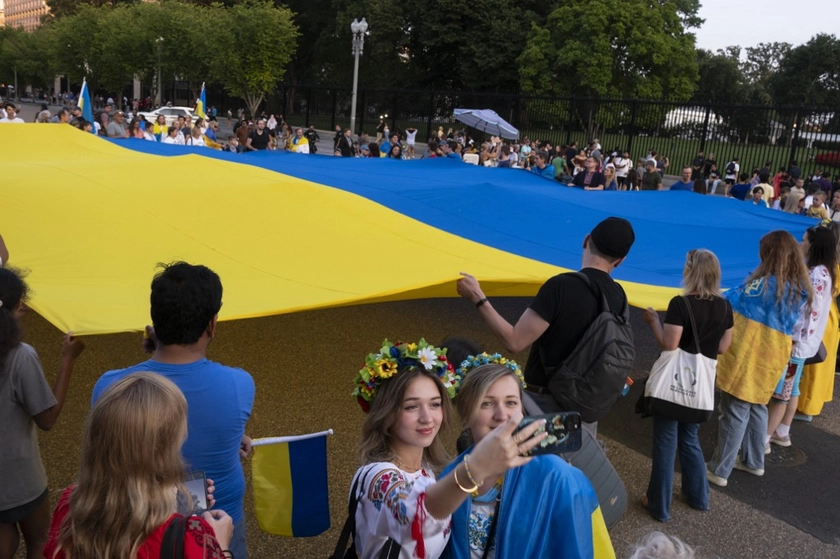
In another development effecting Ukraine’s demographics, on June 18, the law on multiple citizenship was adopted by parliament. This law, signed by President Volodymyr Zelensky, allows citizens of Ukraine to have passports of other countries and allow citizens of some other countries to take Ukrainian citizenship.
The topic of multiple citizenship has interested Zelensky since 2019 when he was elected president. At least five bills on the subject have been submitted to parliament, but all of them were withdrawn due to obvious legal contradictions. Now, it seems, the document is sufficiently well constructed to come into law.
Is the move to adopt the law on multiple citizenship part of an attempt to solve Ukraine’s population problem? I am not sure, but it will allow foreigners obtaining Ukrainian citizenship with the right to vote in the next presidential and parliamentary elections. Their votes could help Ukraine maintain its pro-democratic and EU-leaning political course. This “diaspora influence” was felt during the last presidential elections in Moldova and Romania, where the votes of Romanian and Moldovan citizens living abroad prevented both countries from turning towards Moscow or extreme right-wing ideology.
It would be naive to think that Russia will ever leave Ukraine in peace and not try again and again to bring the country back into its sphere of interests.
The final word on this new law will be with the Constitutional Court of Ukraine. And, of course, it is very important that none of the presiding judges – as has happened after 2014 – have a Russian passport hidden in their pocket.
The views expressed are the author’s and not necessarily of Kyiv Post.
You can also highlight the text and press Ctrl + Enter