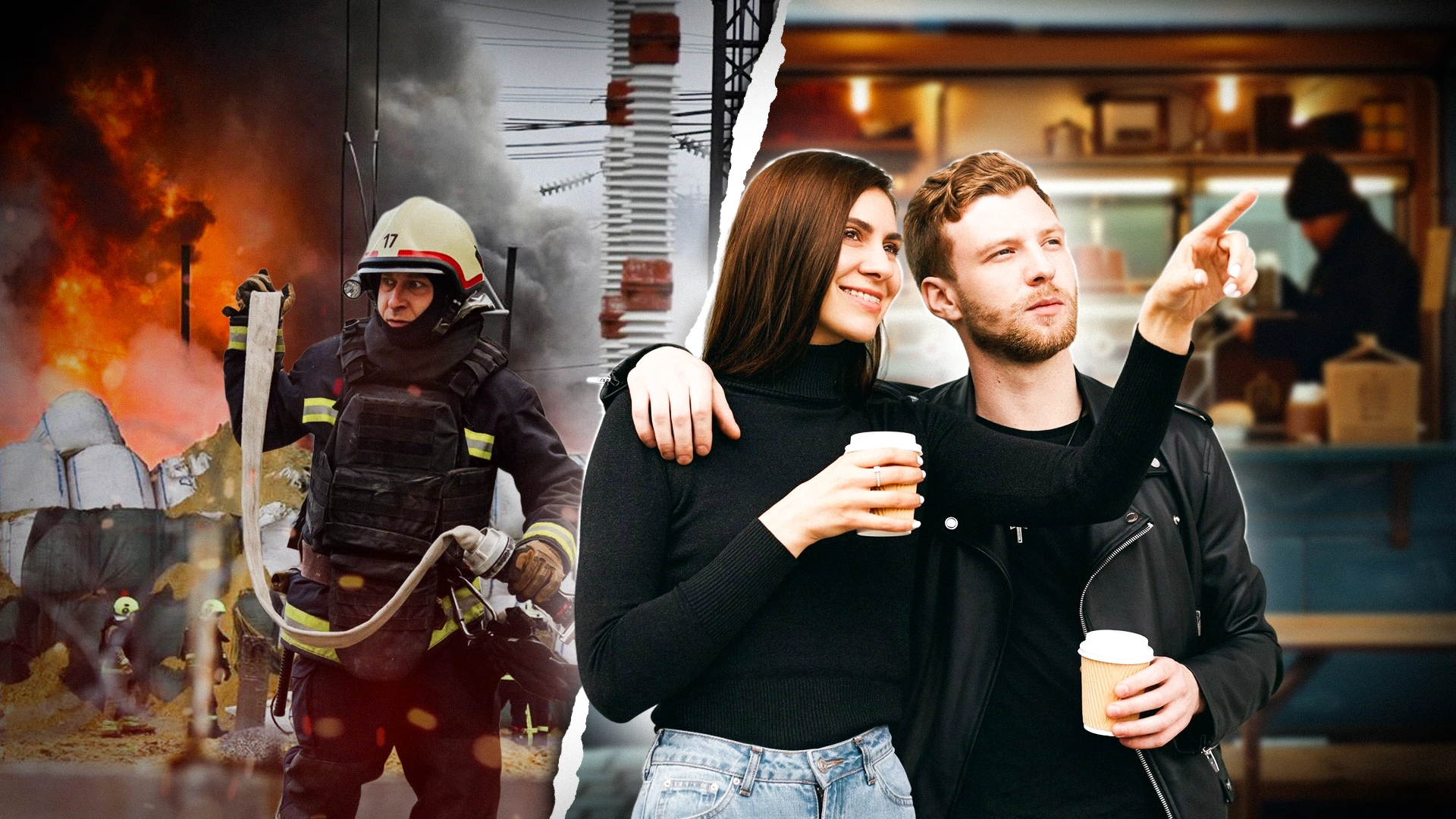
Ukraine – a country that has fallen victim to aggression from a large neighboring country – is fighting a war of liberation and, at the same time, occupying an increasingly prominent place in the world. We find ourselves in a difficult international situation that requires not only endurance but also a sober understanding of our own position.
If we assess the current situation compared with 2022, the main conclusion that emerges from monitoring studies conducted by the Institute of Sociology of the National Academy of Sciences of Ukraine since 1992, as well as from the data of the most influential and methodologically correct public opinion centers, is that Ukrainian society has finally reached a state of adaptation to the tragic and extremely difficult reality of full-scale war.
JOIN US ON TELEGRAM
Follow our coverage of the war on the @Kyivpost_official.
Ukrainians are, by nature, a peaceful society. We are not inclined toward war and endless sacrifices, unlike our neighbors, who would evidently prefer to die for the state than to live. For Ukrainians, life is of value and not expendable material for state greatness.
At the end of 2022, public sentiment in Ukraine was at its most optimistic since the restoration of independence. This applied to perceptions of the country’s general state of affairs, attitudes toward the authorities, and a vision of the future – especially against the backdrop of the liberation of the Kyiv region soon after the start of the full-scale invasion, followed by the Kharkiv and Kherson regions in the fall of 2022.
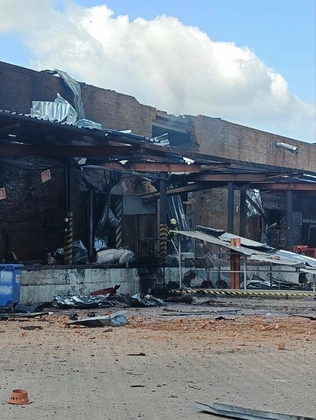
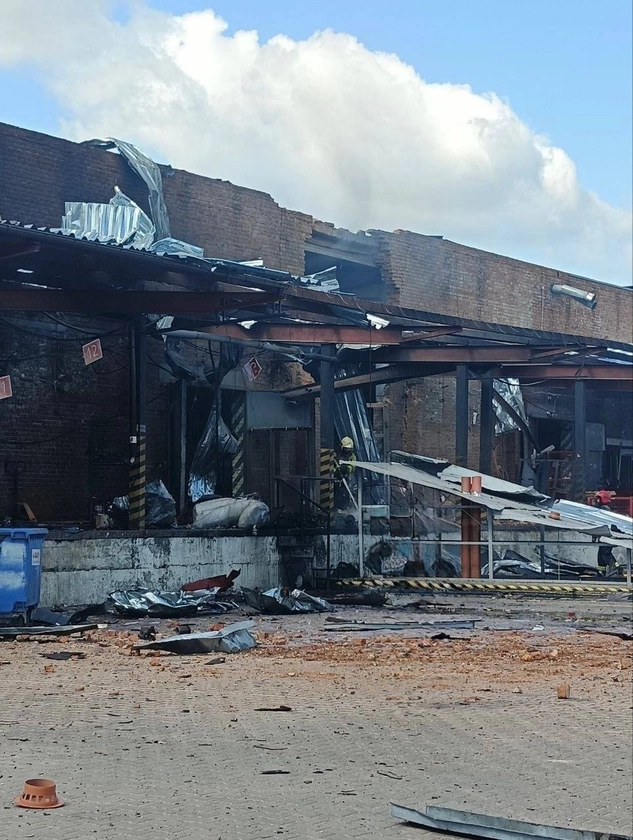
Russian Drones Hit Nova Poshta’s Sumy Hub
After that, a gradual year-on-year deterioration began to affect all key public opinion indicators although, even in 2024, these indicators did not reach the lowest point seen at the end of 2021, when public sentiment was critically low.
In 2025, the situation changed. Some indicators showed a kind of “freeze” in trends, while others – particularly important ones such as faith in Ukraine’s future – showed a significant improvement compared to 2024. This indicates an adaptation and awareness that the war could last for years or end at any time.
Ukrainian society has essentially learned to live under conditions of prolonged extraordinary stress. Ukrainians have also become much more aware of their place in the world. Over the years of the full-scale war, Ukraine has become a subject of world politics. At the same time, there has been a growing understanding of the complexity of the international context: it is necessary to take into account not only Russia as the aggressor, but also processes in partner countries, particularly the US. In fact, US President Donald Trump has taken a position that places responsibility on both sides of the war, equating the aggressor with the victim of aggression.
Despite serious disappointments with NATO, support for Ukraine’s membership in the Alliance remains high among citizens, even in the eastern and southern regions where favorability was marginal prior to 2014 but is now a majority view. At the same time, Ukrainians are increasingly aware that the issue of membership is complex and that NATO’s position on Ukraine is ambiguous.
In Ukraine, there has traditionally been a significant segment of the population – up to a third – who believe that one should rely primarily on one’s own strength, because no one, not even NATO, can guarantee complete security. Perhaps it is this segment of society that is becoming the ideological leader today. Overall, Ukrainian society is maturing and becoming more integrated.
The importance of overcoming regional differences
Whilst attitudes toward the EU previously differed markedly between the west, center, east, and south, a convincing majority of Ukrainians in all regions now see the country’s future in the EU. This is one of the key signs of integration.
The second sign is the dominance of national-civic identity. Today, 70–80% of citizens identify themselves primarily with the Ukrainian political nation, whereas in the early 1990s this figure was around 40%.
In many ways, I became a “victim” of my own prediction three years ago when I said that the war could end in 2026. At that time, most Ukrainians expected the fighting to end in a few months or a year at most. My prediction assumed that the Russian economy would not withstand a total war and would be forced to present its actual defeat as a “great victory.”
In 2022, I could not have predicted a scenario in which the US would effectively equate Ukraine with the aggressor and refuse to be the main donor of aid. This is contrary to the sentiments of Americans themselves, including a significant portion of Republicans, more than 70% of whom support the idea of increasing aid to Ukraine.
As a sociologist, I should have considered various scenarios, but in the social world, it is impossible to predict everything. Forecasts sometimes serve not only for analysis, but also for shaping expectations and stimulating action.
I still have reasons not to abandon my forecast of a possible end to the war in 2026.
According to many serious experts, the Russian economy will be in actual collapse by next summer. Gazprom has practically exhausted its prospects, and the oil industry is deteriorating. Continuing the war after 2026 will mean Russia losing any chance of development for decades to come.
However, in an authoritarian state where key decisions are made by one person, irrational scenarios are possible. The power of a mad dictator is always dangerous.
If the war ends, Ukraine will face other, albeit “normal” challenges: the return of migrants, the reconstruction of infrastructure, the restoration of political life, and the holding of elections. These are complex but healthy problems for any post-war society.
I am convinced that Ukraine will be supported in this process by its partners, primarily Europeans. Europe is becoming increasingly aware that Ukraine is the main shield against another Eurasian invasion. Support for Ukraine is becoming the dominant position in public opinion. As Poland’s Prime Minister Donald Tusk aptly put it: “Either money today or blood tomorrow.”
If the Russian authorities ignore the opportunity to avoid economic degradation and do not collapse from within, we may face years of war until a radical change occurs there. We must also be prepared for such a scenario, with all its losses and extremely serious consequences.
The views expressed are the author’s and not necessarily of Kyiv Post.
You can also highlight the text and press Ctrl + Enter
Putin’s Worst Nightmare
Zelensky Reveals Intercepted Intel From Putin’s Desk