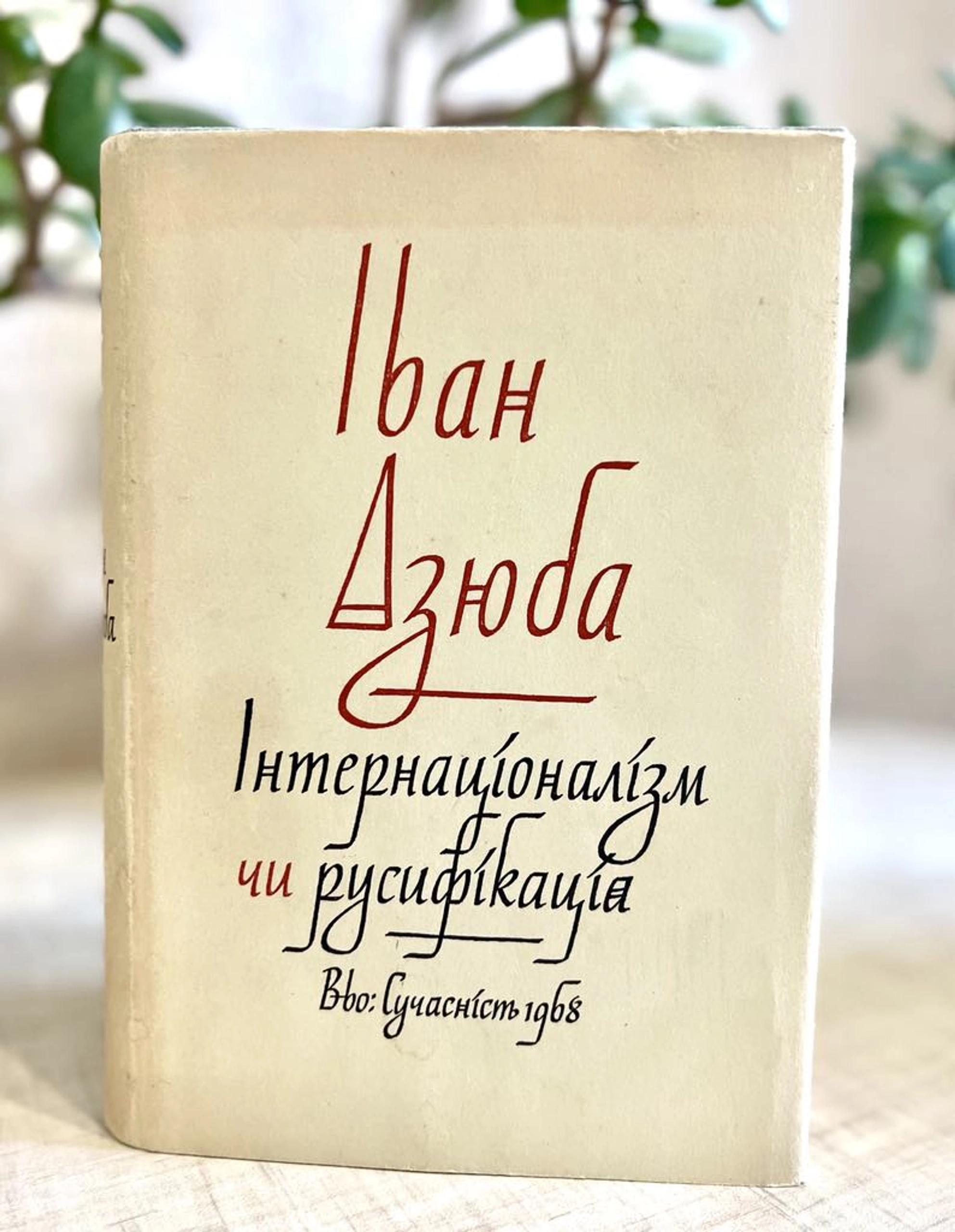
July 26 marked 94 years since the birth of Ivan Dziuba (1931-2022), the literary critic, activist, member of the Sixties protest movement, and author of over 400 scholarly works. He was one of the most important intellectuals in Ukraine and Central-Eastern Europe in the second half of the 20th century.
He is best known for the influential “Internationalism or Russification,” written in 1965. The manuscript was first circulated in Ukrainian samvydav (self-publishing) and then in 1968 was published abroad by the Ukrainian publishing house Suchasnist. The book was then translated into Russian, English, French, Italian and Chinese, among other languages. It has been described as “basically the program document for the Ukrainian national liberation movement” at the beginning of the 1970s.
JOIN US ON TELEGRAM
Follow our coverage of the war on the @Kyivpost_official.
The text did not immediately attract the attention of the KGB. Dziuba had sent it in 1965 to the Ukrainian party leader Petro Shelest (Chair of the Communist Party of Ukraine) and Volodymyr Shcherbytsky (Head of the Council of Ministers of the Ukrainian SSR) together with a letter supporting the Ukrainian dissidents imprisoned by the KGB during the first wave of arrests in August and September 1965. The text today testifies to the author’s firm convictions, intellectual honesty and political courage.
Repression came to Dziuba himself in 1972, a tragic year for the Ukrainian resistance movement. First, he was expelled from the Writers’ Union, and then arrested in the “Dobosh case,” which as the pretext for arresting scores of Ukrainian intellectuals. He was imprisoned for 18 months, charged with the anti-Soviet nature of “Internationalism or Russification?” During their investigation, the KGB looked for other possible evidence that could be used against him to make the sentence harsher. They tried to prove through textual analysis that he was the author of the fictitious “Program of Ukrainian Communists,” which would have proven his membership in an underground organization whose purpose was overthrowing Soviet rule. In reply to this fabricated charge, Ivan Dziuba wrote a 300-page manuscript, a counter-analysis that showed he could not have been the author. He called this document a “small victory” in the criminal procedure against him. It exemplifies the struggle of an individual against the state in the unequal conditions of authoritarianism. (Criminal Case No. 55, Archive of the Tenth Section of the KGB of the Ukrainian SBU; in preparation by Dukh i Litera publishers.)
Kyiv Weighs Participation in Gdańsk Recovery Conference
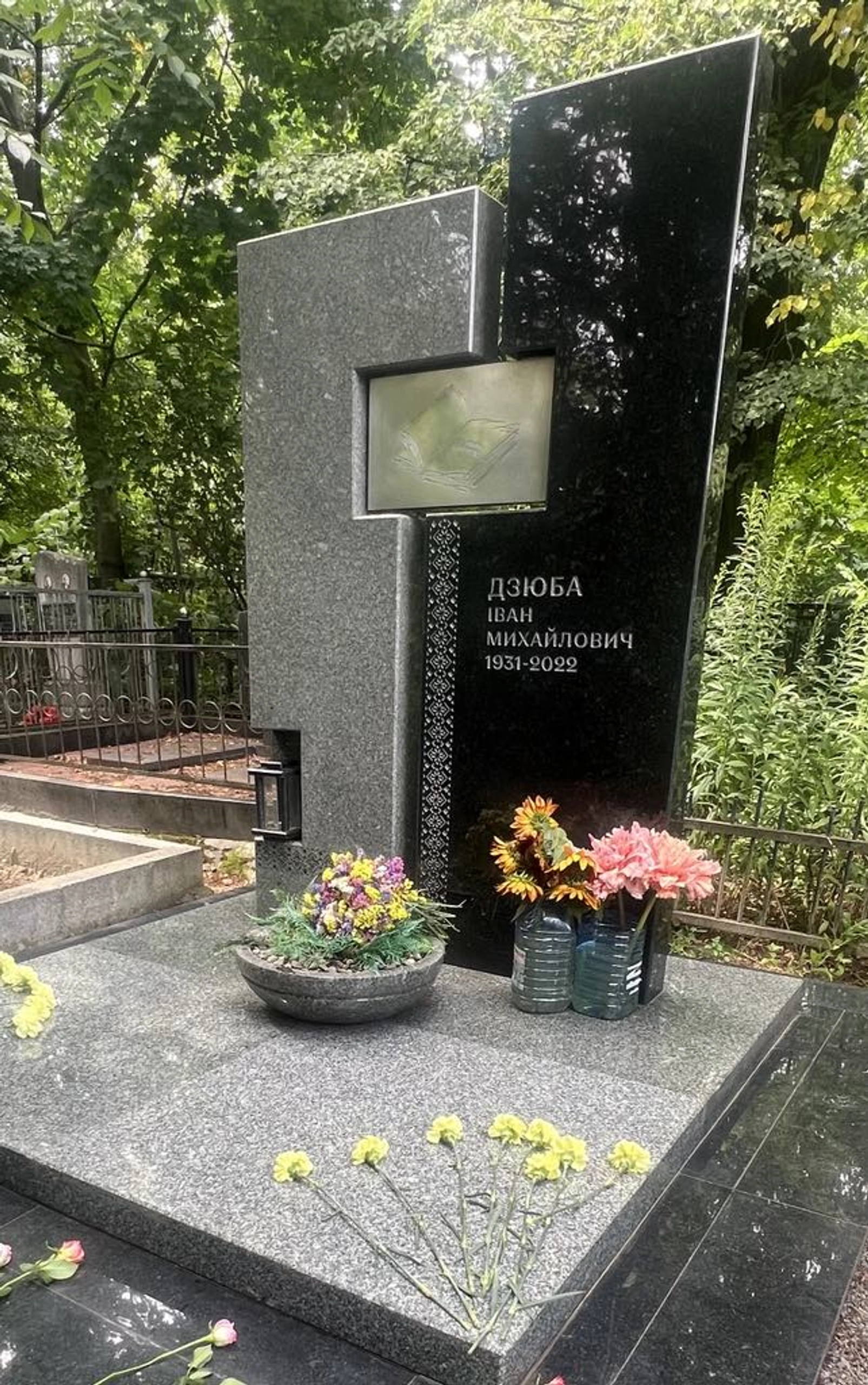
The contents of “Internationalism or Russification?”
Dziuba was familiar with the works of Marx and Lenin, and understood the foundations of Marxism. As a critically-thinking individual, he could see that as concerned the national question Soviet society was not applying the principles of Marxist ideology or the views expressed in Lenin’s late writings. He characterized the politics of Stalin and Khrushchev as “political pragmatism that ignored the spirit of Marxism and only formally used its phraseology.”
Dzyuba observed the constant humiliation of the Ukrainian language and culture, and of Ukrainians. His refusal to accept this injustice was what motivated his research. He indicated that colonialism took various forms and Russian colonialism should not be ignored.
The “internationalism” of Russian great-power chauvinists is, he wrote, a desire to “appropriate and swallow.” He condemned the emphasis on the leading role of the Russian people in enumerating the achievements of the Soviet Union, when all the different nations had made a contribution. He drew attention to the artificial transfer of populations with the goal of erasing borders between ethnic and national groups so as to diminish the possibility of using national languages. He criticized, among other things, the dominance of Russian-language literature in Ukraine, of Russian publishing in Ukraine, and in school libraries. He referenced a great many sources to provide evidence of how Soviet rule had conducted a discriminatory nationalities policy.
The text is valuable in that it calls citizens to action. He wrote: “I propose that russificatory violence be opposed with freedom – the freedom to openly and honestly discuss national issues, the freedom to choose one’s nation, the freedom of national self-discovery, self-understanding and self-development.”
He also speaks eloquently of the democratism that is typical of the Ukrainian nation. A sincere love of another people, he wrote, signals a respect for them as different and not as copies of ourselves: “We want to see them outside and alongside ourselves as independent and equal, not as part of ourselves; we are ready to help them get established, not become identical with us. The existence of an individual requires the existence of other equally valued individuals, the existence of nations requires the existence of equally valued nations.”
Recently a revised English translation of the book appeared as “Internationalism or Russification. A study in the Soviet nationalities problem” (London: Resistance Books, 2024). The book is particularly topical in view of the process of decolonization now taking place in Eastern Europe, the Caucasus and Central Asia.
You can also highlight the text and press Ctrl + Enter