WASHINGTON DC – A bipartisan duo of US Senators is challenging the Trump administration’s budget-slashing agenda with a new $54.6 billion aid package for Ukraine. The move is designed to not only bolster Kyiv’s defenses but also, its sponsors say, strengthen President Trump’s own hand in negotiations with Vladimir Putin.
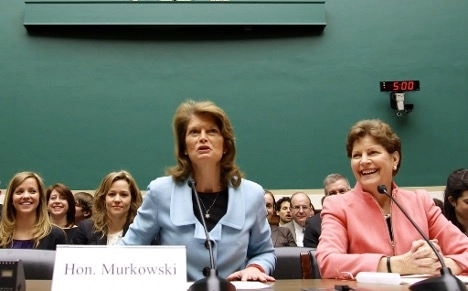
Senators Jeanne Shaheen (D-NH) and Lisa Murkowski (R-AK) on Thursday introduced the “Supporting Ukraine Act of 2025,” a comprehensive two-year plan to provide military, humanitarian, and governance assistance.
JOIN US ON TELEGRAM
Follow our coverage of the war on the @Kyivpost_official.
The legislation comes at a critical juncture, as Russia escalates its attacks and US-brokered peace talks falter, raising questions about America’s commitment to its allies.
Innovative funding model using Russian assets
The bill’s most innovative and potentially controversial aspect is its approach to funding. Rather than relying solely on American taxpayer money, the legislation proposes that up to a third of the aid be financed by seized Russian assets and weapons sales to European allies.
In a statement, Senator Shaheen explained this rationale, asserting, “This bipartisan bill will strengthen President Trump’s negotiating hand with Vladimir Putin and finally put an end to this senseless war... It also makes clear that Russian assets held in the United States should be used to cover the costs to provide weapons to Ukraine.”

Russian Guided Bombs in Kharkiv Kill Teen, Wound 32, Including Children
This creative solution is a direct message to Moscow that its aggression will have financial consequences, while also aiming to assuage domestic concerns about the cost of foreign aid. To make this happen, the bill would reestablish “Task Force KleptoCapture” to enforce sanctions and seize assets from Russian officials and oligarchs.
Strengthening US industry and military readiness
The legislation is not just about helping Ukraine; it’s also framed as a strategic investment in US national security and its defense industrial base.
The bill seeks to increase American military production, creating jobs and supporting manufacturers across the country. “This bipartisan bill is a win for America,” Shaheen declared, “it supports our defense industrial base, American manufacturers and workers—all while ensuring the US military learns from Ukraine’s battlefield innovations.”
A core detail from the bill is the establishment of a formal “Ukraine Lessons Learned Task Force.”
This group would be charged with identifying battlefield innovations and defense strategies used by Ukraine and formally applying them to US military doctrine, training, and strategic planning. This includes a joint drone initiative with Ukraine and Taiwan to promote the rapid development of unmanned defense systems.]
Murkowski highlighted the broader implications of this provision, stating, “We are also incorporating the use of seized Russian assets to hold aggressors accountable, while strengthening America’s military preparedness by applying valuable battlefield insights from Ukraine’s fight and sharing these lessons with critical partners like Taiwan.”
Expanding Presidential Drawdown Authority and geopolitical strategy
The bill would also dramatically increase the President’s authority to unilaterally transfer weapons to Ukraine. It raises the “drawdown authority” to $6 billion for each of the fiscal years 2025, 2026, and 2027, giving the White House more flexibility to respond to the rapidly changing conflict without waiting for lengthy congressional approval.
Furthermore, the legislation has a distinct geopolitical focus that extends beyond the immediate conflict. It explicitly links US support for Ukraine to deterring potential aggression from China, noting that Beijing is “watching the extent to which the United States continues to vigorously support and provide military assistance to Ukraine” to gauge US commitment to its Indo-Pacific allies. This is a clear signal that the senators view the war in Ukraine as part of a larger global struggle against authoritarian expansion.
While the bill’s sponsors are optimistic that its innovative funding mechanisms and alignment with a “Peace through Strength” message will win over opponents, its path through Congress remains uncertain.
It faces opposition from many Republicans who have backed Trump’s push to scale back US global involvement.
Shaheen, however, sent a clear message to would-be aggressors, stating: “Make no mistake: unprovoked violence against US partners by would-be aggressors in the Kremlin and Beijing will be met by unshakable resolve from the US and our allies.”
The bill’s introduction, therefore, marks a significant bipartisan effort to reassert American leadership and support Ukraine’s fight for survival.
You can also highlight the text and press Ctrl + Enter