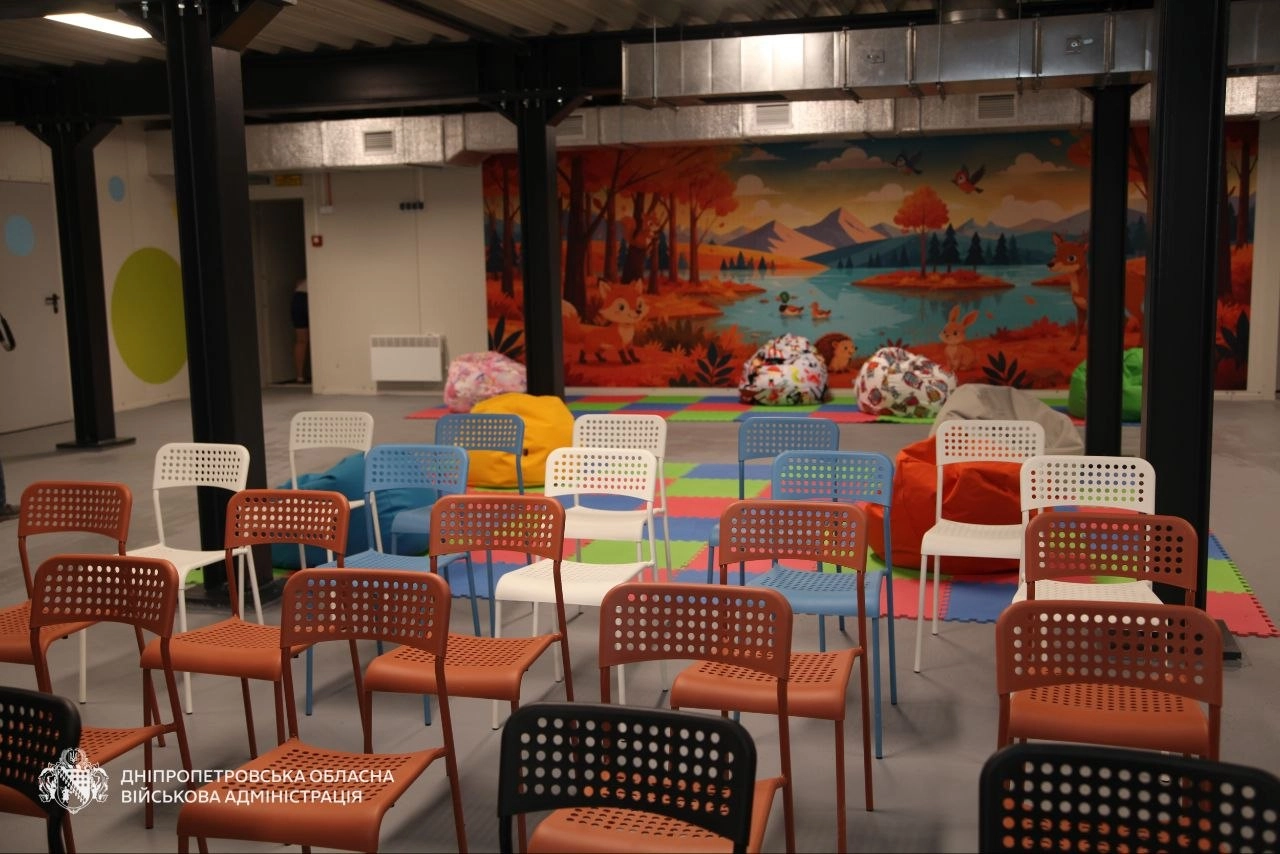
A newly built shelter at a lyceum in the frontline community of Nikopol is bringing 120 students and teachers back to the classroom, ending months of remote-only learning.
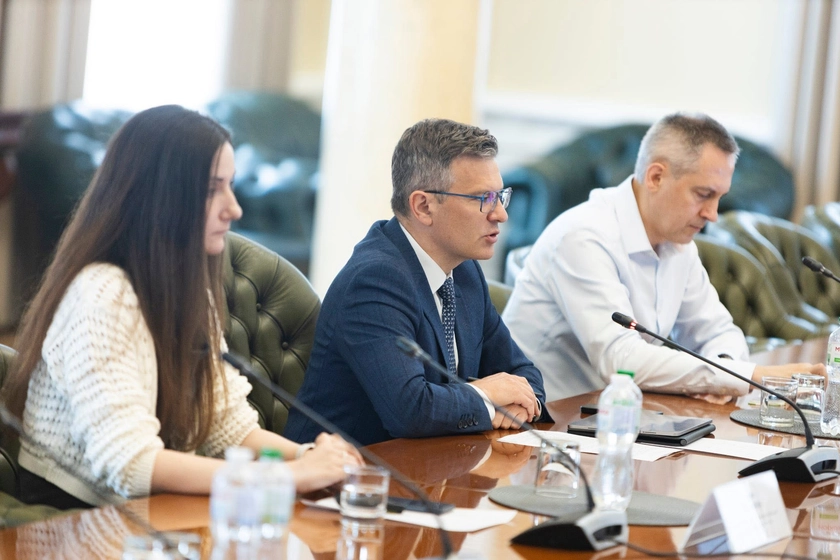
According to Regional Governor Oleksandr Hanzha’s Telegram channel, the facility was jointly opened by him and the Extraordinary and Plenipotentiary Ambassador of the Czech Republic to Ukraine, Luboš Veselý.
JOIN US ON TELEGRAM
Follow our coverage of the war on the @Kyivpost_official.
“Inside, there is everything necessary to continue lessons even during an air raid alert,” Hanzha said, pointing to the “furniture and a wall screen with a projector for better learning.”
Reportedly, the construction took three months and cost approximately HR.21 million ($468.714), with funding provided by Czechia and the local community.
A shelter built for daily use
Alongside the classroom furniture, the shelter includes a restroom, a shower room and a storage area for personal belongings, allowing students to spend extended periods underground if needed, without disruption to their routine.
Before the shelter’s completion, students at the lyceum had to rely on remote learning, as the school previously lacked adequate protection for air raids and possible strikes.
“Previously, due to the lack of safe conditions, pupils studied remotely. Now they will be able to return to their regular classrooms,” Hanzha said, thanking the Czech partners who helped bring this project to life.
Ukraine's Banks Post Longest Credit Growth in 15 Years as Windfall Tax Threatens to Choke It Off
With the construction now finished, the lyceum’s students and staff expect to return to on-site education, continuing the efforts to maintain a somewhat normal life during the ongoing threat of Russian strikes.
Digitalization of education – a powerful tool
Under the Multi-Year Resilience Programme (MYRP), digitalization has become key to reducing learning loss among Ukrainian schoolchildren and other students.
As of May 1, Ukraine’s Ministry of Education and Science (MoES) reported 3,582,340 total students in general secondary education, split as follows: 2,338,924 in-person, 555,892 blended, and 285,162 remote.
An additional 315,441 children remain abroad, for whom, along with those in occupied Ukrainian territories, online learning is the only link to Ukraine’s education system.
One of the hardest-hit areas
Nikopol district remains one of the hardest-hit areas in the Dnipropetrovsk region, repeatedly targeted by Russian drone and missile strikes.
On Monday, Russian forces launched over 60 strikes across the region, killing six and wounding 35, with Nikopol district communities including Marhanets, Cheronovohryhorivka, Tomakivka and Pokrovske hit alongside Dnipro, Kamianske and Synelnykove districts.
Only days before, on Saturday, June 27, a first-person-view (FPV) drone struck a minibus in Nikopol, killing two and injuring 13, including two 12-year-old girls.
Earlier in June, Russian forces struck five districts of the Dnipropetrovsk region more than 40 times in a single day, prompting Hanzha to convene an emergency Defense Council to strengthen evacuations and reinforce defenses across the region.
You can also highlight the text and press Ctrl + Enter