Friends from abroad often ask whether it is possible for Ukrainians to get used to the attacks on their cities. I don’t think it is, but it might be easy to get used to the heroism that accompanies these attacks – to stop noticing and start taking for granted the courage and determination of people caught up in the devastation.
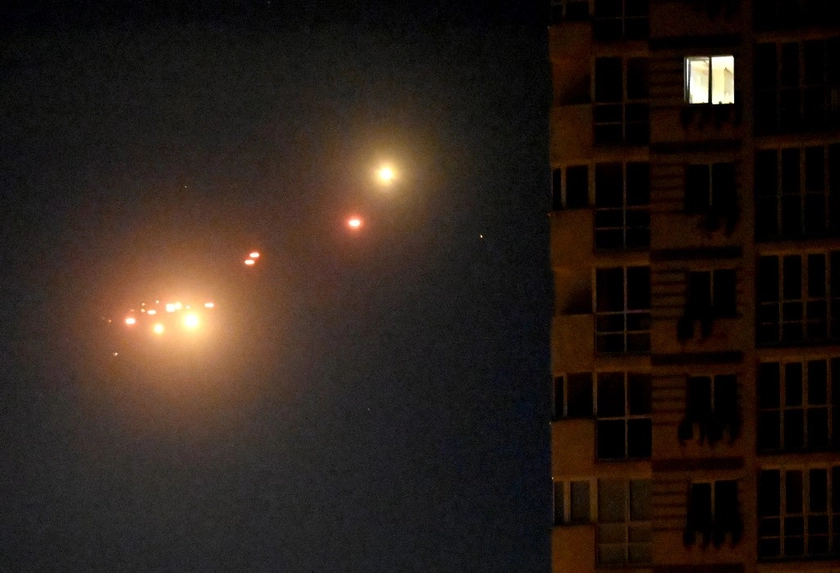
Every day, we are all focused on the horrors of near nightly air attacks, but should we allow what happened on July 10 to fade into insignificance?
JOIN US ON TELEGRAM
Follow our coverage of the war on the @Kyivpost_official.
That night, during another cruel attack on Kyiv, a four-year-old girl died in the main children’s hospital “Okhmatdyt.” Her parents gave their consent for the use of her organs for transplant to children who would not otherwise survive.
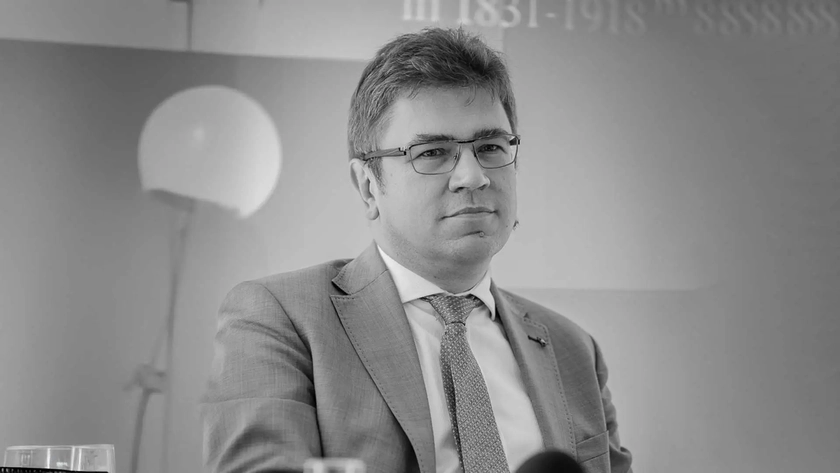
Accompanied by the sound of explosions, the director of the Ukrainian Heart Institute, Boris Todurov, drove his car to the children’s hospital to collect the donor heart and transfer it to the Heart Institute, located on the other side of the Dnipro River.
Bridges across the Dnipro are closed during air raids, but vehicles are allowed to cross in an emergency, and this was exactly that.
At the Heart Institute, they were already preparing 12-year-old Kira for surgery. She is a displaced person from occupied Luhansk region who, due to heart failure, was connected to a life-support system. The operation to give her a new heart lasted 13 hours.
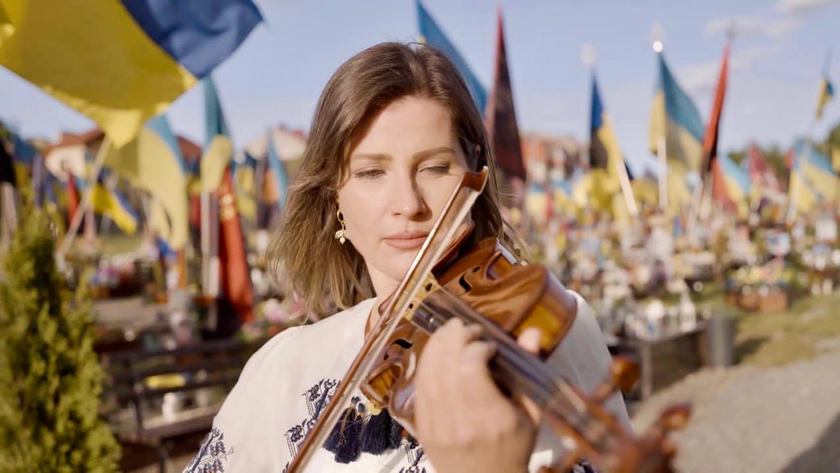
Culture as Resistance: Georgian Violinist Performs in Lviv
That same night, while Kyiv was under attack, doctors performed two more transplants using organs from the deceased child. Her liver was given to a 16-year-old girl, and her kidneys to a 14-year-old boy. Todurov and his fellow surgeons have every right to be considered national heroes.
On Saturday, July 26,12-year-old Kira, regained consciousness and is now feeling well, although she will need to remain at the Heart Institute for a long time – often in the hospital’s bomb shelter, to which staff transfer patients every night.
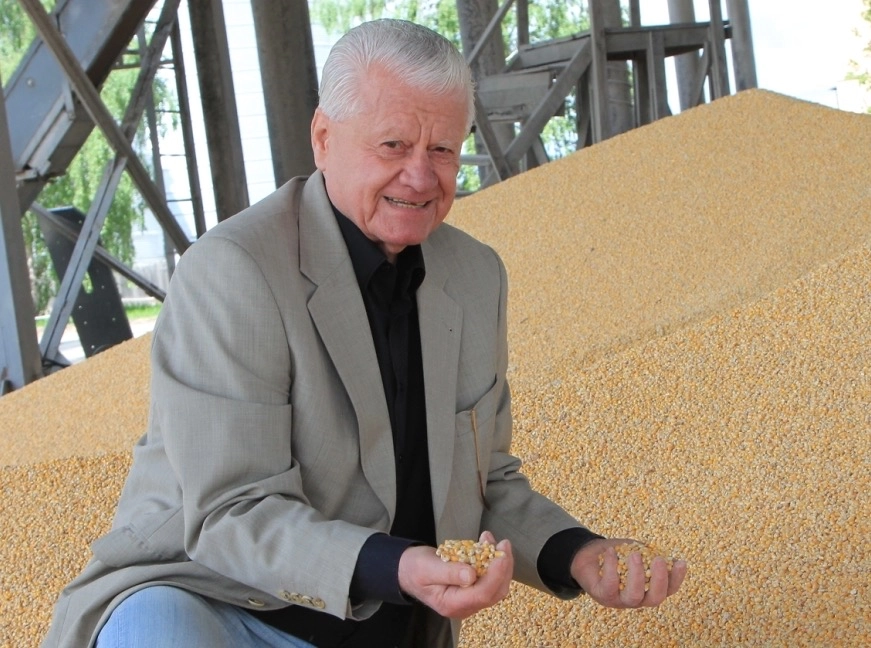
On that Saturday – the day that Kira can consider her second birthday – another well-known Kyiv heart clinic, the Shalimov Hospital, saw the death of a very controversial figure – one of our richest farmers, a convinced communist, and an official hero of Ukraine, Leonid Yakovishin. He had been a parliamentarian in the early 1990s, so the Verkhovna Rada published an obituary for the 87-year-old, but it was restrained.
Until his last days, Yakovishin liked to repeat that he did not vote for the independence of Ukraine and that, if there was a new vote, he would vote against it again. His main argument was the lack of real statesmen among Ukrainian politicians and presidents.
Yakovishin was always in conflict with the authorities, including the second president of Ukraine Leonid Kuchma, whom he accused of corruption and having insufficient talent or desire to build a state. It must be said that Yakovishin was not the only politician who held this opinion.
It was, however, Leonid Kuchma who, in August 2004, awarded Yakovishin with the “Hero of Ukraine Star” for his contribution to the development of Ukrainian agriculture. By the way, Kuchma did not vote for the Independence of Ukraine either.
Yakovishin was known for his temper and bluntness, and it must have been the title of Hero of Ukraine that saved him from retribution from the authorities. He was prosecuted several times on trumped-up charges but always managed to defend his freedom and his agricultural empire, located on the border with Russia in Chernihiv region.
Before the start of the full-scale war, Yakovishin argued for continuing trade with Russia, although he readily compared Putin to Hitler and openly called the Russian president a fascist.
At the beginning of the full-scale invasion, he refused to give his agricultural equipment to the Ukrainian army, and some of his machinery had to be taken by force to build a line of defense.
In the memory of Ukrainians, Yakovishin will remain the man who built himself a mausoleum – a copy of Napoleon’s – during his lifetime.
In his will, he stated that he should be buried in a marble sarcophagus inside this mausoleum and that it should be open to the public each day from 10 a.m. to 5 p.m.
On Yakovishin’s death, the town of Bobrovitsa, where he lived, declared three days of mourning and cancelled all forms of public entertainment. The residents loved him and understood that he was the area’s main employer.
His death, or rather the fact that the mausoleum he built 10 years ago can now be used for its intended purpose, has breathed new life into a pre-war debate about the need for a Ukrainian Pantheon of national heroes – the equivalent of the Pantheon in Paris.
A commission responsible for its creation was formed in 2016 under President Poroshenko, but nothing has yet been achieved. The commission’s members must foresee the divisive nature of discussions about which Ukrainians deserve a place in the Pantheon.
Given his statements about the independence of Ukraine, Leonid Yakovishin would not be among the worthy, but he did not wait for a national Pantheon to be built, preferring his own luxurious mausoleum, featuring four gilded sculptures which depict him at the ages of 20, 40, 60 and 80.
The views expressed in this opinion article are the author’s and not necessarily those of Kyiv Post.
You can also highlight the text and press Ctrl + Enter