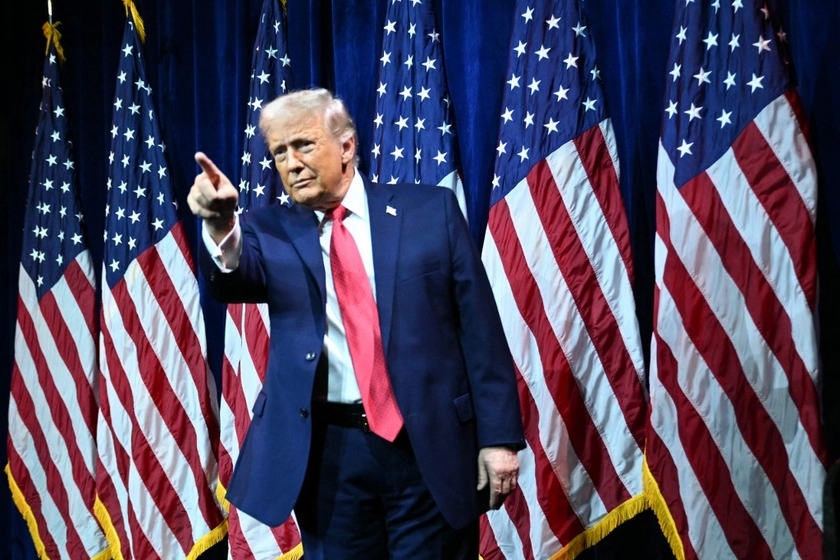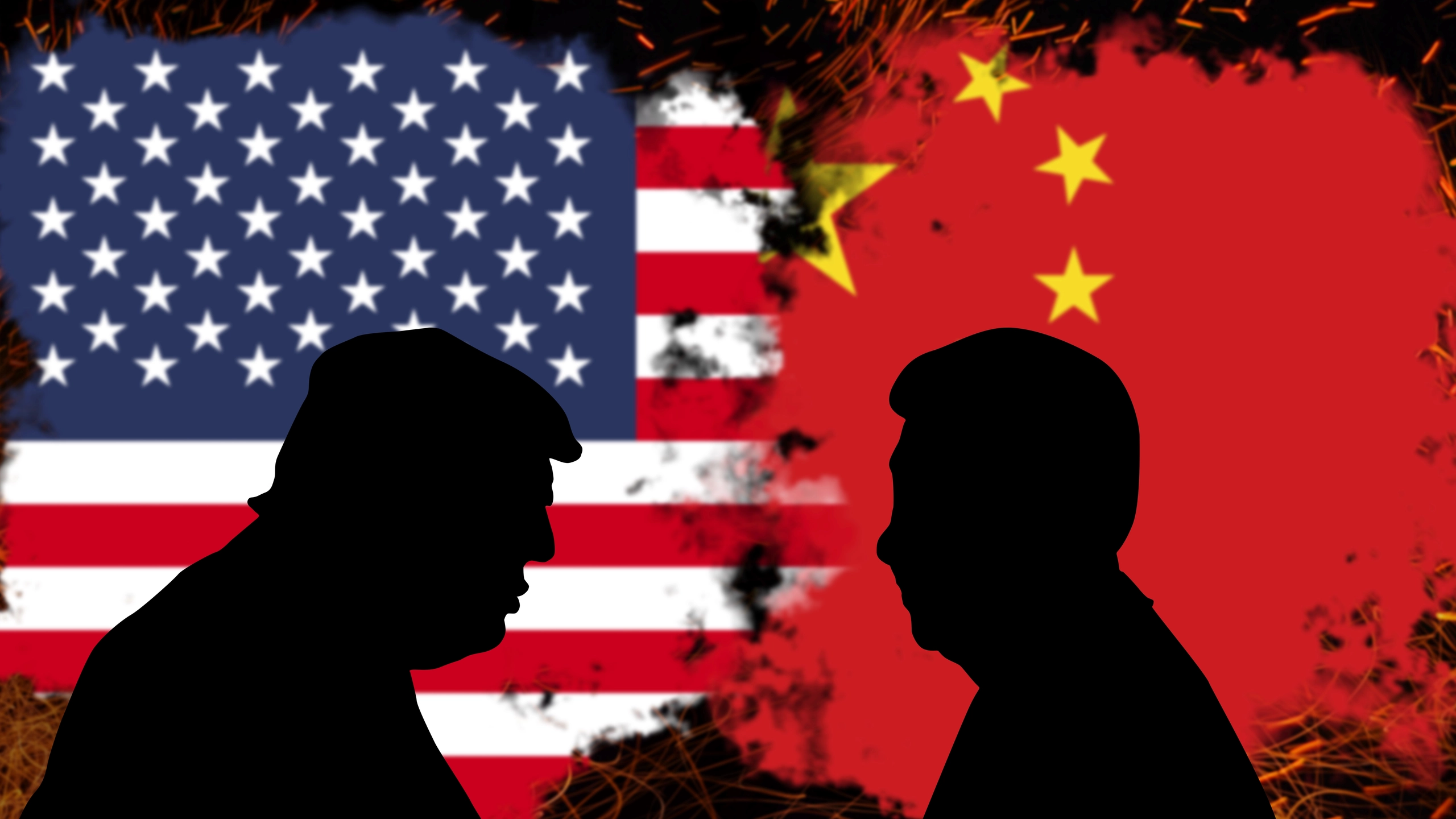
President Donald Trump upends the global economy by deploying tariffs, demanding the end to non-tariff barriers, and securing huge investments and military support from trading partners.
But China has been winning the trade wars for decades by outflanking America. And the West let it happen. Beijing retooled and its companies and state-owned enterprises cornered markets in essential products, materials, pharmaceutical precursors, critical minerals, and logistical infrastructure such as ports and railways.
JOIN US ON TELEGRAM
Follow our coverage of the war on the @Kyivpost_official.
In essence, Beijing has played chess, while the US and EU played checkers, and took on America without confrontation. The West realized its dependence on China during the COVID pandemic because it relied on Chinese supply chains, medical equipment, and medicines. Since then, dependency has grown because China mastered the free trading system to “Make China Great Again.”
The West’s underlying disadvantage is that Beijing thinks in decades while Washington and Brussels believe in quarters.
Chinese leaders took the long view and years ago analyzed the world’s economy and trading patterns to find strategies, loopholes, or openings that would give them a leg up structurally as well as commercially over their freewheeling rivals.
Beijing did not aspire, as did Russia, to militarily conquer the United States and Europe or any country, but has been waging a trade war for years. Key tech and resources were identified, then sought and controlled.
How Much Will Trump's Confusion About US Troops in Europe Cost Americans?
It used restrictions on these essential materials or products as economic weapons. Secure supply chains and infrastructure were forged to defend against attacks or competition, and vertical integration was sought to monopolize markets and block competitors from obtaining needed inputs or substitutes whenever possible. Technological primacy was the principal goal, and subsidies, sabotage, or theft of foreign intellectual property were also used.
Another differentiator is that China’s best and brightest people (and corporations) are disciplined, diligent, and deeply engaged in science and math. They, and Chinese corporations, work toward enhancing the wealth of the nation. By comparison, the West’s best and brightest devote their efforts to personal gain, avoiding taxes, and the pursuit of profits. Further, China’s competitive advantage over its free-enterprise rivals was to ascend and control them, not merely outperform them. It has been a long game designed to displace, then disable, the American order without confrontation or triggering war.
President Trump, back in 2016, understood the economic danger that China posed and took action. The Biden administration placed restrictions on technology transfers and the export of semiconductor chips. But China bypassed obstacles and invested heavily to match American technologies.
So in his second term, Trump launched his trade war of tariffs against the world and imposed punishing levies on China. But Beijing’s years of restructuring and leverage repelled the blows and, so far, Beijing is winning, wrote Max Boot in the Washington Post: “China’s economy grew by an average of 5.3% in the first half of the year, America’s by only 1.25%. You can see it, too, in Trump’s failure to wring significant concessions from Beijing.”
He added: “Though most countries have acquiesced to US trade bullying, China has not. In April, Trump hiked US tariffs on Chinese goods to 145%. China retaliated with 125% tariffs on US goods. Then President Xi Jinping ramped up the pressure by restricting exports of rare earth metals to the United States, which threatens to halt production of cars, fighter jets, and other products. Trump had to back down.”
Even so, some of Trump’s strategies will worsen America’s competitive position. He plans to cut federal support for scientific research by more than 30% and make it harder for foreign students to attend universities in the United States, which will cut off the offshore brain drain of talent to its universities that has benefited the US for decades.
Meanwhile, China doubles down and pours billions of dollars into education and cutting-edge research and development. It has also specialized in products geared to the future, and China leads the United States in most frontier technologies, including batteries, solar panels, electric vehicles, drones, advanced optical communication systems, machine learning, and high-performance computing. Trump’s cutbacks to R&D spending and restrictions on foreign students will enhance Chinese gains.
By contrast, Beijing’s ten-year-old “Made in China 2025” plan was a state-led industrial policy that continues to transform its manufacturing sector from a low-cost, low-tech producer to a high-tech global leader. It has reduced China’s reliance on foreign technology, boosted domestic innovation, and enhanced its competitiveness in strategic industries like robotics, semiconductors, and electric vehicles. This strategy has also vaulted the country ahead in high‑speed rail, solar panels, EVs, graphene, and drones, and outpaced US sanctions and export controls.
China has even caught up with America’s artificial intelligence dominance.
On Jan. 22, President Donald Trump announced the $500-billion AI Stargate project to build data centers and double electricity in America to serve them. Just days later, a Chinese startup called DeepSeek revealed its own AI model, equivalent to America’s ChatGPT. It was produced at a fraction of the cost and required minimal power. Investors panicked, and shares plunged. The innovation shocked Wall Street, embarrassed Silicon Valley and Washington, and hoisted Beijing’s status to the top of the global tech sweepstakes.
The significance was captured best by venture capitalist Marc Andreessen, who described it as “one of the most remarkable breakthroughs I’ve ever seen… It’s AI’s Sputnik moment.”
It was also a vindication of China’s tactics, which have been at play in the Great Game between the world’s two superpowers.
Reprinted from [email protected] – Diane Francis on America and the World.
The views expressed in this opinion article are the author’s and not necessarily those of Kyiv Post.
You can also highlight the text and press Ctrl + Enter

Stalin’s Playbook: Why Putin’s Insiders Keep Dying
Kremlin Warned: War Spending Is Breaking the Budget