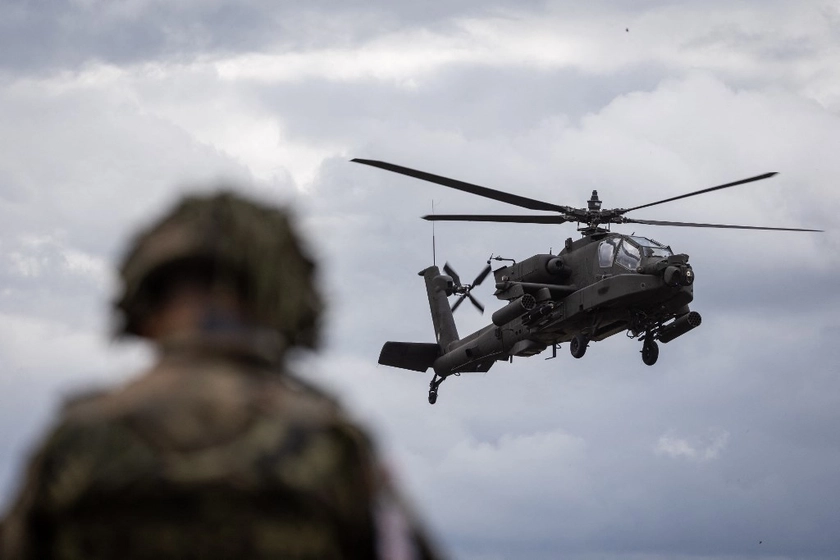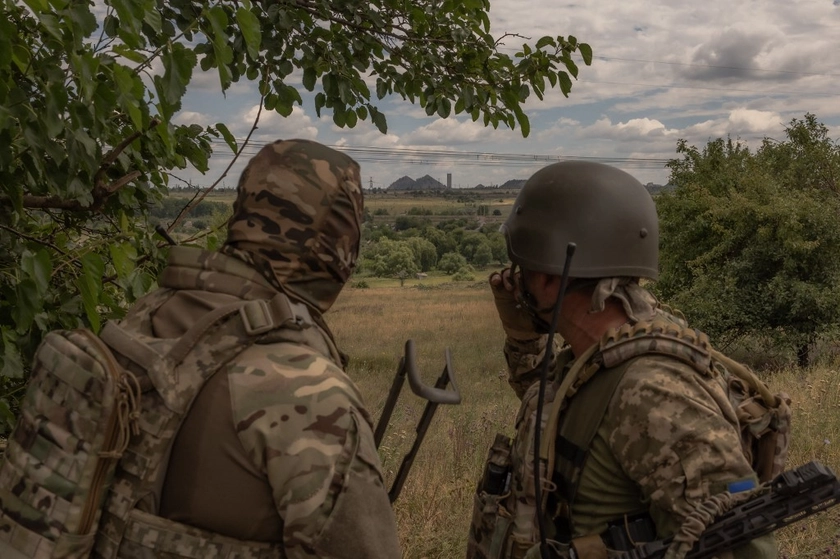
Although it is not technically at war, the EU is in many ways already in a state of armed conflict – particularly in how it makes sense of its own predicament.
Belligerent language is especially prevalent in Brussels, where EU officials and commentators appear incapable of construing any subject – least of all economics – in non-militaristic terms.
JOIN US ON TELEGRAM
Follow our coverage of the war on the @Kyivpost_official.
The US and China, we’re told, are gaining ground on Europe. Western sanctions are devastating Russia’s economy. Chinese exports are laying waste to Europe’s industrial base. Regulations are throttling Europe’s businesses. And Donald Trump’s tariffs are pounding EU exporters.
The policy prescriptions are equally bellicose. Europe’s defence sector must be strengthened. Its economic security should be bolstered. Red tape should be slashed. And Brussels’ trade bazooka might even be fired.
Such conceptual militarism is certainly understandable. After more than four years, Russia’s war on Ukraine is still raging; the months-long US-Israeli conflict with Iran is still simmering; and trade wars with China and America are threatening to morph into something considerably more sinister.
But it is not justifiable.
For one thing, the metaphors themselves are often nonsensical. Tariffs, for instance, are taxes that are typically paid by importers, rather than exporters. This is particularly true in the case of Trump’s levies: the Kiel Institute, a German think-tank, has found that 96% of the tariff burden has been borne by American consumers and firms. If Trump is pounding anyone, it’s himself.
Stalwart Denmark Announces 30th Military Aid Package for Ukraine
More important, however, is the fact that tariffs don’t really pound – or, depending on your preference, hit or slap or slam – anyone at all. As Ha-Joon Chang, a leading development economist, has pointed out, they’re better understood as a form of economic parenting.
In particular, tariffs have a long and distinguished history of being used for ‘infant industry protection’ – that is, to shield nascent sectors before they’re able to compete internationally. When combined with effective industrial policy, they also often work – just ask Britain (which used tariffs in the 17th and 18th centuries to protect its textile sector) or America (which was, until the 1930s, one of the most protectionist countries on Earth).
“Giving tariff protection is like sending a kid to school,” Chang said in an interview last year. “But the kid has to study if he wants to become a productive person… That’s why you need industrial policy.” (Trump’s instinctive aversion to industrial policy, Chang added, also explains why his attempt to revive American manufacturing is doomed.)
Similar morals apply elsewhere. Cheap Chinese exports, for example, should in many cases (e.g. the solar industry) be construed as a boon for European consumers, rather than as a blow to European industries: a point made by none other than Mario Draghi in his 2024 report on “competitiveness” – a term that is itself a symptom of the EU’s mental militarism.
This also points to a deeper problem. The tendency to regard everything militaristically – as a zero-sum competition – risks exacerbating the very problem that such framing purports to address. Viewing the world as fundamentally conflictual, in other words, may eventually make it so.
This point has been made before. Paul Krugman, a Nobel Prize-winning economist, warned more than thirty years ago that there is a “serious risk that the obsession with competitiveness” – a term trumpeted by, among others, then-European Commission President Jacques Delors – “will lead to trade conflict, perhaps even to a world trade war”.
Viewed from 2026, it seems that Krugman was right.
Mixing metaphors
But wasn’t it always thus?
Humans, after all, have long wielded warlike metaphors to understand the world. As George Lakoff and Mark Johnson note in their seminal 1980 book, Metaphors We Live By, arguments can also be demolished, attacked, and shot down (including, sadly, this newsletter’s). Inflation, too, is often deemed an enemy that must be fought before it destroys people’s savings.
Nor is such conceptual framing necessarily a bad thing. In fact, it might even be essential. As Lakoff and Johnson also point out, the inflation is an adversary metaphor “has an explanatory power of the only sort that makes sense to most people”.
“When we are suffering substantial economic losses due to complex economic and political factors that no one really understands, the inflation is an adversary metaphor at least gives us a coherent account of why we’re suffering these losses,” they wrote.
The problem in Brussels today, however, is not that such metaphors are used at all. Rather, it’s that bellicose – or, at least, pugnacious – language is used constantly. (Case in point: the latest draft conclusions for the EU summit later this month mention the words “aggression”, “aggressor”, or “aggressive” ten times.) What’s more, it often makes no economic or even political sense.
Indeed, it’s worth recalling Lakoff and Johnson’s point that arguments can also be construed as journeys (e.g., “We will proceed in a step-by-step fashion”) or as containers (e.g. “Tom’s argument is totally vacuous”). But how often have you heard EU officials compare tariffs to parenting? Or admit that cheap Chinese exports can often benefit ordinary European citizens?
One final example cited by Lakoff and Johnson is also worth mentioning. In an address to the nation in 1977, then-US President Jimmy Carter declared “the moral equivalent of war” on energy – one which, he said, would demand “sacrifices” that “will test the character of the American people”.
As Lakoff and Johnson point out, the martial framing was completely unnecessary. What they didn’t mention was what followed: just three years later – the year their book was published – Carter was booted from office.
Given the similarities to today – where the world economy is also being roiled by turmoil in the Middle East – EU leaders should definitely take note.
Unless, of course, they want to be pounded at the next election.
See the original of this report by Thomas Moller-Nielsen here.
You can also highlight the text and press Ctrl + Enter