This week has been another one full of mostly distracting noise about ceasefires and peace deals. I have a section on that lower down but feel free to skip it as in my view Washington and Moscow are just blowing air in order to seem like they are still dictating events.
In fact, there was more than a normal share of upbeat news this week.
JOIN US ON TELEGRAM
Follow our coverage of the war on the @Kyivpost_official.
I have an administrative request to some readers. If you served in the Special Monitoring Mission (SMM) with OSCE, could you please look at this petition letter and if you agree sign it? It’s support for the three SMM staffers, all Ukrainians, who were arrested by Russian forces following the invasion and are still in Russian prison.
The Pokrovsk Grind and Local Counterattacks
On the ground, the most intense fighting is still around Pokrovsk, but the quantity of Russian attacks has fallen off somewhat. Soldiers from there are saying the Russian attacks are artillery, drone strikes and attempts by small groups of Russian infantry to get forward and dig in.
Overall, the state of the fighting lines is static. For example, on Thursday the Army General Staff proudly announced that 22 of 24 Russian assaults for the day had been repelled and that only two were still “in progress.” However, the next day open sources confirmed that to the south of the city the Russians had advanced about 200 meters and a couple of farm fields.
The heaviest combat appears to be to the north of the city about 6-8 kilometers (3.7-5 miles) from city limits. A more detailed write-up of the fighting is here.
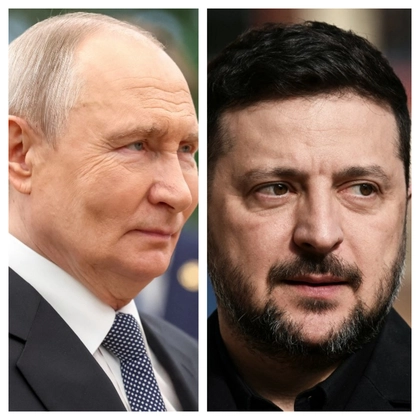
Kremlin Responds: ‘If Zelensky Wants to Meet, He Can Come to Moscow”
There has been an uptick of fighting in the southern Zaporizhzhia sector, on the east end of what used to be the Dnipro River upper reservoir, but now is a pretty impassible wetland to anything but seriously hooah infantrymen and ducks. The Ukrainians have claimed even to have executed a successful counterattack in the area (borrowed map) and units involved (210th Assault Regiment, Joint Forces South, among others) say they took the village of Plavni and captured prisoners. They also claim to have reached the next village down the line, called Kamianske. This was on Monday.
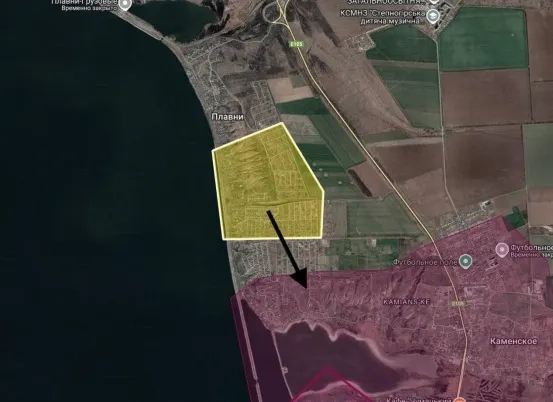
Even if confirmed, this is not Russia defeated. This is a small regain of ground and not the overall trend, which is that Russian forces are capturing two-to-four chunks of ground daily.
What caught my eye, rather, was this. First, (see below), the Ukrainians very clearly coordinated the ground attack with air strikes. This is extremely rare for the ZSU and it’s almost unheard of for a local counterattack that just regains ground, for example, the last confirmed time we saw Ukrainian bombs dropping in support of ground attacks was in Kursk almost last summer. So this is either a much bigger priority to ZSU command than the ground makes it look like, or, somehow Joint Forces South somehow convinced Generals Syrsky and Hnatov it’s OK to delegate air strikes to a regional command. Either way it’s head-scratching.
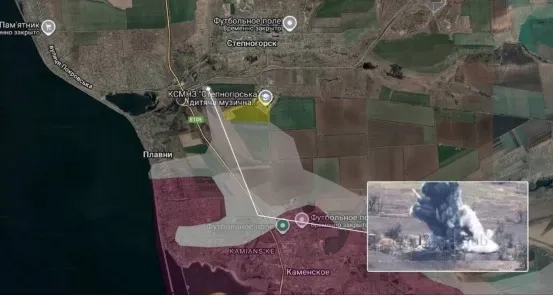
At minimum, this is another instance of one of the new “Assault Regiments” (for the historically inclined, think an updated version of Stosstruppen) seeming to do effective work.
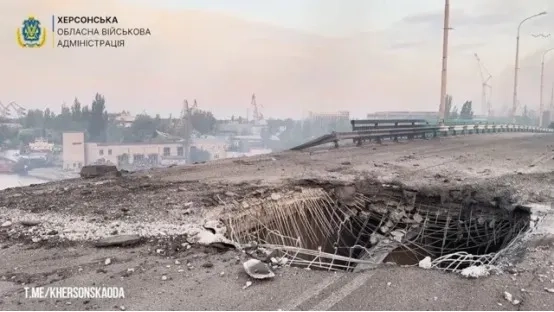
Also, this Tuesday (I think) the Russians dropped a three-ton bomb to hit a bridge inside Kherson. The bomb blew a big hole, but light vehicles can still pass (image) and subsequent Russian attempts to knock the bridge down have missed. The bridge connects, roughly, the high ground/bluff on which most of Kherson sits, with the industrial-residential Korobelny district, which on is the actual riverbank. So again, the military analytical crowd are wondering what the Russians are up to, are they just destroying infrastructure, or planning a cross-river assault, or maybe the local air commander figured the video would be impressive and help his promotion chances.
A final “I’m not quite sure what this means, if anything” development this week in battle was, there was a visible uptick in reported Russian prisoner of war captures. Azov did it in the Toretsk sector, 3rd Assault/3rd Corps did it in the Siviersk sector and the SSO did it in the Kursk sector. Plus there were these two guys who managed to get themselves taken prisoner, twice within about the space of a month, on exactly the same battlefield. If I wrote it as fiction, no one would believe it.
But the big bag, clearly, was in 425 Assault Regiment’s sector where 32 – yes 32 – Russian POWs were claimed captured this week. This also was Kharkiv sector and yes it was again an Assault Infantry Regiment.
Losing units included 74th Motor Rifle Regiment which – I recently came across some numbers about this – is arguably the unit that’s suffered the most casualties, in all of 41st Combined Arms Army, for the entire war. Total establishment wiped out more than twice since 2022, the figure has to be double that for the infantry companies. Skala recorded soldiers complaining they were abandoned in forward positions by officers. This isn’t confirmed by other sources, yet. Screen grab attached.
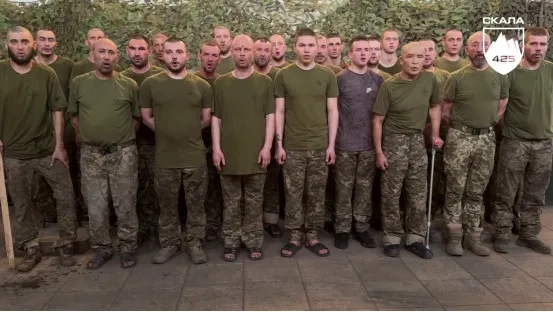
The link to the video is here:
This is not to imply Ukrainians aren’t dying and getting wounded. But, 40+ Russian POWs in a week with some evidence confirming them is a lot. Usually, armies that are losing don’t take a lot of prisoners.
The Air War
This week on the Russia attacking Ukraine side, the Russians seem to have been taking a breather, or maybe they are running low on missiles and drones. No major attacks, most nights 50-100 drones. Ukrainians over the week claimed about an 80% shootdown rate. In that context, images appeared on Friday (pictured) of a Czechoslovakian (not Czech, this is a Socialist aircraft, albeit an excellent one) Zlin Z137T AgroTurbo. The Ukrainians, being Ukrainians, have figured out a way to hang a pair of the Soviet version of the Cold War era Sidewinder missile, called an R-73, onto the Zlin’s wings. The Ukrainian internet is pretty sure the point is to hunt Russian Shahed drones.
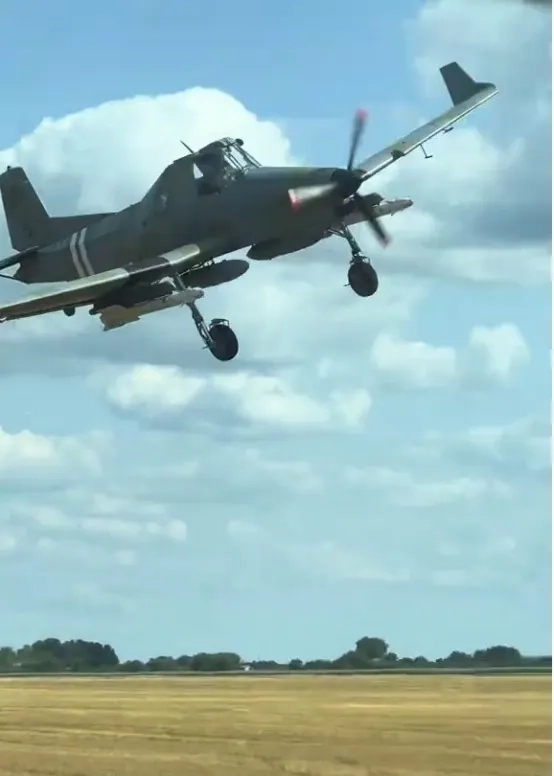
As I understand it, this little plane is highly maneuverable and was designed in the 1970s as a military trainer. It lives on today as a crop duster and, thanks to the Ukrainian internet, we now are aware that somehow one of these cool aircraft is defending Ukraine’s skies. I bet more.
On the 4th, there was a mini-flood of reports and warnings on the Ukrainian early-warning networks and via chat groups: Get ready! The Russian bombers/missile carriers are coming tonight. For the record the expected aircraft count was about seven Tu-95 Bear turboprop bombers, and about two or three Tu-160 Blackjack bombers. Which is a shockingly small available-aircraft count for supposedly the second-biggest air force in the world. But anyway, there weren’t any missiles, just several dozen Shaheds.
As to the Ukrainians hitting Russian stuff, when you read the section on politics and negotiations and so forth, I think it would be worth bearing in mind that this week, it’s fair to say the Ukrainians were on par with the Russians in terms of damage and pain caused by air strikes.
I’ll say that again. Ukraine, this week, generally speaking, was fighting an air war against the Russian Air Force, pretty much at parity. This may be an anomaly, but, considering the size of the countries involved, that’s a pretty impressive achievement.
As you may recall, last week it was pretty obvious the Ukrainians were especially interested in harming Russian rail capacity in south-west Russia, with anything having to do with the Volgograd-Rostov line at the top of the priority list.
This week, the Ukrainians expanded and took some big swings at Russian oil production primarily, but also with a big focus on air defense. The bottom line is, compared to last week, which was already painful for Russia, this week the Ukrainians picked up the pace.
I assume this is primarily being driven by the 14th Unmanned Aircraft Brigade (Special Operations) having somehow developed deeper reserves of Lyuitiy drones. My journo spidey sense tells me somehow the Ukrainians have a better picture of where the Russian air defenses are, but I don’t know how they know. In any case, this is a partial laundry list of what Ukrainians “Friendly Drones” have been up to for the past seven days:
July 31
- Military electronics plant in Penza is hit. 11 ground explosions, fire. One woman killed.
- RR infrastructure vic. Kotelnikovo switching station is hit. Explosions, fires, epic traffic delays.
Aug. 1
- One of Russia’s biggest refineries, in Ryazan, is hit. Multiple drones strike the cracking tower, giant fire. The fourth-biggest refinery in all Russia goes offline.
- Refinery in Samara, this is 900 kilometers (559 miles) inside Russia, is hit. Mushroom cloud explosions, production stops
- Refinery near Nizhniy Novogorod is hit. Explosions, big fires visible from space.
Aug. 2
- Voronezh, fuel storage facility set on fire.
Aug. 3
- Oil refinery in Astrakhan region, multiple hits, left on fire, damage unclear.
Aug. 4
- Saky air base in Crimea, one Su-30SM fighter confirmed destroyed, three Su-24 bombers damaged to some extent and possibly destroyed (maybe they were hangar queens), aviation ammo blown up.
Aug. 5
- Yelabuga, Tartarstan, the factory that makes Shahed drones. Hits seen but damage unclear. All manner of civilian traffic cancelled, including Moscow and Petersburg.
Aug. 6
- Fuel storage site Oryo hit. Explosions reported, damage unclear.
- Signal electronics factory, Stavropol Krai possibly hit, small fire reported.
Aug. 7
- Krasnodar air defense facility and surrounding infrastructure is hit, including an oil refinery, Krasnodar region. Refinery cracking tower takes at least two direct hits, epic fires. Image.
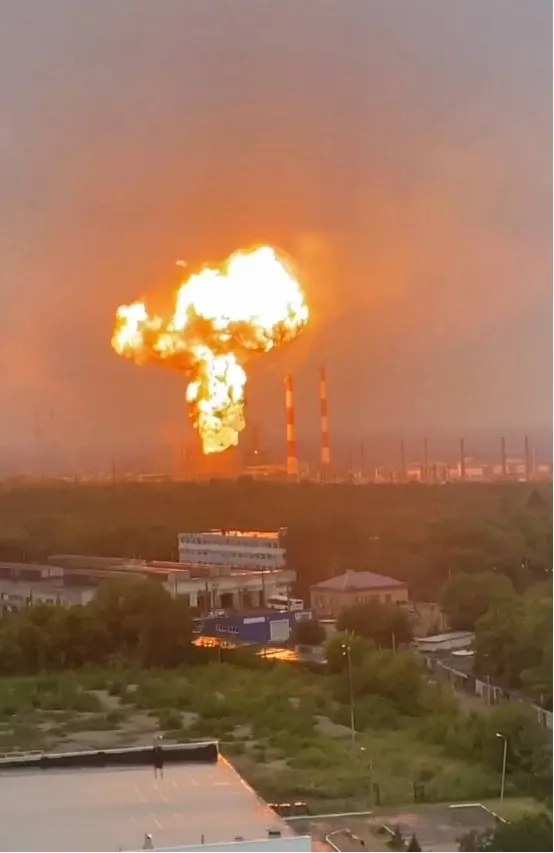
- HUR identifies the air defense unit as 90th Anti-Aircraft Missile Brigade. HUR claims 12 soldiers killed and about two dozen wounded.
- Railway infrastructure hit (again) in Volgograd region.
- Military facility at Slavyasnsk-na-Kubani attacked fires reported, no info on other damage.
Aug. 8
- Millerovo, Rostov region; oil refinery or fuel storage site is hit, fires burning, super-visible from space, image.
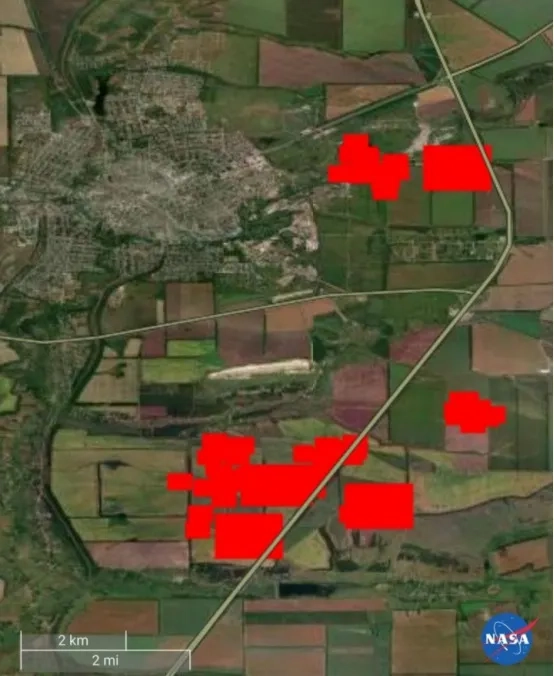
- Millerovo, Rostov region; airport here is hit for umpteenth time, probably the Ukrainians were suppressing air defenses to break open a path for the strike drones.
- Sochi region; drones spotted and some shot down offshore, I suspect the point here was to disrupt summer rail traffic and remind Russian summer tourists there is a war on and that Russian Federation air space is far from impermeable. Beach evacuation image.

Taken together, this is nothing less than Ukraine beating up on Russia by air. If you believe the Russians, this was 50-150 aircraft nightly. (Also, if you believe the Russians, there was no damage except for minor damage from shot-down Ukrainian drones, and they all were).
Nor was that all. HUR, so army military intelligence, splits up its strike operations in Russia into effectively several commands. Airfields, oil refineries and other big stationary objects that need sophisticated strike planning and whole coveys (squadrons? flights? flocks?) of drones pushing into Russian airspace, that 14th UAV regiment.
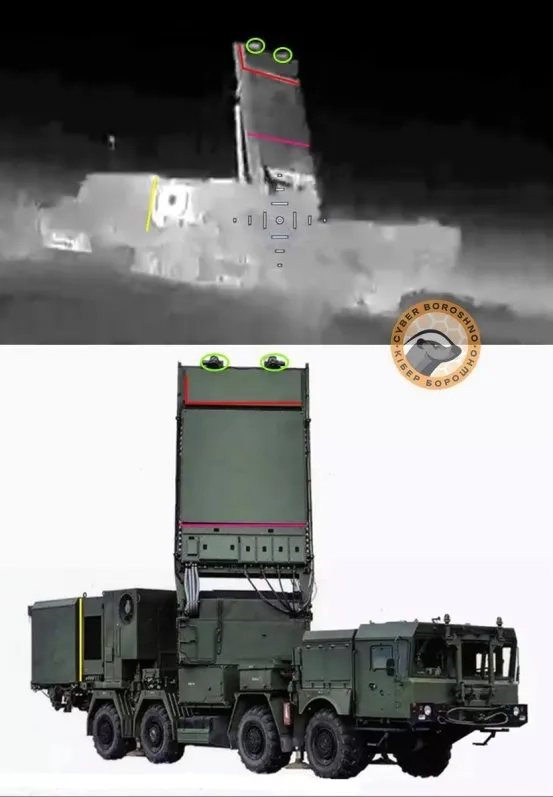
But there are also the point target drone guys, who are special operations guys, who hunt down mobile super high value targets like Russian air defense radars and Russian generals, and they, as I understand it, operate on their own, because, well, they’re special. This week they reported knocking out with drone strikes a Russian RLS Nebo-SVU radar and a Podlot K-1 radar, both in Crimea. Also hit was an RLS 96L6 radar system (image) which is a component of Russia’s S-500 air defense system, which is so advanced that formally Russia isn’t fielding it near the war.
Also, by way of begging the question – does the Russian air force really have air superiority, I mean really – this week video appeared of the city Mariupol which, according to the Ukrainians, was recorded by a Shark drone. That’s 120-140 kilometers (75-87 miles) inside airspace supposedly under total Russian control. The Shark is manufactured in Ukraine.
Moreover, the conventional, fixed wing, pilot-with-goggles-and-a-silk-scarf component of the Ukrainian air force very visibly ran at least two, and I’m guessing probably twice that precision-guided bomb strikes in Zaporizhzhia region. Relatively confirmed is an Air-to-Air Surface-to-Missile System (AASMS) strike by a MiG-29 hitting Russian positions in Stepanohirsk, Zaporizhzhia.
According to official statements, France is manufacturing these bombs for Ukraine monthly. The weapon has a good reputation and it’s nickname is, inevitably, “French Baguette” (Французький багет).
Also there was an F-16 strike or MiG-29, probably on July 31 and probably by a MiG-29, dropping a US-guided bomb called Joint Direct Attack Munitions (JDAMs). Also some reports have said the munition was a GBU62, which is roughly the same thing as the AASMS. Either way, I’m not aware of any clever nicknames. Russian positions in Kamyan’ske were hit. Image of the detonation. It seems like it worked just like in Afghanistan.
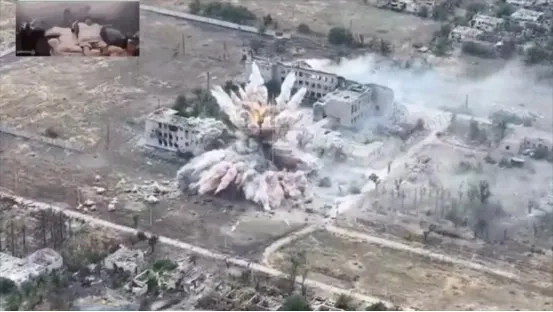
There were more reports, one each of a MiG-29 and an F-16 strike during the week, with video, but location and date not clear. And there was a video appearing of a MiG-29 firing a HARM anti-radar missile, also in the Zaporizhzhia region.
This is an awful lot of Ukrainian air activity and pretty risky considering all the air bases Russia has in the area which, as we know, is basically Crimea.
It would be reasonable to suspect there is a link between the take-down of the air defense radars in Crimea by HUR, and the sudden uptick of Ukrainian air strikes in the Zaporizhzhia region. It is just speculation but it would match the longstanding Ukrainian pattern of performing all manner of prep work usually using sneak spy tactics, before launching something that actually damages Russian military assets.
Instead of plopping in the traditional still pic of an airplane here’s a video put together by a Ukrainian MiG-29 pilot calling himself YellowTAIL29.



Anyway, point to this section, as I write this, Russian fuel prices are up about 6%. Were Russia to get a ceasefire, then obviously that would give Russia a break in the refinery-bashing.
Closing factoid: According to Russian Defense Ministry official kill counts, Russian forces by all means since 2022 have destroyed every single aircraft in the Ukrainian air force, at least twice, and already it’s closing in on three times.
Warder and the Environment
This is just to point your attention to a piece I did on the water situation in Donetsk, which may be news to some. Many of you will already be aware the traditional summer water shortage in Donbas has become crippling.
But mostly, I’m flagging a report about people drawing water from puddles and corrupt water transportation schemes in Donetsk and Rostov regions, because none of this is a surprise. Literally a decade ago, there were foreign observers in Donetsk region thoroughly and dutifully recording, with citations and triangulation, the impending environmental disaster that was inevitable when surface water ran short and the regions ground water – which is about the most polluted water on earth from all the mining – becomes the region’s only source of water.
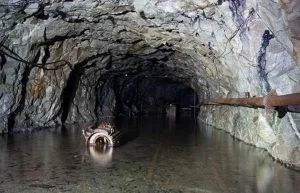
In the “peace” section of this review you might well bear that in mind. If there is a territory component of a ceasefire or a peace deal, the side that gets Donbas will receive not only some serious ore fields, but a slice of territory that might as well be the Nafud desert, for all the usable water it has available to support life. We all knew if the coal mines didn’t stay pumped out this was going to happen, now it has. Emergency Situations image of a flooded coal mine.
The Pridnenstrovie Gambit
Small item, this week authorities in Belarus, for reasons best known to themselves, decided to send nine trucks loaded with drone parts and technicians through Poland and Romania with final destination Transnistria. According to the news reports, the shipping paperwork said it was just business; a factory called Moldavavizilit in Transnistria was going to do the assembly work, and it was all for civilian purposes.
The Romanian police stopped and impounded the trucks. Now, both the Belarusians and Transnistrians are irate at Romania’s shocking interference with free trade. However, the Romanian Foreign Ministry says the shipment may not have been on the up and up so police will have to do some investigating.
Frankurter Allgemeine Writes Up Germany Engineering Excellence
You really should read the original, but if lazy, here’s a link to a story about how a Patriot missile radar was really smashed up by the Russians in Ukraine, the manufacturer Raytheon said there were absolutely zero chances it could be fixed, the customer should just order a replacement (at Raytheon prices and it would have to be approved by the Trump administration). So the Germans got an engineering team together and working 16 hours a day, they fixed it. If that is not a pretext for an image of Karl Benz, inventor of the first practical automobile, then I have never seen a pretext.

And Finally, the “Peace and Ceasefire Talks,” Revisited Yet Again for Another Time
Aug. 8 has come and gone and to few people’s surprise, the massive sanctions the Trump administration was threatening against Russia, if Russia did not agree to a ceasefire by Friday, have not gone into effect.
Instead, as of Wednesday, there has been another round of “we’re really close to peace, progress is being made, you really can trust us” messages coming out of Washington and Moscow, while the adults in the room – the Ukrainians and the Europeans – are scrolling past reports likely to go on to something with some value, like cat videos.
The Russians seem to be pushing two ceasefire condition packages out onto the internet.
One effectively is a Ukrainian capitulation except that NATO membership and foreign weaponry are not completely off the table, instead, those things “would be negotiated later.”
The other seems to be an air ceasefire to be in effect for 50 days, followed by a full-scale ceasefire if the air ceasefire holds.
How an “air ceasefire” would work in a war with the most drones in history, and literally tens of thousands of them in the air daily, is glossed over.
But, and this is the point that I was trying to make in the air section, if the Russians could somehow rig it so that “air ceasefire” = no more drone strikes on Russia, that is not a Russian concession, that’s a Ukrainian concession, and a big one.
Plenty of people will argue the point with me, but my contention is, last two weeks, Ukraine has demonstrably been winning the air war.
As to how the “negotiations” might go in the next several weeks, I think the main thing is that no one – not Putin, not Trump, not Rubio, not Miller, not Medvedev – no one has a plan, and not a one of them have the slightest idea about how to get to a ceasefire beyond hoping somehow to bully Ukraine. But Ukraine has clear red lines, Europe agrees with most of them. Ukraine being successfully bullied in a situation like that seems pretty improbable to me.
For Ukraine I would say the takeaways on the “peace process” are:
- The top priority is to fight the war and ignore the noise.
- The top war objectives are resistance and increasing the pain of war to Russia.
- The US is not a player, they have squandered their leverage with Ukraine, Russia, and Europe, and the national leadership is incapable of consistent foreign policy over the long term.
- Theoretically, China intervening on Russia’s side would be a threat to Ukraine, but the Chinese can see the Americans like everyone else, and obviously if a US foreign policy move needs opposing, the simple thing to do is just to wait, the Americans can be relied on to lose focus in a matter of weeks or months.
- Thankfully for Ukraine, most European states are adult and possible to work with, albeit it’s pretty much impossible on a continental level. The development of Ukrainian/European war-fighting capacity will be slow and haphazard.
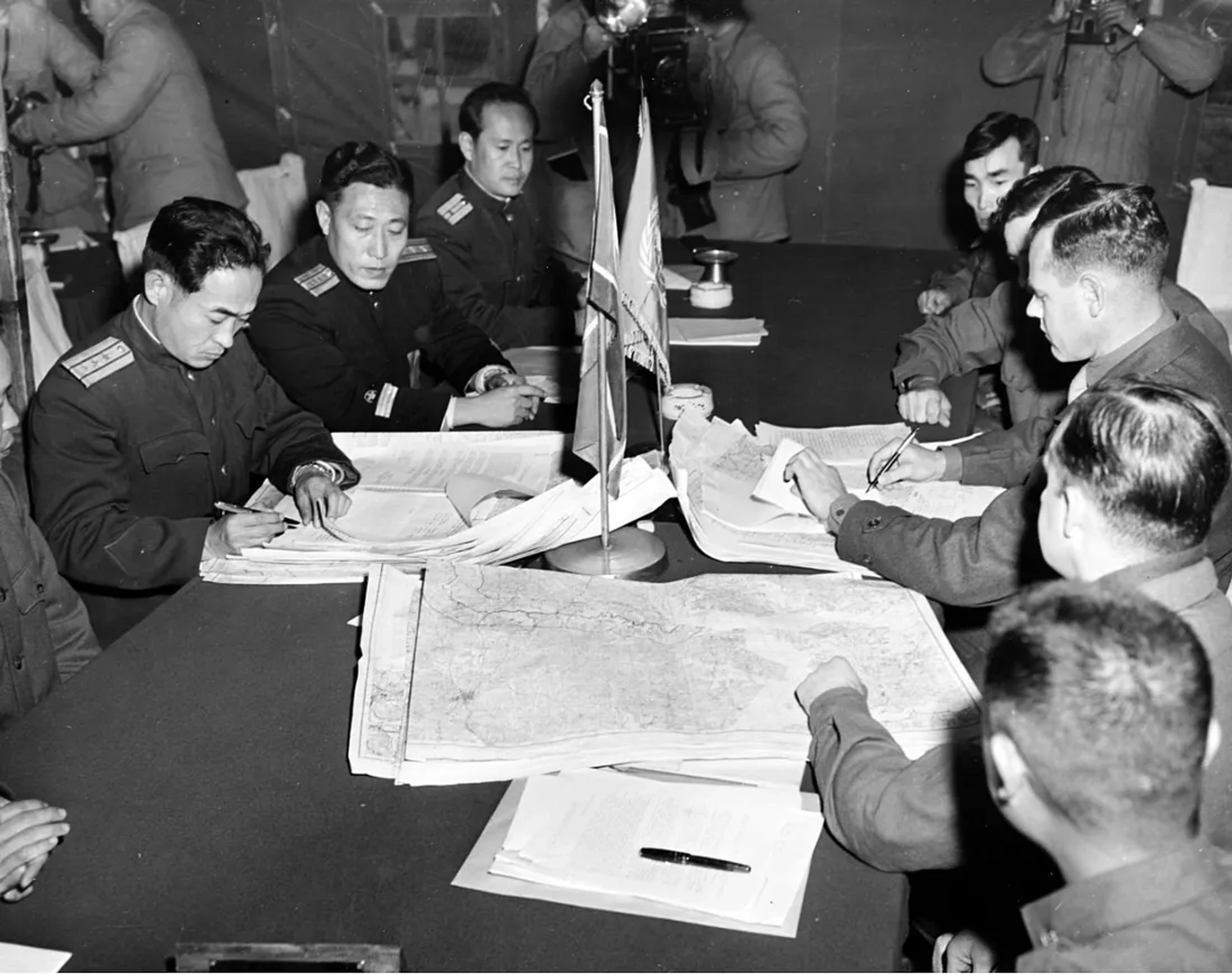
So from the Ukrainian point of view, the only reason this latest round of hyperventilation about peace talks and ceasefires from DC can’t be called “stupid” and “pointless,” is that “stupid” is getting kind of old. Image of the Pamunjon talks to remind you that it took them more than two years to decide seating arrangements at the negotiating table.
Reprinted from Kyiv Post’s Special Military Correspondent Stefan Korshak’s blog. You can read his blog here.
The views expressed in this opinion article are the author’s and not necessarily those of Kyiv Post.
You can also highlight the text and press Ctrl + Enter