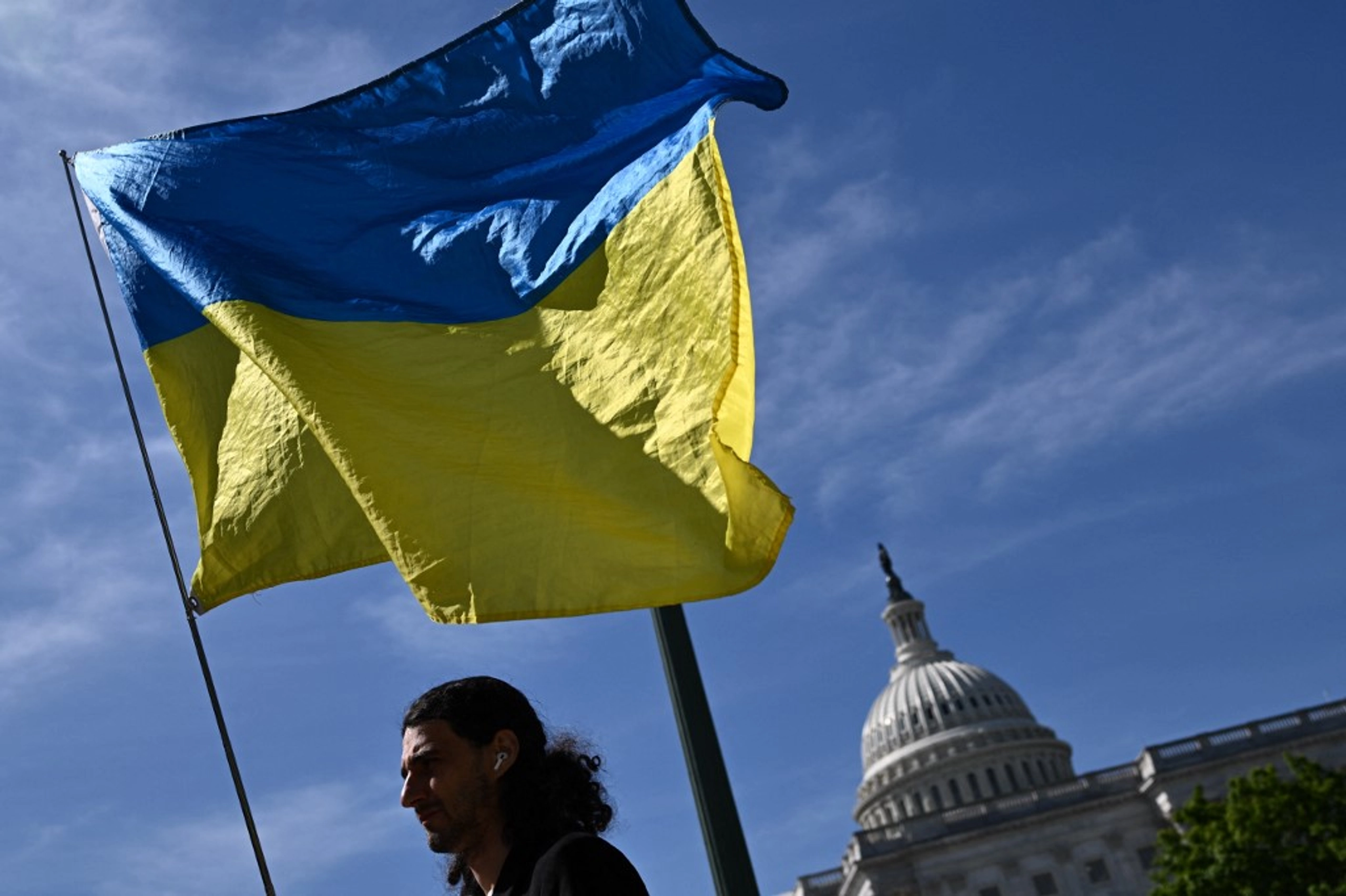
US military aid to Ukraine may have been curtailed, but support among the American public has proven more resilient, with new data shedding light on the Americans most and least likely to support Ukraine.
JOIN US ON TELEGRAM
Follow our coverage of the war on the @Kyivpost_official.
An April survey by Pew Research Center shows that, more than four years into Russia’s full-scale invasion, Ukraine remains a salient foreign policy issue for a majority of Americans – across party lines.
While the share of Americans who say the war is personally important to them has declined slightly since 2024 (from 59%), 54% still say it is at least somewhat important. Around 34% say it is not, while 12% remain unsure.
Partisan differences persist, but they are not absolute. Democrats (62%) are more likely than Republicans (49%) to say the war matters to them personally. Age, however, appears to be the more decisive factor.
Among Democrats, 71% of those aged 50+ say the war is important, compared to 55% of those aged 18-49. The same pattern holds among Republicans: 60% of older Republicans versus just 37% of younger ones.
In other words, concern about Ukraine increases significantly with age –regardless of party affiliation.
Nonetheless, public concern does not translate neatly into support for policy.
Only 29% of Americans say the US is not providing enough support to Ukraine. Meanwhile, 26% believe support is about right, while 20% say it provides too much support. The share of Americans who believe the US is doing too much has stabilized compared to August 2025, but remains lower than in February 2025, when it peaked at 30%.
Kasparov: Ukrainian Flag in Sevastopol Is the Shock Russia Needs to Accept Empire Is Dead
Trump losing ground
Perhaps the most notable shift is the decline in confidence in US President Donald Trump’s handling of the war between Russia and Ukraine.
Confidence in his approach has dropped from 45% to 32%, while 66% now say they lack confidence – placing Ukraine among the lowest-ranked foreign policy areas for the administration.
The shift is most pronounced among Republicans: confidence has fallen from 81% to 60%. Among Democrats, it declined more modestly – from 12% to 7%.
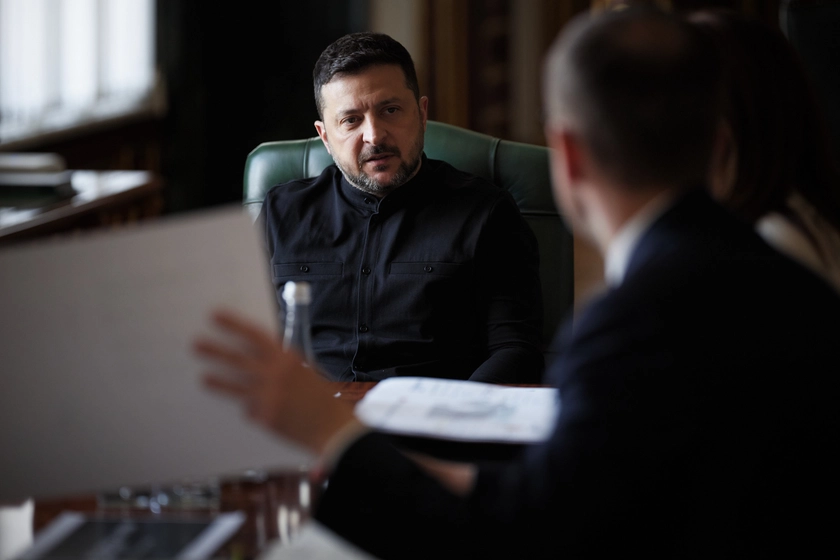
At the same time, 50% of Americans say they have confidence in President Volodymyr Zelensky, while 40% do not, and 9% say they have never heard of him.
Still, partisan differences remain sharp: 69% of Democrats express confidence in Zelensky, compared to 34% of Republicans, though Republican views have warmed slightly over the past year.
Russia: enemy, competitor or partner?
Roughly 51% of Americans view Russia as an enemy, 39% as a competitor, and 7% as a partner.
While these numbers are broadly stable, the partisan gap has narrowed – from 22 percentage points to 10.
This shift is driven primarily by Republicans becoming more likely to see Russia as an enemy (from 40% to 47%), while Democrats have become slightly less likely to do so (from 62% to 57%).
For the first time since 2024, more Republicans now describe Russia as an enemy rather than a competitor.
Age again plays a decisive role: 62% of Americans aged 50+ view Russia as an enemy, compared to just 40% among those under 50.
Despite these nuances, the broader picture remains unchanged: 83% of Americans hold an unfavorable view of Russia, and large majorities across both parties express little or no confidence in Kremlin leader Vladimir Putin.
Negative views of Russia and Putin have remained remarkably stable throughout the war.
The bigger picture
While partisan differences are expected in surveys like these, arguably the most alarming finding is the noticeable age divide within both voter groups, suggesting that the Ukraine issue resonates far less with younger voters than with their older counterparts.
The fact that younger Americans are also less likely to view Russia as an enemy is another point of concern, likely linked not only to the post-Cold War era, but also to the influence of Russian propaganda across social media and beyond, as well as the popularity of Russia- or USSR-sympathetic influencers such as Tucker Carlson on the right and Hasan Piker on the left.
For Ukraine – and other interested parties–this may become a long-term challenge, especially given Kyiv’s comparatively limited informational resources when set against the Kremlin’s far more robust propaganda machine.
Still, despite those limitations, the latest data suggests that Ukraine has managed to regain some ground among Republican voters – an electorate widely overlooked by Kyiv between 2023 and 2024 – once again underscoring the enduring importance of partisan politics in the United States.
Loss of confidence in Trump’s handling of the Ukraine war is also a positive given that the peace talks have effectively reached an impasse after the administration’s repeated attempts to impose largely Russia-favorable terms on Kyiv, including the secession of the remaining parts of Donetsk region.
What remains largely unclear is the Americans’ stance on providing aid to Ukraine.
The survey shows that 26% believe support is about right, while 20% say it provides too much support, begging the question of which support they’re referring to.
The US has stopped providing direct military aid to Ukraine in 2025, forcing European member states to purchase weapons through the PURL program. It likewise no longer provides humanitarian aid to Kyiv, a niche fully overtaken by the EU and its member states.
This finding suggests that despite these developments, the perception proves difficult to eradicate and may still be used as a bargaining chip in American political brinkmanship, including during the upcoming midterms that are set to take place in November 2026.
Russia under fire from American conservatives
The appearance of controversial figures Candace Owens and Andrew Tate at the St. Petersburg Economic Forum, held in early June, is noticeable. As traditional pro-Kremlin voices such as Tucker Carlson appear to be losing some of their ability to shape public opinion, Moscow seems increasingly willing to court internet personalities with massive online followings who can reach audiences far beyond conventional political circles.
Both Owens and Tate have spent years cultivating anti-establishment brands, criticizing Western institutions, questioning support for Ukraine, and, more recently, attacking Israel. Owens has praised Russia’s spirituality and traditional values while giving interviews to Kremlin-aligned outlets, whereas Tate has enthusiastically documented his visit to Moscow for millions of followers.
Their presence suggests that Russia’s influence strategy is evolving. Rather than relying solely on state media or sympathetic politicians, the Kremlin is increasingly turning to influencers capable of packaging anti-Western narratives for younger and less politically engaged audiences around the world.
Yet they’re facing resistance.
Conservative commentator Ben Shapiro pushed back against Owens’ portrayal of Russia as a bastion of Christian values, pointing to the country’s low church attendance and high abortion rates.
Meanwhile, commentator Laura Loomer went further, arguing that parts of the American conservative movement have been exposed to years of Russian influence operations. Loomer specifically criticized Owens’ participation in events linked to the St. Petersburg Economic Forum, portraying her as part of a growing network of commentators who romanticize Russia while downplaying the Kremlin’s actions abroad.
You can also highlight the text and press Ctrl + Enter