Given all the focus on the upcoming Trump-Putin summit in Alaska on Aug. 15 – and the considerable uncertainty therein – I thought it perhaps useful to lay down some of the facts around the state of the war and potential peace. I always find a Q&A format is simplest – both for me writing and perhaps for readers.
First things first, where are we in terms of the state of the war?
Answer: Well, I am no military strategist, but those I read that are (Michael Kofman, amongst the best), suggest that we are in something of a stalemate where neither side is able to deliver a winning or decisive blow.
JOIN US ON TELEGRAM
Follow our coverage of the war on the @Kyivpost_official.
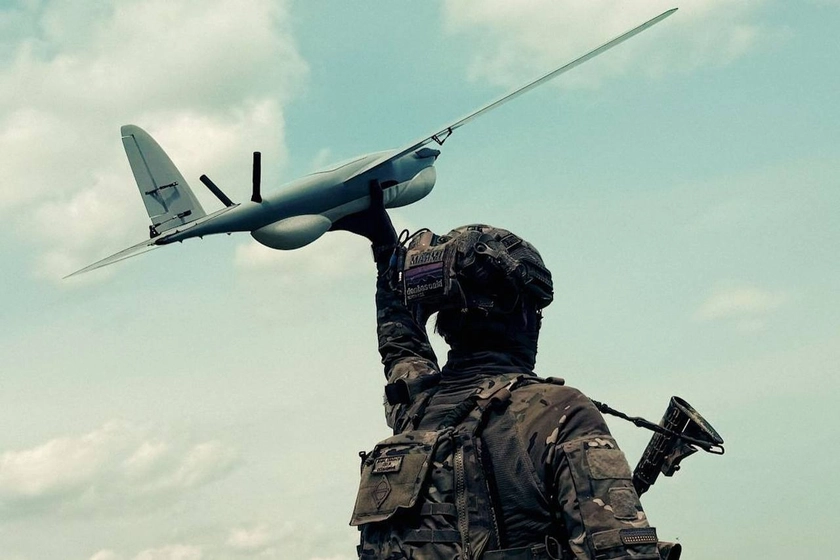
Ukraine’s earlier manpower shortages are being partly made up for with the use of drone technology. And therein I think, from both sides, drones are becoming increasingly dominant with less of a role for traditional military equipment, like tanks, which appear increasingly vulnerable on the modern battlefield.
Russia is making incremental progress in the Donbas, but still at a heavy cost in terms of men and equipment – the meat grinder. But both Ukraine and Russia now appear to be waging a war of their respective military industrial complexes – who can produce the most at scale and who can develop the technological edge. Russia seems to be succeeding in outproducing Ukraine and the latter’s disadvantage is not being made up for yet by its European allies.
Europe should easily be able to outgun Russia in military industrial production, given Russia’s economy is less than one-tenth the size of the European allies.
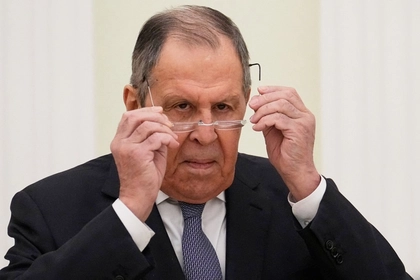
How’s Russia Reacting to Zelensky’s Letter to Putin and Peace Talk Offer?
But despite all the rhetoric around going to 5% of GDP in defense spend, Europe is still moving at a glacial pace in actually building military industrial capacity. So the war now is about who can build their own military industrial capacity, while eroding through long-range strikes that of their opponents, and to develop the battlefield and war-defining technology. Neither side is there yet.
Question? Can Ukraine survive without US support?
Answer: Yes, but it will be more painful and more costly?
Ukraine has seen the writing on the wall in terms of the risk of Trump selling Ukraine out to Russia, since the Oval Office ambush of Zelensky, if not before, and has been building its domestic military production capacity for such an eventuality. This is making progress in shells, artillery, drones, and some long-range missile capability – Ukraine produces around 40% of its total military needs at present. But in many other areas, Ukraine and Europe simply cannot fill the gaps – like Patriot air defense, satellite/intelligence support. If the US walks away, Ukraine will suffer more losses and casualties.
Can Russia quickly seize the initiative/advantage if the US walks away?
Answer: Likely not. Imagine a scenario where all Western support falls away and Russia has to enforce its advantage by occupying the whole of Ukraine. Russia simply lacks the military capacity to do that against an entrenched and motivated opposition. We saw that in February 2022.
To cut a long story short, even if Trump tried to cut a deal with Putin in Alaska to surrender Ukraine to Russia, Ukraine could and likely would fight on for an indefinite period of time and would still impose huge costs on Russia. Russia is simply unable to enforce its will on Ukraine. That genie left the bottle long ago. Ukraine does have leverage or agency in these talks. Peace cannot be imposed by Trump or Putin.
What have been the costs of the war already to Russia?
Answer: Again, I am no military expert, but those who are suggest upwards of 1 million Russian troops either killed or injured. That is a huge casualty toll considering the 15,000 or so Soviet troops killed, and around 55,000 injured, in their decade or so in Afghanistan, and this is on a much lower Russian population today of nearer to 140 million.
Imagine the huge current and long-term social cost of this. And the economic costs on Russia? I would assume something on the order of $2 trillion at least, close to the annual Russian GDP.
Consider there, the fact that annual military spending has gone from around $70 billion annually to closer to $170 billion, an additional $100 billion for 3.5 years, so $350 billion.
Russia has lost $330 billion in CBR reserves immobilized in Western jurisdictions, and likely well over $400 billion in total if one considers the assets of Russian oligarchs and state-owned entities.
Then there is the lower rate of Russian GDP growth run since perhaps 2014 and the first imposition of Western sanctions after the annexation of Crimea. From that time, Russia has run tighter fiscal and monetary policies than I would argue were appropriate given its balance sheet, and sanctions have slowed inward investment and attached premiums to import prices and discounts to export receipts.
I estimate that real GDP growth has been at least 1% lower than might have been the case, which cumulatively suggests another $1 trillion lost GDP, at least over the past decade. And now think of the recurring costs of social support to the hundreds of thousands of soldiers lost or injured in this war.
And the costs to Ukraine?
Well, also huge. Likely hundreds of thousands dead and injured. Even though multiples lower than Russia, on a much smaller population, that is still a huge burden. In terms of the economic costs, the World Bank and the Kyiv School of Economics put the cost of loss of infrastructure, buildings, etc, at well over $500 billion. Add in similar lost economic growth/activity, and the costs are probably also approaching $1 trillion – five times the annual Ukrainian GDP.
Western support to Ukraine, meanwhile, is running at an annualized rate of more than $100 billion a year. The best source of info on the latter is still the Kiel Institute of the World Economy.
Who is paying the tab for supporting Ukraine?
Answer: The Kiel data is conclusive, that so far, since the full-scale invasion of Ukraine in 2022, Europe has been outspending the US 60-40, and since Trump assumed the presidency, the US is providing almost no financing of the war. The US is likely now a net beneficiary from the war, as it’s earning huge amounts from arms purchases by Europe for Ukraine. The US is now a war profiteer.
Can Zelensky realistically trade territory for peace?
Answer: Politically and legally almost impossible.
The inviolability for Ukraine’s borders is enshrined in the Ukrainian constitution, and there is simply no constitutional majority to make this happen. Trump has spoken about the prospect of Ukraine conceding the remaining territory it occupies in Donbas (Donetsk and Luhansk) for territory Russia holds in Zaporizhia and Kherson, but this would involve the transfer of upwards of a million residents.
Politically, socially, economically, and militarily this would be hugely disruptive and destabilizing to Ukraine. What is the legal basis for this move and who is going to police it? Who is to assure that Russia will not take advantage of Ukraine giving up its defensive front line in Donbas to make further territorial gains? Imagine also the political and social opposition this would generate in Ukraine and to the leader who conceded territory, without any security assurances worth the paper they are written on, and after hundreds of thousands of Ukrainian losses. Could any leader, including Zelensky, survive such a territorial give-up? Very unlikely.
What comes after Zelensky?
Answer: Well in a scenario where Ukraine suffers de facto territorial loss with little security assured, I cannot imagine that it will be a dove, and peacemaker, more likely a militarist hawk.
Even then the transfer of power could be disruptive, leaving Ukraine vulnerable in the transition.
But Putin knows that, which is why he is playing hardball in talks and trying to impose a bad peace on Ukraine. Ukraine has a history of revolution – two, since independence in 1991 – with the Orange Revolution in 2004-2005, and then the Euromaidan in 2013-2014. But even elections would be a huge security risk, given they would require the end of mobilization and martial law, and likely the depopulation of the front lines. Russia again would take advantage of that.
The reality here is that Ukraine could survive the war but not survive the peace. The peace could be so bad that it could strain the very social, economic, and political fabric of the country, resulting in effective state failure, and then further Russian interference.
To have a prospect of a sustainable and stable peace, Ukraine needs security assurances and a development perspective (EU accession is the best anchor), but where are they being talked about seriously within the Trump administration? Trump seems to just want a quick deal, any deal, and others (Europe) can pick up the pieces. But it really could be the pieces given the shape of the deal that Trump is now concocting with Putin. Putin is absolutely aware of all this; Trump either is oblivious or simply does not care.
What does a bad peace look like for Europe?
Answer: Well if the peace imposed leaves Ukraine politically, socially, and economically weak, that likely means mass migration out of Ukraine, think there tens of millions moving West.
And that would certainly be the case if Russia used state failure in Ukraine to invade again. This would boost populism and the far right in Europe. And if a later invasion of Ukraine by Russia succeeds, that would mean the two biggest military industrial complexes in Europe united against Europe. Europe would be close to defenseless against future Russian expansion.
All the above kind of explains why Europe is so keen to ensure that any peace imposed by Trump/Putin on Ukraine is sustainable and secure, and why Europe will likely continue to look to fund and arm Ukraine in the event the US walks away – because it is absolutely in its national security interest.
And what does Putin want from Ukraine?
Answer: Worth restating this for the idiots who are now trying to impose a bad peace on Ukraine. Putin will settle for nothing less than the subjugation of Ukraine or conditions which will give him the opportunity to achieve that in the future. You might ask, “Well how can Putin be stopped then?” Well, he has to be, for the future of Ukraine, and Europe. And for Europe, Ukraine still presents the best chance of actually stopping Putin.
Reprinted from the author’s @tashecon blog! See the original article here.
The views expressed in this opinion article are the author’s and not necessarily those of Kyiv Post.
You can also highlight the text and press Ctrl + Enter