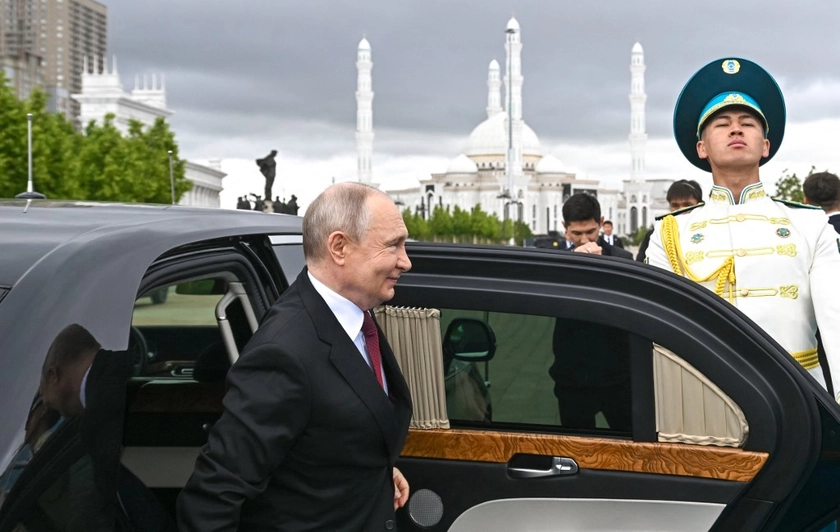
NEW YORK – In a day of high-level diplomacy at the UN, top Trump administration officials on Wednesday sent a clear, unified message to Russia and its like-minded backers: The time for the war in Ukraine to end is now.
The forceful public posture comes just one day after President Donald Trump’s surprise reversal on the conflict, in which he called Russia a “paper tiger” and said Ukraine was in a position to win back its territory.
JOIN US ON TELEGRAM
Follow our coverage of the war on the @Kyivpost_official.
Rubio confronts Lavrov on Ukraine
As Kyiv Post reported earlier, US Secretary of State Marco Rubio met with Russian Foreign Minister Sergey Lavrov on Wednesday, an encounter that was closely watched by international observers.
According to the State Department readout of the meeting, Rubio “reiterated President Trump’s call for the killing to stop and the need for Moscow to take meaningful steps toward a durable resolution of the Russia-Ukraine war.”
The Russian Foreign Ministry has not released a detailed statement on the Lavrov-Rubio meeting, but according to Russian state media, the two diplomats “reaffirmed their resolve to find a peaceful solution to the Ukraine war.”
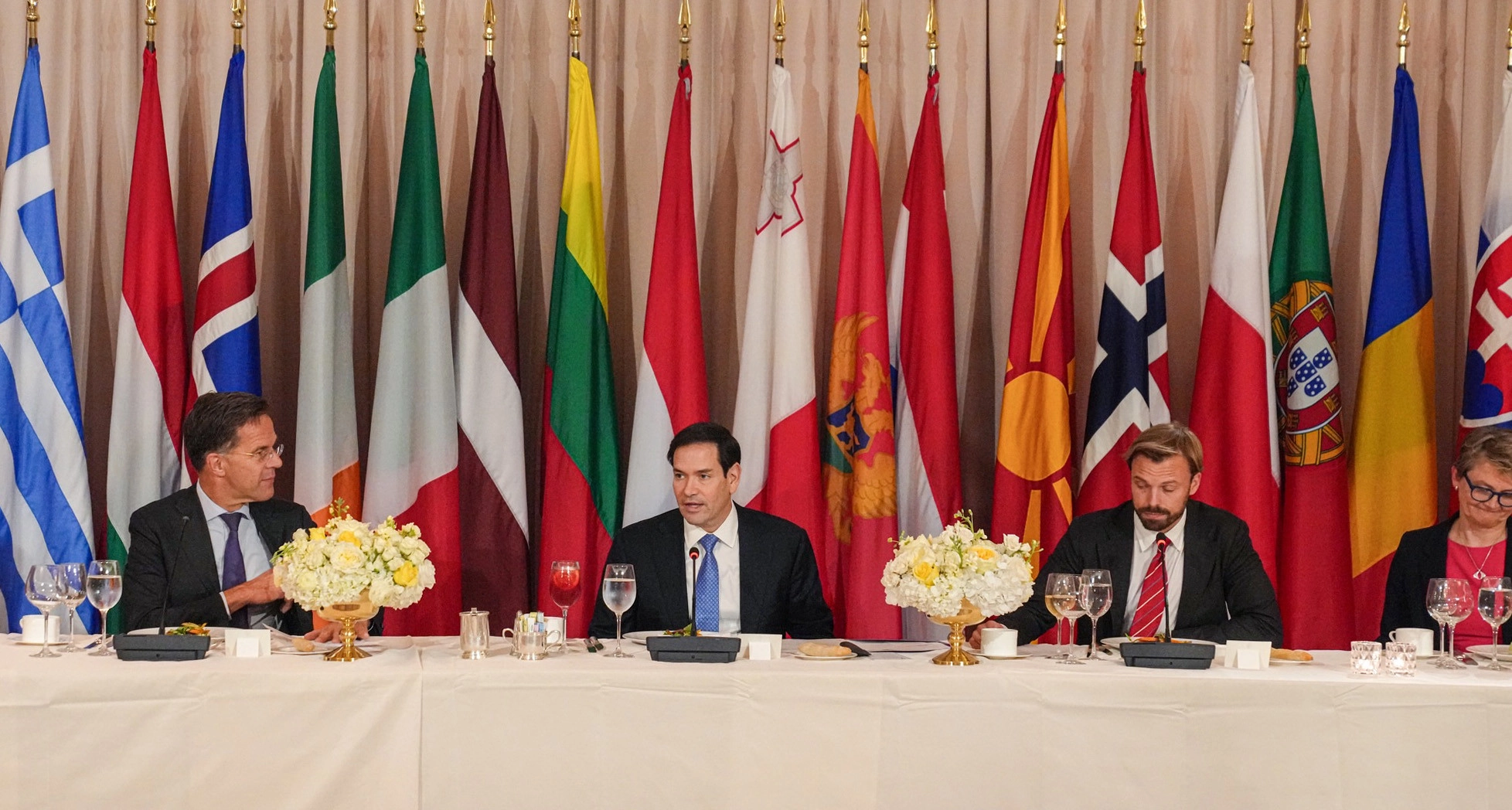
Rubio concluded his UN meetings on Wednesday evening, dining with Transatlantic allies. He is set to return to Washington to attend Trump’s meeting with Turkish President Recep Tayyip Erdoğan on Thursday.
This meeting, according to Ukraine watchers in Washington, will be a crucial test of whether the US intends to extend its energy pressure strategy on Russia and Ukraine to another key NATO ally.
The Illusion of a Peace Deal for Ukraine
US Energy Secretary puts pressure on Russia’s revenue
Separately, US Energy Secretary Chris Wright used a press briefing in New York on Wednesday afternoon to reinforce the administration’s new hardline stance, directly tying Russia’s ability to wage war to its energy sales.
“The Russian war in Ukraine, of course, is brutal. We all want to see it come to an end,” Wright said.
He went on to single out countries that continue to purchase sanctioned Russian oil, specifically mentioning China, India, and Turkey, stating that their actions “help Russia fund that war.”
Wright’s comments were a direct follow-up to President Trump’s UN address, in which he labeled China and India as the “primary funders” of the war.
Wright stated that while the US wants to expand energy cooperation with India, the continued purchases of cheap Russian oil were a major hurdle.
“India has decided to make the tradeoff to buy cheaper oil and sort of look the other way, that that’s giving money to a guy who’s murdering thousands of people every week,” Wright said.
“You can buy oil from every nation on the Earth, just not Russian oil.6 That’s our position.”
US is conveying a new policy to Central Asia
Meanwhile, senior US administration officials told reporters on Wednesday that a major focus of their engagements with Central Asian leaders at the UN was conveying the latest Ukraine-related policy.“
The [US] President’s been incredibly clear, he wants to end the war in Ukraine,” one official said, adding,
“This war is one of [Trump’s] biggest priorities right now. So, it comes up in every single conversation with every leader we have, particularly in the central part of the country. It came up in all of our meetings, and the President is focused on ending this war,” another official said.
Regarding India’s purchase of Russian oil, a senior official noted that, while the US and India have been “working through some differences,” the issue was “absolutely discussed as it’s discussed in every single engagement we have.”
The official also said that Trump “does not want revenue going to Russia as we continue to see this war play out.”
The official highlighted the pressure being placed on countries like India, noting that a bill in the US Congress has “85 Senators cosigned, that would impose 500 percent tariffs on any country buying Russian oil. So, 25 percent doesn’t look so bad compared to that, but we continue to put pressure on these countries to stop it by cutting off the revenue, when it comes to Russian energy, which is Russia’s largest revenue source...”
Ukraine peace in a new American energy agenda
The new “America First” energy agenda, outlined by US officials at the UN, is designed to give Washington significant leverage against Russia in the ongoing conflict with Ukraine.
By pivoting away from climate-centric policies, the administration aims to increase the production of oil, natural gas, and nuclear power. This strategic shift is not just about domestic energy independence; it is fundamentally about creating a powerful economic weapon to counter Russia’s influence.
A central component of this policy is directly challenging Russia’s primary revenue source, one US official told Kyiv Post, recalling that Russia’s economy is heavily reliant on the sale of oil and gas, which funds its military operations in Ukraine.
By boosting its own energy production, the US can offer an alternative supply to its allies, especially those in Europe, thereby reducing their dependency on Russian energy, as an official put it. This move is intended to diminish Moscow’s economic leverage and cripple its ability to sustain the war effort.
The Trump administration views its energy policy as a direct tool for foreign policy, another official told Kyiv Post.
Energy Secretary Wright also explicitly noted during a briefing that developing American energy resources would make the US better equipped to displace Russian energy supplies to its allies, particularly in Europe.
This is a critical point, as Europe’s energy dependence on Russia has long been seen as a weakness that Moscow could exploit.
By becoming a major energy exporter, the US can provide its partners with energy security, effectively undermining Russia’s geopolitical power.
In essence, the new energy agenda is a calculated move to turn America’s fossil fuel abundance into a decisive advantage in the geopolitical struggle surrounding Ukraine.
By increasing its own petroleum production and pressuring other nations to cut off their purchases of Russian oil, the US is applying an economic chokehold on Russia.
The White House’s stated goal is to drain the Kremlin of the resources needed to continue its aggression and to force a resolution to the war.
You can also highlight the text and press Ctrl + Enter