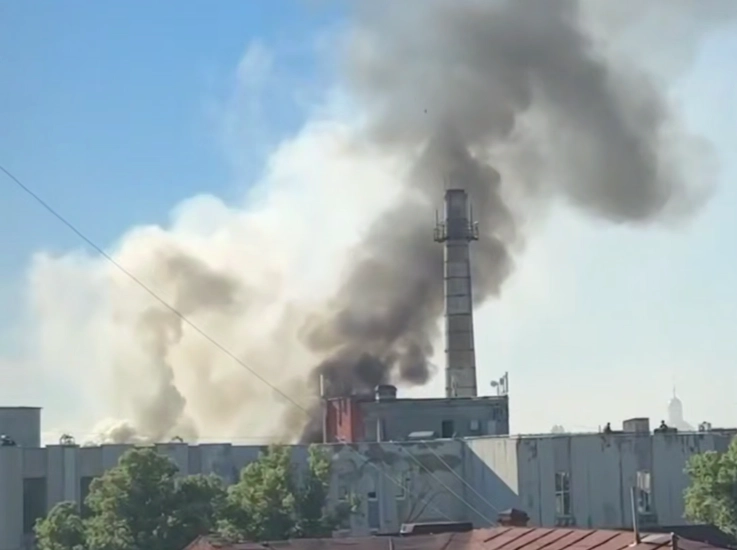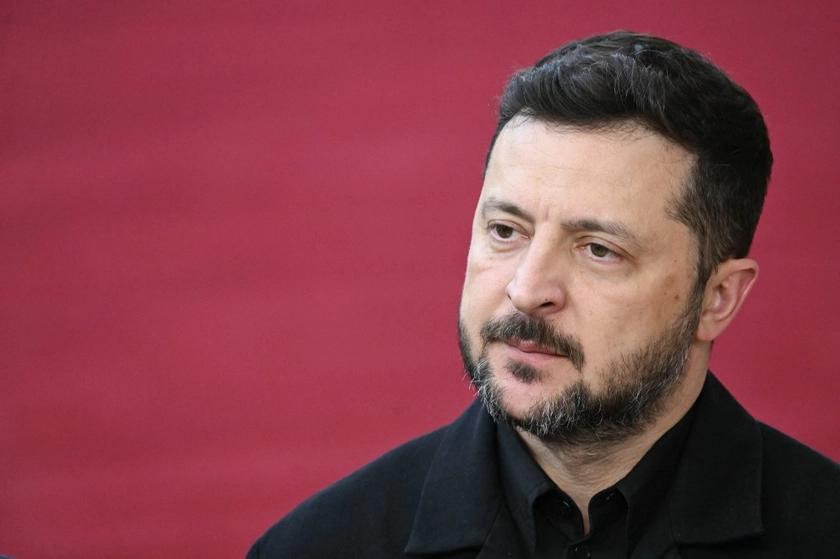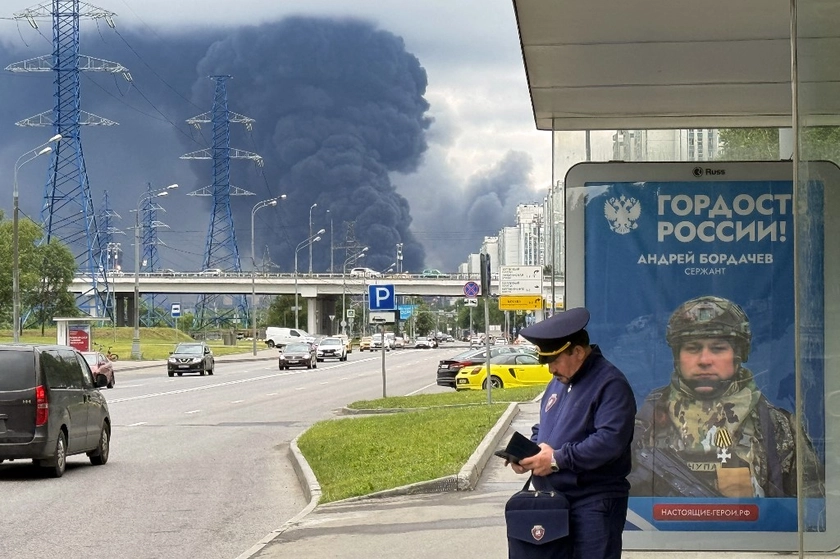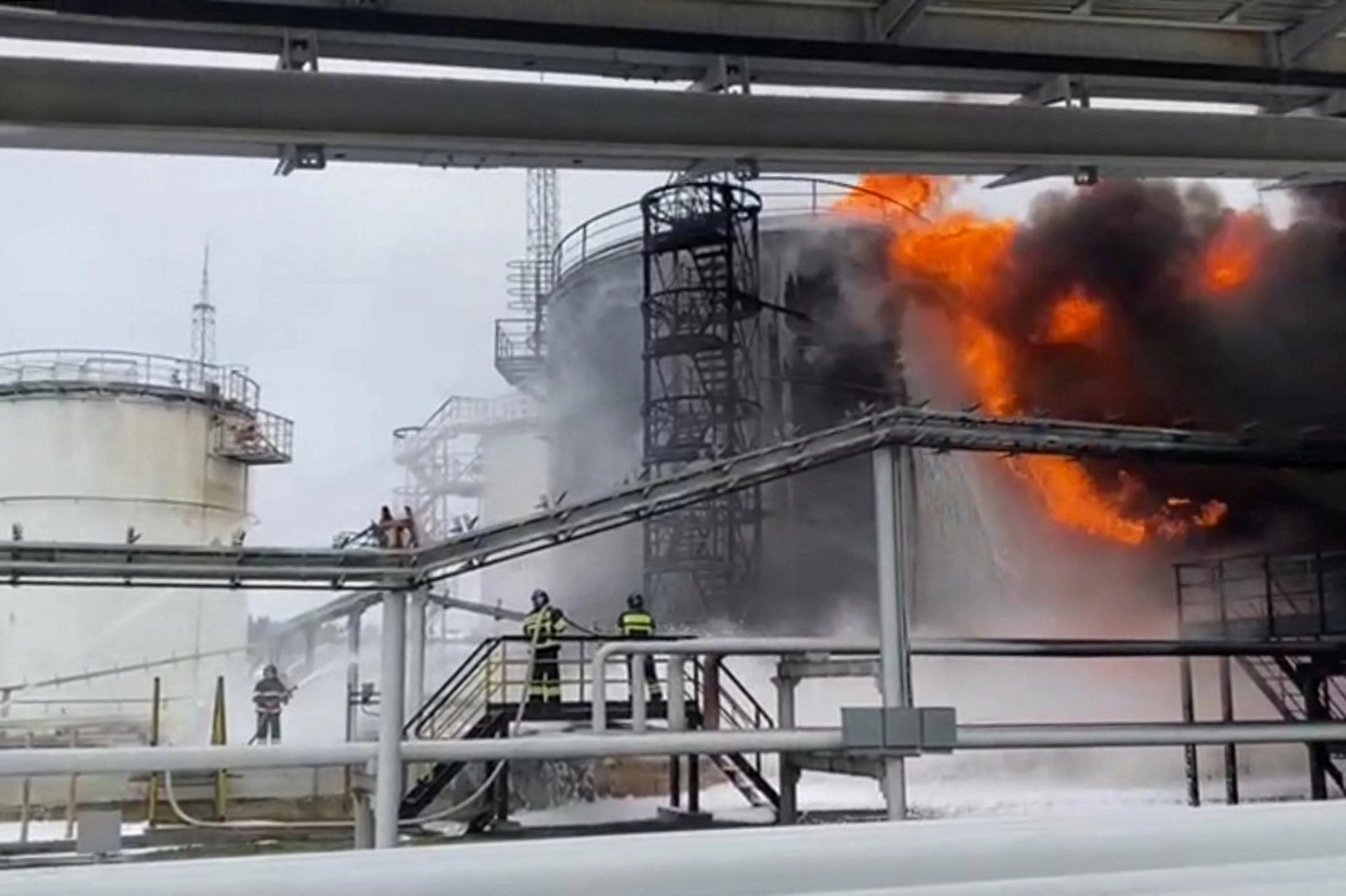
Ukraine’s strikes on oil refining facilities deep inside Russia have severely impacted Moscow’s economy through the removal of its refining and fuel production capacities, President Volodymyr Zelensky said on Oct. 27.
“We believe the Russians have lost more than 20% of their oil refining capacity, about 22–27% of their fuel. That’s why there are queues – there’s a real problem there,” Zelensky told journalists.
JOIN US ON TELEGRAM
Follow our coverage of the war on the @Kyivpost_official.
He said several Russian refineries were damaged by Ukrainian strikes, forcing Moscow to redistribute fuel production among other plants.
“When they started restoring operations and saw the queues, they had to redistribute volumes. Our task is clear – to continue striking other facilities [that are] now increasing production,” he said.
Zelensky added that Ukraine is using long-range weapons of its own production, alongside smaller numbers of British Storm Shadow and French SCALP cruise missiles.
He emphasized that 90-95% of strikes deep inside Russia are now carried out using Ukrainian-made systems, adding that Kyiv will continue developing its arsenal and securing funding to further weaken Russia’s economic base.
“This is their money for the war – from oil refining. That’s why we’re working on it,” he said.
The Institute for the Study of War (ISW) earlier reported that after Ukraine’s successful attacks on Russian oil refineries, fuel prices in Russia surged sharply, already hitting more than 70% of Russians.

Report: Zelensky Asked Zaluzhny If He Would Run for President
Since August, Ukraine has intensified drone attacks on Russia’s oil and gas infrastructure, striking refineries and pipelines across the country.
Reports suggest that US President Donald Trump has approved the sharing of , intelligence to help Kyiv target Russian oil facilities in a covert effort to pressure Moscow into negotiations.
By early October, the strikes had forced the shutdown of about 38% of Russia’s oil refineries, sparking fuel shortages and prompting authorities to impose gasoline and diesel sales limitation in several regions.
The disruption has left as many as 57 regions facing gasoline shortages, forcing Russia to halt exports and to import fuel from Belarus, China, and other Asian suppliers.
Fuel prices have also surged – Rosstat recorded a 2.58% increase in September, the sharpest monthly rise since 2018, while annual fuel inflation in hit 12.73%, the highest level for 14 years.
You can also highlight the text and press Ctrl + Enter