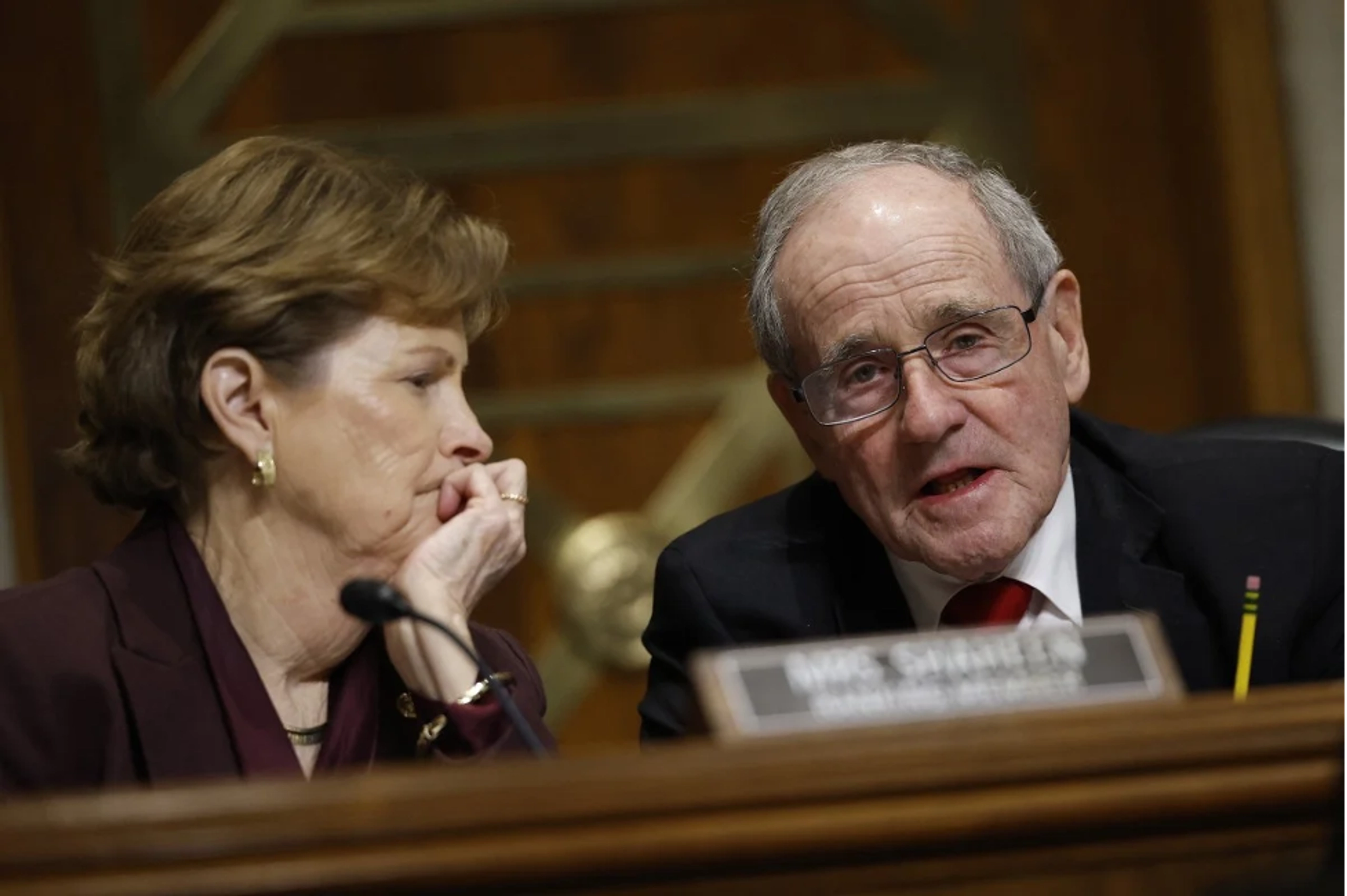
WASHINGTO, DC – The US Senate Foreign Relations Committee’s hearing on several key national-security nominees on Wednesday doubled as a stress test of Washington’s posture toward Russia and NATO’s eastern flank, with Chair Jim Risch (R-ID) and Ranking Member Jeanne Shaheen (D-NH) offering sharply divergent interpretations of US commitment abroad.
What was billed as a routine nominations session quickly morphed into a pointed examination of American resolve in Europe, the future of nuclear arms control, and the political messages the administration is sending as multiple conflicts escalate.
JOIN US ON TELEGRAM
Follow our coverage of the war on the @Kyivpost_official.
Calls for a tougher posture
Senator Risch opened with a stark assessment: Russia is probing NATO’s defenses, spreading propaganda, and accelerating its nuclear modernization campaign.
Against that backdrop, he framed Melissa Argyros’s nomination to serve as the US Ambassador to Latvia and Daryl Nirenberg’s nomination to Romania as critical to maintaining US credibility on the alliance’s front lines.
He portrayed Latvia and Romania as essential bulwarks against Russian expansionism, insisting that Washington’s security assurances must be just as firm.
On arms control, Risch cast the landscape as dangerously outdated, arguing that the expiration of New START has left the US in a “moment of decision.”
His message to Christopher Yeaw – nominated to run the State Department’s new arms-control bureau – was clear: deterrence first, negotiations second. The implication was that the administration must recalibrate its strategic posture before entering any new talks with Moscow or Beijing.
Latvian Defense Minister Arrives in Ukraine on First Official Foreign Visit
Shaheen rebukes troop cut as “American retreat”
Shaheen countered with an unmistakable warning of her own. The Pentagon’s recent announcement that it will pull US troops from Romania, she argued, sends precisely the wrong message as Putin escalates strikes in Ukraine and Russian drones stray into NATO airspace.
She contrasted Romania’s rising defense spending, its missile-defense installations, and its major US weapons purchases with Hungary’s drift toward Moscow – arguing that allies meeting NATO obligations should not be penalized while Viktor Orbán escapes consequences.
“Actions speak louder than words,” she said, labeling the withdrawal a “retreat” that undermines deterrence at a moment when allies are increasingly anxious.
Her line of criticism transformed what might have been a straightforward confirmation exchange with Nirenberg into a broader debate over whether the administration is inadvertently undercutting its own leverage in Europe.
Nirenberg reassures: Romania remains “strong NATO ally”
Caught between bipartisan skepticism and difficult geopolitical timing, Nirenberg leaned into a message of reassurance.
He emphasized Romania’s 2.28 percent defense spending, its pledge to reach five percent by 2035, and its $16 billion in US foreign military sales—including a new order for F-35s.
He spotlighted Romania’s co-production efforts with American firms, its role in NATO’s missile-defense architecture, and its cooperation on counterterrorism.
On energy, he argued that US investment in Romania’s critical-minerals and clean-energy projects is helping Europe reduce dependency on Russian supply chains.
Nirenberg closed by pledging to advance “President Trump’s America First Agenda,” promising to make the US “stronger, safer, and more prosperous” while deepening military and economic ties with Bucharest.
Latvia under daily pressure from Russia, Belarus
Risch pressed Argyros on what she intends to tell Latvians who “look across the fence at Russia” and fear US wavering.
Argyros responded by describing a barrage of hybrid threats – weaponized migration directed by Belarus, constant cyberattacks, and active measures aimed at destabilizing the government.
She cast Latvia as an early, reliable partner in Ukraine’s defense and noted that it has fully cut off Russian energy, now sourcing all LNG imports from the US.
The Latvian-US relationship, she said, spans a century and remains anchored in shared democratic and security interests.
Her testimony underscored a theme both parties touched on: Latvia views the threat from Moscow as existential and expects Washington to behave accordingly.
Verifiable arms control
Yeaw – a nuclear expert by background – painted a global landscape defined by “grinding” Russian aggression, Iranian intransigence, and a rapidly expanding North Korean arsenal. He signaled support for arms control only when it is “verifiable and enforceable,” echoing Republican skepticism toward legacy frameworks.
He argued that a credible US deterrent remains the primary check on adversaries’ nuclear ambitions, while maintaining that arms-control agreements can still constrain capabilities – if the agreements have teeth.
His testimony attempted to straddle the enduring divide between diplomacy-first Democrats and deterrence-first Republicans.
Shaheen flagged what she called a glaring process issue: the committee has yet to be briefed on the structure of the new arms-control bureau created through the administration’s reorganization, calling it a gap that “must be fixed promptly,” particularly in light of the president’s recent statements about potential resumed nuclear testing.
Debating strategy
By the time the gavel came down, the hearing had already shifted from confirmations to competing narratives that shaped US influence abroad.
While Senators projected urgency about rising nuclear and military threats, warning that mixed signals from Washington risk emboldening adversaries, the nominees attempted to calm anxieties in allied capitals watching every move.
If confirmed, Argyros, Nirenberg, and Yeaw will step into roles that demand more than formal diplomacy – they will be tasked with restoring confidence among allies increasingly unsure whether American promises will match American policy.
The stakes, as both parties made clear, are higher than any single committee hearing.
You can also highlight the text and press Ctrl + Enter
OPINION: The Illusion of a Peace Deal for Ukraine
Zelensky Proposes G7 Meeting With Putin to End War