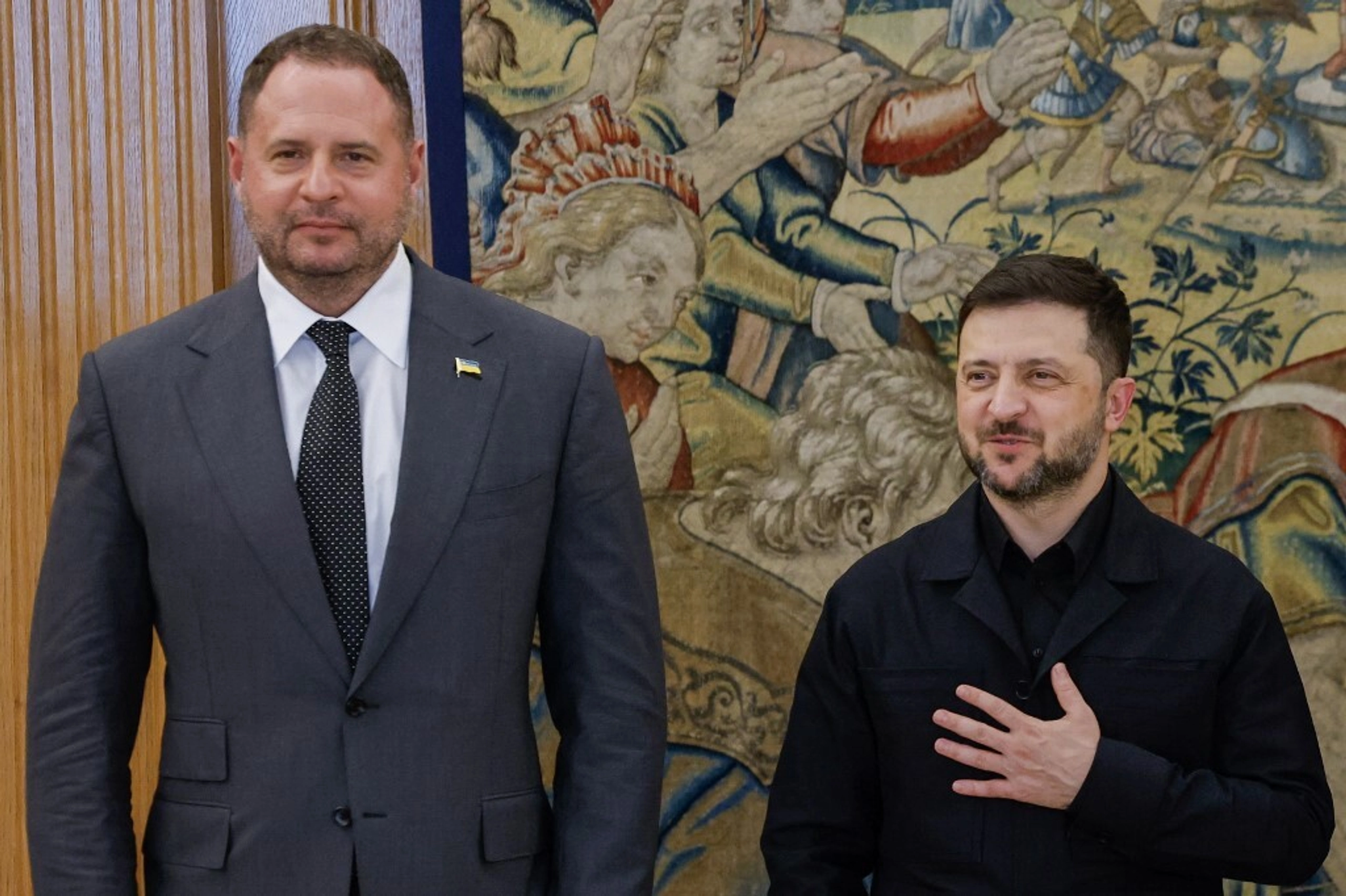
Andriy Yermak resigned as Head of Ukraine’s President’s Office at the end of November 2025. The $100 million Energoatom corruption scandal – the most significant of President Volodymyr Zelensky’s tenure – finally forced him out.
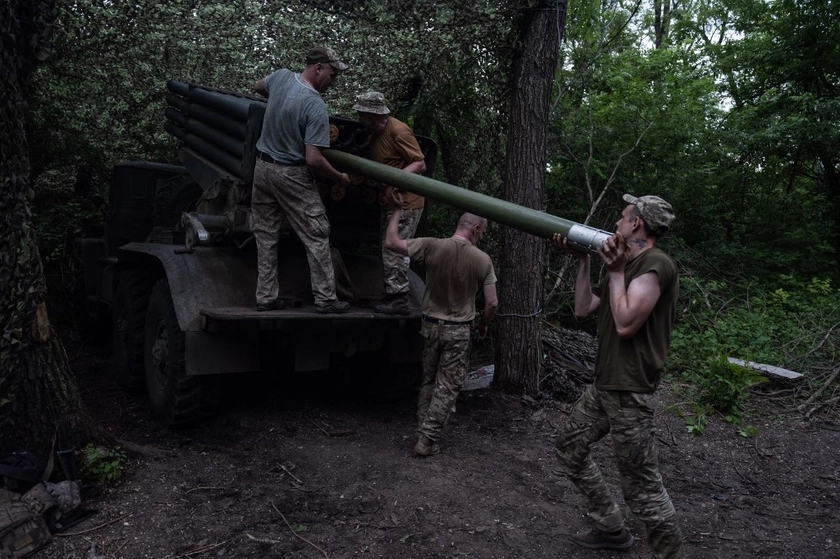
Ukraine is facing mounting pressure from the US to enter peace negotiations that, in effect, favor Russia while Russian forces grind forward on the front lines. Western partners are getting louder about governance reforms as a condition for continued support. And Zelensky’s administration just lost the man who, for better or worse, held the whole operation together.
JOIN US ON TELEGRAM
Follow our coverage of the war on the @Kyivpost_official.
The temptation now will be to treat this as a personnel problem solved. Find a new face, reset the narrative, move forward. But that would be catastrophic.
Yermak’s resignation isn’t the solution; it’s merely the opening for one. The real question is whether Zelensky will use this opportunity to dismantle the system of concentrated power that Yermak and his predecessors under previous presidents built or simply install a new manager to run the same authoritarian machinery.
The problem isn’t just Yermak – it’s the system he built
From 2020 onwards, Yermak systematically accumulated power far exceeding anything his office was supposed to have. He controlled ministerial appointments. He gatekept access to the president. He inserted himself into judicial reform, law enforcement, and economic policy – domains that should have remained with the Cabinet of Ministers and parliament.
You Realize How Valuable Life Is When Death Feels Possible Every Day
From 2020 onwards, Yermak systematically accumulated power far exceeding anything his office was supposed to have.
The Office of the President under Yermak came to control judicial appointments through informal influence over the High Council of Justice. It wielded de facto authority over the Security Service of Ukraine. It maintained leverage over prosecutorial decisions that should have been independent.
Sound familiar? It should. This concentration of power in a single, unelected office bears an uncomfortable resemblance to Leonid Kuchma’s and Viktor Yanukovych’s governance model.
Ukraine’s civil society has been screaming about this for years. When one office controls appointments, resources, and access to power, it becomes a magnet for rent-seeking, patronage networks, and the kind of corruption exemplified by the Energoatom scandal.
The system creates the corruption. The individual merely administers it.
Yermak made his choices, and if found guilty, he should answer them. But replacing him without reforming the system will simply produce Yermak 2.0 – perhaps with a different style, maybe better PR, but operating within the same corrupting structure.
What kind of Head does Ukraine need?
The next Head of the President’s Office must represent a fundamental break from the Yermak model.
Start with integrity. Not the performative kind, but genuine, unimpeachable integrity. Someone whose reputation for probity is so solid that even their critics have to acknowledge it grudgingly. Ukraine’s presidents have appointed too many “trusted allies” and not enough qualified professionals. That pattern has eroded institutional competence and gutted public trust.
The role itself needs to be reconceived. A facilitator, not a power broker.
The Head of the President’s Office should ensure the efficient delivery of the president’s constitutional functions – foreign policy, defense, and national security coordination. Full stop. That means coordinating, not controlling. Advising, not commanding. It means staying in your lane instead of treating every ministry as your personal fiefdom.
Ukraine needs someone who empowers rather than monopolizes. The right person should actively work to strengthen other institutions – ensuring that ministers can actually govern their portfolios, that parliament can legislate without constant interference, that local authorities can exercise their mandates without Bankova Street breathing down their necks.
Ukraine needs someone who empowers rather than monopolizes.
This requires a leader secure enough to distribute power rather than hoard it – quite a challenge in Ukrainian politics.
And here’s the non-negotiable part: the next Head must be free from connections to oligarchs or shadow networks.
One of the most corrosive aspects of Yermak’s tenure was the perception – often substantiated – that business interests could purchase influence through proximity to his office. Breaking this pattern requires someone whose professional history demonstrates real independence, not just clever distancing.
Finally, Ukraine needs someone who can help restore trust with Western partners who have grown increasingly skeptical. European and American officials have watched democratic institutions weaken even as they provided tens of billions in assistance.
No more excuses. The next Head must be someone who can credibly represent Ukraine’s commitment to reform in Brussels and Washington, capitals where Ukraine’s future is being decided.
The broader changes Zelensky must make
But even the ideal candidate will fail if the structural problems remain unaddressed. Yermak’s resignation must be the beginning of comprehensive decentralization, not merely a changing of the guard.
Return power to where it constitutionally belongs. The Cabinet of Ministers should run executive functions. The parliament – Verkhovna Rada – should legislate. Local authorities should govern their regions.
This isn’t radical – it’s basic constitutional order. Ministers must be empowered to run their ministries without constant interference from presidential advisors. Parliament must be treated as a co-equal branch of government, not a rubber stamp. Local officials must be allowed to govern without fear that Kyiv will override their decisions at will.
The independence of anti-corruption institutions like the National Anti-Corruption Bureau of Ukraine (NABU) and Specialized Anti-Corruption Prosecutor’s Office (SAPO) cannot be negotiable anymore. The July 2025 attempt to curtail their powers sparked mass protests – the first since the full-scale invasion began. That should have been a wake-up call. These institutions need leadership appointments insulated from political pressure and operational autonomy that’s protected in practice, not just on paper.
Law enforcement agencies must be freed from political influence. Period. The Security Service of Ukraine (SBU), the National Police, the Prosecutor General’s Office – they cannot function as instruments of presidential power. They must operate in accordance with the law, not political expediency. This shouldn’t be controversial, but in Ukraine, it apparently is.
Zelensky also needs to bring in fresh talent. Not the same cast of characters who have cycled through various positions over the past five years, playing musical chairs while the country burns. Ukraine has qualified professionals in civil society, the private sector, academia, and among younger reformers. Tapping this talent pool would signal genuine commitment to renewal. Ignoring it would signal business as usual.
Transparency and institutional checks must be restored. Yes, wartime requires some centralized decision-making. But that cannot become a permanent excuse for opacity and unaccountable power. As Ukraine moves toward peace negotiations, the rationale for emergency measures weakens. The imperative for democratic governance strengthens.
And the loyalty-based appointment pattern must end. Competence, integrity, professional qualification – these must become the criteria for high office, not personal relationships or political convenience.
Competence, integrity, professional qualification – these must become the criteria for high office, not personal relationships or political convenience.
Why this matters now
The stakes could not be higher, and the window is closing fast.
Ukraine’s EU accession depends explicitly on progress in anti-corruption and rule-of-law reforms. The European Commission’s reports have grown increasingly pointed about the gap between Ukraine’s commitments and its performance. Without credible governance reforms, the path to membership will stall – and with it, Ukraine’s long-term security and prosperity.
Western support, both military and financial, increasingly hinges on demonstrable progress. While allies remain committed to Ukraine’s defense, their publics and parliaments are asking harder questions about where their money goes and whether Ukraine is serious about reform. The Energoatom scandal has already triggered uncomfortable conversations in Western capitals. More such scandals could erode the political will that sustains Ukraine’s defense.
Public trust within Ukraine is eroding at a critical moment. After nearly four years of war, Ukrainians have endured extraordinary sacrifices. They’ve tolerated restrictions on civil liberties, accepted the suspension of elections, and borne the daily hardships of conflict. But this patience is not infinite. The perception that elites are enriching themselves while ordinary citizens suffer, undermines the social cohesion that Ukraine’s defense requires.
Peace negotiations require leadership with both domestic legitimacy and international credibility. A government tainted by corruption and authoritarian tendencies will struggle to negotiate effectively or to sell any eventual agreement to the Ukrainian people and Western partners alike.
And perhaps most urgently, Russia’s recent advances on the front lines make internal unity essential. Ukraine cannot afford the distraction and demoralization that comes from governance crises and corruption scandals. The military needs stable, legitimate political leadership that can maintain public support and international assistance.
A genuine reset or more of the same?
Yermak’s resignation is an opportunity for a genuine reset, but only if President Zelensky recognizes that the problem wasn’t one man – it was a system of concentrated power that Ukraine’s democracy cannot afford. The next Head of the President’s Office must be part of a broader democratic rebalancing, or Ukraine risks repeating the same mistakes that have plagued its post-Soviet history.
Yermak's resignation is an opportunity for a genuine reset, but only if President Zelensky recognizes that the problem wasn't one man – it was a system of concentrated power that Ukraine's democracy cannot afford.
This is not about weakening the presidency or hamstringing Ukraine’s ability to defend itself. It is about building a governance model that is sustainable, legitimate, and aligned with the democratic values that Ukraine claims to be fighting for. A strong presidency can coexist with strong institutions, independent courts, and empowered local governments. Indeed, in the long run, a presidency that respects institutional boundaries will be stronger and more effective than one that tries to control everything.
The choice before Zelensky is clear: use this moment to build the democratic, transparent, accountable governance that Ukraine’s future demands, or install a new manager to run the old system and hope the next scandal doesn’t come too soon.
At stake is not just Ukraine’s credibility with the West, but its future as a democratic state.
The Ukrainian people have earned better. The moment demands nothing less than transformation. The domestic front needs to be stabilized
The views expressed are the author’s and not necessarily of Kyiv Post.
You can also highlight the text and press Ctrl + Enter