





Key Takeaways from the ISW:
- The Kremlin is significantly intensifying its cognitive warfare effort to present the Russian military and economy as able to inevitably win a war of attrition against Ukraine.
- The Kremlin’s cognitive warfare effort aims to achieve several of Putin’s original war aims through a negotiated settlement, as Russian forces are currently unable to achieve them on the battlefield.
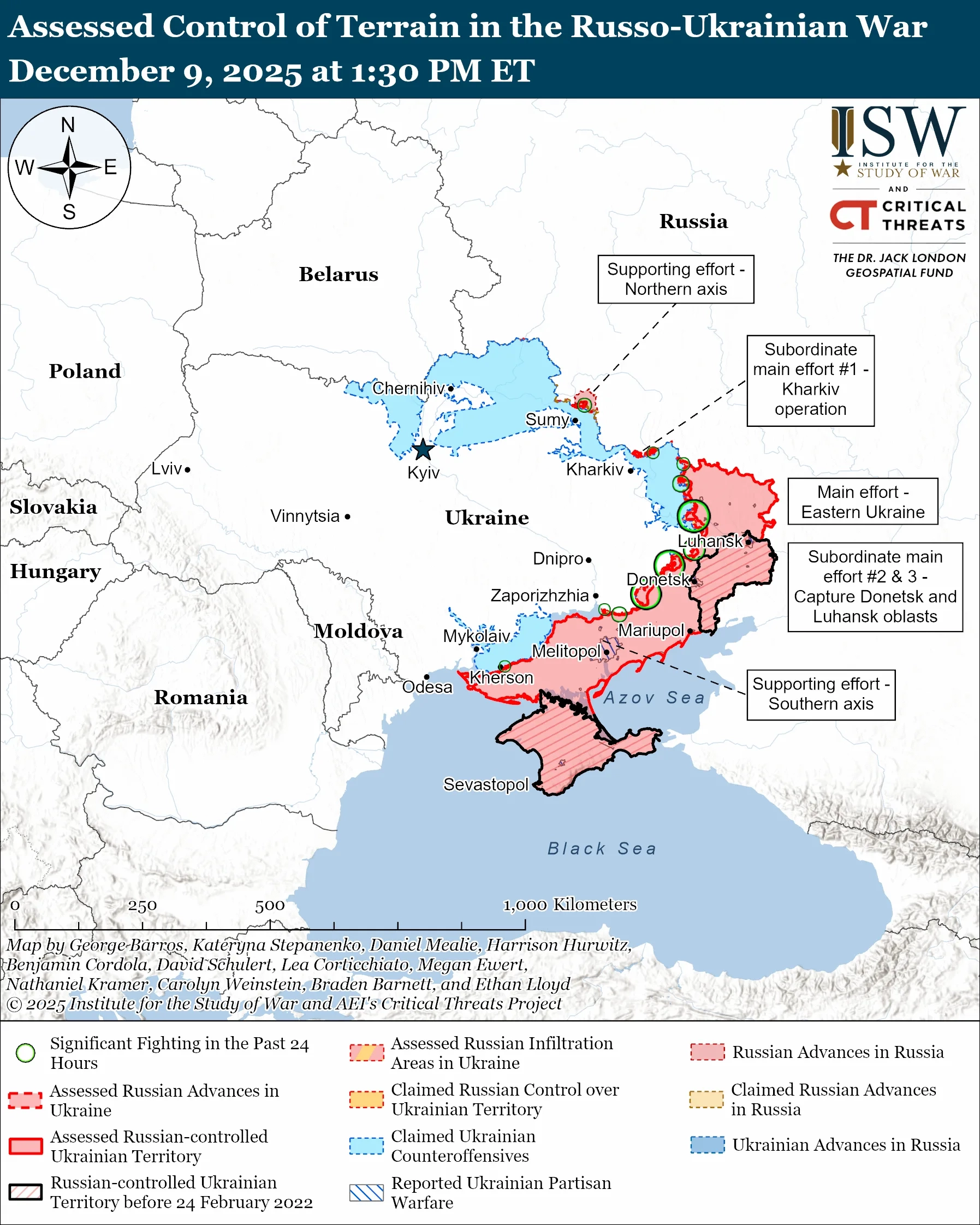
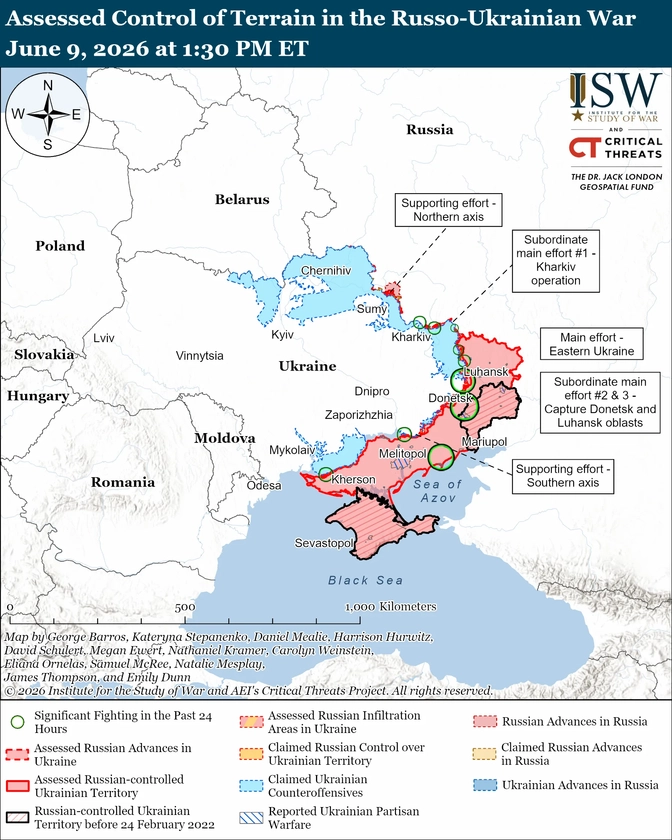
- Russian forces have gained 0.77 percent of Ukrainian territory since the start of 2025 while suffering disproportionately high personnel costs.
- Russia’s resources are not endless as Putin is trying to assert, and Putin currently appears to be facing difficult decision points regarding the strategic sustainment of Russian force generation.
- Putin is very likely preparing to attempt to offset Russia’s near-exhaustion of voluntary recruitment in 2026 by mobilizing elements of Russia’s strategic reserve to sustain combat operations in Ukraine. The Kremlin remains unlikely to undertake a single large-scale mobilization at this time, however, and is most likely to persistently recruit reservists on a rolling basis.
- A Kremlin official suggested that Russia may try to renege on any future peace agreement it signs with Ukraine due to the Ukrainian government’s alleged “illegitimacy” – as ISW has long warned.
- Ukrainian President Volodymyr Zelensky commented on the latest 20-point US-proposed peace plan.
- Ukraine continued discussions with its European allies on December 8 about the ongoing peace negotiations.
- Russian forces recently advanced near Lyman and Pokrovsk and in western Zaporizhia Oblast. Ukrainian forces recently advanced near Oleksandrivka.
JOIN US ON TELEGRAM
Follow our coverage of the war on the @Kyivpost_official.
See the original here.
To suggest a correction or clarification, write to us here
You can also highlight the text and press Ctrl + Enter
You can also highlight the text and press Ctrl + Enter

Putin’s Worst Nightmare
Russia has moved rapidly to counteract the possibility that Western AI could locate Putin.
13h ago