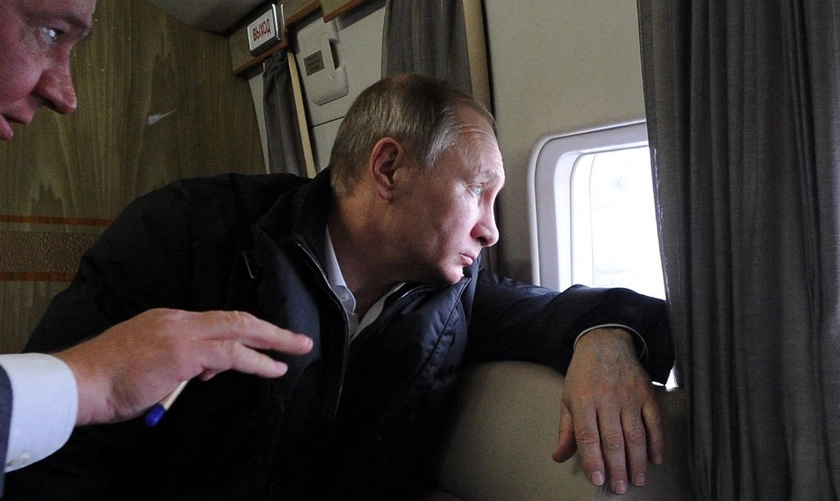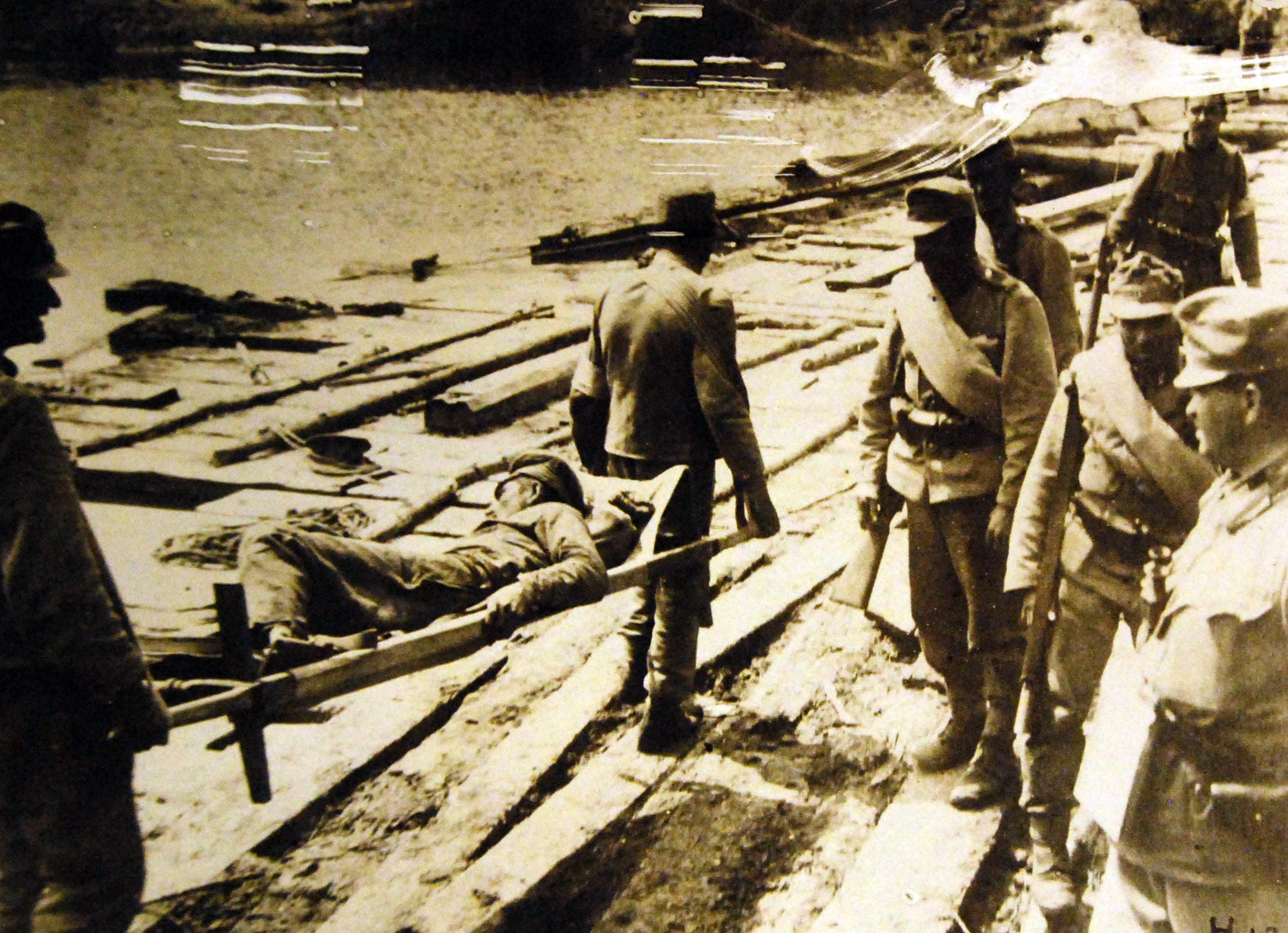
Russian President Vladimir Putin’s full-scale invasion of Ukraine has now lasted longer than the disastrously unsuccessful war fought by Imperial Russia and Tsar Nicholas II from 1914-1917.
By the numbers, World War I started on Jul. 28 1914 and ended on Nov. 11 1918, with hostilities lasting 1,567 days. By the time of the formal end of fighting, revolution had overthrown the Romanov regime and Red agents had shot dead Tsar Nicholas II and his family in a Yekaterinburg basement, because the new government in Moscow saw the royals as a threat to Communist rule of Russia.
JOIN US ON TELEGRAM
Follow our coverage of the war on the @Kyivpost_official.
Modern Russia’s thus-far failed attempt to implement regime change in Ukraine and return the former Soviet republic to Moscow rule, by war and invasion, was launched on Feb. 24 2022 and, by Thursday, had lasted one day more (1,568 days), than the entirety of World War I.
Butcher’s bill – World War I or Russian Armed Forces in Ukraine, which war was worse?
The most important difference between the two wars is that, for Russia, World War I was a total war with full mobilization affecting practically every facet of the country, with the national leadership totally behind the war effort. During that war, a major alliance of Western states supported Russia.
Russia’s (second) invasion of Ukraine is for Russia a war affecting different parts of the country in different ways, with the national leadership juggling the conflicting goals of mobilizing enough men and resources to defeat Ukraine and its allies, while avoiding imposing the shock and sacrifices of a full-scale mobilized war effort on Russian society. Aside from North Korea and to a lesser extent Iran, Russia has no allies supporting its attempt to take over Ukraine.
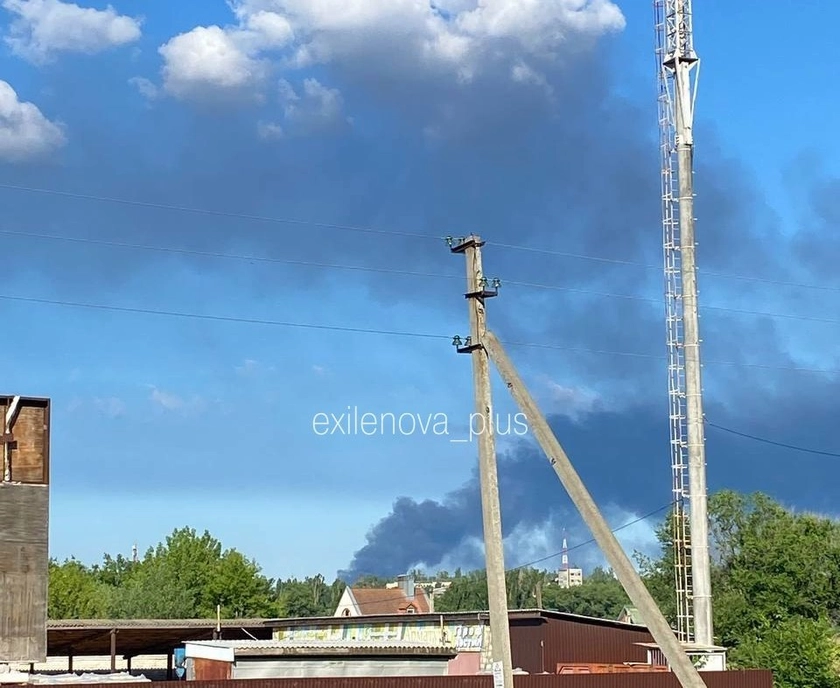
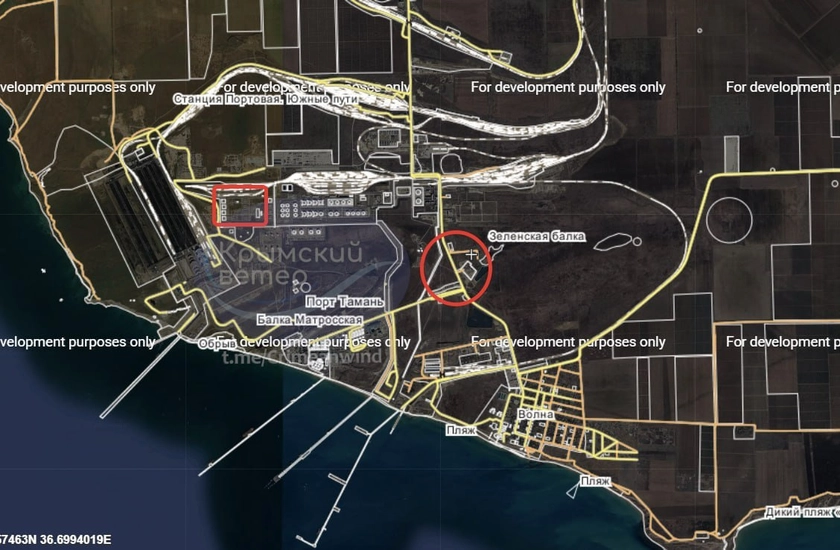
SBU, HUR, and SSO Joint Drone Strike Cripples Tamanneftegas Terminal
The most important metric of how much more widely WWI affected Russian society is starkly visible in terms of soldiers mobilized, and those killed and wounded in combat. During that war, according to most historians, a Russia with a total population of 175-180 million, using forced conscription, deployed about 12 million men in its armed forces. This works out to about 5 percent of the population or about one in every ten men in Russia actually in uniform.
According to conventional histories, in World War I, about 9 million Russian soldiers were killed, wounded or otherwise rendered ineffective for reasons like sickness or desertion, or roughly, one in every 15 men in all Russia, or three out of four men in military service. This is one of the bloodiest casualty rates suffered by a country at war in post-medieval history.
Modern Russia’s population was around 146 million in February 2022. According to Ukrainian intelligence estimates, somewhere between 1.8-2.0 million individuals had served in the Ukrainian theater by June 2026, which works out to about 1.2-1.4 percent of the total population of modern Russia, or about one in every fifty Russian men having participated in their country’s invasion of Ukraine.
Ukrainian Armed Forces (AFU) counts backed by drone footage and international research groups currently put the estimated number of Russian soldiers killed, wounded or otherwise rendered ineffective at about 1.2 million men. This works out to about 1.6 percent of Russia’s male population or about about one or two Russian men killed or wounded in Ukraine, for every 98 or 99 Russian men either not wounded or not serving.
In other words, across Russian society, the scale of men killed and wounded in World War I was about ten times greater than in the Russo-Ukrainian War.
However, once in uniform, the chances of a Russian soldier being killed or wounded in combat are mostly unchanged after a century: in World War I about 76 percent of soldiers fielded became casualties, and in Ukraine the figure seems to be between 60-65 percent.
Men doing the fighting – Were early 20th-century Russian soldiers and officers different from or similar to 21st-century Russian soldiers and officers?
The Russian army in the First World War was overwhelmingly a peasant army, with probably four out of five soldiers conscripted from rural villages. Rank and file were only semi-literate and the problem was worse in units from Siberia and eastern Russia, where soldiers often only understood basic orders of command.
The officer corps in the Imperial Russian army came from a different social stratum led by nobility and gentry, and buttressed with members of the educated middle class, almost always from cities.
This hard-wired Russia’s World War I army for a potential fracture between the mostly illiterate and peasant other ranks, and the aristocrats and urban professionals commanding them. Russian society as a whole was little different and contained the same potential schism.
As the progress of the war worsened for the Tsar and his commanders, dissent in the ranks became increasingly difficult to suppress, because written media did not reach many soldiers, and because the army’s officer class had no tradition of negotiating with lower class ranks, and risked loss of authority even by discussing options.
The modern Russian military is a (mostly) volunteer force with the leadership nearly all professionals focused on career advancement, and other ranks recruited by various means, most often by federal or regional government offers of salaries impossible in the civilian economy or through carrot and stick benefits like exchange of a prison term for an army contract.
Recruiting has been heaviest in small towns, Siberia, the North Caucasus, Buryatia, Tuva, and the Volga republics, while wealthy cities like Moscow, St. Petersburg and Krasnodar have contributed far fewer fighters.
However, the Russian officer corps is similar.
Thanks to technology and mass media, there are no major language barriers in the Russian forces invading Ukraine, although some minorities might speak Tuvan or Chechen, all ranks speak Russian. Likewise, literacy in the modern Russian army is effectively total, and moreover, practically all soldiers are familiar with modern consumer tech like a smartphone or text messaging.
Since the modern Russian state exercises near total control of media and can reach even individual soldiers through their smartphones, it is easier for the modern Russian state to buttress loyalty and undermine dissent, than it was for the Tsars during World War I.
Battlefield (today, Battlespace)– Is it true that both wars are just trenches, mass attacks and stagnation?
No, that’s not true, not historically, and not in Ukraine right now. The meme “The Russo-Ukrainian War is nothing but static WWI trench warfare” is pretty inaccurate on several levels.
It’s true that bunkers and barbed wire were widely used in WWI and common in Ukraine currently, but saying that the Russian military fought mostly statically in either conflict, without decisive results isn’t borne out by the record.
In WWI, the Eastern Front saw large-scale mobile operations, most notably Russia’s 1916 Brusilov Offensive, that scored spectacular initial breakthroughs, advanced over 100 kilometers in places and inflicted, not just severe losses, but routed Austro-Hungarian forces opposing them.
Campaigns fought by Russia, in Prussia in 1914 and across what is now eastern Poland and western Ukraine in 2015, likewise shifted fighting lines dramatically, albeit in both those cases it was the Russian force that was disastrously defeated.
A risky bid by a semi-democratic Russia to regain initiative in 1917, called the Kerensky offensive, came apart at the seams with the Russian army nearly mutinying, which led directly to the break-up of Imperial Russia. In early 1918, a German offensive transferred control of the Baltic states, Belarus and Ukraine from Russian to German control, in a little less than two months.
The first six months of the Russo-Ukrainian War saw dramatic advances and losses of territory by both sides similar to the great operations of World War I. Since then, both sides have launched smaller-scale operations aimed at capturing terrain, the Russians most visibly with a now two-year-old offensive with the objective of capturing major cities in Ukraine’s Luhansk and Donetsk region, and the Ukrainians with a limited amphibious assault across the Dnipro River in 2024 and a spoiling attack invading Russia in 2025.
Both sides have, as well, attempted major offensives and failed, for Ukraine the worst probably taking place in summer 2023 in the Zaporizhzhia sector, and in Russia in late 2025-early 2026 with the failure of its Winter-Spring offensive to capture Ukraine Donetsk region. But from the perspective of the Kremlin, the front in Ukraine has never been static, it has always been shifting in Russia’s favor, just sometimes quickly and sometimes slowly.
Tactics and technology – How is the Russian performance in the two wars?
The degree of similarity between the way the Imperial Russian army fought, and the modern Russian military fights, is striking. In both conflicts, commanders displayed a preference for complicated, sweeping operations that would hopefully give a decisive result by concentrating overwhelming Russian force against a narrow sector of the enemy line. If the large-scale maneuver fails or isn’t practical, the fallback tactic of concentration of firepower – first and foremost by artillery – is the preferred tactic.
The ability of the Russian soldier to suffer discomfort that soldiers in other armies would probably find unacceptable, and the willingness of the Russian soldier to accept risk and casualties among his mates, Western forces would see as prohibitive, was considered an inherent advantage by Russian generals in World War I and in Ukraine today.
Equally, in both attack and in defense, Russian staff officers in the 20th and 21st centuries bank heavily on the Russian soldier’s skill at fending for himself without supply, and digging into and hiding himself in the landscape. In both militaries, the individual Russian soldier’s skill at infiltration was, and is, taken as a given.
Both the Russian Imperial army and the modern Russian armed forces started out their wars training recently civilian new troops about 4-6 months before placing them in the ranks of a fighting unit, and after 1,567 days of war that standard had fallen to about two or three weeks.
Russian arms manufacturing and industry during World War I struggled to manufacture sufficient shells for the front line, where howitzers and cannon were nearly out of ammunition after about six months of fighting. In summer 2023 – in this case after about nine months of fighting – Russia was reduced to emergency mass purchases of shells from North Korea, to fill the exact same ammo gap.
In WWI, Russia generally succeeded in supplying its troops at the front for most of the war, but struggled to produce the high-tech weapons of the day in quantity, among them automobiles, aircraft, locomotives and rail infrastructure, modern rifles and above all, machine guns.
In Ukraine, Russia has generally managed to deliver moderate supplies of legacy military material like tanks, lighter armored fighting vehicles and combat aircraft to frontline troops. Production of higher-tech, 21st-century-relevant military has been a different story, with Russian manufacturers heavily dependent on Western or Chinese components to build precision-guided weaponry like cruise and ballistic missiles, or stealth or early warning aircraft.
Russia’s greatest manufacturing success in the defining weapon of the Russo-Ukrainian War – the drone – is a licensed copy of an Iranian design, produced in a factory set up by Iranian managers and with product matching Iranian specs.
Entire weapon categories Ukraine is now attacking Russia with, like the tactical Vampire bomber drone, the Liuyty strategic strike drone, and the Flamingo cruise missile are effectively absent from the Russian Federation arsenal.
Digitally, with data fusion networks and artificially intelligent drones in wide use, Ukrainian forces are technologically at least a half-century ahead of Russian forces.
Revolution Soon? – How Close is Russia and the Russian Army in Ukraine to a “1917 moment” collapse?
The 2026 Russian military and society are nowhere near the collapse and revolution their counterparts saw in 1917 – but precursors are undeniable.
Most critically, as Russia neared the end of its participation in World War I, it wasn’t just on the front that things were going badly, Russian civilian society top to bottom was in crisis.
Millions of men were under arms and families across Russia, particularly in the poorer echelons of Russian society, faced the prospect of a war without end in which a loved one might well die or be wounded. Inflation was close to pushing the price of basic necessities like food and coal or wood for warming a home beyond the reach of most of the population.
At the same time, Russian politics were wide open and furiously competitive, with democrats, socialists, soft Communists, hard-core Communists, ethic groups and even anarchists vying with monarchists and republicans for control of the direction of the Russian state, and the wealth-generating parts of the economy. The national government’s secret services and the police were inefficient and frequently corrupted by other groups attempting to influence events.
In modern Russia, the police state is strong, mostly loyal to the Kremlin, and the political opposition is weak and for the most part in exile abroad. Control of media by the state is near total and narratives buttressing war aims and the legitimacy of Putin and his allies’ hold on power is constant.
Prices are up but, by and large, Russian lower- and middle-class families are still able to afford basics; the economic fallout from the war for them has largely been to make luxuries more expensive.
Also, the Russian war economy has reduced unemployment to record minimums and major government services like the railroad and subsidized energy to consumers have continued.
Since far fewer modern Russian families feel their lives harmed by the war by a family member death or injury, or from rising prices, than their great-grandparents in 1917, modern Russian society – so far – is visibly resilient to a war going badly, in ways Imperial Russia in its twilight was not.
But revolutions rarely arrive on schedule. Many of the precursors that led to upheavals in Russia in 1917 – inflation, rising casualty counts, impossible war objectives, inferior war technology, isolation from allies, a sense that the national leadership has no workable plan for the future, a sense that the only people benefiting from the war are the oligarchs – are just facts of life in Russia in 2026.
You can also highlight the text and press Ctrl + Enter

ANALYSIS: Russia’s Air Defense Problems Are Growing